Themenfeld
Biologische Vielfalt
Die Vielfalt an Pflanzen, Tieren und Mikroben auf Feldern, in Wäldern und in Meeren ist der Garant für funktionierende Ökosysteme. Diese Biodiversität ist bedroht. Wir erforschen die Wechselwirkungen zwischen Nutzungssystemen und biologischer Vielfalt, und wir entwickeln Konzepte zur Erhöhung der Biodiversität.
Expertise
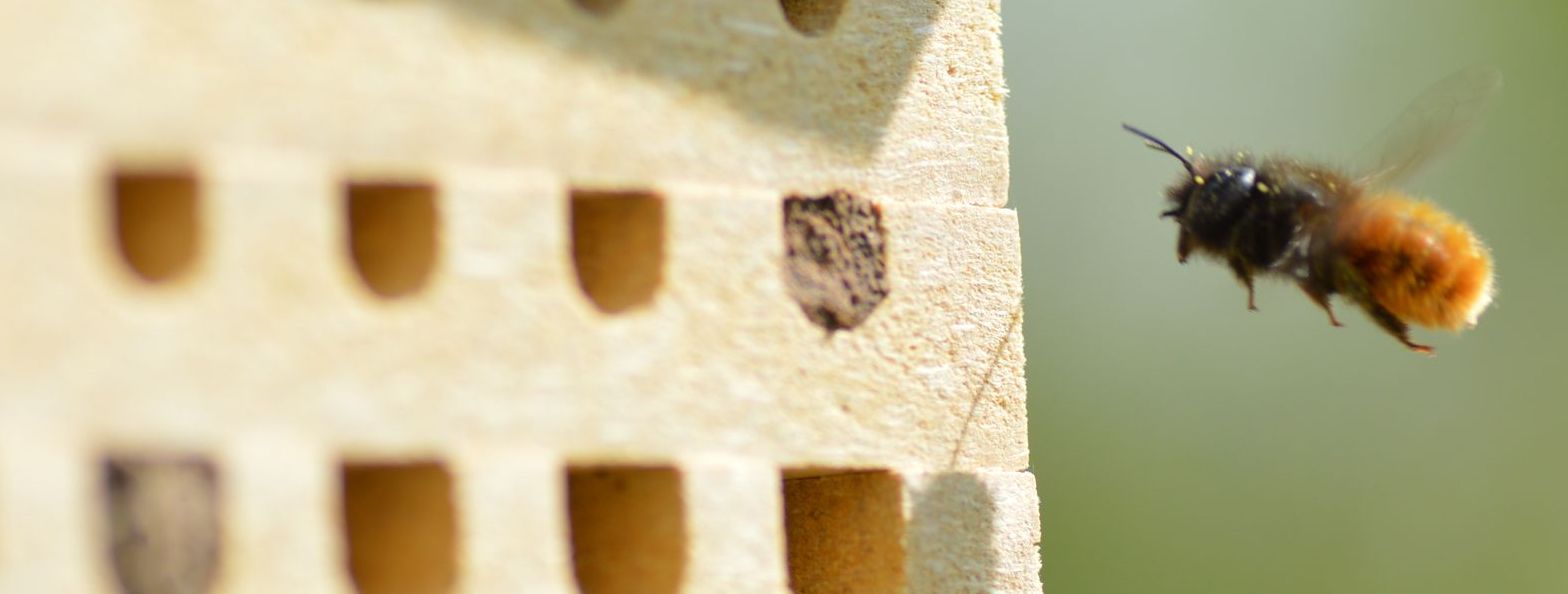
Wildbienen – wer sind sie und wenn ja, wie viele?
Die vielen in Deutschland vorkommenden Wildbienenarten haben eine elementare Bedeutung für Landwirtschaft, Obstbau und die verschiedenen Ökosysteme.
Ansprechpersonen

- Telefon
- +49 531 257 02048
- sophie.ogan@thuenen.de

- Telefon
- +49 531 2570 2235
- christian.levers@thuenen.de

- Telefon
- +49 3334 3820 309
- franz.kroiher@thuenen.de
Wissenschaftlicher Mitarbeiter

Projekte
| Status | Institut | Titel | Beginn | Ende |
|---|---|---|---|---|
| in Planung | Institut für Biodiversität BD | NATURE-Restore | 10 2028 | 2032 |
| Läuft | Institut für Betriebswirtschaft BW LVBDKB | Valorisierung und Integration von Daten für Agrarlandschaften, Umwelt und AgrarPolitik | 10 2025 | 2027 |
| Läuft | Institut für Lebensverhältnisse in ländlichen Räumen LV | Evaluierung der Gemeinsamen Agrarpolitik aus Sicht des Umweltschutzes (GAPEval IV) | 10 2025 | 2028 |
| Läuft | Institut für Biodiversität BD BWWF | SELVA-BIO: Szenarien für Landnutzung, Biodiversität und Ökosystemleistungen | 10 2025 | 2028 |
| Läuft | Institut für Forstgenetik FG | Evolution von Monözie und Diözie | 6 2025 | 2028 |
| Läuft | Institut für Biodiversität BD | Supporting the agroecological transition through living labs networks (SUNRISE) | 4 2025 | 2028 |
| Läuft | Institut für Forstgenetik FG | Pangenomanalyse der Buche | 3 2025 | 2028 |
| Läuft | Institut für Ökologischen Landbau OL | Saatwicken: Sortenprüfung für Anbau und Mastschweinefütterung | 2 2025 | 2028 |
| Läuft | Institut für Fischereiökologie FI | Altersbestimmung bei Fischen anhand von DNA-Methylierungsmustern | 1 2025 | 2027 |
| in Planung | Institut für Biodiversität BD | KI-Reallabor Agrar | 10 2024 | 2030 |
| Läuft | Institut für Ostseefischerei OF | Wie ist der Zustand unserer Küstenfischgemeinschaft? | 9 2024 | 2029 |
| Abgeschlossen | Institut für Biodiversität BD BW | OECD farmland habitat biodiversity indicator | 9 2024 | 2025 |
| Läuft | Institut für Seefischerei SF | Monitoringkonzepte in Schutzgebieten: Habitatnutzung und Bewegungsmuster von Fischen, Haien und Rochen (NIKOFIN) | 9 2024 | 2027 |
| Läuft | Institut für Fischereiökologie FI FI | Wanderfische in deutschen Gewässern | 6 2024 | 2027 |
| Läuft | Institut für Ostseefischerei OF | Untersuchungen zu ökosystemgerechten Fanggeräten in Nord- und Ostsee (EMFAF) | 6 2024 | 2027 |
| Läuft | Institut für Fischereiökologie FI | Gesamtheitliche Bestandsbewertung von Aal, Lachs und Meerforelle | 5 2024 | 2026 |
| Läuft | Institut für Forstgenetik FG | Genetische Diversität der Kiefer in Deutschland | 1 2024 | 2026 |
| Läuft | Institut für Fischereiökologie FI | PINKTrack | 11 2023 | 2026 |
| Läuft | Institut für Lebensverhältnisse in ländlichen Räumen LV | Modellhafte Erprobung von Naturschutz-Kooperativen in Deutschland nach dem niederländischen Ansatz (MoNaKo) | 11 2023 | 2026 |
| Läuft | Institut für Marktanalyse MA MABD | BioServicES: Verknüpfung von Bodenbiodiversität und Ökosystem Funktionen und Leistungen bei unterschiedlicher Landnutzung | 9 2023 | 2028 |
| Läuft | Institut für Ostseefischerei OF | Beifangreduktion in Nordatlantik, Ostsee und Mittelmeer (CIBBRiNA) | 9 2023 | 2029 |
| Läuft | Institut für Biodiversität BD MA | BIOservicES: Verknüpfung von Bodenbiodiversität und Ökosystem Funktionen und Leistungen bei unterschiedlicher Landnutzung | 9 2023 | 2028 |
| Läuft | Institut für Marktanalyse MA BD | BIOFINCAS | 7 2023 | 2031 |
| Läuft | Institut für Biodiversität BD | Zusammenhang von politikinduzierten Landnutzungänderungen und Biodiversitätstrends | 4 2023 | |
| Läuft | Institut für Lebensverhältnisse in ländlichen Räumen LV | Naturschutzfachliche Qualität von FFH-Mähwiesen in Baden-Württemberg | 3 2023 | 2026 |
| Läuft | Institut für Waldökosysteme WO | Akustisches Waldmonitoring (AkWamo) | 2 2023 | 2026 |
| Abgeschlossen | Institut für Lebensverhältnisse in ländlichen Räumen LV BWBDAKOL | CatchHedge - Kohlenstoffspeicherung in Hecken und Feldgehölzen | 1 2023 | 2025 |
| Läuft | Institut für Waldökosysteme WO | BBZE-Wald | 1 2023 | 2026 |
| Läuft | Institut für Biodiversität BD | Archetypen agrarischer Landsysteme zur wirksamen Lenkung von Politikmaßnahmen (ARC-SPOT) | 1 2023 | |
| Läuft | Institut für Biodiversität BD | Nexus zwischen Biodiversität, Landwirtschaft, Wasser, Klima und Gesundheit auf regionalen bis globalen Skalen (NEXUS) | 1 2023 | |
| Läuft | Institut für Biodiversität BD | Future Proof Grasslands | 10 2022 | 2027 |
| Läuft | Institut für Forstgenetik FG | TaxGen | 10 2022 | 2026 |
| Läuft | Institut für Seefischerei SF | Analyse kumulativer Belastungen zur Erreichung eines guten Umweltzustandes | 9 2022 | 2026 |
| Abgeschlossen | Institut für Fischereiökologie FI | Vorkommen und Verteilung von Larven des Europäischen Aals in der Biskaya und um die Iberische Halbinsel | 8 2022 | 2024 |
| Abgeschlossen | Institut für Betriebswirtschaft BW | EOekoLand - Erdbeobachtung und künstliche Intelligenz für das Monitoring im ökologischen Landbau | 8 2022 | 2025 |
| Abgeschlossen | Institut für Seefischerei SF | Synthese von Methoden zur Bewertung der Konnektivität in einem Netzwerk von Schutzgebieten (CREATE) | 12 2021 | 2024 |
| Abgeschlossen | Institut für Ostseefischerei OF | STELlnetzfischerei-LösungsAnsätze (STELLA2) | 11 2021 | 2024 |
| Abgeschlossen | Institut für Biodiversität BD | Grassworks-2 - Erfolgreiche Konzepte zur Wiederherstellung artenreichen Grünlandes | 11 2021 | 2025 |
| Abgeschlossen | Institut für Ostseefischerei OF | Verringern die PAL-Geräte immer noch die Beifänge von Schweinswalen? | 10 2021 | 2025 |
| Läuft | Institut für Forstgenetik FG | Hainbuche - von der dienenden Baumart zum Zukunftsbaum | 10 2021 | 2025 |
| Läuft | Institut für Waldwirtschaft WF | Sekundäre Nebelwälder in Mexiko (SCF) | 8 2021 | 2026 |
| Abgeschlossen | Institut für Ostseefischerei OF | Rote Liste Fische | 7 2021 | 2025 |
| Abgeschlossen | Institut für Forstgenetik FG | Survivor-Oaks | 7 2021 | 2025 |
| Abgeschlossen | Institut für Betriebswirtschaft BW AK | Copernicus leuchtet Grün | 5 2021 | 2024 |
| Abgeschlossen | Institut für Biodiversität BD | Gemeinsam Forschen@Thünen | 4 2021 | 2023 |
| Abgeschlossen | Institut für Biodiversität BD | Agrarökologie für Europa | 1 2021 | 2023 |
| Abgeschlossen | Institut für Betriebswirtschaft BW | kliMAGS - Monitoring von klimawirksamen Maßnahmen in der Acker- und Grünlandbewirtschaftung mit Satellitendaten | 1 2021 | 2024 |
| Läuft | Institut für Biodiversität BD | Transformative Zielbilder und agrarökologische Ansätze für mehr Biodiversität in Agrarlandschaften (TRANSFORM) | 1 2021 | |
| Abgeschlossen | Institut für Seefischerei SF | Wechselwirkungen zwischen Fischerei, Biodiversität und Nahrungsnetzen (BioWeb) | 11 2020 | 2024 |
| Abgeschlossen | Institut für Biodiversität BD | Auswirkungen von Landnutzung und Landschaftsstruktur auf Schmetterlinge in Agrarlandschaften | 11 2020 | 2024 |
| Abgeschlossen | Institut für Fischereiökologie FI | Bewertung der biologischen Vielfalt von Aalen in Tansania | 10 2020 | 2023 |
| Abgeschlossen | Institut für Ostseefischerei OF | Wie ist der Zustand unserer Küstenfischgemeinschaft? | 9 2020 | 2024 |
| Abgeschlossen | Institut für Forstgenetik FG WO | Genetische Erhebungen BWI | 7 2020 | 2023 |
| Abgeschlossen | Institut für Ostseefischerei OF | Stellnetzmodifikation zur Beifangreduktion (PEARLNET_OP) | 7 2020 | 2022 |
| Abgeschlossen | Institut für Lebensverhältnisse in ländlichen Räumen LV | NatApp - Smartphone gestützte Dokumentation von Naturschutzmaßnahmen | 7 2020 | 2022 |
| Abgeschlossen | Institut für Biodiversität BD | Lebenswerter Insekten-Campus | 7 2020 | 2024 |
| Läuft | Institut für Seefischerei SF | Ausschluss von mobiler grundberührender Fischerei in marinen Schutzgebieten der Deutschen AWZ der Nordsee | 3 2020 | 2026 |
| Abgeschlossen | Institut für Forstgenetik FG | Beurteilung Spitz-Ahorn | 1 2020 | 2025 |
| Läuft | Institut für Seefischerei SF | Biodiversität im Meer | 1 2020 | 2027 |
| Abgeschlossen | Institut für Betriebswirtschaft BW | Ökologische und sozioökonomische Funktionen tropischer Tieflandregenwald-Transformationssysteme (EFForTS) | 1 2020 | 2023 |
| Läuft | Institut für Biodiversität BD | Trendanalyse und Belastungsindikatoren | 1 2020 | |
| Läuft | Institut für Seefischerei SF | Ökologische Klimafolgen im Meer | 1 2020 | 2027 |
| Abgeschlossen | Institut für Seefischerei SF | Fischhabitate im Wandel: Entwicklungstrends benthischer Infauna | 12 2019 | 2021 |
| Abgeschlossen | Institut für Betriebswirtschaft BW | Regionale Forschungswerkstätten Ackerbau | 11 2019 | 2022 |
| Läuft | Institut für Biodiversität BD LV | Auswirkungen von Landnutzung und Landschaftsstruktur auf Agrarvögel | 11 2019 | 2027 |
| Läuft | Institut für Betriebswirtschaft BW | Monitoring der biologischen Vielfalt in Agrarlandschaften mit Fernerkundung | 10 2019 | 2026 |
| Läuft | Institut für Biodiversität BD | Methodenentwicklung: Auswertung von eDNA aus Nisthilfen | 10 2019 | 2027 |
| Läuft | Institut für Biodiversität BD | Entwicklung eines bundesweiten Hummel-Monitorings in Agrarlandschaften | 10 2019 | 2025 |
| Abgeschlossen | Institut für Biodiversität BD | Verbesserung der Ökosystemleistungen | 10 2019 | 2023 |
| Abgeschlossen | Institut für Biodiversität BD AT | Citizen Science als Ansatz in der Angewandten Biodiversitätsforschung in Agrarlandschaften | 9 2019 | |
| Läuft | Institut für Biodiversität BD | Methodenentwicklung: standardisierte Erfassung hohlraumnistender Wildbienen | 7 2019 | 2027 |
| Abgeschlossen | Institut für Biodiversität BD MA | SoildiverAgro - Förderung der Bodenbiodiversität europäischer Agrar-Ökosysteme | 6 2019 | 2025 |
| Abgeschlossen | Institut für Biodiversität BD LV | Entwicklung von Grundlagen für ein Monitoring der biologischen Vielfalt in Agrarlandschaften | 5 2019 | 2023 |
| Abgeschlossen | Institut für Seefischerei SF FI | Evaluierung von Methoden zur Trennung von Bestandskomponenten des Herings in der Nordsee | 3 2019 | 2020 |
| Abgeschlossen | Institut für Fischereiökologie FI | Artidentifizierung von Krustentieren | 2 2019 | 2022 |
| Abgeschlossen | Institut für Fischereiökologie FI SF | Fischbestandserhebung mit genetischen Methoden | 1 2019 | 2022 |
| Läuft | Institut für Biodiversität BD LVBWKB | MonViA: Monitoring der biologischen Vielfalt in Agrarlandschaften | 1 2019 | |
| Abgeschlossen | Institut für Biodiversität BD AT | Legumes Translated | 11 2018 | 2022 |
| Abgeschlossen | Institut für Agrarklimaschutz AK | EMSAfrica - Entscheidungsunterstützung für das Management von Ökosystemen des südlichen Afrikas in Zeiten des Klimawandels | 11 2018 | 2023 |
| Abgeschlossen | Institut für Ökologischen Landbau OL AT | LandLessFood - concept | 10 2018 | 2020 |
| Läuft | Institut für Biodiversität BD BW | Förderung von Insekten in Agrarlandschaften durch nachwachsende Rohstoffe | 10 2018 | 2028 |
| Abgeschlossen | Institut für Biodiversität BD AK | BESTLAND - THG-Minderung und Boden-Biodiversität unter Dauerkulturen wechselfeuchter Standorte | 10 2018 | 2022 |
| Abgeschlossen | Institut für Forstgenetik FG | Pappel Diözie | 10 2018 | 2022 |
| Abgeschlossen | Institut für Seefischerei SF | Produktivität des Benguela-Stroms unter der Lupe | 7 2018 | 2022 |
| Läuft | Institut für Biodiversität BD | Modellierung des Landschaftswiderstands für verschiedene Artengruppen | 5 2018 | |
| Abgeschlossen | Institut für Forstgenetik FG | Holz-DNA-Barcoding | 4 2018 | 2022 |
| Abgeschlossen | Institut für Betriebswirtschaft BW LVBD | Ich sehe was, was Du nicht siehst: automatische Erkennung von Agrar- und Anbaustrukturen mittels Satellitenbildern | 9 2017 | 2022 |
| Abgeschlossen | Institut für Holzforschung HF | Mikrobiome auf afrikanischem Importholz: Neobiotische Pilze und Bakterien | 8 2017 | 2023 |
| Abgeschlossen | Institut für Lebensverhältnisse in ländlichen Räumen LV | Wirkung Ökologischer Vorrangflächen zur Erreichung der Biodiversitätsziele in Ackerlandschaften (OEVForsch2) | 8 2017 | 2020 |
| Abgeschlossen | Institut für Biodiversität BD | DiverIMPACTS | 6 2017 | 2022 |
| Abgeschlossen | Institut für Biodiversität BD | RELEVANT | 3 2017 | 2020 |
| Abgeschlossen | Institut für Biodiversität BD | Auswirkungen historischer Landnutzung auf Grünland-Artengemeinschaften | 3 2017 | 2022 |
| Abgeschlossen | Institut für Biodiversität BD MA | SoilMan - Ökologische und ökonomische Bedeutung von Bodenbiodiversität in Agrarsystemen | 3 2017 | 2020 |
| Läuft | Institut für Biodiversität BD LVBW | F.R.A.N.Z. - Für Ressourcen, Agrarwirtschaft & Naturschutz mit Zukunft (Teilprojekt Ökologie) | 11 2016 | 2025 |
| Läuft | Institut für Lebensverhältnisse in ländlichen Räumen LV BWBD | F.R.A.N.Z. – Für Ressourcen, Agrarwirtschaft & Naturschutz mit Zukunft (Teilprojekt Sozioökonomie) | 11 2016 | 2026 |
| Abgeschlossen | Institut für Fischereiökologie FI | Piratenfischerei und Lebensmittelbetrug durch DNA-Nachweistests bekämpfen | 9 2016 | 2020 |
| Abgeschlossen | Institut für Forstgenetik FG | GBOLII-Rostpilze | 9 2016 | 2019 |
| Abgeschlossen | Institut für Waldökosysteme WO | SUSTREE | 8 2016 | 2019 |
| Läuft | Institut für Lebensverhältnisse in ländlichen Räumen LV MA | Thünen Agrar-GIS | 6 2016 | |
| Abgeschlossen | Institut für Forstgenetik FG | GenMon | 5 2016 | 2020 |
| Abgeschlossen | Institut für Forstgenetik FG | GenTree | 3 2016 | 2020 |
| Abgeschlossen | Institut für Ostseefischerei OF FI | Populationsstruktur von Dorsch und Scholle in der Ostsee | 2 2016 | 2021 |
| Abgeschlossen | Institut für Biodiversität BD | Bioindikatoren-Konzept für landwirtschaftlich genutzte Böden | 2 2016 | 2018 |
| Abgeschlossen | Institut für Biodiversität BD BW | Zielorientierte Maßnahmen zur Erhöhung der Agrobiodiversität | 1 2016 | 2021 |
| Abgeschlossen | Institut für Lebensverhältnisse in ländlichen Räumen LV | Auswirkungen der EU-Agrarpolitik auf den Erhalt der Biodiversität des Grünlands (GAPGrün) | 11 2015 | 2019 |
| Abgeschlossen | Institut für Waldwirtschaft WF | WaVerNa - Vertragsnaturschutz im Wald | 10 2015 | 2018 |
| Abgeschlossen | Institut für Biodiversität BD | Ameisengemeinschaften im Berggrünland | 10 2015 | 2020 |
| Abgeschlossen | Institut für Lebensverhältnisse in ländlichen Räumen LV | Umweltwirkungen der Agrarreform von 2013 (GAPEval) | 9 2015 | 2017 |
| Abgeschlossen | Institut für Agrarklimaschutz AK | Torfmooskultivierung: Potenziale für Biodiversität und Klimaschutz | 9 2015 | 2021 |
| Läuft | Institut für Lebensverhältnisse in ländlichen Räumen LV | Dachprojekt: Begleitforschung zur ökologischen Wirksamkeit der Gemeinsamen Agrarpolitik | 4 2015 | 2028 |
| Abgeschlossen | Institut für Lebensverhältnisse in ländlichen Räumen LV | Naturschutz auf ökologischen Vorrangflächen (OEVForsch) | 4 2015 | 2016 |
| Abgeschlossen | Institut für Biodiversität BD | Leguminosen- und Zwischenfruchtanbau als Ökologische Vorrangflächen: Wirkung auf die Biodiversität | 2 2015 | 2018 |
| Abgeschlossen | Institut für Biodiversität BD | Wie beeinflussen Bodeneigenschaften das Überleben von pathogenen Bakterien? | 11 2014 | 2017 |
| Abgeschlossen | Institut für Forstgenetik FG | Nicht-heimische Baumarten für die Wälder Europas | 11 2014 | 2018 |
| Abgeschlossen | Institut für Forstgenetik FG | Buchensaatgut | 10 2014 | 2017 |
| Abgeschlossen | Institut für Lebensverhältnisse in ländlichen Räumen LV OL | Sympathieträger Kiebitz: Entwicklung von produktionsintegrierten Maßnahmen zum Schutz des Kiebitz | 8 2014 | 2021 |
| Abgeschlossen | Institut für Fischereiökologie FI | Schwimmverhalten von Fischen und dessen Bedeutung für Migration und Aquakultur | 4 2014 | 2018 |
| Abgeschlossen | Institut für Holzforschung HF | Die Sandwichplatte aus nachwachsenden Rohstoffen | 1 2014 | 2016 |
| Abgeschlossen | Institut für Seefischerei SF | Maritime Raumordnung, Meeresstrategie-Rahmenrichtlinie und die Biodiversität der Nordseefische | 9 2013 | 2017 |
| Abgeschlossen | Institut für Fischereiökologie FI | Fische am genetischen Barcode erkennen | 7 2013 | 2015 |
| Abgeschlossen | Institut für Betriebswirtschaft BW | Nachhaltige Milcherzeugung in Niedersachsen | 5 2013 | 2014 |
| Abgeschlossen | Institut für Seefischerei SF FI | NOAH1: Sedimentprovinzen der Deutschen Bucht – Eigenschaften, Leistungen, Risiken | 4 2013 | 2016 |
| Abgeschlossen | Institut für Betriebswirtschaft BW LR | Wie wirken Entwicklungsprogramme für den ländlichen Raum auf die Umwelt? Neue Methoden für die Evaluation | 1 2013 | 2016 |
| Abgeschlossen | Institut für Ostseefischerei OF | Schweinswale retten, deutsche Fischer im Wettbewerb stärken (PAL-Projekt) | 12 2012 | 2017 |
| Abgeschlossen | Institut für Biodiversität BD | Klimaresilienz durch Agrobiodiversität | 11 2012 | 2014 |
| Abgeschlossen | Institut für Biodiversität BD AT | Vergleichendes lifecycle assessment der Biogasproduktion | 11 2012 | 2013 |
| Abgeschlossen | Institut für Seefischerei SF | Was wir von fernen Korallenriffen lernen können (BEST-CORAL) | 9 2012 | 2015 |
| Abgeschlossen | Institut für Biodiversität BD | Regenwurm-basiertes Test-System zur Umwelt-Risikoabschätzung | 4 2012 | 2015 |
| Abgeschlossen | Institut für Biodiversität BD | Agroforstsysteme mit Energieholz | 4 2012 | 2015 |
| Abgeschlossen | Institut für Biodiversität BD | Bewertung der Durchwachsenen Silphie anhand der Boden-Biodiversität | 3 2012 | 2015 |
| Abgeschlossen | Institut für Biodiversität BD | Agrarökologische Bewertung der Durchwachsenen Silphie | 2 2012 | 2015 |
| Abgeschlossen | Institut für Biodiversität BD | Informationspool zu Regenwürmern und Collembolen | 1 2012 | 2012 |
| Abgeschlossen | Institut für Biodiversität BD | Ozon und Biodiversität | 1 2012 | 2014 |
| Abgeschlossen | Institut für Forstgenetik FG | ForGer | 1 2012 | 2015 |
| Abgeschlossen | Institut für Agrarklimaschutz AK LR | Moorschutz in Deutschland | 10 2011 | 2014 |
| Abgeschlossen | Institut für Biodiversität BD | Clostridium botulinum - Ein Risiko für landwirtschaftliche Biogas-Anlagen? | 9 2011 | 2014 |
| Abgeschlossen | Institut für Biodiversität BD | Vergleich des Wurzelwachstums von Mais und Sorghum unter geänderten Klimabedingungen | 5 2011 | 2014 |
| Läuft | Institut für Fischereiökologie FI | Untersuchungen im Laichgebiet des Europäischen Aals | 2 2011 | 2027 |
| Abgeschlossen | Institut für Seefischerei SF | Wege des Wandels in Ozeanen und marinen Organismen, Einfluss auf ökonomische Sektoren (VECTORS) | 2 2011 | 2015 |
| Abgeschlossen | Institut für Biodiversität BD | Reaktionen von Gerstegenotypen auf erhöhte CO2-Konzentrationen | 1 2011 | 2014 |
| Abgeschlossen | Institut für Seefischerei SF | Werkzeuge für die Marine Raumplanung (MESMA) | 1 2010 | 2013 |
| Abgeschlossen | Institut für Biodiversität BD AT | Wie reagieren Bodenorganismen auf Verfahren der Bodenbearbeitung? | 11 2009 | 2011 |
| Abgeschlossen | Institut für Fischereiökologie FI | Wanderfischarten in der Nordseeregion | 9 2009 | 2013 |
| Abgeschlossen | Institut für Biodiversität BD AT | Biologische Kontrolle pflanzenpathogener Bodenpilze | 5 2009 | 2015 |
| Abgeschlossen | Institut für Biodiversität BD | Klimawandel: Vorteil für Mais oder Sorghum? | 4 2009 | 2012 |
| Abgeschlossen | Institut für Fischereiökologie FI | DCF-Aal: Wie man sich bettet, so liegt man - Schadstoffe, Parasiten und ihr Einfluss auf den Aal | 3 2009 | 2027 |
| Abgeschlossen | Institut für Waldökosysteme WO LR | Umwelteinflüsse von Kurzumtriebsplantagen (KUP) - Pflanzenartenvielfalt | 10 2008 | 2012 |
| Abgeschlossen | Institut für Biodiversität BD | Bodenmikroorganismen - Mikrohabitate sorgen für Vielfalt | 11 2007 | 2013 |
| Abgeschlossen | Institut für Lebensverhältnisse in ländlichen Räumen LV BWWF | 7-Länder-Evaluierung: Umwelt, Wachstum, Beschäftigung, Lebensqualität in ländlichen Räumen | 11 2006 | 2017 |
| Abgeschlossen | Institut für Lebensverhältnisse in ländlichen Räumen LV BWWF | 7-Länder-Evaluierung: Werden ländliche Räume wirksam und effizient gefördert? | 11 2006 | 2017 |
| Abgeschlossen | Institut für Forstgenetik FG | Gebietsheimische Gehölze | 11 2004 | 2007 |
| Läuft | Institut für Biodiversität BD | Diversität der Bodenfauna in Agrarökosystemen | 8 2003 | 2028 |
| Läuft | Institut für Biodiversität BD | Funktionelle Bedeutung der Bodenfauna | 8 2003 | 2028 |
| Läuft | Institut für Ökologischen Landbau OL | Monitoring der Biodiversität auf den Flächen in Trenthorst seit der Umstellung auf Ökolandbau | 1 2001 | 2025 |
| Läuft | Institut für Ostseefischerei OF SF | Wie groß ist der Beifang? | 1 2001 | 2027 |
| Läuft | Institut für Ostseefischerei OF SF | Fischereiforschungsreisen: Monitoring der Fischgemeinschaften | 1 2001 | 2027 |
| Abgeschlossen | Institut für Biodiversität BD | Ökologische Risiken durch Gentechnik? | 1 2001 | 2024 |
| Abgeschlossen | Institut für Biodiversität BD | Aktivitäten im Rahmen des UNECE ICP Vegetation | 1 2001 | 2023 |
| Abgeschlossen | Institut für Biodiversität BD | Mikrobiomanalysen - Methodenentwicklung und Bioinformatik | 1 2001 | 2024 |
| Läuft | Institut für Betriebswirtschaft BW | Nachwachsende Rohstoffe – ökonomisch bewertet | 1 2001 | 2027 |
| Abgeschlossen | Institut für Ökologischen Landbau OL | Gehölzkontrolle mit Ziegen in der Biotoppflege | 7 1993 | 2012 |
Publikationen
- 0
Zhao J, Wang D, Chen K, Xie J, Li Y, Wang Y, Zhao L, Yang Y, Olson MS, Müller NA, Liu J, Renner SS, Ma T (2026) A new two-gene system of sex determination in a Salicaceae. Current Biol 36(2):492-505, DOI:10.1016/j.cub.2025.12.003
- 1
Pingel M, Golla B, Birkenstock M, Krämer C, Holz L, Röder N, Sietz D, Klimek S (2026) Ableitung und Priorisierung agrarraum-spezifischer Indikatoren-Sets für ein Monitoring der Biodiversität in Agrarlandschaften. Quedlinburg: JKI, 65 p, Ber Julius Kühn Inst 232, DOI:10.5073/20251219-095701-0
- 2
Ernst R, Cheek M, Dijkstra K-DB, Finckh M, Gomes A, Huntley BJ, Kempe A, Mandombe JL, Neinhuis C, Vamberger M, Lautenschläger T (2026) Angola’s northern escarpment forest is disappearing before our eyes. Nature Ecol Evol: Online First, Jan 2026, DOI:10.1038/s41559-026-02979-6
- 3
Holz L, Krämer C, Birkenstock M, Röder N, Sietz D, Pingel M, Klimek S, Golla B (2026) Bewertung der agrarraumspezifischen Wirksamkeit und Realisierbarkeit existierender Politikziele und -maßnahmen zum Schutz der Biodiversität. Braunschweig: Johann Heinrich von Thünen-Institut, 66 p, Thünen Working Paper 279, DOI:10.3220/253-2026-0
- 4
Probst WN, Rehren J, Kraan C, Haslob H, Neumann H, Lemmen C, Krishna S, Kruse M, Wirtz K, Stelzenmüller V (2026) Conservation potential of offshore windfarms for epibenthic invertebrates and fish communities in a heavily used regional sea. Biol Conserv 316:111771, DOI:10.1016/j.biocon.2026.111771
- 5
Siedt M, Ponton Paul AB, Franck M, Brill I, Drews LK, Nothbaum A, Kader S, Hubens WHG, Finn D, Tebbe CC, van Dongen JT (2026) Effects of urease inhibitor 2-NPT and nitrification inhibitors DMPP and MPA on soil microbial communities: an incubation study. Environ Sci Europe 38(1):21, DOI:10.1186/s12302-026-01334-7
- 6
Sietz D, Birkenstock M, Golla B, Krämer C, Pingel M, Holz L, Röder N, Klimek S (2026) Entwicklung transformativer Zielbilder zur Förderung der Biodiversität und ihrer Ökosystemleistungen in Agrarlandschaften. Braunschweig: Johann Heinrich von Thünen-Institut, 46 p, Thünen Working Paper 280, DOI:10.3220/253-2026-1
- 7
Baum S, Wegmann J, Zinnbauer M, Steinhoff-Knopp B, Strassemeyer J (2026) Evaluation of the Common Agricultural Policy from an environmental perspective: greening had little effect. Braunschweig: Thünen Institute of Rural Studies, 2 p, Project Brief Thünen Inst 2026/03a, DOI:10.3220/253-2026-8
- 8
Baum S, Wegmann J, Zinnbauer M, Steinhoff-Knopp B, Strassemeyer J (2026) Evaluierung der Gemeinsamen Agrarpolitik aus Sicht des Umweltschutzes: Greening hatte geringe Wirkung. Braunschweig: Thünen-Institut für Lebensverhältnisse in ländlichen Räumen, 2 p, Project Brief Thünen Inst 2026/03, DOI:10.3220/253-2026-7
- 9
Glenny W, Lanuza JB, Rákosy D, Ladouceur E, Zhong Y, Knight TM (2026) Flowers for habitat enhancement primarily benefit common insect pollinators across temperate grasslands. J Appl Ecol 63(1):e70216, DOI:10.1111/1365-2664.70216
- 10
Bross D, Mittelbach J, Pippel M, Mader M, Lazic D, Uelze L, Schröder H, Pers-Kamczyc E, Kurtz S, Winkler S, Müller NA, Kersten B (2026) Genomic analyses demonstrate the absence of genetic sex determination in the dioecious conifer Taxus baccata [Preprint]. Cold Spring Harbor: bioRxiv, 25 p, DOI:10.64898/2026.02.27.708407
- 11
Mader M, Orgel F, Nosenko T, Fladung M, Zimmer I, Ghirardo A, Schnitzler JP, Schröder H, Kersten B (2026) Modulation of the leaf transcriptome of Quercus robur by specialist and generalist herbivorous insects. Tree Physiol 46(2):tpaf158, DOI:10.1093/treephys/tpaf158
- 12
Cano-Barbacil C, Cahill JF, Regan HM, Hackett TD, Barney JN, Donoso I, Essl F, García-Berthou E, Heger T, Korell L, Kühn I, Rákosy D, Visakorpi K, Roura-Pascual N (2026) Overcoming barriers that limit the impact of ecological research. Front Ecol Environ 24(1):e70016, DOI:10.1002/fee.70016
- 13
Kersten B, Kruijt R, Shmida A, de Jong TJ (2026) Paternal inheritance of chloroplast and mitochondrial DNA in huon pine (Lagarostrobos franklinii) [Preprint]. Version 1. Durham, NC: Research Square, 14 p, DOI:10.21203/rs.3.rs-8659228/v1
- 14
Pingel M, Sinn C, Holz L, Klimek S, Sietz D, Birkenstock M, Röder N, Golla B (2026) Typisierung der Agrarräume Deutschlands. Quedlinburg: JKI, 50 p, Ber Julius Kühn Inst 231, DOI:10.5073/20251219-095049-0
- 15
Krafft MJ, Kunkowski T, Ostrowski L, Selter A, Trost C (2025) 2. REGULUS-Statuskonferenz. AFZ Der Wald 80(3):46
- 16
Beritognolo I, Liesebach M, Rosso L, Schneck V, Ducci F, Vietto L, Sabatti M (2025) 3.3 Genetics and conservation of fast-growing trees : adaptation, drift, selection, biotechnology, genetic pollution and habitat shrinkage. In: Zalesny RS, Barzagli A, Caldwell B, Minotta G, Nervo G, Paris P, Rogers ER, Salbitano F (eds) Innovative practices in the sustainable management of fast-growing trees : lessons learned from poplars and willows and other experiences with fast-growing trees around the world. Rome: FAO, pp 41-59, DOI:10.4060/cd4104en
- 17
Sell AF, Vorberg R, Müller G (2025) Annual fish abundance and biomass from stow net monitoring in the Wadden Sea of Schleswig-Holstein (1991-2019) [Datenpublikation]. 1 CSV file, 1 PDF file. Göttingen: OpenAgrar, DOI:10.3220/253-2025-57
- 18
Coelho AJP, Silla F, Silva Magnago LF, Matos FAR, Heringer G, Mesquita Mota N, Costa Brito Lacerda F da, Hummel do Amaral C, Villa PM, Thiele J, Meira-Neto JAA (2025) Anthropogenic disturbances shape functional composition and diversity in Brazilian savanna : contrasting effects of local and landscape-scale drivers. Global Ecol Conserv 63:e03893, DOI:10.1016/j.gecco.2025.e03893
- 19
Matras P, Seimert M, Sitte J, Dietrich V, Kaufmann A, Gärtner J, Hoffmann M, Oertel C, Wellbrock N (2025) Bericht zum Aufbau eines deutschlandweiten Moorbodenmonitorings für den Klimaschutz : Band 2: Wald. Braunschweig: Johann Heinrich von Thünen-Institut, 118 p, Thünen Rep 123(Band 2), DOI:10.3220/253-2025-182
- 20
Krämer C (2025) Bewertung der sozio-ökonomischen Auswirkungen des Projektes LIFE BOVAR [unveröffentlicht]. III, 34 p
- 21
Joormann I (2025) Biodiversitätsförderung im Rahmen der Gemeinsamen Agrarpolitik : zwischen Hoffnung und Hürdenlauf. Politische Ökol 180(1):52-57, DOI:10.14512/POE012025052
- 22
Ernst LM, Thiele J, Dieker P, Temperton VM, Dauber J (2025) Biodiversity on old permanent versus restored grassland is driven by small-scale land-use intensity and habitat connectivity. Restoration Ecol 33(4):e70029, DOI:10.1111/rec.70029
- 23
Bishop GA, Kleijn D, Albrecht M, Bartomeus I, Isaacs R, Kremen C, Magrach A, Ponisio LC, Potts SG, Scheper J, Smith HG, Tscharntke T, Albrecht J, Åström J, Badenhausser I, Baldi A, Basu P, Berggren Å, Beyer N, Kirsch F, et al (2025) Critical habitat thresholds for effective pollinator conservation in agricultural landscapes. Science 389(6767):1314-1319, DOI:10.1126/science.adr2146
- 24
Remelgado R, Levers C, Cord AF (2025) Cultivated lands : blind spots in global biodiversity data. Trends Ecol Evol 40(12):1155-1158, DOI:10.1016/j.tree.2025.09.017
- 25
Freese M, Marohn L, Ferrer L, Pohlmann J-D, Wysujack K, Blancke T, Hanel R (2025) Details on the transport of European eel larvae through the Strait of Gibraltar into the Mediterranean Sea. Sci Rep 15:1006, DOI:10.1038/s41598-024-82929-z
- 26
Wang H, Yang J, Finn D, Brunotte J, Tebbe CC (2025) Distinct seasonal and annual variability of prokaryotes, fungi and protists in cropland soil under different tillage systems and soil texture. Soil Biol Biochem 203:109732, DOI:10.1016/j.soilbio.2025.109732
- 27
Laurian K, Gaspare L, Wysujack K, Mwakosya C, Hanel R (2025) Diversity and biological characterization of anguillid eels in Pangani and Rufiji river systems, Tanzania : implications for conservation. J Fish Biol 107(4):1335-1351, DOI:10.1111/jfb.70123
- 28
Bross D, Schröder H, Pers-Kamczyc E, Kersten B (2025) DNA markers targeting three cellular genomes for the discrimination between Taxus baccata, T. cuspidata and their hybrid. Tree Genetics Genomes 21(3):14, DOI:10.1007/s11295-025-01696-8
- 29
Wöhl L, Kemmann B, Ruf T, Emmerling C, Well R, Schrader S (2025) Earthworm-controlled CO2, N2O and N2 emissions from a silt loam soil amended with senescent litter of two energy crops (Silphium perfoliatum and Zea mays). Plant Soil 515(2):1937-1959, DOI:10.1007/s11104-025-07696-w
- 30
Ellrich JA, Kozian-Fleck C, Brand M, Colsoul B, Pogoda B (2025) Ecological reef restoration : consumptive and nonconsumptive interactions among common North Sea predators and European oysters. Front Environ Sci 13:1509318, DOI:10.3389/fenvs.2025.1509318
- 31
Noetzel DC, Colsoul B, Akcha F, Briant N, Le Roy J, Francois V, Stavrakakis C, Pogoda B, Sokolova IM (2025) Effect of temperature and trace metal exposure on early life stages of European flat oysters and Pacific oysters. Mar Environ Res 211:107376, DOI:10.1016/j.marenvres.2025.107376
- 32
Baden-Böhm F, Hellwig N, Dauber J, Thiele J (2025) Efficiency of flower strips for bumblebee colonies depends on nesting habitat and interactions with semi-natural habitats and mass-flowering crops. Landscape Ecol 40(7):123, DOI:10.1007/s10980-025-02139-4
- 33
Lanuza JB, Knight TM, Montes-Perez N, Glenny W, Acuña P, Albrecht M, Artamendi M, Badenhausser I, Bennett JM, Biella P, Bommarco R, Cappellari A, Castro S, Clough Y, Colom P, Costa J, Cyrille N, Manincor N de, Dominguez-Lapido P, Rákosy D, et al (2025) EuPPollNet : a European database of plant-pollinator networks. Global Ecol Biogeogr 34(2):e70000, DOI:10.1111/geb.70000
- 34
Morugán-Coronado A, Calatrava J, Meno L, Alonso-Vega F, Pouta E, Tienhaara A, Schrader S, Bind D-A, Wustenberghs H, Fleerakkers S, Fernández-Calviño D, Gómez-López MD (2025) European stakeholders' perspectives on achieving more sustainable wheat cultivation across different pedoclimatic zones. Front Sustain Food Syst 9:1615755, DOI:10.3389/fsufs.2025.1615755
- 35
Baum S, Wegmann J, Zinnbauer M, Steinhoff-Knopp B, Strassemeyer J (2025) Evaluierung der Gemeinsamen Agrarpolitik aus Sicht des Umweltschutzes III : Abschlussbericht. 2. Auflage. Dessau-Roßlau: Umweltbundesamt, 272 p, Texte UBA 142/2025, DOI:10.60810/openumwelt-7949
- 36
Rittinghaus H, Saborowski R, Kammann UKR, Oesterwind D, Sell AF (2025) Fatty acids and stomach contents reveal dietary overlaps of two prospering squid species in the North Sea. Ecol Evol 15(12):e72464, DOI:10.1002/ece3.72464
- 37
Huckfeldt T, Brischke C (2025) Fäuleschäden an Holzspielplätzen und ihre Vermeidung : Teil 2. Bausachverständige 21(1):13-24, DOI:10.60628/1614-6123-2025-1-13
- 38
Schrader L, Trautner J, Brischke C (2025) Fungal degradation of oak timber bridges [IRG/WP 25-11058]. In: IRG56 Scientific Conference on Wood Protection : Yokohama, Japan, 22 - 26 June, 2025. Stockholm: IRG Secretariat
- 39
Rehren J, Kruse M, Probst WN, Gordó-Vilaseca C, Lemmen C, Krishna S, Stelzenmüller V (2025) Future cumulative effects on demersal fish in a transforming North Sea pressure landscape. J Environ Manag 392:126727, DOI:10.1016/j.jenvman.2025.126727
- 40
Freese M, Blancke T, Marohn L, Pohlmann J-D, Sundin J, Wysujack K, Hanel R (2025) Genetically confirmed first records of an egg and a juvenile roundscale spearfish, Tetrapturus georgii. J Fish Biol 106(6):1696-1703, DOI:10.1111/jfb.16043
- 41
Petit-Marty N, Casas L, Rocha S, Saura M, González-Castellano I, Ramirez-Amaro S, Eschbach E, Guijarro B, Hanel R, Caballero A, Saborido-Rey F (2025) Genomic patterns and levels of genetic diversity reveal recent declines in the effective size of European hake populations. ICES J Mar Sci 82(12):fsaf231, DOI:10.1093/icesjms/fsaf231
- 42
Muro J, Blickensdörfer L, Don A, Köber A, Asam S, Schwieder M, Erasmi S (2025) Hedgerow mapping with high resolution satellite imagery to support policy initiatives at national level. Remote Sens Environ 328:114870, DOI:10.1016/j.rse.2025.114870
- 43
Ermgassen PEE zu, Albentosa M, Bakker N, Barja JL, Blanco A, Bonacic K, Brundu G, Carboni S, Colsoul B, Gair JR, Gray M, Costa F da, Dubbeldam M, Fabra M, Galley T, Hernandis S, Jones N, Laugen AT, Love R, Araujo Pineiro N, et al (2025) Identifying common factors resulting in hatchery crashes during the production of Ostrea edulis for ecological restoration in Europe. Aquatic Liv Res 38:18, DOI:10.1051/alr/2025016
- 44
Kasiske T, Klimek S, Dauber J, Harpke A, Kühn E, Levers C, Schwieder M, Settele J, Sietz D, Tetteh GO, Musche M (2025) Identifying typical patterns of land-use and landscape structure in citizen science butterfly monitoring. Ecol Indic 180:114317, DOI:10.1016/j.ecolind.2025.114317
- 45
Levers C, Schwieder M, Dieker P, Erasmi S, Rodríguez RA, Bayr U, Calvo Obando AJ, Fjellstad W, Furubayashi S, Heliölä J, Herzog F, Hyvönen T, Ievina L, Lakovskis P, Meier E, Ojanen H, Pitkänen T, Tomas WM (2025) Implementing an OECD Farmland Habitat Biodiversity Indicator : lessons and guidelines from eight pilot studies. 49 p
- 46
Beng KC, Akimova A, Laakmann S, Sidorenko V, Rubinetti S, Pineda-Metz SEA, Pogoda B, Brand SC, Klemm K, Wegner M, Shama LNS, Schmittmann L, Gimenez L, Alter K, Stechele B, Rahdarian A, Winter C, Androsov A, Sokolova IM, Sell AF (2025) Integrating molecular methods and biophysical modeling to assess functional connectivity between marine protected areas. Ecol Appl 35(8):e70150, DOI:10.1002/eap.70150
- 47
Ellis J, Schuchert P, Allison C, Auber A, Baldo F, Bland B, Börjesson P, Burns F, Chaves C, Couperus B, Denechaud C, Eidset E, Giraldo C, Griffin F, Hatton B, Hilvarsson A, Huwer B, Kelly R, Neumann H, Sell AF, et al (2025) International Bottom Trawl Survey Working Group (IBTSWG; outputs from 2024 meeting). Copenhagen: ICES, 208 p, ICES Sci Rep 7(33), DOI:10.17895/ices.pub.28562888
- 48
Liesebach H, Bäucker C, Pakull B, Liepe KJ, Mittelberg HS, Eusemann P (2025) Ist Anpassungsfähigkeit quantifizierbar? Schlussfolgerungen zur Gewinnung von genetisch hochwertigem forstlichem Vermehrungsgut. Thünen Rep 119:46-56, DOI:10.3220/253-2025-23
- 49
Sell AF, Akimova A, Beng KC, Androsov A (2025) Konzepte zur Reduzierung der Auswirkungen anthropogener Drücke und Nutzungen auf marine Ökosysteme und die Artenvielfalt - Vorhaben : Bewertung der Konnektivität zwischen Meeresschutzgebieten in der Nordsee [Abschlussbericht, Projekt CREATE]. Hannover: TIB, 24 p, DOI:10.34657/19506
- 50
Bardusch B, Röder N (2025) Kooperativer Naturschutz - Erwartungen im deutschen Kontext. In: Versorgungssicherheit im Spannungsfeld steigender Nachfrage und begrenzter Ressourcen : 35. Jahrestagung der Österreichischen Gesellschaft für Agrarökonomie, Tagungsband 2025 ; 18.-19. September 2025, Universität Graz. pp 98-99
- 51
Kirsch F, Hass A, Alfert T, Westphal C (2025) Landscape diversity, habitat connectivity, age and size determine the conservation value of limestone quarries for diverse wild bee communities. J Appl Ecol 62(1):64-79, DOI:10.1111/1365-2664.14820
- 52
Kulow J, Thiele J, Westphal C, Dauber J (2025) Landscape-level effects of local conservation interventions on the abundance and diversity of wild bees in agricultural landscapes of Germany. Biodiv Conserv 34(13):4853-4880, DOI:10.1007/s10531-025-03183-x
- 53
Beng KC, Cerbin S, Monaghan MT, Wolinska J (2025) Long-term changes to plankton communities in artificially heated lakes. Limnol Oceanogr 70(10):3029-3042, DOI:10.1002/lno.70192
- 54
Costache C, Rákosy L, Rákosy D (2025) Long-term phenological shifts in butterfly species from Transylvania, Romania - a case study. Insects 16(10):1071, DOI:10.3390/insects16101071
- 55
Sietz D (2025) Mapping human-nature archetypes to guide global biodiversity, food security and land use policy : data layer underlying Figure 1 - Human-nature archetypes [Datenpublikation]. Genève: Zenodo, DOI:10.5281/zenodo.10851971
- 56
Sietz D, Niamir A, Müller D, Hickler T, Kanemoto K, Moran DD, Thonicke K (2025) Mapping human-nature archetypes to guide global biodiversity, food security, and land-use policy. One Earth 8(8):101416, DOI:10.1016/j.oneear.2025.101416
- 57
Kirsch F (2025) Mathieu Lihoreau : What do bees think about? Community Ecol 26(3):737, DOI:10.1007/s42974-025-00273-2
- 58
Aleeje A, Ehbrecht M, Ahimbisibwe V, Höhl M, Günter S, Stanturf JA, Bolte A (2025) Mixed active and passive forest restoration facilitates plant diversity recovery in southern Ethiopia. Restoration Ecol 33(1):e14301, DOI:10.1111/rec.14301
- 59
Walther F, Hofmann M, Rákosy D, Plos C, Deilmann TJ, Lenk A, Römermann C, Harpole WS, Hornick T, Dunker S (2025) Multispectral imaging flow cytometry for spatio-temporal pollen trait variation measurements of insect-pollinated plants. Cytometry A 107(5):293-308, DOI:10.1002/cyto.a.24932
- 60
Bathke M (2025) Naturschutz braucht funktionierende Förderung. LandInForm(4):44-45
- 61
Herold A, Drösler M, Boetius A, Bolte A, Evers M, Gattinger A, Grethe H, Hansen R, Ibisch PL, Köck W, Pongratz J, Rehdanz K, Settele J, Tanneberger F, Temperton VM, Zschiesche M (2025) Optionen zur Weiterentwicklung des Aktionsprogramms Natürlicher Klimaschutz : Stellungnahme des Wissenschaftlichen Beirats für Natürlichen Klimaschutz für das Bundesministerium für Umwelt, Klimaschutz, Naturschutz und nukleare Sicherheit. Bonn: Wissenschaftlicher Beirat für Natürlichen Klimaschutz, 258 p
- 62
Krämer C, Röder N, Raab L, Birkenstock M (2025) Politikziele und -maßnahmen des Biodiversitätsschutzes in Deutschland - Aggregation und Hierarchisierung. In: Versorgungssicherheit im Spannungsfeld steigender Nachfrage und begrenzter Ressourcen : 35. Jahrestagung der Österreichischen Gesellschaft für Agrarökonomie, Tagungsband 2025 ; 18.-19. September 2025, Universität Graz. pp 58-59
- 63
Gornall L, Dauber J, Sickel W (2025) Population delimitation in bumble bees - strategies and research gaps. Front Bee Sci 3:1507903, DOI:10.3389/frbee.2025.1507903
- 64
Temperton VM, Patru-Duse IA, Twerski A, Laeseke P, Neudert R, Cebrián-Piqueras MA, Romero MP, Bauer M, Beckmann V, Fischer J, Gray K, Härdtle W, Kollmann J, Kuhn L, Laschke CJ, Loos J, Lutz L, May F, Riechers M, Thiele J, et al (2025) Proposing a social-ecological framework for successful grassland restoration in Germany – an overview and insights from the Grassworks project. Restoration Ecol 33(7):e70109, DOI:10.1111/rec.70109
- 65
Engel T, Brenz Y, Geyer H, Holetschek J, Bonn A, Balthasar C, Bengsch S, Clément RJG, Dietzen C, Dlouhy C, Esser J, Griesbaum F, Haag M, Hauth K-S, Jarling R, Kahlert S, Kenntner N, Krebühl J, Kruse J, Ogan S, et al (2025) Quality-checked species records from the German citizen science platform ArtenFinder. Biodiv Data J 13:e150687, DOI:10.3897/BDJ.13.e150687
- 66
Große-Stoltenberg A, Werner C, Hellmann C, Oldeland J, Thiele J (2025) Quantifying the spatial impact of an invasive Acacia on ecosystem functioning using remote sensing. Ecol Indic 170:112928, DOI:10.1016/j.ecolind.2024.112928
- 67
Thiel R, Winkler HM, Sarrazin V, Böttcher U, Dänhardt A, Dorow M, Dureuil M, George M, Kuhs VN, Oesterwind D, Probst WN, Schaarschmidt T, Vorberg R (2025) Rote Liste und Gesamtartenliste der Fische und Neunaugen (Elasmobranchii, Actinopterygii & Petromyzontida) der marinen Gewässer Deutschlands. Münster: BfN-Schriftenvertrieb, 119 p, Naturschutz Biol Vielfalt 170(9), DOI:10.19217/rl1709
- 68
Cord AF, Fricke U, Dauber J, Mupepele A-C, Feuerbacher A, Temperton VM, Patru-Duse IA, Kirmer A, Fick J, Westphal C, Hass A, Schüler S, Poppenborg Martin E, Vierling A, Kernecker M, Wätzold F, Weißhuhn P, Holzhauer SI, Busse M, Sietz D, et al (2025) So gelingt transdisziplinäre Forschung für eine nachhaltige Agrarwende. Genève: Zenodo, 23 p, DOI:10.5281/zenodo.17749060
- 69
Montoya-Sanchez V, Schweiger AK, Schlund M, Paterno GB, Erasmi S, Kreft H, Hölscher D, Brambach F, Irawan B, Sundawati L, Zemp DC (2025) Spectral characterization of plant diversity in a biodiversity-enriched oil palm plantation. Remote Sensing Ecol Conserv: Online First, Sep 2025, DOI:10.1002/rse2.70034
- 70
Ferrante M, Kirsch F, Westphal C (2025) Stable pollinator communities in different white clover populations suggest potential win-win scenarios for crop yield and biodiversity. Agric Ecosyst Environ 378:109295, DOI:10.1016/j.agee.2024.109295
- 71
Hohberg K, Ristok C, Eisenhauer N, Tebbe CC, Scheu S (2025) Status and trends in soil biodiversity - a national survey of Germany. Soil Organisms 97(2):103-114, DOI:10.25674/449
- 72
Popa R, Rákosy L, Crisan A, Pop F-M, Rákosy D (2025) Successful translocation of the Transylvanian Bavius Blue - Pseudophilotes bavius hungarica (Diószeghy, 1913) (Lepidoptera, Lycaenidae) in Romania, for increased protection and conservation. Nature Conservation 59:157-177, DOI:10.3897/natureconservation.59.145873
- 73
App M, Hellwig N, Schneider-Hohenbrink A-K, Burmeister J, Schröder B, Thiele J (2025) SyrFitSources : an agent-based model to investigate the effects of land use on the population dynamics of aphidophagous hoverflies. Ecol Model 507:111098, DOI:10.1016/j.ecolmodel.2025.111098
- 74
Tischer A, Degen B, Haverkamp M, Henry J, Kätzel R, Kleinschmit J, Liesebach M, Lemmen P, Meyer M, Overrödder V, Paul M, Poeppel S, Šeho M, Zimmermann M (2025) Tätigkeitsbericht der BLAG Forstgenetik/Forstsaatgut verfügbar. AFZ Der Wald 80(3):44-45
- 75
Gjelstrup CVB, Boje J, MacKenzie BR, Post SL, Werner K-M, Visser AW, Stedmon CA (2025) The East Greenland Polar Front as a mediator of climate-ocean-ecosystem variability along southeast Greenland. JGR Oceans 130(10):e2025JC022669, DOI:10.1029/2025JC022669
- 76
Kasmi Y (2025) The role of eDNA in the marine biodiversity monitoring of the future [online]. Kiel: Christian-Albrechts-Univ, XI, 193 p, Kiel, Univ, Mathematisch-Naturwiss Fak, Diss, 2025, zu finden in <https://nbn-resolving.org/urn:nbn:de:gbv:8:3-2025-00785-8> [zitiert am 27.01.2026]
- 77
Bolte A, Ammer C, Blaschke M, Bräsicke N, Caspari S, Degen B, Elmer M, Eusemann P, Gärtner S, Goßner MM, Katzenberger J, Kätzel R, Kleinschmit J, Krüger I, Meyer P, Michler B, Pertl C, Sanders TGM, Wellbrock N, Kroiher F, et al (2025) The scientific concept for a National Biodiversity Monitoring of Forests (NaBioWald) in Germany. In: Gesellschaft für Ökologie (ed) GfÖ 2025 : 54th GfÖ Annual Meeting ; Würzburg, Germany, September 1-5 2025 ; "Ecological systems under pressure : challenges and solutions" ; Book of abstracts. Würzburg, Germany: Gesellschaft für Ökologie eV (GfÖ), p 313
- 78
Ristok C, Babin D, Bartkowski B, Burkhard B, Filser J, Hohberg K, Kleemann J, Kolb S, Lehmitz R, Rillig MC, Römbke J, Ruess L, Scheu S, Scheunemann N, Schmidt A, Steinhoff-Knopp B, Eisenhauer N, Tebbe CC, Xylander WER (2025) Towards a comprehensive assessment of soil biodiversity in Germany: status quo, challenges, and policy implications. Soil Organisms 97(2):143-157, DOI:10.25674/446
- 79
Schreiner V, Mehring M, Kleemann J, Hauck J, Knauß S, Poßer C, Schleyer C, Potthast T, Grunewald K, Fürst C, Müller J, Albert C, Egerer M, Haase D, Jähnig SC, Kaiser J, Sanders TGM, Sommer P, Wellmann T, Keil P, Wittmer H (2025) Towards transformative change for biodiversity : what can we learn from case studies in Germany? J Environ Manag 386:125663, DOI:10.1016/j.jenvman.2025.125663
- 80
Pingel M, Röder N, Sinn C, Sietz D, Klimek S, Golla B (2025) Typology of agricultural land systems of Germany at a resolution of 100 hectares [Datenpublikation]. 1 ZIP archive. Environmental Data Initiative, DOI:10.6073/pasta/623f9bfa59b7802c5e07705170441a56
- 81
Bolte A, Kroiher F, Bender S, Rock J (2025) Überblick Waldverjüngung : Ergebnisse der BWI 2022. BDF Aktuell 66(3):4-5
- 82
Rajarajan A, Cerbin S, Beng KC, Monaghan MT, Wolinska J (2025) Warming increases richness and shapes assemblages of eukaryotic parasitic plankton. Environ Microbiome 20:76, DOI:10.1186/s40793-025-00724-3
- 83
Mupepele A-C, Hellwig N, Dieker P, Klein A-M (2025) What evidence exists on wild bee trends in Germany? A systematic map. Environ Evid 14:11, DOI:10.1186/s13750-025-00364-7
- 84
Nuutinen V, Briones MJI, Schrader S, Dekemati I, Grujic N, Hyvönen J, Ivask M, Lassen SB, Lloret E, Ollio I, Pérez-Rodríguez P, Simon B, Sutri M, Sutter N de, Brandt KK, Peltoniemi K, Shanskiy M, Waeyenberge L, Martínez-Martínez S, Fernández-Calviño D (2025) Wheat field earthworms under divergent farming systems across a European climate gradient. Ecol Appl 35(1):e3066, DOI:10.1002/eap.3066
- 85
van den Heuvel-Greve M, Bailey S, Berkman PA, Flores H, Frie AK, Grebmeier J, Hackett M, Ingvaldsen R, Jørgensen LL, Werner K-M (2025) Workshop for the revision of the ecosystem overview of the Central Arctic Ocean ecoregion (WKCAO; outputs from 2024 meeting). Copenhagen: ICES, 58 p, ICES Sci Rep 7(105), DOI:10.17895/ices.pub.30510521
- 86
Stemmler S, Meyer M, Nendza L, Borchard N, Pingen S, Kero R, Kehlenbeck H, Plaas E, Wolters S, Berger M, Kister C, Beneke J, Schultheiß P, Rottenburg N von, Strey A, Braun C, Döhring J, Eckert A, Schade D, Schwengler K, et al (2025) Zwischen Risiko und Verantwortung : eine Marktstudie zur Berücksichtigung von Biodiversität im Agrarbanking. Frankfurt a M: Landwirtschaftliche Rentenbank, 48 p
- 87
Häfner B, Schulte auf'm Erley G, Gabriel D, Herden A, Höppner F, Dauber J, Nürnberger F (2024) Arthropod activity density and predation are supported by mixed cropping of maize with common sainfoin (Onobrychis viciifolia) and reduced tillage. Entomol Exp Appl 172(11):1098-1111, DOI:10.1111/eea.13508
- 88
Solé M, Brendel S, Aldrich A, Dauber J, Ewald J, Duquesne S, Gottschalk E, Hofmann J, Kuemmerlen M, Leake A, Matezki S, Meyer S, Nabel M, Natal-da-Luz T, Pieper S, Piselli D, Rigal S, Roß-Nickoll M, Schäfer A, Settele J, et al (2024) Assessing in-field pesticide effects under European regulation and its implications for biodiversity: a workshop report. Environ Sci Europe 36:153, DOI:10.1186/s12302-024-00977-8
- 89
Kasiske T, Dauber J, Dieker P, Harpke A, Klimek S, Kühn E, Levers C, Schwieder M, Settele J, Musche M (2024) Assessing landscape-level effects of permanent grassland management and landscape configuration on open-land butterflies based on national monitoring data. Biodiv Conserv 33(8-9):2381-3404, DOI:10.1007/s10531-024-02861-6
- 90
Sommerlandt FMJ, Ogan S, Lakemann L, Rákosy D (2024) Bestäuber im Fokus: Das Hummel-Monitoring in Agrarlandschaften. Biol Unserer Zeit 54(4):327-329, DOI:10.11576/biuz-7588
- 91
Burger H, Döring M, Garnreiter I, Greil H, Hopfenmüller S, Jütte T, Krahner A, Mandery K, Mann S, Rieger J, Schindler M, Schmied H, Seitz H, Sommerlandt FMJ, Trein L, Unterseher E, Weiss K, Worm R, Wucherer M, Wurtz L (2024) Biodiversität - Etablierung von Wildbienenhabitaten in der Agrarlandschaft [Gründruck]. Berlin: Beuth, 43 p, VDI Richtl 4340(Blatt 2)
- 92
Grabener S, Groß J, Hoiß B, Hopfenmüller S, Hornby G, König C, Mayr A, Neumayer J, Philipp B, Reininghaus H, Rest M, Schlager M, Schmid-Egger C, Seitz H, Sommerlandt FMJ, Tschöpe M, Voigt N, Zobel M (2024) Biodiversität - Wildbienenschulungen zu Bestimmung, Erfassung, Förderung und Kommunikation [Gründruck]. Berlin: Beuth, 20 p, VDI-MT 4340(Blatt 3)
- 93
Schleip IM, Feindt PH, Bahrs E, Wider J, Kleinschmit JRG, Wagner S, Dauber J, Finckh MR, Jaenicke H, Krämer F, Kreuter-Kirchhof C, Tholen E, Wätzold F, Wedekind H, Weigend S, Wolters V, Stein N, Zander K (2024) Biodiversität bei klimaschonender Moorbewirtschaftung mitdenken! : Stellungnahme des Wissenschaftlichen Beirats für Biodiversität und Genetische Ressourcen beim Bundesministerium für Ernährung und Landwirtschaft. 13 p
- 94
Finckh MR, Bahrs E, Dauber J, Feindt PH, Schleip IM, Tholen E, Wagner S, Wätzold F, Wider J, Wolters V, Jaenicke H, Kleinschmit JRG, Krämer F, Kreuter-Kirchhof C, Stein N, Wedekind H, Weigend S, Zander K (2024) Biodiversität in der landwirtschaftlichen Pflanzenproduktion: Voraussetzung für Pflanzenschutz, Klimaschutz und Produktivität ; Stellungnahme des Wissenschaftlichen Beirats für Biodiversität und Genetische Ressourcen beim Bundesministerium für Ernährung und Landwirtschaft. ii, 23 p
- 95
Eisenhauer N, Ristok C, Guerra CA, Tebbe CC, Xylander W, Babin D, Bartkowski B, Burkhard B, Filser J, Glante F, Hohberg K, Kleemann J, Kolb S, Lachmann C, Lehmitz R, Rillig M, Römbke J, Ruess L, Steinhoff-Knopp B, Wellbrock N, et al (2024) Bodenbiodiversität. In: Wirth C, Bruelheide H, Farwig N, Marx JM, Settele J (eds) Faktencheck Artenvielfalt: Bestandsaufnahme und Perspektiven für den Erhalt der biologischen Vielfalt in Deutschland. München: oekom Verl, pp 917-1047, DOI:10.14512/9783987263361
- 96
Ristok C, Tebbe CC (2024) Box 3.1: Bodenbiodiversität im Agrar- und Offenland. In: Wirth C, Bruelheide H, Farwig N, Marx JM, Settele J (eds) Faktencheck Artenvielfalt: Bestandsaufnahme und Perspektiven für den Erhalt der biologischen Vielfalt in Deutschland. München: oekom Verl, pp 260-262, DOI:10.14512/9783987263361
- 97
Harrison PA, McElwee PD, Phang SC, Zambrana-Torrelio C, Enrico L, Giraudoux P, Jarvis RM, Karim PG, Luque S, Prescott GW, Rivera-Ferre MG, Sietz D, Turetta APD, Obura D (2024) Chapter 1: Introducing the nexus. In: McElwee PD, Harrison PA, van Huysen TL (eds) Thematic assessment report on the interlinkages among biodiversity, water, food and health of the intergovernmental science-policy platform on biodiversity and ecosystem services. Bonn: IPBES secretariat, DOI:10.5281/zenodo.13850293
- 98
Prist PR, Seppelt R, Hayman DTS, Molua EL, Arneth A, Biber-Freudenberger L, Bukvareva E, Chaudhary S, Fischer J, Földvári G, Godoy-Faúndez A, Howe C, Hussain A, Materu SF, Maire E, Miyake Y, Türkmen A, Vanham D, Dubey PK, Levers C, et al (2024) Chapter 2: Status and past trends of interactions in the nexus [Version v3, Jan 6, 2026]. In: McElwee PD, Harrison PA, van Huysen TL (eds) Thematic assessment report on the interlinkages among biodiversity, water, food and health of the intergovernmental science-policy platform on biodiversity and ecosystem services. Bonn: IPBES secretariat, DOI:10.5281/zenodo.18165173
- 99
McElwee PD, Sitas N, Ley D, Glavovic BC, Herrero M, Biber-Freudenberger L, Campbell D, Cavanagh CJ, Cherubini F, Dasgupta P, Eriksen SH, Harrison PA, Jarvis RM, Kuiken T, Luque S, Lynch AJ, Mangalagiu D, McFarlane RA, Phang SC, Sietz D, et al (2024) Chapter 7: Summary and synthesis of options, knowledge and technology gaps and capacity development. In: McElwee PD, Harrison PA, van Huysen TL (eds) Thematic assessment report on the interlinkages among biodiversity, water, food and health of the intergovernmental science-policy platform on biodiversity and ecosystem services. Bonn: IPBES secretariat, DOI:10.5281/zenodo.13850355
- 100
Lindermann L, Grabener S, Hellwig N, Stahl J, Dieker P (2024) Citizen science-based monitoring of cavity-nesting wild bees and wasps - Benefits for volunteers, insects, and ecological science. Citizen Sci Theory Practice 9(1):22, DOI:10.5334/cstp.632
- 101
Kasmi Y, Neumann H, Haslob H, Blancke T, Möckel B, Postel U, Hanel R (2024) Comparative analysis of bottom trawl and nanopore sequencing in fish biodiversity assessment: The Sylt outer reef example. Mar Environ Res 199:106602, DOI:10.1016/j.marenvres.2024.106602
- 102
Busse M, Bartels A, Beutnagel HK, Fick-Haas V, Glemnitz M, Holzhauer SI, Plaas E, Scharschmidt P, Dauber J (2024) Conceptualizing and reflecting co-design processes for the transformation towards insect-friendly agricultural landscapes - Experiences from transdisciplinary processes in three German landscape labs. J Innov Manag 12(3):273-316, DOI:10.24840/2183-0606_012.003_0012
- 103
Krämer C, Röder N (2024) Das Umsetzungsdesign von IP-LIFE Sandlandschaften : Lessons Learned in Bezug auf die Förderung investiver Naturschutzmaßnahmen. Naturschutz Landschaftsplanung 56(1):16-25, DOI:10.1399/NuL.2024.01.01
- 104
Annighöfer P, Brischke C (2024) Dauerhafte Klimawandelgewinner : Neue Baum- und Holzarten für den Außenbereich. Holztechnol 65(3):5-18
- 105
Reiter K, Peitz C, Röder N (2024) Die Umsetzung der Grünen Architektur der Gemeinsamen Agrarpolitik in Deutschland : Bessere Förderbedingungen für die Biodiversität in der Agrarlandschaft? Naturschutz Landschaftsplanung 56(1):26-37, DOI:10.1399/NuL.2024.01.02
- 106
Dauber J, Kummel O, Riedesel L, Immel V, Borchard N (2024) Die Vorteile kooperativer Modelle. DLG Mitt(12):30-31
- 107
Eusemann P, Rees J, Kuhlenkamp V, Lippitsch P, Schumann H (2024) Dietary analysis of wolf (Canis lupus) - a comparison of markers and methods. Conserv Genet Resources 16(3):217-220, DOI:10.1007/s12686-024-01356-4
- 108
Ng TH, Harrison MC, Scharsack JP, Kurtz J (2024) Disentangling specific and unspecific components of innate immune memory in a copepod-tapeworm system. Front Immunol 15:1307477, DOI:10.3389/fimmu.2024.1307477
- 109
Paterno GB, Brambach F, Guerrero-Ramírez N, Zemp DC, Cantillo AF, Camarretta N, Moura CCM, Gailing O, Ballauff J, Polle A, Schlund M, Erasmi S, Iddris NA, Khokthong W, Sundawati L, Irawan B, Hölscher D, Kreft H (2024) Diverse and larger tree islands promote native tree diversity in oil palm landscapes. Science 386(6723):795-802, DOI:10.1126/science.ado1629
- 110
Orozco R, Meyer-Jürshof M, Vergara K, Václavic T, Sietz D (2024) Dynamic archetypes of agricultural land systems in Germany 1992-2019. In: Global Land Programme's 5th Open Science Meeting "Pathways to Sustainable and Just Land Systems" : 4.-8.11.2024, Oaxaca, Mexico.
- 111
Orozco R, Meyer-Jürshof M, Vergara-Rodríguez K, Václavík T, Sietz D (2024) Dynamic archetypes of agricultural land systems in Germany from 1992 to 2019. Land Use Pol 145:107281, DOI:10.1016/j.landusepol.2024.107281
- 112
Wöhl L, Ruf T, Emmerling C, Schrader S (2024) Earthworm communities and their relation to above-ground organic residues and water infiltration in perennial cup plant (Silphium perfoliatum) and annual silage maize (Zea mays) energy plants. Soil Use Manag 40(2):e13041, DOI:10.1111/sum.13041
- 113
Liesebach H, Eusemann P, Höltken AM, Tröber U, Kuchma O, Karopka M, Becker F, Kätzel R, Fussi B (2024) Effective population size of adult and offspring cohorts as a genetic monitoring tool in two stand-forming and wind-pollinated tree species: Fagus sylvatica L. and Picea abies (L.) Karst.. Conserv Genet 25(3):739-753, DOI:10.1007/s10592-024-01600-2
- 114
Gaspare L, Mwakosya C, Kaijage L, Kanyairitha C, Wysujack K, Hanel R (2024) Environmental monitoring and genetic identification of freshwater fish species enable the conservation of biodiversity in coastal rivers of Tanzania : Policy brief. Dar es Salaam: University of Dar es Salaam, 7 p
- 115
Ogan S, Guggemoos T, Kirsch F, Lakemann L, Sommerlandt FMJ, Witt R (2024) Erstnachweis von Bombus argillaceus (Scopoli, 1763) (Hymenoptera, Anthophila) für Deutschland [online]. Ampulex 15:46-49, zu finden in <www.ampulex.de/images/ampu15.pdf> [zitiert am 12.11.2024]
- 116
Lumbierres M, Abecasis D, Alcaraz-Segura D, Alison J, Álvarez-Presas M, Anderle M, Avci F, Bajocco S, Baldo M, Beja P, Bergamini A, Bergami C, Blanco-Aguiar JA, Boada J, Bonn A, Borges PAV, Borgwardt F, Dahlkamp A, Hunger S, Kasmi Y, et al (2024) EuropaBON EBV workflow templates. Genève: Zenodo, 297 p, DOI:10.5281/zenodo.10971094
- 117
Baum S (2024) Europäische Agrarpolitik: Ausnahmen bei GLÖZ 8 verhindern positive Umwelteffekte der Regelung in Deutschland [online]. Dessau-Roßlau: Umweltbundesamt, 29 p, zu finden in <https://www.umweltbundesamt.de/publikationen/europaeische-agrarpolitik-ausnahmen-bei-gloez-8> [zitiert am 21.06.2024]
- 118
Wirth C, Bruelheide H, Farwig N, Marx JM, Settele J, Ellerbrok JS, Schmidt A, Spatz T, Sporbert M, Bieling C, Eisenhauer N, Eskildsen K, Feld CK, Freyhof J, Fürst C, Grunewald K, Grüner S, Guerra CA, Haase D, Tebbe CC, et al (2024) Faktencheck Artenvielfalt: Bestandsaufnahme und Perspektiven für den Erhalt der biologischen Vielfalt in Deutschland ; Zusammenfassung für die gesellschaftliche Entscheidungsfindung. München: oekom Verl, 96 p, DOI:10.14512/9783987263378
- 119
Wirth C, Bruelheide H, Farwig N, Settele J, Marx JM, Ellerbrok JS, Schmidt A, Spatz T, Sporbert M, Bieling C, Eisenhauer N, Eskildsen K, Feld CK, Freyhof J, Fürst C, Grunewald K, Grüner S, Guerra CA, Haase D, Tebbe CC, et al (2024) Faktencheck Artenvielfalt: Zusammenfassung für die politische und gesellschaftliche Entscheidungsfindung. In: Wirth C, Bruelheide H, Farwig N, Marx JM, Settele J (eds) Faktencheck Artenvielfalt: Bestandsaufnahme und Perspektiven für den Erhalt der biologischen Vielfalt in Deutschland. München: oekom Verl, pp 31-116, DOI:10.14512/9783987263361
- 120
Huber R, Bartkowski B, Brown C, El Benni N, Feil J-H, Grohmann P, Joormann I, Leonhardt H, Mitter H, Müller B (2024) Farm typologies for understanding farm systems and improving agricultural policy. Agric Syst 213:103800, DOI:10.1016/j.agsy.2023.103800
- 121
Sundin J, Freese M, Otten E, Marohn L, Blancke T, Hanel R (2024) First description of post-flexion larvae of the West Atlantic trumpetfish, Aulostomus maculatus. J Marine Biol Ass UK 104:e101, DOI:10.1017/S002531542400081X
- 122
Zidowitz H, Dureuil M, Schaber M (2024) Germany. In: Jabado RW, Morata AZA, Bennett RH, Finucci B, Ellis JR, Fowler S, Grant MI, Barbosa Martins AP, Sinclair SL (eds) The global status of sharks, rays, and chimaeras. Gland: IUCN, pp 659-664, DOI:10.59216/ssg.gsrsrc.2024
- 123
Weber D, Schwieder M, Ritter L, Koch T, Psomas A, Huber N, Ginzler C, Boch S (2024) Grassland-use intensity maps for Switzerland based on satellite time series: Challenges and opportunities for ecological applications. Remote Sensing Ecol Conserv 10(3):312-327, DOI:10.1002/rse2.372
- 124
Krautwurst M, Eikhof A, Winkler S, Bross D, Kersten B, Müller NA (2024) High-molecular-weight DNA extraction for broadleaved and conifer tree species. Silvae Genetica 73(1):85-98, DOI:10.2478/sg-2024-0009
- 125
Krautwurst M, Past F, Kersten B, Bubner B, Müller NA (2024) Identification of full-sibling families from natural single-tree ash progenies based on SSR markers and genome-wide SNPs. J Plant Dis Protect 131(5):1301-1310, DOI:10.1007/s41348-024-00966-2
- 126
Aladesuru DT, Cechura L, Neuenfeldt S, Kuhn T, Smeets Kristkova Z, Zakova Kroupova Z, Ratinger T, Gocht A, Müller M, Storm H (2024) Impacts of agricultural production decisions on the safe and just operating space: A systematic literature review. Q Open: Online First, Oct 2024, DOI:10.1093/qopen/qoae027
- 127
Klaus F, Ayasse M, Classen A, Dauber J, Diekötter T, Everaars J, Fornoff F, Greil H, Hendriksma HP, Jütte T, Klein A-M, Krahner A, Leonhardt SD, Lüken DJ, Paxton RJ, Schmid-Egger C, Steffan-Dewenter I, Thiele J, Tscharntke T, Erler S, Pistorius J (2024) Improving wild bee monitoring, sampling methods, and conservation. Basic Appl Ecol 75:2-11, DOI:10.1016/j.baae.2024.01.003
- 128
Lakner S, Grüner S, Sommer P, Hasenöhrl U, Turk Z, Böhner HGS, Klauer B, Koch M, Meyer-Jürshof M, Mupepele A-C, Mascarenhas A, Klein A-M, Paul C, Jansen F, Mehring M (2024) Indirekte Treiber der Biodiversitätsentwicklung. In: Wirth C, Bruelheide H, Farwig N, Marx JM, Settele J (eds) Faktencheck Artenvielfalt: Bestandsaufnahme und Perspektiven für den Erhalt der biologischen Vielfalt in Deutschland. München: oekom Verl, pp 1049-1119, DOI:10.14512/9783987263361
- 129
Joormann I, Röder N, Krämer C (2024) Instruments for promoting biodiversity in the Common Agricultural Policy - Assessing farmers' perception. In: Leibniz Centre for Agricultural Landscape Research (ed) LANDSCAPE 2024: Agroecosystems in transformation: Visions, technologies and actors; Book of abstracts. p 166
- 130
Rasmussen LV, Grass I, Mehrabi Z, Smith OM, Bezner Kerr R, Blesh J, Garibaldi LA, Isaac ME, Kennedy CM, Wittman H, Batáry P, Buchori D, Cerda R, Chará J, Crowder DW, Darras K, DeMaster K, Garcia K, Gómez M, Levers C, et al (2024) Joint environmental and social benefits from diversified agriculture. Science 384(6691):87-93, DOI:10.1126/science.adj1914
- 131
Weber D, Schwieder M, Huber N, Ginzler C, Boch S (2024) Kartierung der Grünlandnutzung aus dem All - methodisches Vorgehen und ökologische Anwendung für die Schweiz. N+L Inside(1):35-39
- 132
Yang J, Schrader S, Tebbe CC (2024) Legacy effects of earthworms on soil microbial abundance, diversity, and community dynamics. Soil Biol Biochem 190:109294, DOI:10.1016/j.soilbio.2023.109294
- 133
McPhee C, Schwarz G (2024) Living labs for innovation in agriculture : where does the approach go from here? J Innov Manag 12(4):X-XXI, DOI:10.24840/2183-0606_012.004_L002
- 134
Puliga GA, Sprangers T, Huiting H, Dauber J (2024) Management practices influence biocontrol potential of generalist predators in maize cropping systems. Entomol Exp Appl 172(2):132-144, DOI:10.1111/eea.13395
- 135
Ramírez-Mejía D, Levers C, Kolb M, Ghilardi A, Godínez-Gomez O, Mas J-F (2024) Mapping spatiotemporal patterns of avocado expansion and land-use intensity in central Mexico and their effects on landscape connectivity. Environ Res Lett 19(12):124090, DOI:10.1088/1748-9326/ad948c
- 136
Schrader L, Trautner J, Tebbe CC (2024) Mikrobielle Zersetzungsgemeinschaften von Bauholz. Biospektrum 30(5):530-532, DOI:10.1007/s12268-024-2258-y
- 137
Klein K, Ogan S, Tönshoff C, Böhner HGS, Dauber J, Erasmi S, Gocht A, Hellwig N, Klimek S, Krüger L, Lakemann L, Levers C, Lindermann L, Richter A, Röder N, Schwieder M, Sickel W, Sommerlandt FMJ, Stahl J, Tebbe CC, et al (2024) MonViA Indikatorenbericht 2024 : Bundesweites Monitoring der biologischen Vielfalt in Agrarlandschaften. Bonn: BLE, 199 p
- 138
Mehring M, Brietzke AS, Kleemann J, Knauß S, Poßer C, Schreiner V, Wittmer H, Albert C, Fürst C, Grunewald K, Kolkmann M, Lettenmaier L, Sanders TGM, Schleyer C, Settele J, Straka TM, Hauck J (2024) Multiple ways to bend the curve of biodiversity loss: An analytical framework to support transformative change. People Nature 6(5):1945-1959, DOI:10.1002/pan3.10690
- 139
Wätzold F, Dauber J, Bahrs E, Feindt PH, Kreuter-Kirchhof C, May K, Schleip IM, Tholen E, Wider J, Finckh MR, Jaenicke H, Kleinschmit JRG, Krämer F, Stein N, Wagner S, Wedekind H, Weigend S, Wolters V, Zander K (2024) Nebenwirkungen einer Besteuerung von Fleischprodukten auf die Biodiversität berücksichtigen! : Stellungnahme des Wissenschaftlichen Beirats für Biodiversität und Genetische Ressourcen beim Bundesministerium für Ernährung und Landwirtschaft. 14 p
- 140
Sundin J, Freese M, Marohn L, Blancke T, Hanel R (2024) Occurrence of the pugnose pipefish Bryx dunckeri in the Sargasso Sea. J Fish Biol 104(4):1231-1236, DOI:10.1111/jfb.15642
- 141
Ludwig KE, Singer A, Kröncke I, Sell AF (2024) Predator-prey trait associations and feeding preferences of demersal fishes in the southern North Sea. Mar Ecol Progr Ser 739:173-190, DOI:10.3354/meps14597
- 142
Potts SG, Bartomeus I, Biesmeijer K, Breeze TD, Casino A, Dauber J, Dieker P, Hochkirch A, Høye T, Isaac NJB, Kleijn D, Laikre L, Mandelik Y, Montagna M, Montero-Castaño A, Öckinger E, Oteman B, Pardo Valle A, Polce C, Povellato A, et al (2024) Refined proposal for an EU Pollinator Monitoring Scheme. Luxembourg: Publications Office of the European Union, 323 p, JRC Sci Pol Rep JRC138660, DOI:10.2760/2005545
- 143
Hellwig N, Sommerlandt FMJ, Grabener S, Lindermann L, Sickel W, Krüger L, Dieker P (2024) Six steps towards a spatial design for large-scale pollinator surveillance monitoring. Insects 15(4):229, DOI:10.3390/insects15040229
- 144
Peltoniemi K, Velmala S, Lloret E, Ollio I, Hyvönen J, Liski E, Brandt KK, Campillo-Cora C, Fritze H, Iivonen S, Lassen SB, Loit K, Martínez-Martínez S, Pennanen T, Põldmets M, Schrader S, Shanskiy M, Zornoza R, Waeyenberge L, Fernández Calviño D (2024) Soil and climatic characteristics and farming system shape fungal communities in European wheat fields. Agric Ecosyst Environ 370:109035, DOI:10.1016/j.agee.2024.109035
- 145
Yanbaev Y, Degen B, Yumaguzhin F, Nikolenko A, Gabitov I, Chudov I (2024) Spatial analysis of genetic variation in a natural population of the dark forest bee (Apis mellifera mellifera L.) from the Southern Urals (Russia). Int J Environ Stud 81(3):1441-1454, DOI:10.1080/00207233.2022.2058768
- 146
Settele J, Aracil A, Arnberg H, Aström S, Bacon J, Balalaikins M, Baldi A, Bane M, Barda M, Barea-Azcón J-M, Beckert J, Berlengée F, Bevk D, Biesmeijer JC, Bonelli S, Bosch J, Botham M, Bourn N, Dauber J, Dieker P, et al (2024) SPRING - strengthening pollinator recovery through indicators and monitoring. Leipzig: Helmholtz-Centre for Environmental Research, 116 p
- 147
Krämer C, Röder N (2024) Studie zu den sozio-ökonomischen Auswirkungen des Projektes „LIFE Auenamphibien“ [unveröffentlichter Projektbericht].
- 148
Pham V-D, Tetteh GO, Thiel F, Erasmi S, Schwieder M, Frantz D, van der Linden S (2024) Temporally transferable crop mapping with temporal encoding and deep learning augmentations. Int J Appl Earth Observ Geoinf 129:103867, DOI:10.1016/j.jag.2024.103867
- 149
Chiavassa JA, Kraft M, Noack P, Walther S, Kirse A, Scherber C (2024) The field automatic insect recognition-device - A non-lethal semi-automatic Malaise trap for insect biodiversity monitoring: Proof of concept. Ecol Evol 14(12):e70642, DOI:10.1002/ece3.70642
- 150
Karich A, Jarling R, Ullrich R, Demski D, Bubner B, Hofrichter M (2024) Two new Agaricomycetes related to post-fire mosses. Mycol Progr 23:28, DOI:10.1007/s11557-024-01965-1
- 151
Weber C, Noel G, Sickel W, Monaghan MT, Bonn A, Lokatis S (2024) Urban pavements as a novel habitat for wild bees and other ground-nesting insects. Urban Ecosyst 27(6):2453-2467, DOI:10.1007/s11252-024-01569-3
- 152
Ballasus H, Beylich A, Bluhm C, Buscot F, Cordsen E, Eisenhauer N, Fröhlich J, Glante F, Grüneberg E, Hommel B, Höper H, Jacob F, Lachmann C, Nabel M, Pieper S, Puhlmann H, Römbke J, Roß-Nickoll M, Russell DJ, Tebbe CC, et al (2024) Wege zu einem bundesweit harmonisierten Monitoring: Verbesserung der Erfassung der Bodenbiodiversität und ihrer Funktionen = Towards a monitoring scheme harmonised nationwide: Improving the recording of soil biodiversity and its functions. Natur Landsch 99(9/10):452-458
- 153
Bhunjun CS, Chen YJ, Phukhamsakda C, Boekhout T, Groenewald JZ, McKenzie E, Francisco EC, Frisvad JC, Groenewald M, Hurdeal VG, Luangsa-Ard J, Perrone G, Visagie CM, Bai FY, Blaszkowski J, Braun U, Souza FA de, Queiroz MB de, Dutta AK, Bubner B, et al (2024) What are the 100 most cited fungal genera? Utrecht: Centraalbureau voor Schimmelcultures, 411 p, Stud Mycol 108, DOI:10.3114/sim.2024.108.01
- 154
Frank C, Hertzog LR, Klimek S, Schwieder M, Tetteh GO, Böhner HGS, Röder N, Levers C, Katzenberger J, Kreft H, Kamp J (2024) Woody semi-natural habitats modulate the effects of field size and functional crop diversity on farmland birds. J Appl Ecol 61(5):987-999, DOI:10.1111/1365-2664.14604
- 155
Walker A, Ahlbeck Bergendahl I, April J, Jacobsen JA, Bárðarson H, Bolstad G, Bradbury I, Breau C, Bull C, Chaput G, Dubost G, Ensing D, Erkinaro J, Fiske P, Freese M, Gillson J, Gregory S, Hanson N, Hardie D, Hogan D, et al (2024) Working Group on North Atlantic Salmon (WGNAS). Copenhagen: ICES, vii, 415 p, ICES Sci Rep 6(36), DOI:10.17895/ices.pub.25730247
- 156
Bathke M (2023) "Investiver Naturschutz" (7.6) und "Schutz- und Bewirtschaftungskonzepte Naturschutz" (7.1.3) : Bericht im Rahmen der laufenden Bewertung des NRW-Programms Ländlicher Raum 2014 bis 2022 [online]. Braunschweig: Thünen-Institut für Lebensverhältnisse in ländlichen Räumen, 67 p, 5 Länder Eval 2023/03, zu finden in <https://www.eler-evaluierung.de/fileadmin/eler2/Publikationen/Projektberichte/5-Laender-Bewertung/2023/3-2023_Investiver_Naturschutz_NRW.pdf> [zitiert am 02.05.2023], DOI:10.3220/5LE1683037901000
- 157
Henseler C, Oesterwind D (2023) A comparison of fishing methods to sample coastal fish communities in temperate seagrass meadows. Mar Ecol Progr Ser 715:91-111, DOI:10.3354/meps14347
- 158
Carvalho C, Lima HC de, Lemes MR, Zartman CE, van den Berg C, Garcia-Davila CR, Honorio Coronado EN, Mader M, Paredes-Villanueva K, Tysklind N, Cardoso D (2023) A dated phylogeny of the Neotropical Dipterygeae clade reveals 30 million years of winged papilionate floral conservatism in the otherwise florally labile early-branching papilionoid legumes. Bot J Linn Soc 202(4):449-475, DOI:10.1093/botlinnean/boad003
- 159
Lobert F, Löw J, Schwieder M, Gocht A, Schlund M, Hostert P, Erasmi S (2023) A deep learning approach for deriving winter wheat phenology from optical and SAR time series at field level. Remote Sens Environ 298:113800, DOI:10.1016/j.rse.2023.113800
- 160
Sickel W, Zizka V, Scherges A, Bourlat SJ, Dieker P (2023) Abundance estimation with DNA metabarcoding - recent advancements for terrestrial arthropods. Metabarcoding & Metagenomics 7:e112290, DOI:10.3897/mbmg.7.112290
- 161
Budde-von Beust M, Krämer C, Röder N (2023) Analyse der F.R.A.N.Z.-Maßnahmen hinsichtlich ihrer Sekundärwirkung auf ausgewählte Ressourcen : F.R.A.N.Z.-Projektbericht. Braunschweig: Johann Heinrich von Thünen-Institut, 50 p, DOI:10.3220/MX1692860895000
- 162
Oberlack C, Pedde S, Piemontese L, Václavík T, Sietz D (2023) Archetypes in support of tailoring land-use policies. Environ Res Lett 18(6):060202, DOI:10.1088/1748-9326/acd802
- 163
Probst WN, Lynam CP, Bluemel JK, Clarke M (2023) Assessing change in the occurrence of rare species using the binomial distribution. Ecol Indic 156:111084, DOI:10.1016/j.ecolind.2023.111084
- 164
Fortuna KJ, Szoboszlay M, Holtappels D, Lavigne R, Tebbe CC, Wagemans J (2023) Assessing the environmental biosafety of phage-based biocontrol applications. Biol Contr 187:105375, DOI:10.1016/j.biocontrol.2023.105375
- 165
Wöhl L, Ruf T, Emmerling C, Thiele J, Schrader S (2023) Assessment of earthworm services on litter mineralisation and nutrient release in annual and perennial energy crops (Zea mays vs. Silphium perfoliatum). Agriculture 13(2):494, DOI:10.3390/agriculture13020494
- 166
Hertzog LR, Klimek S, Röder N, Frank C, Böhner HGS, Kamp J (2023) Associations between farmland birds and fallow area at large scales: Consistently positive over three periods of the EU Common Agricultural Policy but moderated by landscape complexity. J Appl Ecol 60(6):1077-1088, DOI:10.1111/1365-2664.14400
- 167
Kasmi Y, Blancke T, Eschbach E, Möckel B, Casas L, Bernreuther M, Nogueira P, Delfs G, Kadhim S, Meißner T, Rödiger M, Eladdadi A, Stransky C, Hanel R (2023) Atlantic cod (Gadus morhua) assessment approaches in the North and Baltic Sea: A comparison of environmental DNA analysis versus bottom trawl sampling. Front Mar Sci 10:1058354, DOI:10.3389/fmars.2023.1058354
- 168
Sickel W, Kulow J, Krüger L, Dieker P (2023) BEE-quest of the nest: A novel method for eDNA-based, nonlethal detection of cavity-nesting hymenopterans and other arthropods. Environmental DNA 5(6):1163-1176, DOI:10.1002/edn3.490
- 169
Baden-Böhm F, Dauber J, Thiele J (2023) Biodiversity measures providing food and nesting habitat increase the number of bumblebee (Bombus terrestris) colonies in modelled agricultural landscapes. Agric Ecosyst Environ 356:108649, DOI:10.1016/j.agee.2023.108649
- 170
Jetzkowitz J (2023) Biologische Vielfalt in soziologischer Perspektive. In: Sonnberger M, Bleicher A, Groß M (eds) Handbuch Umweltsoziologie. Wiesbaden: Springer VS, DOI:10.1007/978-3-658-37222-4_22-1
- 171
Budde-von Beust M (2023) Bisherige Rahmenbedingungen und Potentiale für die Umsetzung von F.R.A.N.Z.-Massnahmen [online]. In: Umweltstiftung Michael Otto (ed) F.R.A.N.Z. Zwischenbilanz 2023 : aktuelle Erkenntnisse aus dem F.R.A.N.Z.-Projekt. Hamburg: Umweltstiftung Michael Otto, pp 38-40, zu finden in <https://franz-projekt.de/uploads/Downloads/Publikationen/FRANZ_Zwischenbilanz_2023_Doppelseiten.pdf> [zitiert am 13.04.2023]
- 172
Reiter K (2023) Chancen für mehr Biodiversität im Ackerbau in der Förderperiode ab 2023? [online] In: Umweltstiftung Michael Otto (ed) F.R.A.N.Z. Zwischenbilanz 2023 : aktuelle Erkenntnisse aus dem F.R.A.N.Z.-Projekt. Hamburg: Umweltstiftung Michael Otto, pp 41-45, zu finden in <https://franz-projekt.de/uploads/Downloads/Publikationen/FRANZ_Zwischenbilanz_2023_Doppelseiten.pdf> [zitiert am 13.04.2023]
- 173
Gönner J von, Herrmann TM, Bruckermann T, Eichinger M, Hecker S, Klan F, Lorke J, Richter A, Sturm U, Voigt-Heucke S, Brink W, Liedtke C, Premke-Kraus M, Altmann C, Bauhus W, Bengtsson L, Büermann A, Dietrich P, Dörler D, Eich-Brod R, et al (2023) Citizen science's transformative impact on science, citizen empowerment and socio-political processes. Socio-ecol pract res 5(1):11-33, DOI:10.1007/s42532-022-00136-4
- 174
Bäucker C, Liesebach H, Liesebach M (2023) Das Potential des Spitz-Ahorns besser nutzen: Einblicke in die Pflanzenanzucht für die Anlage von Feldversuchen. Thünen Rep 105:226-237
- 175
Leese F, Woppowa L, Bálint M, Höss S, Krehenwinkel H, Lötters S, Meissner K, Nowak C, Rausch P, Rduch V, Rulik B, Weigand AM, Zimmermann J, Koschorreck J, Züghart W, Altermatt F, Arle J, Astrin J, Beermann AJ, Sickel W, et al (2023) DNA-basierte Biodiversitätsanalysen im Natur- und Umweltschutz: Welche Optionen haben wir für eine Standardisierung? : Eine Handlungsempfehlung aus Forschung und Praxis. Bonn: Bundesamt für Naturschutz, 51 p, BfN-Schriften 666, DOI:10.19217/skr666
- 176
Thiele J, Schulte auf'm Erley G, Glemnitz M, Gabriel D (2023) Efficiency of spatial sampling designs in estimating abundance and species richness of carabids at the landscape level. Landscape Ecol 38(4):919-932, DOI:10.1007/s10980-023-01605-1
- 177
Pérez-Sánchez AJ, Schröder B, Dauber J, Hellwig N (2023) Flower strip effectiveness for pollinating insects in agricultural landscapes depends on established contrast in habitat quality: A meta-analysis. Ecol Solut Evid 4(3):e12261, DOI:10.1002/2688-8319.12261
- 178
Cabrera O, Ramón P, Stimm B, Günter S, Mosandl R (2023) Functional traits and local environmental conditions determine tropical rain forest types at microscale level in Southern Ecuador. Diversity 15(3):420, DOI:10.3390/d15030420
- 179
Holtgrave A-K, Lobert F, Erasmi S, Röder N, Kleinschmit B (2023) Grassland mowing event detection using combined optical, SAR, and weather time series. Remote Sens Environ 295:113680, DOI:10.1016/j.rse.2023.113680
- 180
Kemmann B, Ruf T, Well R, Emmerling C, Fuß R (2023) Greenhouse gas emissions from Silphium perfoliatum and silage maize cropping on Stagnosols. J Plant Nutr Soil Sci 186(1):79-94, DOI:10.1002/jpln.202200014
- 181
Buschmann C, Narjes M, Röder N (2023) How can an agri-environmental scheme be designed for farmland bird protection, and what does it mean for the CAP 2023-2027? J Nature Conservation 73:126418, DOI:10.1016/j.jnc.2023.126418
- 182
Degen B, Blanc-Jolivet C, Mader M, Yanbaeva V, Yanbaev Y (2023) Introgression as an important driver of geographic genetic differentiation within European white oaks. Forests 14(12):2279, DOI:10.3390/f14122279
- 183
Thor P, Naddafi R, Nadolna-Altyn K, Oesterwind D, Henseler C, Behrens JW, Erlandsson M, Florin A-B, Jakubowska-Lehrmann M, Jaspers C, Lehtiniemi M, Putnis I, Quirijns F, Rakowski M, Rozenfelde L, Udzups D, Wandzel T, Witalis B, Wozniczka A (2023) Invasive species in the Baltic Sea and their impact on commercial fish stocks. Luxembourg: Publications Office of the European Union, xvii, 63 p, DOI:10.2926/175875
- 184
Baum S, Röder N, Wegmann J (2023) Landnutzungsänderungen infolge der GAP und deren Umweltwirkungen [online]. Julius Kühn Arch 475:49-51, zu finden in <https://www.openagrar.de/receive/openagrar_mods_00090145> [zitiert am 25.09.2023]
- 185
Kasiske T, Dauber J, Harpke A, Klimek S, Kühn E, Settele J, Musche M (2023) Livestock density affects species richness and community composition of butterflies: A nationwide study. Ecol Indic 146:109866, DOI:10.1016/j.ecolind.2023.109866
- 186
Pérez-Sánchez AJ, Schibalski A, Schröder B, Klimek S, Dauber J (2023) Local and landscape environmental heterogeneity drive ant community structure in temperate seminatural upland grasslands. Ecol Evol 13(3):e9889, DOI:10.1002/ece3.9889
- 187
Kasmi Y, Eschbach E, Hanel R (2023) Mare-MAGE curated reference database of fish mitochondrial genes. BMC Genomic Data 24:18, DOI:10.1186/s12863-023-01119-4
- 188
Häfner B, Flottau N, Gabriel D, Höppner F, Dauber J (2023) Mehr Biodiversität auf dem Acker durch Untersaaten im Mais : Förderungen von Arthropoden im Bestand und nach der Ernte. Mais 50(1):28-30
- 189
Finn D, Rohe L, Krause SMB, Guliyev J, Loewen A, Tebbe CC (2023) Methanogenesis in biogas reactors under inhibitory ammonia concentration requires community-wide tolerance. Appl Microbiol Biotechnol 107(21):6717-6730, DOI:10.1007/s00253-023-12752-5
- 190
Dioh Lobe P, Schulte auf'm Erley G, Höppner F, Schrader S (2023) Nematode abundances and community diversity under energy crop (maize and sainfoin) cultivation in annual and perennial cropping systems. Biomass Bioenergy 175:106844, DOI:10.1016/j.biombioe.2023.106844
- 191
Liesebach H, Liepe KJ, Bäucker C (2023) Neue Samenplantagen für Deutschland - Empfehlungen auf Basis internationaler Erkenntnisse. Thünen Rep 105:274-281
- 192
Höhne L, Freese M, Pohlmann J-D, Diekmann M, Fladung E, Huisman JBJ, Hanel R, Marohn L (2023) Overestimating management progress - modelled vs. monitored silver eel escapement in a North Sea draining river. ICES J Mar Sci 80(7):1936-1948, DOI:10.1093/icesjms/fsad122
- 193
Seah BKB (2023) Paying it forward: Crowdsourcing of taxonomic harmonization and linking of biodiversity identifiers [Preprint]. EcoEvoRxiv, 14 p, DOI:10.32942/X2Q01H
- 194
Seah BKB (2023) Paying it forward: Crowdsourcing the harmonisation and linking of taxon names and biodiversity identifiers. Biodiv Data J 11:e114076, DOI:10.3897/BDJ.11.e114076
- 195
IUCN SSC Shark Specialist Group (2023) Position statement on shark control programs and shark culls. 5 p
- 196
Mattner CJ (2023) Re-using SE-IBMs for other regions - simple and rewarding? A case study for the European wolf (Canis lupus) [Session 37: Computational Ecology | Oral Presentations]. In: Brückner D, Kietzmann K (eds) Book of abstracts : 52nd Annual Meeting of the Ecological Society of Germany, Austria and Switzerland ; Leipzig - 12-16 September 2023. Berlin: Gesellschaft für Ökologie, p 671
- 197
Ayasse M, Fornoff F, Grabener S, Hoiß B, Hopfenmüller S, Hornby G, König C, Mayr A, Rest M, Reininghaus H, Schlager M, Schmid-Egger C, Seitz H, Sommerlandt FMJ, Tschöpe M, Zobel M (2023) Sammeln von Wildbienen in der Natur - Artenschutzfachliche Argumente : Biodiversität. Düsseldorf: VDI, 19 p, VDI Richtl
- 198
Schröter M, Berbés-Blázquez M, Albert C, Hill R, Krause T, Loos J, Mannetti LM, Martín-López B, Neelakantan A, Parrotta J, Quintas-Soriano C, Abson DJ, Alkemade R, Amelung B, Baptiste B, Barrios E, Djoudi H, Drakou EG, Durance I, Riechers M, et al (2023) Science on ecosystems and people to support the Kunming-Montreal Global Biodiversity Framework. Ecosyst People 19(1):2220913, DOI:10.1080/26395916.2023.2220913
- 199
Suškevics M, Karner K, Bethwell C, Danzinger F, Kay S, Nishizawa T, Schuler J, Sepp K, Värnik R, Glemnitz M, Semm M, Umstätter C, Conradt T, Herzog F, Klein N, Wrbka T, Zander P, Schönhart M (2023) Stakeholder perceptions of agricultural landscape services, biodiversity, and drivers of change in four European case studies. Ecosyst Services 64:101563, DOI:10.1016/j.ecoser.2023.101563
- 200
Lewin W-C, Dorow M, Henseler C, Oesterwind D, Weltersbach MS, Strehlow HV (2023) Temporal development of fish communities in brackish lagoons of the Baltic Sea considering the invasion of the non-indigenous round goby (Neogobius melanostomus). Reg Studies Mar Sci 62:102953, DOI:10.1016/j.rsma.2023.102953
- 201
Beyer N, Kulow J, Dauber J (2023) The contrasting response of cavity-nesting bees, wasps and their natural enemies to biodiversity conservation measures. Insect Conserv Divers 16(4):468-482, DOI:10.1111/icad.12638
- 202
Buschmann C, Böhner HGS, Röder N (2023) The cost of stabilising the German lapwing population: A bioeconomic study on lapwing population development and distribution using a cellular automaton. J Nature Conservation 71(Feb. 2023):126314, DOI:10.1016/j.jnc.2022.126314
- 203
Puliga GA, Arlotti D, Dauber J (2023) The effects of wheat-pea mixed intercropping on biocontrol potential of generalist predators in a long-term experimental trial. Ann Appl Biol 182(1):37-47, DOI:10.1111/aab.12792
- 204
Häfner B, Dauber J, Schittenhelm S, Böhning LM, Darnauer M, Wenkebach LL, Nürnberger F (2023) The perennial biogas crops cup plant (Silphium perfoliatum L.) and field grass pose better autumn and overwintering habitats for arthropods than silage maize (Zea mays L.). GCB Bioenergy 15(3):346-364, DOI:10.1111/gcbb.13027
- 205
Le Provost G, Schenk NV, Penone C, Thiele J, Westphal C, Allan E, Ayasse M, Blüthgen N, Boeddinghaus RS, Boesing AL, Bolliger R, Busch V, Fischer M, Goßner MM, Hölzel N, Jung K, Kandeler E, Klaus VH, Kleinebecker T, Leimer S, et al (2023) The supply of multiple ecosystem services requires biodiversity across spatial scales. Nature Ecol Evol 7(2):236-249, DOI:10.1038/s41559-022-01918-5
- 206
Hakobyan A, Velte S, Sickel W, Quandt D, Stoll A, Knief C (2023) Tillandsia landbeckii phyllosphere and laimosphere as refugia for bacterial life in a hyperarid desert environment. Microbiome 11:246, DOI:10.1186/s40168-023-01684-x
- 207
Notz I, Topp CFE, Schuler J, Alves S, Amthauer Gallardo L, Dauber J, Haase T, Hargreaves PR, Hennessy M, Iantcheva A, Jeanneret P, Kay S, Recknagel J, Rittler L, Vasiljevic M, Watson CA, Reckling M (2023) Transition to legume-supported farming in Europe through redesigning cropping systems. Agronomy Sustainable Dev 43(1):12, DOI:10.1007/s13593-022-00861-w
- 208
Timmermann V, Potocic N, Ognjenovic M, Kirchner T, Hilgers C (2023) Tree crown condition in 2022. ICP Forests Techn Rep 2023:42-56, DOI:10.3220/ICPTR1697801881000
- 209
Oesterwind D, Köhler L, Paar M, Henseler C, Kriegl M, Gogina M, Schubert H, Arbizu PM (2023) Trophic ecology and seasonal occurrence of two Red List fish species in the Western Baltic Sea - two of a kind? Mar Biodiv 53(5):60, DOI:10.1007/s12526-023-01368-7
- 210
Duncan SE, Fock HO, Sell AF, Hagen W (2023) Trophic ecology of mesopelagic fishes in the northern and southern Benguela Upwelling Systems revealed through stable isotope patterns. Mar Ecol Progr Ser 725:75-93, DOI:10.3354/meps14455
- 211
Capelle C van, Schrader S (2023) Welche Maßnahmen dienen der Förderung der Biodiversität im Boden? In: AgrarNatur-Ratgeber : Arten erkennen - Maßnahmen umsetzen - Vielfalt bewahren - Klima schützen. 4. Auflage. Bonn: Stiftung Rheinische Kulturlandschaft, pp 233-235
- 212
Mupepele A-C, Hellwig N, Dieker P, Klein A-M (2023) What evidence exists on wild-bee trends in Germany? Research protocol for a systematic map. PROCEED, 6 p, DOI:10.57808/proceed.2023.2
- 213
Buschmann C, Böhner HGS, Reiter K, Röder N (2023) Wie lässt sich der Schutz der Kiebitzpopulation deutschlandweit planen und was kostet er? : Umsetzungsstrategien zur Erhöhung der Feldvogelpopulation. Ber Landwirtsch 101(3), DOI:10.12767/buel.v101i3.483
- 214
Bardusch B, Richter A (2023) Wissenstransfer und Leitbilder für Biodiversität durch Agrarumweltberatung? Analyse des Status quo. Naturschutz Praxis Forsch / Ber aus der Alfred Toepfer Akad für Naturschutz 1/2023:39-42, DOI:10.23766/NiPF.202301.07
- 215
Kersten B, Rellstab C, Gugerli F (2022) Abies alba isolate AA_WSL01 mitochondrion [...] [Datenpublikation] [online]. 11 scaffold sequences. Bethesda: NCBI National Center for Biotechnology Information, zu finden in <https://www.ncbi.nlm.nih.gov/nuccore/ON378818> [zitiert am 29.11.2022]
- 216
Hornick T, Richter A, Harpole WS, Bastl M, Bohlmann S, Bonn A, Bumberger J, Dietrich P, Gemeinholzer B, Grote R, Heinold B, Keller A, Luttkus ML, Mäder P, Motivans Svara E, Passonneau S, Punyasena SW, Rákosy D, Richter R, Sickel W, et al (2022) An integrative environmental pollen diversity assessment and its importance for the Sustainable Development Goals. Plants People Planet 4(2):110-121, DOI:10.1002/ppp3.10234
- 217
Hagemann N, Magdon P, Schnell S, Pommerening A (2022) Analysing gap dynamics in forest canopies with landscape metrics based on multi-temporal airborne laser scanning surveys - A pilot study. Ecol Indic 145:109627, DOI:10.1016/j.ecolind.2022.109627
- 218
Cimiotti DV, Böhner HGS, Buschmann C, Förster A, Hunke P, Lilje K, Linnemann B, Reiter K, Röder N, Tecker A, Tölle-Nolting C (2022) Anforderungen an den Schutz des Kiebitzes in Deutschland: Erkenntnisse aus dem Projekt "Sympathieträger Kiebitz" im Bundesprogramm Biologische Vielfalt. Berichte zum Vogelschutz(58/59):13-28
- 219
Leite Montalvão AP, Kersten B, Kim G, Fladung M, Müller NA (2022) ARR17 controls dioecy in Populus by repressing B-class MADS-box gene expression. Philos Trans Royal Soc B 377(1850):20210217, DOI:10.1098/rstb.2021.0217
- 220
Fischer R, Zhunusova E, Günter S (2022) Auswirkungen auf die Ökosysteme und deren globale Wirkungen in den mutmaßlichen Exportländern. Mat LWF 17:54-60
- 221
Oesterwind D, Barrett CJ, Sell AF, Núñez-Riboni I, Kloppmann MHF, Piatkowski U, Wieland K, Laptikhovsky V (2022) Climate change-related changes in cephalopod biodiversity on the North East Atlantic Shelf. Biodiv Conserv 31(5-6):1491-1518, DOI:10.1007/s10531-022-02403-y
- 222
Henseler C, Oesterwind D (2022) CM 296: Coastal fish communities - a comparison of fishing methods. In: ICES 2022 Theme session R - Scientific advances under ICES Science Plan. ICES Annual Science Conference 2022, Dublin, Ireland [book of abstracts]. Copenhagen: ICES, p 38
- 223
Hölting L, Busse M, Bülow S, Engler JO, Hagemann N, Joormann I, Kernecker ML, Larondelle N, Sturm A, Turkelboom F, Wätzold F, Cord AF (2022) Co-design: Working with farmers in Europe to halt the loss of biological diversity [online]. Ecol Solut Evid 3(3):e12169, zu finden in <https://besjournals.onlinelibrary.wiley.com/doi/epdf/10.1002/2688-8319.12169> [zitiert am 22.11.2022], DOI:10.1002/2688-8319.12169
- 224
Bowler DE, Bhandari N, Repke L, Beuthner C, Callaghan CT, Eichenberg D, Henle K, Klenke R, Richter A, Jansen F, Bruelheide H, Bonn A (2022) Decision-making of citizen scientists when recording species observations. Sci Rep 12:11069, DOI:10.1038/s41598-022-15218-2
- 225
Dauber J (2022) Der Niedersächsische Weg: nur Weg oder auch Ziel? Loccumer Prot 64/2021:153-159
- 226
Runge T, Banse M, Capelle C van, Schrader S (2022) Die ökonomische Bedeutung von Bodenbiodiversität - Entwicklungspfade bis 2050 am Beispiel des Weizenanbaus [online]. Schr Gesellsch Wirtsch Sozialwiss Landbaues 57:415-417, zu finden in <https://www.gewisola.de/files/Schriften_der_GEWISOLA_Bd_57_2022.pdf> [zitiert am 06.07.2022]
- 227
Andrzejaczek S, Lucas TCD, Goodman MC, Hussey NE, Armstrong AJ, Carlisle A, Coffey DM, Gleiss AC, Huveneers C, Jacoby DMP, Meekan MG, Mourier J, Peel LP, Abrantes K, Afonso AS, Ajemian MJ, Anderson BN, Anderson SC, Araujo G, Schaber M, et al (2022) Diving into the vertical dimension of elasmobranch movement ecology. Sci Adv 8(33):eabo1754, DOI:10.1126/sciadv.abo1754
- 228
Amthauer Gallardo DA, Dauber J (2022) Effects of soybean cropping on arthropods [online]. Berlin: Zenodo, 6 p, zu finden in <https://www.zenodo.org/record/6367989#.Ym_BpdxCRPb> [zitiert am 16.03.2022]
- 229
Amthauer Gallardo L, Dauber J (2022) Effects of soybean cropping on floral diversity [online]. Braunschweig: Thünen Institute of Biodiversity, 6 p, zu finden in <https://www.zenodo.org/record/6394332#.Ym_ButxCRPZ> [zitiert am 29.03.2022]
- 230
Hellwig N, Schubert LF, Kirmer A, Tischew S, Dieker P (2022) Effects of wildflower strips, landscape structure and agricultural practices on wild bee assemblages - A matter of data resolution and spatial scale? Agric Ecosyst Environ 326:107764, DOI:10.1016/j.agee.2021.107764
- 231
Duncan SE, Sell AF, Hagen W, Fock HO (2022) Environmental drivers of upper mesopelagic fish assemblages in the Benguela Upwelling System. Mar Ecol Progr Ser 688:133-152, DOI:10.3354/meps14017
- 232
Wedekind H, Arzbach H-H, Breckling P, Fieseler C, Füllner G, Fey D, Gum B, Hartmann U, Kammerad B, Kohlmann K, Kühn C, Müller-Belecke A, Reiser S, Rösch R (2022) Erhaltung und nachhaltige Nutzung aquatischer genetischer Ressourcen : das nationale Fachprogramm in Deutschland [online]. 1. Neuauflage. Bonn: Bundesministerium für Ernährung und Landwirtschaft (BMEL), 87 p, zu finden in <https://www.bmel.de/SharedDocs/Downloads/DE/Broschueren/aquatische-genetische-ressourcen.pdf?__blob=publicationFile&v=3> [zitiert am 10.01.2023]
- 233
Schmidt A, Kirmer A, Hellwig N, Kiehl K, Tischew S (2022) Evaluating CAP wildflower strips: High-quality seed mixtures significantly improve plant diversity and related pollen and nectar resources. J Appl Ecol 59(3):860-871, DOI:10.1111/1365-2664.14102
- 234
Röder N, Ackermann A, Baum S, Böhner HGS, Laggner B, Lakner S, Ledermüller S, Wegmann J, Zinnbauer M, Strassemeyer J, Pöllinger F (2022) Evaluierung der GAP-Reform von 2013 aus Sicht des Umweltschutzes anhand einer Datenbankanalyse von InVeKoS-Daten der Bundesländer : Abschlussbericht [online]. Dessau: Umweltbundesamt, 288 p, Texte UBA 75/2022, zu finden in <https://www.umweltbundesamt.de/sites/default/files/medien/479/publikationen/texte_75-2022_evaluierung_der_gap-reform_von_2013.pdf> [zitiert am 06.07.2022]
- 235
Schaber M, Gastauer S, Cisewski B, Hielscher NN, Janke M, Pena M, Sakinan S, Thorburn J (2022) Extensive oceanic mesopelagic habitat use of a migratory continental shark species. Sci Rep 12:2047, DOI:10.1038/s41598-022-05989-z
- 236
Kroiher F, Michler B, Krüger I, Michel AK, Storch F, Bolte A, Ammer C, Kleinschmit J, Meyer P, Seebach L, Eichenberg D, Goßner MM, Schmitz F, Volz H-A (2022) Fachworkshop "Nationales Biodiversitätsmonitoring im Wald (NaBioWald)" am 2. und 3. November 2021 in Braunschweig. Braunschweig: Johann Heinrich von Thünen-Institut, 95 p, Thünen Working Paper 189, DOI:10.3220/WP1647518756000
- 237
Liesebach H, Schneck D (2022) Flowering behavior of clones in a Norway maple (Acer platanoides) seed orchard and mating system analysis using nuclear SSR markers. Eur J Forest Res 141:561-569, DOI:10.1007/s10342-022-01459-3
- 238
Svenningsen CS, Bowler DE, Hecker S, Bladt J, Grescho V, Dam NM van, Dauber J, Eichenberg D, Ejrnaes R, Floejgaard C, Frenzel M, Froeslev TG, Hansen AJ, Heilmann-Clausen J, Huang Y, Larsen J, Menger J, Nayan NLBM, Pedersen LB, Richter A, et al (2022) Flying insect biomass is negatively associated with urban cover in surrounding landscapes. Diversity Distributions 28(6):1242-1254, DOI:10.1111/ddi.13532
- 239
Wagemans J, Holtappels D, Vainio E, Rabiey M, Marzachi C, Herrero S, Ravanbakhsh M, Tebbe CC, Ogliastro M, Ayllón MA, Turina M (2022) Going viral: virus-based biological control agents for plant protection. Ann Rev Phytopathol 60:2.1–2.22, DOI:10.1146/annurev-phyto-021621- 114208
- 240
Schubert LF, Hellwig N, Kirmer A, Schmid-Egger C, Schmidt A, Dieker P, Tischew S (2022) Habitat quality and surrounding landscape structures influence wild bee occurrence in perennial wildflower strips. Basic Appl Ecol 60:76-86, DOI:10.1016/j.baae.2021.12.007
- 241
Richter A, Hendriksma HP, Greil H, Gummert A, Kraft M, Ulber L, Redwitz Cv, Chiavassa JA, Lüken DJ (2022) Handreichung : Citizen Science-basiertes Monitoring der Biodiversität in Agrarlandschaften. Braunschweig: Thünen-Institut für Biodiversität, II, 24 p
- 242
Pe'er G, Finn J, Diaz M, Birkenstock M, Lakner S, Röder N, Kazakova Y, Sumrada T, Bezak P, Concepción ED, Dänhardt J, Morales MB, Rac I, Spulerova J, Schindler S, Stavrinides M, Targetti S, Viaggi D, Vogiatzakis IN, Guyomard H (2022) How can the European Common Agricultural Policy help halt biodiversity loss? Recommendations by over 300 experts. Conserv Lett 15(6):e12901, DOI:10.1111/conl.12901
- 243
Bouka GUD, Doumenge C, Ekue MRM, Dainou K, Florence J, Degen B, Loumeto JJ, McKey DB, Hardy OJ (2022) Khaya revisited: Genetic markers and morphological analysis reveal six species in the widespread taxon K. anthotheca. Taxon 71(4):814-832, DOI:10.1002/tax.12720
- 244
Masese FO, Fuss T, Thuile Bistarelli L, Buchen-Tschiskale C, Singer G (2022) Large herbivorous wildlife and livestock differentially influence the relative importance of different sources of energy for riverine food webs. Sci Total Environ 828:154452, DOI:10.1016/j.scitotenv.2022.154452
- 245
Jacobs A, Schrader S, Babin D, Beylich A, Brunotte J, Dauber J, Emmerling C, Engell I, Flessa H, Hallmann J, Hommel B, Klages S, Lehmhus J, Meyer M, Meyer-Wolfarth F, Potthoff M, Runge T, Schulz-Kesting K, Tebbe CC, Capelle C van, et al (2022) Lebendige Böden - fruchtbare Böden. Bonn: Bundesanstalt für Landwirtschaft und Ernährung, 48 p
- 246
Schwieder M, Wesemeyer M, Frantz D, Pfoch K, Erasmi S, Pickert J, Nendel C, Hostert P (2022) Mapping grassland mowing events across Germany based on combined Sentinel-2 and Landsat 8 time series. Remote Sens Environ 269:112795, DOI:10.1016/j.rse.2021.112795
- 247
Blickensdörfer L, Schwieder M, Pflugmacher D, Nendel C, Erasmi S, Hostert P (2022) Mapping of crop types and crop sequences with combined time series of Sentinel-1, Sentinel-2 and Landsat 8 data for Germany. Remote Sens Environ 269:112831, DOI:10.1016/j.rse.2021.112831
- 248
Budde-von Beust M (2022) Mögliche Potenziale zur Regionalisierung von F.R.A.N.Z.-Maßnahmen. Braunschweig: Thünen-Institut für Lebensverhältnisse in ländlichen Räumen, 76 p
- 249
Lobert F, Röder N, Gocht A, Schwieder M, Erasmi S (2022) Mowing detection from combined Sentinel-1, Sentinel-2, and Landsat 8 time series on fallow cropland with transfer learning. Publikationen der DGPF eV 30:117-126
- 250
Bolte A, Ammer C, Kleinschmit J, Kroiher F, Krüger I, Meyer P, Michler B, Müller-Kröhling S, Sanders TGM, Sukopp U (2022) Nationales Biodiversitätsmonitoring im Wald. Natur Landsch 97(8):398-401, DOI:10.19217/NuL2022-08-04
- 251
Ulrich K, Becker R, Behrendt U, Kube M, Schneck V, Ulrich A (2022) Physiological and genomic characterisation of Luteimonas fraxinea sp. nov., a bacterial species associated with trees tolerant to ash dieback. System Appl Microbiol 45(4):126333, DOI:10.1016/j.syapm.2022.126333
- 252
Scherreiks P, Goßner MM, Ambarli D, Ayasse M, Blüthgen N, Fischer M, Klaus VH, Kleinebecker T, Neff F, Prati D, Seibold S, Simons NK, Weisser WW, Wells K, Westphal C, Thiele J (2022) Present and historical landscape structure shapes current species richness in Central European grasslands. Landscape Ecol 37(3):745-762, DOI:10.1007/s10980-021-01392-7
- 253
Finn D, App M, Hertzog LR, Tebbe CC (2022) Reconciling concepts of black queen and tragedy of the commons in simulated bulk soil and rhizosphere prokaryote communities. Front Microbiol 13:969784, DOI:10.3389/fmicb.2022.969784
- 254
Schulz-Kesting K, Dauber J (2022) Regulating ecosystem services in conventional crop rotations with field bean (Vicia faba L.). Braunschweig: Thünen Institute of Biodiversity, 1 p, Project Brief Thünen Inst 2022/15a, DOI:10.3220/PB1649324243000
- 255
Schulz-Kesting K, Dauber J (2022) Regulierende Ökosystemleistungen in Fruchtfolgen mit Ackerbohne (Vicia faba L.). Braunschweig: Thünen-Institut für Biodiversität, 1 p, Project Brief Thünen Inst 2022/15, DOI:10.3220/PB1649323932000
- 256
Baden-Böhm F, Thiele J, Dauber J (2022) Response of honeybee colony size to flower strips in agricultural landscapes depends on areal proportion, spatial distribution and plant composition. Basic Appl Ecol 60:123-138, DOI:10.1016/j.baae.2022.02.005
- 257
Behrens JW, Ryberg MP, Einberg H, Eschbaum R, Florin A-B, Grygie W, Herrmann JP, Huwer B, Hüssy K, Knospina E, Noomaa K, Oesterwind D, Polte P, Smolinski S, Udzups D, van Deurs M, Ojaveer H (2022) Seasonal depth distribution and thermal experience of the non-indigenous round goby Neogobius melanostomus in the Baltic Sea: implications to key trophic relations. Biol Invasions 24:527–541, DOI:10.1007/s10530-021-02662-w
- 258
Renner SS, Müller NA (2022) Sex determination and sex chromosome evolution in land plants. Philos Trans Royal Soc B 377(1850):20210210, DOI:10.1098/rstb.2021.0210
- 259
Horn R, Schrader S, Mordhorst A, Fleige H, Schroeder R (2022) Soil health and biodiversity: Interactions with physical processes and functions [online]. In: Reyes-Sánchez LB, Horn R, Costantini EAC (eds) Sustainable soil management as a key to preserve soil biodiversity and stop its degradation. Vienna: International Union of Soil Sciences (IUSS), pp 314-330, zu finden in <https://www.iuss.org/media/iuss_sustainable_soil_management_as_a_key_to_preserving_soil_biodiversity_and_stopping_its_degradation_book.pdf > [zitiert am 27.06.2022]
- 260
Wolters V, Feindt PH, Dauber J, Bahrs E, Finckh M, Graner A, Jaenicke H, Krämer F, Kreuter-Kirchhof C, Schleip I, Schröder S, Tholen E, Wagner S, Wätzold F, Wedekind H, Weigend S, Wolf H, Zander K (2022) Synergien nutzen: Für die Beteiligung des BMEL an der neuen Nationalen Biodiversitätsstrategie. Kurzstellungnahme des Wissenschaftlichen Beirats für Biodiversität und Genetische Ressourcen beim Bundesministerium für Ernährung und Landwirtschaft. 7 p
- 261
Sietz D, Klimek S, Dauber J (2022) Tailored pathways toward revived farmland biodiversity can inspire agroecological action and policy to transform agriculture. Comm Earth Environ 3:211, DOI:10.1038/s43247-022-00527-1
- 262
Sietz D, Neudert R (2022) Taking stock of and advancing knowledge on interaction archetypes at the nexus between land, biodiversity, food and climate [online]. Environ Res Lett 17(11):113004, zu finden in <https://iopscience.iop.org/article/10.1088/1748-9326/ac9a5c> [zitiert am 25.10.2022], DOI:10.1088/1748-9326/ac9a5c
- 263
Pietrock M, Ritterbusch D, Lewin W-C, Shumka S, Spirkovski Z, Ilik-Boeva D, Brämick U, Peveling R (2022) The fish community of the ancient Prespa Lake (Southeast Europe): Non-indigenous species take over. Fish Aquat Life 30(3):112-124, DOI:10.2478/aopf-2022-0011
- 264
Baden-Böhm F, App M, Thiele J (2022) The FloRes Database: a floral resources trait database for pollinator habitat-assessment generated by a multistep workflow. Biodiv Data J 10:e83523, DOI:10.3897/BDJ.10.e83523
- 265
Kersten B, Rellstab C, Schröder H, Brodbeck S, Fladung M, Krutovsky KV, Gugerli F (2022) The mitochondrial genome sequence of Abies alba Mill. reveals a high structural and combinatorial variation. BMC Genomics 23:776, DOI:10.1186/s12864-022-08993-9
- 266
Stupak N, Sanders J (2022) Umsetzung von F.R.A.N.Z.-Maßnahmen: Einschätzung der Transaktionskosten öffentlicher Hand : F.R.A.N.Z. Bericht. Braunschweig: Thünen-Institut für Betriebswirtschaft, 31 p
- 267
Piemontese L, Neudert R, Oberlack C, Pedde S, Roggero M, Buchadas A, Martin DA, Orozco R, Pellowe K, Segnon AC, Zarbá L, Sietz D (2022) Validity and validation in archetype analysis: practical assessment framework and guidelines. Environ Res Lett 17(2):025010, DOI:10.1088/1748-9326/ac4f12
- 268
Eusemann P, Liesebach H (2022) Verjüngung der Traubeneiche in naturnahen Beständen. AFZ Der Wald 77(5):24-28
- 269
Hertzog LR, Röder N, Frank C, Böhner HGS, Kamp J (2022) Village modernization and farmland birds: A reply to Rosin et al. (2021). Conserv Lett 15(2):e12874, DOI:10.1111/conl.12874
- 270
Chen Y, Alcala Herrera R, Benitez E, Hoffmann C, Möth S, Paredes D, Plaas E, Popescu D, Rascher S, Rusch A, Sandor M, Tolle P, Willemen L, Winter S, Schwarz N (2022) Winegrowers’ decision-making: A pan-European perspective on pesticide use and inter-row management. J Rural Studies 94:37-53, DOI:10.1016/j.jrurstud.2022.05.021
- 271
Pufahl A, Schwarze S, Roggendorf W, Sander A (2022) Wirksamkeit der ELER-Förderung für Umwelt- und Klimaschutz. Schr Gesellsch Wirtsch Sozialwiss Landbaues 57:357-370
- 272
Pufahl A, Schwarze S, Roggendorf W, Sander A, Bathke M, Bergschmidt A (2022) Wirksamkeit und Effizienz der ELER-Förderung für Ressourcenschutz, Klimaschutz und Tierwohl. Ber Landwirtsch 100(1), DOI:10.12767/buel.v100i1.395
- 273
Cimiotti DV, Bähker U, Böhner HGS, Förster A, Hofmann N, Hönisch B, Lemke HF, Lilje K, Linnemann B, Mäck U, Melter J, Rehm R, Röder N, Schmidt J-U, Tecker A (2022) Wirksamkeit von Maßnahmen für den Kiebitz auf Äckern in Deutschland : Ergebnisse aus dem Projekt "Sympathieträger Kiebitz" im Bundesprogramm Biologische Vielfalt. Natur Landsch 97(12):537-550
- 274
Baum S, Chalwatzis D, Böhner HGS, Oppermann R, Röder N (2022) Wirkung ökologischer Vorrangflächen zur Erreichung der Biodiversitätsziele in Ackerlandschaften : Endbericht zum gleichnamigen Forschungsvorhaben, 2017 bis 2021 (FKZ: 3517 840 200). Bonn: BfN, 335 p, BfN Skripten 630, DOI:10.19217/skr630
- 275
Brenn C, Schröder U, Hanel R, Arbizu PM (2021) A multiplex real-time PCR screening assay for routine species identification of four commercially relevant crustaceans. Food Contr 125:107986, DOI:10.1016/j.foodcont.2021.107986
- 276
Nürnberger F, Busse M, Eulenstein F, Golla B, Kretzschmar N, Rottstock T, Dauber J (2021) An agroecosystem living lab approach to facilitate insects in agricultural landscapes. Verhandl Gesellsch Ökol 50: 300, DOI:10.24355/dbbs.084-202108120758-0
- 277
Siebert J, Richter A (2021) An opportunity to induce bottom-up change in society : Bringing the transformative potential of citizen science into the classroom. Neue Rhetorik 36:199-225, DOI:10.1515/9783110676310-011
- 278
Cimiotti DV, Böhner HGS, Buschmann C, Förster A, Hunke P, Lilje K, Linnemann B, Reiter K, Röder N, Tecker A, Tölle-Nolting C (2021) Anforderungen an den Schutz des Kiebitzes in Deutschland: Erkenntnisse aus dem Projekt "Sympathieträger Kiebitz" im Bundesprogramm Biologische Vielfalt. 10 p
- 279
Stupak N, Sanders J (2021) Auswirkungen biodiversitätsfördernder Maßnahmen auf andere Umweltgüter : F.R.A.N.Z.-Bericht. Braunschweig: Thünen-Institut für Betriebswirtschaft, 24 p
- 280
Eisenack K, Oberlack C, Sietz D (2021) Avenues of archetype analysis: roots, achievements, and next steps in sustainability research. Ecol Soc 26(2):31, DOI:10.5751/ES-12484-260231
- 281
Ayasse M, Burger H, Burger R, Diestelhorst O, Eltz T, Fricke J, Hopfenmüller S, Jütte T, Krahner A, Mandery K, Neumüller U, Paxton R, Schneider C, Sommerlandt FMJ, Zobel M (2021) Biodiversität - Standardisierte bestandsschonende Erfassung von Wildbienen für ein Langzeitmonitoring. Düsseldorf: VDI, 28 p, VDI Richtl 4340(Blatt 1 - Biodiversität)
- 282
Mupepele A-C, Bruelheide H, Brühl C, Dauber J, Fenske M, Freibauer A, Gerowitt B, Krüß A, Lakner S, Plieninger T, Potthast T, Schlacke S, Seppelt R, Stützel H, Weisser W, Wägele W, Böhning-Gaese K, Klein A-M (2021) Biodiversity in European agricultural landscapes: transformative societal changes needed. Trends Ecol Evol 36(12):1067-1070, DOI:10.1016/j.tree.2021.08.014
- 283
Frigerio D, Richter A, Per E, Pruse B, Vohland K (2021) Citizen Science in the Natural Sciences. In: Vohland K, Land-Zandstra A, Ceccaroni L, Lemmens R, Perello J, Ponti M, Samson R, Wagenknecht K (eds) The Science of Citizen Science. Cham: Springer, pp 79-96, DOI:10.1007/978-3-030-58278-4_5
- 284
Le Provost G, Thiele J, Westphal C, Penone C, Allan E, Neyret M, van der Plas F, Ayasse M, Bardgett RD, Birkhofer K, Boch S, Bonkowski M, Buscot F, Feldhaar H, Gaulton R, Goldmann K, Goßner MM, Klaus VH, Kleinebecker T, Scherreiks P, et al (2021) Contrasting responses of above- and belowground diversity to multiple components of land-use intensity. Nature Comm 12:3918, DOI:10.1038/s41467-021-23931-1
- 285
Engell I, Linsler D, Schrader S, Taylor A, Ludwig B, Potthoff M (2021) Crop residue displacement by soil inversion: Annelid responses and their impact on carbon and nitrogen dynamics in a lab-based mesocosm study. Appl Soil Ecol 167:104151, DOI:10.1016/j.apsoil.2021.104151
- 286
Böhm H, Dauber J, Dehler M, Amthauer Gallardo DA, Witte T de, Fuß R, Höppner F, Langhof M, Rinke N, Rodemann B, Rühl G, Schittenhelm S (2021) Crop rotations with and without legumes: a review [online]. 37 p Legume Translated Practice Guide 1, zu finden in <www.legumehub.eu> [zitiert am 08.12.2021]
- 287
Eusemann P, Kätzel R, Becker F, Liesebach H (2021) Der genetische Fußabdruck der Verjüngungsphase - Einblicke in die Geschichte zweier alter Buchenbestände in Brandenburg. Eberswalder Forstl SchrR 71:86-93
- 288
Cimiotti DV, Lemke H, Sohler J, Hötker H, Förster A, Lilje K, Tecker A, Linnemann B, Bähker U, Münchberger R, Böhner HGS, Buschmann C, Reiter K, Röder N (2021) Der Sympathieträger Kiebitz als Botschafter der Agrarlandschaft : Umsetzung eines Artenschutzprojektes zur Förderung des Kiebitzes in der Agrarlandschaft ; Bundesprogramm Biologische Vielfalt, Förderschwerpunkt Arten in besonderer Verantwortung Deutschlands, FKZ: 3514 685A01/B01/C01. 251 p
- 289
Lobert F, Holtgrave A-K, Schwieder M, Pause M, Gocht A, Vogt J, Erasmi S (2021) Detection of mowing events from combined Sentinel-1, Sentinel-2, and Landsat 8 time series with machine learning. Grassl Sci Europe 26:123-125
- 290
Liesebach M, Jablonski EJ (2021) Die Sorten der Robinien (Robinia L.). Mitt Dtsch Dendrol Ges 106:63-92
- 291
Marohn L, Schaber M, Freese M, Pohlmann J-D, Wysujack K, Czudaj S, Blancke T, Hanel R (2021) Distribution and diel vertical migration of mesopelagic fishes in the Southern Sargasso Sea - observations through hydroacoustics and stratified catches. Mar Biodiv 51:87, DOI:10.1007/s12526-021-01216-6
- 292
Maas B, Fabian Y, Kross SM, Richter A (2021) Divergent farmer and scientist perceptions of agricultural biodiversity, ecosystem services and decision-making. Biol Conserv 256:109065, DOI:10.1016/j.biocon.2021.109065
- 293
Ruf T, Kemann B, Fuß R, Well R, Wöhl L, Schrader S, Kirch A, Emmerling C (2021) Durchwachsene Silphie : Eine Kultur für besondere Standorte. DLG Mitt(5):60-63
- 294
Röder N, Matthews A (2021) Eco-schemes a work in progress [online]. , zu finden in <http://capreform.eu/eco-schemes-a-work-in-progress/> [zitiert am 05.03.2021]
- 295
Meyer-Wolfarth F, Oldenburg E, Meiners T, Munoz K, Schrader S (2021) Effects of temperature and soil fauna on the reduction and leaching of deoxynivalenol and zearalenone from Fusarium graminearum-infected maize stubbles. Mycotoxin Res 37:249-263, DOI:10.1007/s12550-021-00434-y
- 296
Puliga GA, Thiele J, Ahnemann H, Dauber J (2021) Effects of temporal crop diversification of a cereal-based cropping system on generalist predators and their biocontrol potential. Front Agron 3:704979, DOI:10.3389/fagro.2021.704979
- 297
Werner A, Richter A, Mahdavi P, Herden M (2021) Etablierung einer digitalen Aktions- und Vernetzungsplattform Citizen Science am Thünen-Institut. Braunschweig: Johann Heinrich von Thünen-Institut, 30 p, Thünen Working Paper 182, DOI:10.3220/WP1636531008000
- 298
Nürnberger F, Busse M, Richter A (2021) EU-Living Labs in agricultural settings: enabling transformations in agriculture towards sustainable land use and food systems. Verhandl Gesellsch Ökol 50: 298
- 299
Bertic M, Schröder H, Kersten B, Fladung M, Orgel F, Buegger F, Schnitzler JP, Ghirardo A (2021) European oak chemical diversity - from ecotypes to herbivore resistance. New Phytol 232(2):818-834, DOI:10.1111/nph.17608
- 300
Tetteh GO, Gocht A, Erasmi S, Schwieder M, Conrad C (2021) Evaluation of sentinel-1 and sentinel-2 feature sets for delineating agricultural fields in heterogeneous landscapes. IEEE Access 9:116702-116719, DOI:10.1109/ACCESS.2021.3105903
- 301
Maas B, Fabian F, Kross SM, Richter A (2021) Expert*innen-Befragung zu Biodiversität und Landwirtschaft. Nachr Gesellsch Ökol 51(1):9-10
- 302
Böhner HGS, Joormann I (2021) Fördermaßnahmen aus Agrarumweltprogrammen. Ökol Wirtschaften 36(4):19-20, DOI:10.14512/OEW360419
- 303
Gömöry D, Himanen K, Tollefsrud MM, Uggla C, Kraigher H, Bordács S, Alizoti P, A’Hara S, Frank A, Proschowsky GF, Frýdl J, Geburek T, Guibert M, Ivankovic M, Jurse A, Kennedy S, Kowalczyk J, Liesebach H, Maaten T, Pilipovic A, Proietti R, Schneck V, Servais A, Skulason B, Sperisen C, Wolter F, Yüksel T, Bozzano M (2021) Genetic aspects linked to production and use of forest reproductive material (FRM): Collecting scientific evidence for developing guidelines and decision support tools for effective FRM management. Barcelona: Euforgen Secretariat, 216 p
- 304
Ulrich K, Kube M, Becker R, Schneck V, Ulrich A (2021) Genomic analysis of the endophytic stenotrophomonas strain 169 reveals features related to plant-growth promotion and stress tolerance. Front Microbiol 12:687463, DOI:10.3389/fmicb.2021.687463
- 305
Röder N, Ackermann A, Baum S, Wegmann J, Strassemeyer J, Pöllinger F (2021) Geringe Umweltwirkung, hohe Kosten : Ergebnisse und Empfehlungen aus dem Projekt "Evaluierung der Gemeinsamen Agrarpolitik aus Sicht des Umweltschutzes II" [online]. Dessau: Umweltbundesamt, 26 p, Texte UBA 71, zu finden in <https://www.umweltbundesamt.de/publikationen/geringe-umweltwirkung-hohe-kosten> [zitiert am 04.05.2021]
- 306
Dauber J, Schröder-Esselbach B, Richter D, Borchert V, Hogreve JVC (eds) (2021) GfÖ 2021: Ecology – Science in Transition, Science for Transition; 50th Anniversary Conference of the Ecological Society of Germany, Austria and Switzerland; Braunschweig, 30 August - 1 September 2021; Book of Abstracts. Berlin: Gesellschaft für Ökologie, 334 p, Verhandl Gesellsch Ökol 50, DOI:10.24355/dbbs.084-202108120758-0
- 307
Pérez Sánchez AJ, Dauber J (2021) How beneficial are flower strips for biodiversity in European agricultural landscapes? Verhandl Gesellsch Ökol 50: 316
- 308
Hoeffner K, Beylich A, Chabbi A, Cluzeau D, Dascalu D, Graefe U, Guzman G, Hallaire V, Hanisch J, Landa B, Linsler D, Menasseri S, Öpik M, Potthoff M, Sandor M, Scheu S, Schrader S, Banse M, Plaas E, Runge T, et al (2021) Legacy effects of temporary grassland in annual crop rotation on soil ecosystem services. Sci Total Environ 780:146140, DOI:10.1016/j.scitotenv.2021.146140
- 309
Röder N, Ackermann A, Baum S, Wegmann J, Strassemeyer J, Pöllinger F (2021) Limited environmental impact and high costs : Findings and recommendations from the project "An Evaluation of the Common Agricultural Policy from the Perspective of Environmental Protection II" [online]. Dessau: Umweltbundesamt, 24 p, Texte UBA 76, zu finden in <https://www.umweltbundesamt.de/publikationen/limited-environmental-impact-high-costs> [zitiert am 11.05.2021]
- 310
Capelle C van, Meyer-Wolfarth F, Meiners T, Schrader S (2021) Lumbricus terrestris regulating the ecosystem service/disservice balance in maize (Zea mays) cultivation. Plant Soil 462:459-475, DOI:10.1007/s11104-021-04882-4
- 311
Kasmi Y, Eschbach E, Hanel R (2021) Mare-MAGE database A curated reference database of fish mitochondrial genes [Datenpublikation] [online]. Iasi, London, Boston: figshare, figshare collection, zu finden in <https://doi.org/10.6084/m9.figshare.c.5410161.v5> [zitiert am 16.01.2023], DOI:10.6084/m9.figshare.c.5410161.v5
- 312
Hertzog LR, Frank C, Klimek S, Röder N, Böhner HGS, Kamp J (2021) Model-based integration of citizen science data from disparate sources increases the precision of bird population trends. Diversity Distrib 27(6):1106-1119, DOI:10.1111/ddi.13259
- 313
Richter A, Comay O, Svenningsen CS, Colling Larsen J, Hecker S, Tottrup AP, Pe'er G, Dunn RR, Bonn A, Marselle M (2021) Motivation and support services in citizen science insect monitoring: A cross-country study. Biol Conserv 263:109325, DOI:10.1016/j.biocon.2021.109325
- 314
Lobert F, Holtgrave A-K, Schwieder M, Pause M, Vogt J, Gocht A, Erasmi S (2021) Mowing event detection in permanent grasslands: Systematic evaluation of input features from Sentinel-1, Sentinel-2, and Landsat 8 time series. Remote Sens Environ 267:112751, DOI:10.1016/j.rse.2021.112751
- 315
Schulz-Kesting K, Thiele J, Everwand G, Dauber J (2021) Neighbourhood effect of faba bean (Vicia faba L.) on density of vegetation-dwelling natural biocontrol agents in winter wheat. Biol Contr 160:104673, DOI:10.1016/j.biocontrol.2021.104673
- 316
Schröder H, Nosenko T, Ghirardo A, Fladung M, Schnitzler JP, Kersten B (2021) Oaks as beacons of hope for threatened mixed forests in Central Europe. Front Forests Glob Change 4:670797, DOI:10.3389/ffgc.2021.670797
- 317
Perring MP, Hertzog LR, De Groote SRE, Dekeukeleire D, Dekoninck W, De Smedt P, Proesmans W, Sercu BK, Sleeuwaert T, Van Keer J, van Schrojenstein Lantman IM, Vantieghem P, Baeten L, Bonte D, Martel A, Verheyen K, Lens L (2021) Overstorey composition shapes across-trophic level community relationships in deciduous forest regardless of fragmentation context. J Ecol 109(4):1591-1606, DOI:10.1111/1365-2745.13580
- 318
Demandt N, Bierbach D, Kurvers RHJM, Krause J, Kurtz J, Scharsack JP (2021) Parasite infection impairs the shoaling behaviour of uninfected shoal members under predator attack. Behav Ecol Sociobiol 75:148, DOI:10.1007/s00265-021-03080-7
- 319
Röder N (2021) Payments for the environment - new turmoil around an old issue [online]. , zu finden in <http://capreform.eu/payments-for-the-environment-new-turmoil-around-an-old-issue/> [zitiert am 05.03.2021]
- 320
Diniz ES, Oliveira Costa R, Carvalho Müller LA, Thiele J, Souza Silva M (2021) Phenology, reproductive biology and spatial distribution of Chresta scapigera (Less.) Gardner (Asteraceae). Oecol Austr 25(3):710–721, DOI:10.4257/oeco.2021.2503.07
- 321
Diniz ES, Gastauer M, Thiele J, Meira-Neto JAA (2021) Phylogenetic dynamics of Tropical Atlantic Forests. Evol Ecol 35:65-81, DOI:10.1007/s10682-020-10094-6
- 322
Diniz ES, Hummel do Amaral C, Tadin Sardinha S, Thiele J, Meira-Neto JAA (2021) Phylogenetic signatures in reflected foliar spectra of regenerating plants in Neotropical forest gaps. Remote Sens Environ 253:112172, DOI:10.1016/j.rse.2020.112172
- 323
Renner SS, Müller NA (2021) Plant sex chromosomes defy evolutionary models of expanding recombination suppression and genetic degeneration. Nat Plants 7:392-402, DOI:10.1038/s41477-021-00884-3
- 324
Schlund M, Lobert F, Erasmi S (2021) Potential of Sentinel-1 time series data for the estimation of season length in winter wheat phenology. In: Institute of Electrical and Electronics Engineers (ed) IGARSS 2021 - 2021 IEEE International Geoscience and Remote Sensing Symposium : proceedings ; 12-16 July 2021, Virtual Symposium, Brussels, Belgium. IEEE, pp 5917-5920, DOI:10.1109/IGARSS47720.2021.9554454
- 325
Potts SG, Dauber J, Hochkirch A, Oteman B, Roy DB, Ahrné K, Biesmeijer K, Breeze TD, Carvell C, Ferreira C, Fitzpatrick U, Isaac NJB, Kuussaari M, Ljubomirov T, Maes J, Ngo H, Pardo A, Polce C, Quaranta M, Settele J, et al (2021) Proposal for an EU pollinator monitoring scheme. Luxembourg: Publications Office of the European Union, 310 p, JRC Techn Rep, DOI:10.2760/881843
- 326
Grobe A, Tiemeyer B, Graf M (2021) Recommendations for successful establishment of Sphagnum farming on shallow highly decomposed peat [online]. Mires Peat 27:27, zu finden in <http://mires-and-peat.net/modules/download_gallery/dlc.php?file=413&id=1635443853> [zitiert am 01.11.2021], DOI:10.19189/MaP.2020.APG.StA.2022
- 327
Kreyling J, Tanneberger F, Jansen F, van der Linden S, Aggenbach C, Blüml V, Couwenberg J, Emsens W-J, Joosten H, Klimkowska A, Kotowski W, Kozub L, Lennartz B, Liczner Y, Liu H, Michaelis D, Oehmke C, Parakenings K, Pleyl E, Tiemeyer B, et al (2021) Rewetting does not return drained fen peatlands to their old selves. Nature Comm 12:5693, DOI:10.1038/s41467-021-25619-y
- 328
Eusemann P, Liesebach H (2021) Small-scale genetic structure and mating patterns in an extensive sessile oak forest (Quercus petraea (Matt.) Liebl.). Ecol Evol 11(12):7796-7809, DOI:10.1002/ece3.7613
- 329
Kasiske T (2021) Tagfalter in Agrarlandschaften - Einfluss von Landnutzung und Landschaftsstruktur auf verschiedenen räumlichen und zeitlichen Skalen. Oedippus 39:36-38
- 330
Kloss P, Teschke K, Dannheim J, Koppe R, Kraan C, Piepenburg D, Brey T (2021) The Collector's App for CRITTERBASE, a science-driven data warehouse for marine biota (4.4.4). Genève: Zenodo, DOI:10.5281/zenodo.5724020
- 331
Pe'er G, Birkenstock M, Lakner S, Röder N (2021) The Common Agricultural Policy post-2020: Views and recommendations from scientists to improve performance for biodiversity : Volume 1 - Synthesis Report. Braunschweig: Johann Heinrich von Thünen-Institut, 112 p, Thünen Working Paper 175, Vol. 1, DOI:10.3220/WP1620646984000
- 332
Pe'er G, Birkenstock M, Lakner S, Röder N (2021) The Common Agricultural Policy post-2020: Views and recommendations from scientists to improve performance for biodiversity : Volume 2 - Annexes. Braunschweig: Johann Heinrich von Thünen-Institut, 264 p, Thünen Working Paper 175, Vol. 2, DOI:10.3220/WP1620647428000
- 333
Pe'er G, Birkenstock M, Lakner S, Röder N (2021) The Common Agricultural Policy post-2020: Views and recommendations from scientists to improve performance for biodiversity : Volume 3, Policy Brief. Braunschweig: Johann Heinrich von Thünen-Institut, 46 p, Thünen Working Paper 175, Vol. 3, DOI:10.3220/WP1620647816000
- 334
Leite Montalvão AP, Kersten B, Fladung M, Müller NA (2021) The diversity and dynamics of sex determination in dioecious plants. Front Plant Sci 11:580488, DOI:10.3389/fpls.2020.580488
- 335
Liesebach H, Liepe KJ, Bäucker C (2021) Towards new seed orchard designs in Germany - A review. Silvae Genetica 70(1):84-98, DOI:10.2478/sg-2021-0007
- 336
Kratzer I, Brooks ME, Bilgin S, Ozdemir S, Kindt-Larsen L, Larsen F, Stepputtis D (2021) Using acoustically visible gillnets to reduce bycatch of a small cetacean: first pilot trials in a commercial fishery. Fish Res 243:106088, DOI:10.1016/j.fishres.2021.106088
- 337
Camarretta N, Ehbrecht M, Seidel D, Wenzel A, Zuhdi M, Merk MS, Schlund M, Erasmi S, Knohl A (2021) Using airborne laser scanning to characterize land-use systems in a tropical landscape based on vegetation structural metrics. Remote Sensing 13:4794, DOI:10.3390/rs13234794
- 338
Bonn A, Brink W, Hecker S, Herrmann TM, Liedtke C, Premke-Kraus M, Voigt-Heucke S, von Gönner J, Altmann C, Bauhus W, Bengtsson L, Brandt M, Bruckermann T, Büermann A, Dietrich P, Dörler D, Eich-Brod R, Eichinger M, Ferschinger L, Richter A, et al (2021) Weißbuch Citizen-Science-Strategie 2030 für Deutschland [online]. SocArXiv, 150 p, zu finden in <https://doi.org/10.31235/osf.io/ew4uk> [zitiert am 05.05.2022], DOI:10.31235/osf.io/ew4uk
- 339
Baum S, Böhner HGS, Röder N (2021) What are we talking about? Patterns in the implementation of wildflower strips and fallows by German farmers. Verhandl Gesellsch Ökol 50: 314
- 340
Puliga GA, Arlotti D, Dauber J (2021) Wheat-pea intercrop affects activity density and biocontrol potential of generalist predators. Asp Appl Biol 146:1-7, DOI:10.5281/zenodo.5153028
- 341
Pufahl A, Schwarze S, Roggendorf W, Sander A (2021) Wirksamkeit der ELER-Förderung für Umwelt und Klimaschutz. Beitrag zur 61. Jahrestagung der GEWISOLA (Gesellschaft für Wirtschafts- und Sozialwissenschaften des Landbaues e.V.) "Transformationsprozesse im Agrar- und Ernährungssystem: Herausforderungen für die Wirtschafts- und Sozialwissenschaften", 22. bis 24. September 2021 [online]. GEWISOLA, 15 p, zu finden in <https://ageconsearch.umn.edu/record/317059/ > [zitiert am 11.01.2022]
- 342
Dieker P, Klimek S, Dauber J (2021) Zielbilder für Biodiversität in Agrarlandschaften. Geogr Rundsch(5):36-39
- 343
Richter A, Bardusch B, Herden M, Ferschinger L (2021) Zur Rolle und Bedeutung von Kompetenzen in und für die Praxis von Citizen Science. In: Genkova P (ed) Handbuch globale Kompetenz : Grundlagen - Herausforderungen - Krisen. Wiesbaden: Springer Fachmedien, pp 1-27, DOI:10.1007/978-3-658-30684-7_34-1
- 344
Bahrs E, Dauber J, Feindt PH, Hamm U, Isselstein J, Backes Gunter, Brandt H, Engels E-M, Engels J, Graner A, Herdegen M, Schröder S, Tholen E, Wagner S, Wätzold F, Wedekind H, Wolf H, Wolters V (2020) 10 Empfehlungen für mehr Biodiversität im Ackerbau : Stellungnahme zum Diskussionspapier des BMEL zur "Ackerbaustrategie 2035" ; Stellungnahme des Wissenschaftlichen Beirats für Biodiversität und Genetische Ressourcen beim Bundesministerium für Ernährung und Landwirtschaft. Berlin: Wissenschaftlicher Beirat für Biodiversität und Genetische Ressourcen beim BMEL, 23 p
- 345
Müller NA, Kersten B, Leite Montalvão AP, Mähler N, Bernhardsson C, Bräutigam K, Carracedo Lorenzo Z, Hönicka H, Kumar V, Mader M, Pakull B, Robinson KM, Sabatti M, Vettori C, Ingvarsson PK, Cronk Q, Street NR, Fladung M (2020) A single gene underlies the dynamic evolution of poplar sex determination. Nat Plants 6:630-637, DOI:10.1038/s41477-020-0672-9
- 346
Pe'er G, Bonn A, Bruelheide H, Dieker P, Eisenhauer N, Feindt PH, Hagedorn G, Hansjürgens B, Herzon I, Lomba A, Marquard E, Moreira F, Nitsch H, Oppermann R, Perino A, Röder N, Schleyer C, Schindler S, Wolf C, Zinngrebe Y, Lakner S (2020) Action needed for the EU Common Agricultural Policy to address sustainability challenges. People Nature 2(2):305-316, DOI:10.1002/pan3.10080
- 347
Oppermann R, Chalwatzis D, Röder N, Baum S (2020) Biodiversität in der Gemeinsamen Agrarpolitik (GAP) der EU nach 2020 : Ergebnisse und Empfehlungen aus den Forschungs- und Entwicklungsvorhaben "Naturschutzfachliche Ausgestaltung von ökologischen Vorrangflächen" (OEVForsch I; 2015 - 2017) und "Wirkung ökologischer Vorrangflächen zur Erreichung der Biodiversitätsziele in Ackerlandschaften" (OEVForsch II; 2017 - 2020) [online]. Bonn: BfN, 11 p, zu finden in <https://www.bfn.de/fileadmin/BfN/landwirtschaft/Dokumente/Broschu__re-Biodiversitaet_in_der_Gemeinsamen_Agrarpolitik__GAP__der_EU_nach_2020.pdf> [zitiert am 18.08.2020]
- 348
Dauber J (2020) Biodiversität in der Landwirtschaft: Wo stehen wir? Wo wollen wir hin? Und welche Wege gibt es? Loccumer Prot 3:11-34
- 349
Böhning-Gaese K, Klein A-M, Wägele W, Bruelheide H, Brühl C, Dauber J, Fenske M, Freibauer A, Gerowitt B, Krüß A, Lakner S, Mupepele A-C, Plieninger T, Potthast T, Schlacke S, Seppelt R, Stützel H, Weisser WW (2020) Biodiversität und Management von Agrarlandschaften : Umfassendes Handeln ist jetzt wichtig. Halle (Saale): Nationale Akademie der Wissenschaften Leopoldina ; acatech - Deutsche Akademie der Technikwissenschaften ; Union der deutschen Akademien der Wissenschaften, 76 p
- 350
Richter A, Emmrich M, Geibler J von, Hecker S, Kiefer S, Klan F, Steuer B, Trenel M, Truckenbrodt S, Voigt-Heule S (2020) Citizen Science - Neues Beteiligungsformat für die Forschung zur Agrar-, Forst-, Fischereiwirtschaft und zu ländlichen Räumen? Braunschweig: Johann Heinrich von Thünen-Institut, 40 p, Thünen Working Paper 146, DOI:10.3220/WP1589785971000
- 351
Holtgrave A-K, Röder N, Ackermann A, Erasmi S, Kleinschmit B (2020) Comparing Sentinel-1 and -2 data and indices for agricultural land use monitoring. Remote Sensing 12:2919, DOI:10.3390/rs12182919
- 352
Lloret E, Waeyenberge L, Schrader S, Fernandez JA, Zornoza R (2020) Crop diversification and soil biodiversity [online]. In: Soto-Gómez D, Shanskiy M, Fernández-Calviño D (eds) Interactions between agricultural management and soil biodiversity: An overview of current knowledge. Universidade de Vigo, pp 26-37, zu finden in <http://soildiveragro.webs.uvigo.es/wp-content/uploads/2020/12/D2.2..pdf> [zitiert am 15.12.2020]
- 353
Wietzke A, Waveren C-S van, Bergmeier E, Meyer S, Leuschner C (2020) Current state and drivers of arable plant diversity in conventionally managed farmland in Northwest Germany. Diversity 12(12):469, DOI:10.3390/d12120469
- 354
Budde-von Beust M (2020) Darstellung der regionalen und strukturellen Rahmenbedingungen der F.R.A.N.Z.-Betriebe. Braunschweig: Thünen-Institut für Ländliche Räume, 50 p
- 355
Höltken AM, Eusemann P, Kersten B, Liesebach H, Kahlert K, Karopka M, Kätzel R, Kuchma O, Leinemann L, Rose B, Tröber U, Wolf H, Voth W, Kunz M, Fussi B (2020) Das Verbundprojekt GENMON: Einrichtung eines genetischen Langzeit-Monitorings in Buchenbeständen (Fagus sylvatica L.). Thünen Rep 76:230-245
- 356
Pakull B, Schindler L, Mader M, Kersten B, Blanc-Jolivet C, Paulini M, Lemes MR, Ward S, Navarro CM, Cavers S, Sebbenn AM, Dio Odi, Guichoux E, Degen B (2020) Development of nuclear SNP markers for Mahogany (Swietenia spp.). Conserv Genet Resources 12:585-587, DOI:10.1007/s12686-020-01162-8
- 357
Liesebach M, Schneck V (2020) Die Genressourcen der Robinie erhalten und nutzen. AFZ Der Wald 75(20):16-20
- 358
Schneider B, Kätzel R, Kube M (2020) Die Verbreitung der bakteriellen Vergilbung an Ulme. AFZ Der Wald 75(20):12-15
- 359
Pérez Sánchez AJ, Schibalski A, Schröder B, Klimek S, Dauber J (2020) Disentangling the effects of host resources, local, and landscape variables on the occurrence pattern of the dusky large blue butterfly (Phengaris nausithous) in upland grasslands. J Insect Conserv 24:327-341, DOI:10.1007/s10841-019-00204-3
- 360
Buschmann C, Röder N (2020) Does the new "Green Architecture" of the CAP provide a chance for the conservation of Lapwings (Vanellus vanellus)? Findings from discrete choice experiments with German arable farmers [Vortrag] [online]. , zu finden in <https://sites.google.com/view/reecap/events/webinar-2020> [zitiert am 07.09.2020]
- 361
Eguiguren P, Ojeda Luna T, Torres B, Lippe M, Günter S (2020) Ecosystem service multifunctionality: Decline and recovery pathways in the Amazon and Chocó Lowland rainforests. Sustainability 12(18):7786, DOI:10.3390/su12187786
- 362
Kühl HS, Bowler DE, Bösch L, Bruelheide H, Dauber J, Eichenberg D, Eisenhauer N, Fernandez N, Guerra CA, Henle K, Herbinger I, Isaac NJB, Jansen F, König-Ries B, Kühn I, Nilsen EB, Pe'er G, Richter A, Schulte R, Settele J, et al (2020) Effective biodiversity monitoring needs a culture of integration. One Earth 3(4):462-474, DOI:10.1016/j.oneear.2020.09.010
- 363
Amthauer Gallardo DA, Everwand G, Stichnothe H, Dauber J (2020) Environmental performance of cropping systems. In: Legumes Translated practice guide. p 69
- 364
More S, Bampidis V, Benford D, Bragard C, Halldorsson T, Hernandez-Jerez A, Bennekou Susanne H, Koutsoumanis K, Machera K, Naegeli H, Saxmose Nielsen S, Schlatter J, Schrenk D, Silano V, Turck D, Younes M, Glandorf B, Herman L, Tebbe CC, Vlak J, et al (2020) Evaluation of existing guidelines for their adequacy for the microbial characterisation and environmental risk assessment of microorganisms obtained through synthetic biology. EFSA J 18(10):e06263, DOI:10.2903/j.efsa.2020.6263
- 365
Müller AL, Biertümpfel A, Friedritz Lennart, Power EF, Wright GA, Dauber J (2020) Floral resources provided by the new energy crop, Silphium perfoliatum L. (Asteraceae). J Apicult Res 59(2):232-245, DOI:10.1080/00218839.2019.1668140
- 366
Beyer N, Gabriel D, Kirsch F, Schulz-Kesting K, Dauber J, Westphal C (2020) Functional groups of wild bees respond differently to faba bean (Vicia faba L.) cultivation at landscape scale. J Appl Ecol 57(12):2499-2508, DOI:10.1111/1365-2664.13745
- 367
Schneider B, Hüttel B, Zübert C, Kube M (2020) Genetic variation, phylogenetic relationship and spatial distribution of ‘Candidatus Phytoplasma ulmi’ strains in Germany. Sci Rep 10:21864, DOI:10.1038/s41598-020-78745-w
- 368
Liesebach H, Wojacki J, Pakull B, Eusemann P (2020) Genetische Diversität von Douglasiensaatgut aus zugelassenen Erntebeständen und Samenplantagen - Schlussfolgerungen für die Praxis. Thünen Rep 76:246-259
- 369
Lindermann L, Dieker P (2020) Hohlräume für die wilden Bestäuber. Bauernzeitg 61(30):24-25
- 370
Vaudo AD, Biddinger DJ, Sickel W, Keller A, López-Uribe MM (2020) Introduced bees (Osmia cornifrons) collect pollen from both coevolved and novel host-plant species within their family-level phylogenetic preferences. Royal Soc Open Sci 7(7):200225, DOI:10.1098/rsos.200225
- 371
Joormann I, Schmidt TG (2020) Landwirtebefragung und Expertendiskussionen zur Akzeptanz von Biodiversitätsmaßnahmen. Schr Gesellsch Wirtsch Sozialwiss Landbaues 55:407-409
- 372
Eichenberg D, Bernhardt-Römermann M, Bowler DE, Bruelheide H, Conze K-J, Dauber J, Dengler J, Engels D, Fartmann T, Frank D, Geske C, Grescho V, Harter D, Henle K, Hofmann S, Jandt U, Jansen F, Kamp J, Kautzner A, König-Ries B, et al (2020) Langfristige Biodiversitätsveränderungen in Deutschland erkennen - mit Hilfe der Vergangenheit in die Zukunft schauen. Natur Landsch 95(11):479-491, DOI:10.17433/11.2020.50153851.479-491
- 373
Moos JH, Schrader S, Paulsen HM (2020) Minor changes in collembolan communities under different organic crop rotations and tillage regimes. Landbauforsch J Sustainable Organic Agric Syst 70(2):113-128, DOI:10.3220/LBF1611932809000
- 374
Mader M, Schröder H, Schott T, Schöning-Stierand K, Leite Montalvão AP, Liesebach H, Liesebach M, Fussi B, Kersten B (2020) Mitochondrial genome of Fagus sylvatica L. as a source for taxonomic marker development in the Fagales. Plants(9):1274, DOI:10.3390/plants9101274
- 375
Muenchow J, Dieker P, Böttcher T, Brock J, Didenko G, Fremout T, Jakubka D, Jentsch A, Nüst D, Richter M, Rodriguez EF, Rodriguez RA, Rollenbeck R, Salazar Zarsosa P, Schratz P, Brenning A (2020) Monitoring and predictive mapping of floristic biodiversity along a climatic gradient in ENSO's terrestrial core region, NW Peru. Ecography 43(12):1878-1890, DOI:10.1111/ecog.05091
- 376
Sickel W, Dieker P (2020) Neues Werkzeug: Umwelt-DNA. Bauernzeitg 61(46):22-23
- 377
Krause SMB, Näther A, Ortiz Cortes V, Mullins E, Kessel GJT, Lotz LAP, Tebbe CC (2020) No tangible effects of field-grown cisgenic potatoes on soil microbial communities. Front Bioeng Biotechnol 8:603145, DOI:10.3389/fbioe.2020.603145
- 378
Riecken U, Ammer C, Baur B, Bonn A, Diekötter T, Hotes S, Krüß A, Klimek S, Leyer I, Werk K, Ziegenhagen B, Farwig N (2020) Notwendigkeit eines Brückenschlags zwischen Wissenschaft und Praxis im Naturschutz - Chancen und Herausforderungen. Natur Landsch 95(8):364-371, DOI:10.17433/8.2020.50153829.364-371
- 379
Paredes-Villanueva K, Blanc-Jolivet C, Mader M, Honorio Coronado EN, Garcia-Davila CR, Sebbenn AM, Meyer-Sand BRV, Caron H, Tysklind N, Cavers S, Degen B (2020) Nuclear and plastid SNP markers for tracing Cedrela timber in the tropics. Conserv Genet Resources 12:239-244, DOI:10.1007/s12686-019-01110-1
- 380
Mansourian S, Parrotta J, Balaji P, Bellwood-Howard I, Bhasme S, Bixler RP, Boedhihartono AK, Carmenta R, Jedd T, De Jong W, Lake FK, Latawiec A, Lippe M, Rai ND, Sayer J, Dexter K van, Vira B, Visseren-Hamakers I, Wyborn C, Yang AL (2020) Putting the pieces together: Integration for forest landscape restoration implementation. Land Degrad Dev 31(4):419-429, DOI:10.1002/ldr.3448
- 381
Schrader S, Capelle C van, Meyer-Wolfarth F (2020) Regenwürmer als Partner bei der Bodennutzung : Die Servicekräfte des Bodens. Biol Unserer Zeit 50(3):192-198, DOI:10.1002/biuz. 202010706
- 382
Briones MJI, Nuutinen V, Schrader S (2020) Sampling for earthworm diversity [online]. In: Soto-Gómez D, Fernández-Calviño D, Brandt KK, Waeyenberge L, Zornoza R, Martinez Martinez S (eds) Handbook on case studies set up, protocols for sampling, sample procedure and analysis. Universidade de Vigo, pp 30-35, zu finden in <http://soildiveragro.webs.uvigo.es/wp-content/uploads/2020/12/D5.1..pdf> [zitiert am 15.12.2020]
- 383
Schlund M, Erasmi S (2020) Sentinel-1 time series data for monitoring the phenology of winter wheat. Remote Sens Environ 246:111814, DOI:10.1016/j.rse.2020.111814
- 384
Pe'er G, Lakner S, Seppelt R, Bezak P, Bonn A, Concepción ED, Creutzig F, Daub C-H, Diaz M, Dieker P, Eisenhauer N, Hagedorn G, Hansjürgens B, Harrer-Puchner G, Herzon I, Hickler T, Jetzkowitz J, Kazakova Y, Kindlmann P, Röder N, et al (2020) The EU's common agriculture policy and sustainable farming: A statement by scientists. Genève: Zenodo, 23 p, DOI:10.5281/zenodo.4311314
- 385
Schielzeth H, Dieker P (2020) The green-brown polymorphism of the club-legged grasshopper Gomphocerus sibiricus is heritable and appears genetically simple. BMC Evol Biol 20:63, DOI:10.1186/s12862-020-01630-7
- 386
Stupak N, Sanders J (2020) Umsetzung von F.R.A.N.Z.-Maßnahmen: Einschätzung der Transaktionskosten öffentlicher Hand : F.R.A.N.Z. Bericht. Braunschweig: Thünen-Institut für Betriebswirtschaft, 31 p
- 387
Tetteh GO, Gocht A, Schwieder M, Erasmi S, Conrad C (2020) Unsupervised parameterization for optimal segmentation of agricultural parcels from satellite images in different agricultural landscapes. Remote Sensing 12(18):3096, DOI:10.3390/rs12183096
- 388
Belyaeva IV, Dutton C, Govaerts RHA, Liesebach H, McGinn K, Steenackers M, Taylor G, Pickett J (2020) Verification of names for certain Populus L. clones (Salicaceae) commonly grown in the United Kingdom. Skvortsovia 6(3):87-116, DOI:10.51776/2309-6500_2020_6_3_87
- 389
Müller AL, Berger C, Schittenhelm S, Stever-Schoo B, Dauber J (2020) Water availability affects nectar sugar production and insect visitation of the cup plant Silphium perfoliatum L. (Asteraceae). J Agron Crop Sci 206(5):529-537, DOI:10.1111/jac.12406
- 390
Ojeda Luna T, Eguiguren P, Günter S, Torres B, Dieter M (2020) What drives household deforestation decisions? Insights from the Ecuadorian lowland rainforests. Forests 11(11):1131, DOI:10.3390/f11111131
- 391
Schneider B, Kätzel R, Kube M (2020) Widespread occurrence of "Candidatus Phytoplasma ulmi" in elm species in Germany. BMC Microbiol 20:74, DOI:10.1186/s12866-020-01749-z
- 392
Sommerlandt FMJ, Dieker P (2020) Wirksam für die Bienen? Bauernzeitg 61(29):26-27
- 393
Clarke M, Alves A, Arceredillo AT, Guijarro B, Perales Raya C, Konrad C, Delaunay D, Voces D, Miller D, Glyki E, Balestri E, Foucher E, Nixon E, Boer Fde, Kelly F, Velasco F, Tiganov G, Carruel G, Wennhage H, Probst WN, et al (2020) Workshop to review and progress the reported lists of EU MSFD Descriptor (WKD3Lists). Copenhagen: ICES, 128 p, ICES Sci Rep 2(82), DOI:10.17895/ices.pub.7467
- 394
Olbrich M, Arndt E, Richter A, Jessat M (2020) Zur Entwicklung der Bestände des Dunklen Wiesenknopf-Ameisenbläulings Phengaris (Maculinea) nausithous (Bergsträsser, 1779) im Altenburger Land (Ostthüringen) nach dem Jahr 2000 und Anmerkungen zu verschiedenen Bewirtschaftungsvarianten (Insecta: Lepidoptera). Mauritiana 38:163-263
- 395
Reich M, Zoch L, Grobe A, Tiemeyer B, Oestmann J (2019) "Auswirkungen großflächiger Torfmooskultivierung nach Schwarztorf-Abbau auf Biodiversität und Treibhausgasfreisetzung" : Abschlussbericht 2019 [online]. Niedersächsisches Ministerium für Ernährung, Landwirtschaft und Verbraucherschutz ; Deutsche Bundesstiftung Umwelt, 87 p, zu finden in <https://www.dbu.de/OPAC/ab/DBU-Abschlussbericht-AZ-33305_01-Hauptbericht.pdf> [zitiert am 09.06.2020]
- 396
Weist P, Schade FM, Damerau M, Barth JM, Dierking J, Andre C, Petereit C, Reusch TBH, Jentoft S, Hanel R, Krumme U (2019) Assessing SNP-markers to study population mixing and ecological adaptation in Baltic cod. PLOS One 14(6):e0218127, DOI:10.1371/journal.pone.0218127
- 397
Dauber J, Dieker P, Beer H, Schröder S (2019) Auf der Suche nach wissenschaftlich belastbaren Antworten : Monitoring der biologischen Vielfalt in Agrarlandschaften. Dt Bauern Korrespondenz(6):14-15
- 398
Schoof N, Luick R, Ackermann A, Baum S, Böhner HGS, Röder N, Rudolph S, Schmidt TG, Hötker H, Jeromin H (2019) Auswirkungen der neuen Rahmenbedingungen der Gemeinsamen Agrarpolitik auf die Grünland-bezogene Biodiversität [online]. Bonn: BfN, 234 p, BfN Skripten 540, zu finden in <https://www.researchgate.net/publication/335580755_Auswirkungen_der_neuen_Rahmenbedingungen_der_Gemeinsamen_Agrarpolitik_auf_die_Grunland-bezogene_Biodiversitat_-_BfN-Skript_540> [zitiert am 04.09.2019], DOI:10.19217/skr540
- 399
Böhner HGS, Schmidt TG (2019) Beratung als Instrument für mehr Naturschutz in der Landwirtschaft - Evaluierung des Beratungsangebotes im Verbundprojekt "Rotmilan - Land zum Leben". Braunschweig: Johann Heinrich von Thünen-Institut, 135 p, Thünen Working Paper 130, DOI:10.3220/WP1571042046000
- 400
Liesebach H, Preuss A, Liesebach M, Döbbeler H, Eusemann P (2019) Bereitstellung von genetisch hochwertigem Vermehrungsgut. AFZ Der Wald 74(1):38-40
- 401
Geschke J, Vohland K, Bonn A, Dauber J, Gessner MO, Henle K, Nieschulze J, Schmeller D, Settele J, Sommerwerk N, Wetzel F (2019) Biodiversitätsmonitoring in Deutschland : Wie Wissenschaft, Politik und Zivilgesellschaft ein nationales Monitoring unterstützen können. GAIA 28(3):265-270, DOI:10.14512/gaia.28.3.6
- 402
Dieker P, Dauber J (2019) Biodiversity monitoring schemes and indicators - challenges and feasibilities. In: GfÖ 2019 : Science meets practice ; 49th Annual Meeting of the Ecological Society of Germany, Austria and Switzerland ; University of Münster, 9 - 13 September 2019 ; book of abstracts. Berlin: Gesellschaft für Ökologie, p 550
- 403
Fischer HS, Michler B, Ziche D, Fischer A (2019) Chapter 10: Plants as indicators of soil chemical properties. Ecol Stud 237:295-309, DOI:10.1007/978-3-030-15734-0_10
- 404
Dauber J, Dieker P, Nürnberger F (2019) Das Aktionsprogramm Insektenschutz aus Sicht der agrarökologischen Forschung. In: GfÖ 2019 : Science meets practice ; 49th Annual Meeting of the Ecological Society of Germany, Austria and Switzerland ; University of Münster, 9 - 13 September 2019 ; book of abstracts. Berlin: Gesellschaft für Ökologie, p 182
- 405
Luick R, Freese J, Reisinger E, Röder N, Schoof N (2019) Der agrarpolitische Rahmen. In: Naturnahe Beweidung und NATURA 2000 : Ganzjahresbeweidung im Management von Lebensraumtypen und Arten im europäischen Schutzgebietssystem NATURA 2000. 2. überarb. und erw. Aufl. Bad Sassendorf: Arbeitsgemeinschaft Biologischer Umweltschutz, pp 303-328
- 406
Holtgrave A-K, Röder N, Kleinschmit B (2019) Detecting grassland management strategies with sentinel-1 and fuzzy data in different regions of Germany. In: Living Planet Symposium, Milan (Italy), May 13-17 2019.
- 407
Buschmann C, Röder N (2019) Does the new "Green Architecture" of the CAP provide a chance for the conservation of Lapwings (Vanellus vanellus)? Findings from discrete choice experiments with German arable farmers : paper prepared for presentation at the 172nd EAAE Seminar "Agricultural Policy for the Environment or Environmental Policy for Agriculture?" ; May 28-29, 2019, Brussels. 15 p
- 408
Puliga GA, Thiele J, Ahnemann H, Dauber J (2019) Evaluating effects of cropping-systems diversification on biocontrol potential using Rapid Ecosystem Functions Assessment methods. In: Messéan A, Drexler D, Heim I, Paresys L, Stilmant D, Willer H (eds) First European conference on crop diversification, September 18-21, 2019 Budapest, Book of abstracts. INRA ; ÖMKi, pp 117-118
- 409
Ortmann A, Feilhauer H, Klimek S, Thiele J (2019) Exploring the potential of multispectral remote sensing data to differentiate semi-natural grasslands. In: Living Planet Symposium, Milan (Italy), May 13-17 2019.
- 410
Schulz K, Everwand G, Dauber J (2019) Faba bean (Vicia faba L.) in wheat-dominated cropping systems: spill-over effects on densities and parasitism rates of vegetation dwelling natural pest control agents? In: Messéan A, Drexler D, Heim I, Paresys L, Stilmant D, Willer H (eds) First European conference on crop diversification, September 18-21, 2019 Budapest, Book of abstracts. INRA ; ÖMKi, pp 115-116
- 411
Buschmann C, Röder N (2019) Farmers’ preferences for agri-environmental schemes: findings from a discrete choice experiment for the design of a farmland bird conservation measure : Vortrag anlässlich der 59. Jahrestagung der GEWISOLA (Gesellschaft für Wirtschafts- und Sozialwissenschaften des Landbaues e.V.) "Landwirtschaft und ländliche Räume im gesellschaftlichen Wandel" Braunschweig, 25. bis 27. September 2019. GEWISOLA, 13 p
- 412
Nürnberger F, Dauber J, Golla B, Kretzschmar N, Rottstock T, Stachow U (2019) FInAL - Facilitating insects in agricultural landscapes. In: GfÖ 2019 : Science meets practice ; 49th Annual Meeting of the Ecological Society of Germany, Austria and Switzerland ; University of Münster, 9 - 13 September 2019 ; book of abstracts. Berlin: Gesellschaft für Ökologie, p 311
- 413
Chase JM, Liebergesell M, Sagouis A, May F, Blowes SA, Berg A, Bernard E, Brosi BJ, Cadotte MW, Cayuela L, Chiarello AG, Cosson J-F, Cresswell W, Dami FD, Dauber J, Dickmann CR, Didham RK, Edwards DP, Farneda FZ, Kappes H, et al (2019) FragSAD: A database of diversity and species abundance distributions from habitat fragments. Ecology (Durham NC) 100(12):e02861, DOI:10.1002/ecy.2861
- 414
Brenner WG, Mader M, Müller NA, Hönicka H, Schröder H, Zorn I, Fladung M, Kersten B (2019) High level of conservation of mitochondrial RNA editing sites among four Populus species. G3 Genes Genomes Genetics 9:709-717, DOI:10.1534/g3.118.200763
- 415
Schöning-Stierand K, Schröder H, Degen B, Kersten B (2019) Identification of tree species in wood composite products by DNA barcoding. Genome 62(6):431-432, DOI:10.1139/gen-2019-0083
- 416
Mupepele A-C, Bruelheide H, Dauber J, Krüß A, Potthast T, Wägele W, Klein A-M (2019) Insect decline and its drivers: Unsupported conclusions in a poorly performed meta-analysis on trends - A critique of Sánchez-Bayo and Wyckhuys (2019). Basic Appl Ecol 37:20-23, DOI:10.1016/j.baae.2019.04.001
- 417
Miller MJ, Marohn L, Wysujack K, Bonhommeau S, Kuroki M, Freese M, Pohlmann J-D, Watanabe S, Blancke T, Weist P, Castonguay M, Westerberg H, Tsukamoto K, Hanel R (2019) Larval size-distributions of Ariosoma balearicum cryptic species during the March-April season in the Sargasso Sea Subtropical Convergence Zone. Environ Biol Fishes 102(10):1231–1252, DOI:10.1007/s10641-019-00900-8
- 418
Dieker P, Beer H, Schröder S, Dauber J (2019) MonViA - a long term farmland biodiversity monitoring for Germany. In: GfÖ 2019 : Science meets practice ; 49th Annual Meeting of the Ecological Society of Germany, Austria and Switzerland ; University of Münster, 9 - 13 September 2019 ; book of abstracts. Berlin: Gesellschaft für Ökologie, p 553
- 419
Miller MJ, Marohn L, Wysujack K, Freese M, Pohlmann J-D, Westerberg H, Tsukamoto K, Hanel R (2019) Morphology and gut contents of anguillid and marine eel larvae in the Sargasso Sea. Zool Anz 279:138-151, DOI:10.1016/j.jcz.2019.01.008
- 420
Schneider B, Kube M (2019) Occurrence of "Candidatus Phytoplasma ulmi" in native elm trees in Germany. Phytopathogen Mollicut 9(1):51-52, DOI:10.5958/2249-4677.2019.00026.4
- 421
Dieker P, Kappes H, Klimek S, Dauber J (2019) Progress in farmland biodiversity monitoring in Germany. In: IALE World Congress 2019 - Nature and society facing the Anthropocene: challenges and perspectives for landscape ecology; 10th World Congress of the International Association for Landscape Ecology (IALE); Milan, 1-5 July 2019; book of abstracts. p 18
- 422
Cimiotti DV, Förster A, Lilje K, Sohler J, Röder N, Hötker H (2019) Schutz mithilfe von Forschung, Kommunikation und Vernetzung: Das Projekt "Sympathieträger Kiebitz". Falke 66(3):14-19
- 423
Röder N, Ackermann A, Baum S, Böhner HGS, Rudolph S, Schmidt TG (2019) Small is beautiful? Is there a relation between farmed area and the ecological output? - Results from evaluation studies in Germany : paper prepared for presentation at the 172nd EAAE Seminar "Agricultural Policy for the Environment or Environmental Policy for Agriculture?" ; May 28-29, 2019, Brussels. 15 p
- 424
Miller MJ, Westerberg H, Sparholt H, Wysujack K, Sorensen SR, Marohn L, Jacobsen MW, Freese M, Ayala DJ, Pohlmann J-D, Svendsen JC, Watanabe S, Andersen L, Moller PR, Tsukamoto K, Munk P, Hanel R (2019) Spawning by the European eel across 2000 km of the Sargasso Sea. Biol Lett 15:20180835, DOI:10.1098/rsbl.2018.0835
- 425
Richter A, Sieber A, Siebert J, Miczajka-Rußmann VL, Zabel J, Ziegler D, Hecker S, Frigerio D (2019) Storytelling for narrative approaches in citizen science: towards a generalized model. J Sci Comm 18(6):A02, DOI:10.22323/2.18060202
- 426
Mader M, Liesebach H, Liesebach M, Kersten B (2019) The complete chloroplast genome sequence of Fagus sylvatica L. (Fagaceae). Mitochondrial DNA Part B 4(1):1818-1819, DOI:10.1080/23802359.2019.1612712
- 427
Schott T, Schröder H, Schöning-Stierand K, Kersten B (2019) The complete chloroplast genome sequence of Pinus cembra L. (Pinaceae). Mitochondrial DNA Part B 4(2):4202-4203, DOI:10.1080/23802359.2019.1693297
- 428
Beyer N, Kirsch F, Schulz K, Everwand G, Mecke S, Gabriel D, Dauber J, Westphal C (2019) The cultivation of faba beans increases bumblebee abundances at landscape scale. In: GfÖ 2019 : Science meets practice ; 49th Annual Meeting of the Ecological Society of Germany, Austria and Switzerland ; University of Münster, 9 - 13 September 2019 ; book of abstracts. Berlin: Gesellschaft für Ökologie, p 286
- 429
Stupak N, Sanders J, Heinrich B (2019) The role of farmers' understanding of nature in shaping their uptake of nature protection measures. Ecol Econ 157:301-311, DOI:10.1016/j.ecolecon.2018.11.022
- 430
Plaas E, Meyer-Wolfarth F, Banse M, Bengtsson J, Bergmann H, Faber J, Potthoff M, Runge T, Schrader S, Taylor A (2019) Towards valuation of biodiversity in agricultural soils: A case for earthworms. Ecol Econ 159:291-300, DOI:10.1016/j.ecolecon.2019.02.003
- 431
Lippe M, Bithell M, Gotts N, Natalini D, Barbrook-Johnson P, Giupponi C, Hallier M, Hofstede GJ, Le Page Christophe, Matthews RB, Schlüter M, Smith P, Teglio A, Thellmann K (2019) Using agent-based modelling to simulate social-ecological systems across scales. Geoinformatica 23(2):269-298, DOI:10.1007/s10707-018-00337-8
- 432
Dauber J, Baum S, Masur D, Sevke-Masur K, Glemnitz M (2018) Agrarholzanbau und Biodiversität. In: Veste M, Böhm C (eds) Agrarholz - Schnellwachsende Bäume in der Landwirtschaft : Biologie - Ökologie - Management. Wiesbaden: Springer Spektrum, pp 391-432
- 433
Bassermann L, Büchs W, Dauber J, Herzog F (2018) Agroecology: science, practices and movements for sustainable agriculture. Verhandl Gesellsch Ökol 47/48: 21
- 434
Böhning-Gaese K, Bruelheide H, Brühl C, Dauber J, Fenske M, Freibauer A, Gerowitt B, Klein A-M, Krüß A, Lakner S, Plieninger T, Potthast T, Schlacke S, Seppelt R, Wägele W, Weisser W, Anton C, Mupepele A-C, Steinicke H (2018) Artenrückgang in der Agrarlandschaft: Was wissen wir und was können wir tun? 1. Aufl. Halle (Saale); München; Mainz: Leopoldina ; acatech ; Union der deutschen Akademien der Wissenschaften, 24 p
- 435
Chaves CL, Degen B, Pakull B, Mader M, Honorio E, Ruas P, Tysklind N, Sebbenn AM (2018) Assessing the ability of chloroplast and nuclear DNA gene markers to verify the geographic origin of Jatoba (Hymenaea courbaril L.) timber. J Heredity 109(5):543-552, DOI:10.1093/jhered/esy017
- 436
Wolf H, Liesebach M, Rogge M, Kätzel R, Paul M (2018) Die Genressourcen der Fichte erhalten und nutzen, Teil 1. AFZ Der Wald 73(4):10-13
- 437
Wolf H, Liesebach M, Rogge M, Kätzel R, Paul M (2018) Die Genressourcen der Fichte erhalten und nutzen, Teil 2. AFZ Der Wald 73(9):10-12
- 438
Pérez Sánchez AJ, Zopf D, Klimek S, Dauber J (2018) Differential responses of ant assemblages (Hymenoptera: Formicidae) to long-term grassland management in Central Germany. Myrmecol News 27:13-23
- 439
Schulz K, Beyer N, Everwand G, Mecke S, Westphal C, Dauber J (2018) Diversification of arable cropping systems with faba bean (Vicia faba L.): effects on epigaeic arthropods. Verhandl Gesellsch Ökol 47/48: 35
- 440
Röder N, Ackermann A, Rudolph S (2018) Does conservation status influence the temporal development of agriculturally used permanent grassland in Germany? In: Horan B (ed) Sustainable meat and milk production from grasslands : proceedings of the 27th General Meeting of the European Grassland Federation, Cork, Ireland, 17-21 June 2018. Wageningen: Wageningen Academic Publ, pp 667-669
- 441
Baden-Böhm F, Brandt K, Waveren C-S van, Dauber J (2018) Effect of land-sparing and land-sharing measures on honeybee nest populations: an individual-based modelling approach. Verhandl Gesellsch Ökol 47/48: 336
- 442
Beyer N, Kirsch F, Schweiger S, Schulz K, Everwand G, Mecke S, Dauber J, Westphal C (2018) Effects of diversified cropping systems with faba beans on the abundance pollinators. Verhandl Gesellsch Ökol 47/48: 36
- 443
Kirsch F, Beyer N, Gabriel D, Schulz K, Mecke S, Everwand G, Dauber J, Westphal C (2018) Enhanced bee abundance due to diversified crop rotations with faba bean along a landscape heterogeneity gradient. Verhandl Gesellsch Ökol 47/48: 29
- 444
Bäucker C, Liesebach H (2018) From in vitro clones to high-quality timber production: the Project "Wavy Grain Maple". Thünen Rep 62:49-54
- 445
Hornberg C, Niekisch M, Calliess C, Kemfert C, Lucht W, Messari-Becker L, Rotter VS, Feindt PH, Wolters V, Backes Gunter, Bahrs E, Brandt H, Engels E-M, Engels J, Graner A, Hamm U, Herdegen M, Isselstein J, Schröder S, Dauber J, et al (2018) Für einen flächenwirksamen Insektenschutz : Stellungnahme. Berlin; Bonn: SRU ; BLE, 51 p
- 446
Dauber J, Brandt K, Everwand G, Kulow J, Mecke S, Schulz K, Waveren C-S van, Klimek S (2018) Innovative farming systems in landscapes under change - a plea for a long-term system approach. In: Book of abstracts: Landscape 2018, 12–16 March 2018, Berlin, Germany, Adlershof con.vent. pp 263-264
- 447
Ludwig M, Wilmes P, Schrader S (2018) Measuring soil sustainability via soil resilience. Sci Total Environ 626:1484-1493, DOI:10.1016/j.scitotenv.2017.10.043
- 448
Schmidt TG, Joormann I (2018) Mehr Biodiversität in der Landwirtschaft - Bericht aus dem Verbundprojekt F.R.A.N.Z.. Landinfo(3):21-23
- 449
Dauber J (2018) Progress towards a national farmland biodiversity monitoring in Germany. Verhandl Gesellsch Ökol 47/48: 402
- 450
Ronnenberg K, Dauber J, Mitschke A, Ludwig J, Klimek S (2018) Regionally differentiated responses of farmland birds to levels of agricultural intensity. Verhandl Gesellsch Ökol 47/48: 403
- 451
Kownatzki D, Blomberg M von, Demant L, Lutter C, Meyer P, Möhring B, Paschke M, Seintsch B, Selzer AM, Franz K (2018) Status quo der Umsetzung von Naturschutz im Wald gegen Entgelt in Deutschland : Ergebnisse einer Befragung von Stiftungen. Braunschweig: Johann Heinrich von Thünen-Institut, 65 p, Thünen Working Paper 82, DOI:10.3220/WP1513066749000
- 452
Böhner HGS, Röder N (2018) Sympathieträger Kiebitz - Wissenschaft, Landwirtschaft und Naturschutz engagieren sich gemeinsam für den Gaukler der Lüfte. Landwirtsch Braunschweiger Land:85-89
- 453
Franz K, Blomberg M von, Demant L, Lutter C, Seintsch B, Selzer AM (2018) Umsetzung von Vertragsnaturschutz im deutschen Wald. AFZ Der Wald 73(21):13-15
- 454
Schneider B, Karaus M, Mattauch H, Kube M (2018) Vorkommen der Ulmenvergilbung in einheimischen Ulmenarten in Deutschland. Julius Kühn Arch 461:517-518
- 455
Meyer-Wolfarth F, Schrader S, Oldenburg E, Weinert J, Brunotte J (2017) Biocontrol of the toxigenic plant pathogen Fusarium culmorum by soil fauna in an agroecosystem. Mycotoxin Res 33(3):237-244, DOI:10.1007/s12550-017-0282-1
- 456
Oesterwind D, Piatkowski U, Sell AF (2017) Cephalopod identification guide : North Sea. Rostock: Thünen Institute of Baltic Sea Fisheries, 30 p, DOI:10.3220/253-2025-55
- 457
Lischka A, Piatkowski U, Hanel R (2017) Cephalopods of the Sargasso Sea: distribution patterns in relation to oceanography. Mar Biodiv 47(3):685-697, DOI:10.1007/s12526-016-0629-4
- 458
Meyer-Wolfarth F, Schrader S, Oldenburg E, Weinert J, Brunotte J (2017) Collembolans and soil nematodes as biological regulators of the plant pathogen Fusarium culmorum. J Plant Dis Protect 124(5):493-498, DOI:10.1007/s41348-017-0111-y
- 459
Bowler DE, Hof C, Haase P, Kröncke I, Schweiger O, Adrian R, Baert L, Bauer HG, Blick T, Brooker RW, Dekoninck W, Domisch S, Eckmann R, Hendrickx F, Hickler T, Klotz S, Kraberg AC, Kühn I, Matesanz S, Sell AF, et al (2017) Cross-realm assessment of climate change impacts on species' abundance trends. Nature Ecol Evol 1:Art.0067, DOI:10.1038/s41559-016-0067
- 460
Bowler DE, Haase P, Hof C, Kröncke I, Baert L, Dekoninck W, Domisch S, Hendrickx F, Hickler T, Neumann H, O'Hara RB, Sell AF, Sonnewald M, Stoll S, Türkay M, Klink R van, Schweiger O, Vermeulen R, Böhning-Gaese K (2017) Cross-taxa generalities in the relationship between population abundance and ambient temperatures. Proc R Soc Ser B Biol Sci 284(1863):20170870, DOI:10.1098/rspb.2017.0870
- 461
Petersen-Schlapkohl U, Hochberg H (2017) Das Berggrünlandprojekt Thüringer Wald - Erfassung und Bewertung des Grünlands einer Mittelgebirgsregion. Mitt AG Grünland Futterbau 18:147-152
- 462
Buschmann C, Böhner HGS, Röder N (2017) Der Kiebitz - vom Grünland ins Rübenfeld. Zuckerrübe 66(2):39-41
- 463
Eusemann P, Liesebach H (2017) Die "Championbuche" (Fagus sylvaticaL.) von Hoppenrade (Prignitz): Bündelpflanzung oder ein einziger Baum? Mitt Dtsch Dendrol Ges 102:347-352
- 464
Schorpp Q, Schrader S (2017) Dynamic of nematode communities in energy plant cropping systems. Eur J Soil Biol 78(1):92-101, DOI:10.1016/j.ejsobi.2016.12.002
- 465
Böhner HGS (2017) Einfluss von Landnutzung, Nahrungsverfügbarkeit und Prädatoren auf das Verhalten von Kiebitzen (Vanellus vanellus). München: TU München, 57 p, München, Techn Univ, Masterarbeit, 2017
- 466
Koopmann R, Kühne S (2017) Entwurmungsmittel im Dung - ein Risiko für Nicht-Ziel-Organismen. Tierärztl Umsch 72(10):392-395
- 467
Hart K, Mottershead D, Tucker G, Underwood E, Maréchal A, Menet L, Martin I, Dayde C, Bresson C, Deniel E, Sanders J, Röder N, Osterburg B, Klages S (2017) Evaluation study of the payment for agricultural practices beneficial for the climate and the environment : final report. Luxembourg: European Commission, 248 p, DOI:10.2762/71725
- 468
Joormann I, Schmidt TG (2017) F.R.A.N.Z.-Studie – Hindernisse und Perspektiven für mehr Biodiversität in der Agrarlandschaft. Braunschweig: Johann Heinrich von Thünen-Institut, 67 p, Thünen Working Paper 75, DOI:10.3220/WP1503042751000
- 469
Kersten B, Pakull B, Fladung M (2017) Genomics of sex determination in dioecious trees and woody plants. Trees 31:1113-1125, DOI:10.1007/s00468-017-1525-7
- 470
Jerrentrup S, Dauber J, Strohbach MW, Mecke S, Mitschke A, Ludwig JA, Klimek S (2017) Impact of recent changes in agricultural land use on farmland bird trends. Agric Ecosyst Environ 239:334-341, DOI:10.1016/j.agee.2017.01.041
- 471
Everwand G, Cass S, Dauber J, Williams M, Stout JC (2017) Legume crops and biodiversity. In: Murphy-Bokern D, Stoddard FL, Watson CA (eds) Legumes in cropping systems. Wallingford: CAB International, pp 55-69
- 472
Jilkova V, Vohnik M, Dauber J, Marten A, Simackova H, Frouz J (2017) Low root biomass and occurrence of ectomycorrhizal exploration types in inhabited wood ant (Formica polyctena) nests in a temperate spruce forest. Eur J Soil Biol 79:57-62, DOI:10.1016/j.ejsobi.2017.02.005
- 473
Lomba A, Strohbach MW, Jerrentrup S, Dauber J, Klimek S, McCracken DI (2017) Making the best of both worlds: Can high resolution agricultural administrative data support the assessment of High Nature Value farmlands across Europe? Ecol Indic 72:118-130
- 474
Tiemeyer B, Bechtold M, Belting S, Freibauer A, Förster C, Schubert E, Dettmann U, Frank S, Fuchs D, Gelbrecht J, Jeuther B, Laggner A, Rosinski E, Leiber-Sauheitl K, Sachteleben J, Zak D, Drösler M (2017) Moorschutz in Deutschland - Optimierung des Moormanagements in Hinblick auf den Schutz der Biodiversität und der Ökosystemleistungen : Bewertungsinstrumente und Erhebung von Indikatoren. Bonn: Bundesamt für Naturschutz, 319 p, BfN Skripten 462, DOI:10.19217/skr462
- 475
Nitsch H, Röder N, Oppermann R, Milz E, Baum S, Lepp T, Kronenbitter J, Ackermann A, Schramek J (2017) Naturschutzfachliche Ausgestaltung von Ökologischen Vorrangflächen. Bonn: BfN, 192 p, BfN Skripten 472, DOI:10.19217/skr472
- 476
Lehtiniemi M, Bonsdorff E, Funk SC, Herlevi H, Huwer B, Jaspers C, Kotta J, Kotterba P, Lesutiene J, Margonski P, Mattern S, Niemax J, Nurske K, Oesterwind D, Ojaveer H, Puntila R, Skabeikis A, Smolinski S, Temming A, Törnroos A, Warzocha J (2017) Report assessing the effects of key NIS on ecosystem functioning. 196 p, DOI:10.3289/BIO-C3_D2.3
- 477
Zaiko A, Calkiewicz J, Eero M, Dorrien C von, Kuosa H, Klais R, Lehtiniemi M, Margonski P, Oesterwind D, Ojaveer H, Rau A, Reusch TBH, Törnroos A, Warzocha J, Winder M (2017) Response of biodiversity indicators to management measures (test of indicators). EU Bonusproject BIO-C3, 72 p, DOI:10.3289/BIO-C3_D5.1
- 478
Böhner HGS, Röder N, Buschmann C (2017) Schutzmaßnahmen für den Kiebitz (Vanellus vanellus) in der Agrarlandschaft. Aves Braunschweig(8):31-37
- 479
Kownatzki D, Blomberg M von, Demant L, Lutter C, Meyer P, Möhring B, Paschke M, Seintsch B, Selzer AM, Franz K (2017) Status quo der Umsetzung von Naturschutz im Wald gegen Entgelt in Deutschland : Ergebnisse einer Befragung von Forstbetrieben. Braunschweig: Johann Heinrich von Thünen-Institut, 79 p, Thünen Working Paper 81, DOI:10.3220/WP1513066278000
- 480
Tausan I, Dauber J, Trica MR, Balint M (2017) Succession in ant communities (Hymenoptera: Formicidae) in deciduous forest clear-cuts - an Eastern European case study. Eur J Entomol 114:92-100, DOI:10.14411/eje.2017.013
- 481
Hudson LN, Newbold T, Contu S, Hill S, Lysenko I, De Palma A, Phillips HRP, Alhusseini TI, Bedford FE, Bennett DJ, Booth H, Burton VJ, Chng CWT, Choimes A, Correia DLP, Day J, Echeverria-Londono S, Emerson SR, Gao D, Dauber J, et al (2017) The database of the PREDICTS (Projecting Responses of Ecological Diversity In Changing Terrestrial Systems) project. Ecol Evol 7(1):145-188, DOI:10.1002/ece3.2579
- 482
Lakner S, Röder N, Baum S, Ackermann A (2017) The German implementation of Greening - effectiveness, participation & policy integration with the agri-environmental programs : contributed poster to the XV EAAE Congress ; Towards Sustainable Agri-Food Systems: Balancing between Markets and Society ; Munich, Sept., 13th-15th, 2017. München, 12 p
- 483
Koopmann R, Kühne S (2017) Tierarzneimittel (Antiparasitika) im Kuhfladen - Ein Risiko für Nicht-Ziel-Organismen (Literaturübersicht). Landbauforsch Appl Agric Forestry Res 67(2):70-92, DOI:10.3220/LBF1501500814000
- 484
Graf M, Bredemeier B, Grobe A, Köbbing JF, Lemmer M, Oestmann J, Rammes D, Reich M, Schmilewski G, Tiemeyer B, Zoch L (2017) Torfmooskultivierung auf Schwarztorf: ein neues Forschungsprojekt in Niedersachsen. Telma 47:109-128
- 485
Albert C, Neßhöver C, Schröter M, Wittmer H, Bonn A, Burkhard B, Dauber J, Döring R, Fürst C, Grunewald K, Haase D, Hansjürgens B, Hauck J, Hinzmann M, Koellner T, Plieninger T, Rabe SE, Ring I, Spangenberg JH, Stachow U, et al (2017) Towards a national ecosystem assessment in Germany : a plea for a comprehensive approach. GAIA 26(1):27-33, DOI:10.14512/gaia.26.1.8
- 486
Lakner S, Röder N, Baum S, Ackermann A (2017) What we can learn from the German implementation of greening - effectiveness, participation and policy integration with the agri-environmental programs ; Vortrag anlässlich der 57. Jahrestagung der GEWISOLA (Gesellschaft für Wirtschafts- uns Sozialwissenschaften des Landbaues e.V.) und der 27. Jahrestagung der ÖGA (Österreichische Gesellschaft für Agrarökonomie) "Agrar- und Ernährungswirtschaft zwischen Ressourceneffizienz und gesellschaftlichen Erwartungen", Weihenstephan, 13. bis 15. September 2017 Weihenstephan, 13. bis 15. September 2017 . GEWISOLA, 13 p
- 487
Schorpp Q, Müller AL, Schrader S, Dauber J (2016) Agrarökologisches Potential der Durchwachsenen Silphie (Silphium perfoliatum L.) aus Sicht biologischer Vielfalt. J Kulturpfl 68(12):412-422, DOI:10.1399/jfk.2016.12.12
- 488
Vor T, Nehring S, Bolte A, Höltermann A (2016) Assessment of invasive tree species in nature conservation and forestry - contradictions and coherence. In: Krumm F, Vitkova L (eds) Introduced tree species in European forests: opportunities and challenges. Joensuu: European Forest Institute, pp 148-156
- 489
Schittenhelm S, Dauber J, Schrader S (2016) Bericht über die Fachtagung "Die Durchwachsene Silphie, eine Energiepflanze der Zukunft? Perspektiven von der Pflanze bis zur Landschaft". J Kulturpfl 68(12):349-350
- 490
Schrader S (2016) Bodeninvertebraten sind entscheidende ökologische Leistungsträger. Agrobiodiversität 39:67-80
- 491
Konnert M, Kätzel R, Liesebach M, Wurm A (2016) Die Genressourcen der Winterlinde erhalten. AFZ Der Wald 71(20):38-41
- 492
Schorpp Q, Schrader S (2016) Earthworm functional groups respond to the perennial energy cropping system of the cup plant (Silphium perfoliatumL.). Biomass Bioenergy 87:61-68, DOI:10.1016/j.biombioe.2016.02.009
- 493
Kersten B, Faivre Rampant P, Mader M, Le Paslier M-C, Bounon R, Berard A, Vettori C, Schröder H, Leplé J-C, Fladung M (2016) Genome sequences of Populus tremula chloroplast and mitochondrion: Implications for holistic poplar breeding. PLOS One 11(1):e0147209, DOI:10.1371/journal.pone.0147209
- 494
Röder N, Laggner B, Osterburg B, Schmidt TG (2016) Grassland: quantification of the environmental services provision. Grassl Sci Europe 21:684-686
- 495
Brunotte J, Duttmann R, Ellmer F, Emmerling C, Felgentreu D, Hommel B, Honecker H, Koch HJ, Kolbe H, Kratz S, Kuka K, List M, Marx K, Ortmeier B, Schäfer BC, Schrader S, Schroetter S, Severin K, Urban B, Voßhenrich H-H, et al (2016) Gute fachliche Praxis - Bodenfruchtbarkeit. Bonn: AID, 142 p, AID 1585/2016
- 496
Müller AL, Dauber J (2016) Hoverflies (Diptera: Syrphidae) benefit from a cultivation of the bioenergy crop Silphium perfoliatumL.(Asteraceae) depending on larval feeding type, landscape composition and crop management. Agric For Entomol 18(4):419-431, DOI:10.1111/afe.12175
- 497
Dauber J, Klimek S, Schmidt TG (2016) Konzept für ein Biodiversitätsmonitoring Landwirtschaft in Deutschland. Braunschweig: Johann Heinrich von Thünen-Institut, 31 p, Thünen Working Paper 58, DOI:10.3220/WP1466420944000
- 498
Nitsch H, Röder N, Oppermann R, Baum S, Schmarek J (2016) Naturschutzfachliche Ausgestaltung von Ökologischen Vorrangflächen : Praxishandbuch. Frankfurt am Main: IflS, 17 p
- 499
Moos JH, Schrader S, Paulsen HM, Rahmann G (2016) Occasional reduced tillage in organic farming can promote earthworm performance and resource efficiency. Appl Soil Ecol 103:22-30, DOI:10.1016/j.apsoil.2016.01.017
- 500
Müller AL, Friedritz Lennart, Dauber J (2016) Pollensegen für Honigbienen? Was die Durchwachsene Silphie leisten kann. Allg Dt Imkerzeitg(6):12-13
- 501
Jonsson P, Hinrichsen HH, Kotta J, Kotterba P, Middelboe AL, Oesterwind D, Bonsdorff E (2016) Report on the importance of connectivity as a driver of biodiversity (populations, species, communities, habitats). EU Bonusproject BIO-C3, 187 p, DOI:10.3289/BIO-C3_D3.3
- 502
Dauber J, Müller AL, Schittenhelm S, Schoo B, Schorpp Q, Schrader S, Schroetter S (2016) Schlussbericht zum Vorhaben : Thema: Agrarökologische Bewertung der Durchwachsenen Silphie (Silphium perfoliatum L.) als eine Biomassepflanze der Zukunft ; Teilvorhaben 1: Ober- und unterirdische Biodiversität in Beständen der Durchwachsenen Silphie ; Teilvorhaben 2: Wasserhaushalt und Ökophysiologie der Durchwachsenen Silphie ; Laufzeit: 01.02.2012 bis 31.07.2015. Berlin: Bundesministerium für Ernährung und Landwirtschaft (BMEL), 126 p
- 503
Lamerre J, Langhof M, Sevke-Masur K, Schwarz KU, Wühlisch G von, Swieter A, Greef JM, Dauber J, Hirschberg F, Joormann I, Krestel NT, Masur D, Reith C (2016) Schlussbericht zum Vorhaben : Thema: Nachhaltige Erzeugung von Energieholz in Agroforstsystemen, Teilprojekt 3: Standort Niedersachsen; Strukturvielfalt und Biodiversität ; Laufzeit: 1. April 2012 - 31. August 2015. Berlin: Bundesministerium für Ernährung und Landwirtschaft (BMEL), 171 p
- 504
Capelle C van, Schrader S, Arpaia S (2016) Selection of focal earthworm species as non-target soil organisms for environmental risk assessment of genetically modified plants. Sci Total Environ 548-549:360-369, DOI:10.1016/j.scitotenv.2015.12.165
- 505
Luick R, Röder N (2016) The first pillar of the new CAP - implications for low input grasslands. Grassl Sci Europe 21:603-605
- 506
Dauber J, Miyake S (2016) To integrate or to segregate food crop and energy crop cultivation at the landscape scale? Perspectives on biodiversity conservation in agriculture in Europe. Energy Sustain Soc 6:25, DOI:10.1186/s13705-016-0089-5
- 507
Mader M, Le Paslier M-C, Bounon R, Berard A, Faivre Rampant P, Fladung M, Leplé J-C, Kersten B (2016) Whole-genome draft assembly of Populus tremula x P. alba clone INRA 717-1B4. Silvae Genetica 65(2):74-79, DOI:10.1515/sg-2016-0019
- 508
Dauber J (2016) Zur Bedeutung von Biodiversität in Agrarlandschaften. Julius Kühn Arch 454:336-337
- 509
Osterburg B, Kantelhardt J, Liebersbach H, Matzdorf B, Reutter M, Röder N, Schaller L (2015) 4. Klimapolitik durch Investitionen in das Naturkapital : 4.1. Landwirtschaft: Emissionen reduzieren, Grünlandumbruch vermeiden und Bioenergie umweltfreundlich nutzen. In: Naturkapital Deutschland - TEEB DE (ed) Naturkapital und Klimapolitik : Synergien und Konflikte ; Kurzbericht für Entscheidungsträger. Berlin; Leipzig: Technische Universität Berlin; Helmholtz-Zentrum für Umweltforschung - UFZ, pp 30-37
- 510
Bonn A, Berghöfer U, Couwebberg J, Drösler M, Jensen R, Kantelhardt J, Luthardt V, Permien T, Röder N, Schaller L, Schweppe-Kraft B, Tanneberger F, Trepel M, Wichmann S (2015) 4. Klimapolitik durch Investitionen in das Naturkapital : 4.2. Moore und kohlenstoffreiche Böden: Wiedervernässung als Klimaschutzinvestition. In: Naturkapital Deutschland - TEEB DE (ed) Naturkapital und Klimapolitik : Synergien und Konflikte ; Kurzbericht für Entscheidungsträger. Berlin; Leipzig: Technische Universität Berlin; Helmholtz-Zentrum für Umweltforschung - UFZ, pp 38-43
- 511
Sell AF, Heessen H (2015) 46. Gurnards (Triglidae). In: Heessen H, Daan N, Ellis JR (eds) Fish atlas of the Celtic Sea, North Sea, and Baltic Sea : based on international research-vessel surveys. Wageningen: Wageningen Academic Publ, pp 289-302
- 512
Miller MJ, Bonhommeau S, Munk P, Castonguay M, Hanel R, McCleave JD (2015) A century of research on the larval distributions of the Atlantic eels: a re-examination of the data. Biol Rev Cambridge Philos Soc 90(4):1035-1064, DOI:10.1111/brv.12144
- 513
Grajewski R, Schmidt TG (2015) Agrarumweltmaßnahmen in Deutschland - Förderung in den ländlichen Entwicklungsprogrammen im Jahr 2013. Braunschweig: Johann Heinrich von Thünen-Institut, 40 p, Thünen Working Paper 44, DOI:10.3220/WP1440484615000
- 514
Dauber J, Klimek S (2015) Biodiversität auf Äckern, Wiesen und Weiden in Deutschland - Die Herausforderung einer Bestandsaufnahme. Natur Landsch 90(6):258-262
- 515
Kersten B, Voß M-M, Fladung M (2015) Development of mitochondrial SNP markers in different Populus species. Trees 29(2):575-582, DOI:10.1007/s00468-014-1136-5
- 516
Masur D, Bärwolff M, Jung L, Dauber J (2015) Die Rolle verschiedener Energiegehölzarten für funktionale Biodiversität in Kurzumtriebs-Agroforstsystemen. Mitt Gesellsch Pflanzenbauwiss 27:81-82
- 517
Colombo M, Damerau M, Hanel R, Salzburger W, Matschiner M (2015) Diversity and disparity through time in the adaptive radiation of Antarctic notothenioid fishes. J Evol Biol 28(2):376-394, DOI:10.1111/jeb.12570
- 518
Liesebach H, Ewald E (2015) DNA-Nachweis: Die "tausendjährige" Linde von Heede (Tilia platyphyllos Scop.) ist ein einziges Individuum. Mitt Dtsch Dendrol Ges 100:229-232
- 519
Brunotte J, Busch M, Brandhuber R, Breitschuh T, Bug J, Chappuis A von, Fröba N, Henke W, Honecker H, Höppner F, List M, Mosimann T, Ortmeier B, Schmidt WA, Schrader S, Vorderbrügge T, Weyer T (2015) Gute fachliche Praxis - Bodenbewirtschaftung und Bodenschutz. 2. Aufl. Bonn: AID, 118 p, AID 3614/2015
- 520
Strohbach MW, Kohler ML, Dauber J, Klimek S (2015) High Nature Value farming: From indication to conservation. Ecol Indic 57:557-563
- 521
Breitsameter L, Röder N (2015) Maßnahmen zum Schutz des Kiebitzes (Vanellus vanellus) in der ackerbaulich geprägten Landschaft - erste Ergebnisse aus der Region Braunschweig. Aves Braunschweig(6):28-36
- 522
Dauber J (2015) Ökologische Konzepte zur Erhaltung und Förderung der Biodiversität in Produktionssystemen. Mitt Gesellsch Pflanzenbauwiss 27:13-16
- 523
Schröder H, Orgel F, Fladung M (2015) Performance of the green oak leaf roller (Tortrix viridianaL.) on leaves from resistant and susceptible oak genotypes. Mitt Dt Gesellsch Allg Angew Entomol 20:265-269
- 524
Weigel H-J, Bergmann E, Bender J (2015) Plant-mediated ecosystem effects of tropospheric ozone. Progress in botany 76:395-438, DOI:10.1007/978-3-319-08807-5_15
- 525
Wolfarth F, Wedekind S, Schrader S, Oldenburg E, Brunotte J (2015) Regulation of the mycotoxin deoxynivalenol by Folsomia candida (Collembola) and Aphelenchoides saprophilus (Nematoda) in an on-farm experiment. Pedobiologia 58(1):41-47, DOI:10.1016/j.pedobi.2015.01.003
- 526
Hansjürgens B, Wüstemann H, Bertram C, Bonn A, Dehnhardt A, Döring R, Doyle U, Elsasser P, Hartje V, Jensen R, Osterburg B, Rehdanz K, Röder N, Scholz M, Thrän D, Vohland K (2015) Synergien und Konflikte von Klimapolitik und Naturschutz: Zusammenfassung und Handlungsoptionen. In: Hartje V, Wüstemann H, Bonn A (eds) Naturkapital und Klimapolitik : Synergien und Konflikte [Langfassung]. Berlin; Leipzig: Technische Universität Berlin; Helmholtz-Zentrum für Umweltforschung - UFZ, pp 190-209
- 527
Matschiner M, Colombo M, Damerau M, Ceballos S, Hanel R, Salzburger W (2015) The adaptive radiation of notothenioid fishes in the waters of Antarctica. In: Extremophile fishes : ecology, evolution, and physiology of teleosts in extreme environments. Springer International Publishing Switzerland, pp 35-57
- 528
Liesebach H, Naujoks G (2015) Triploide Buchen (Fagus sylvatica L.) am Rande des Verbreitungsgebiets gefunden. Mitt Dtsch Dendrol Ges 100:189-196
- 529
Liesebach H, Eusemann P, Liesebach M (2015) Verwandtschaftsbeziehungen innerhalb von Prüfgliedern in Herkunftsversuchen - Beispiel Buche (Fagus sylvaticaL.). Forstarchiv 86(6):174-182, DOI:10.4432/0300-4112-86-174
- 530
Schroeder LA, Chaplin S, Isselstein J (2015) What influences farmers' acceptance of agrienvironment schemes? An ex-post application of the 'Theory of Planned Behaviour'. Landbauforsch Appl Agric Forestry Res 65(1):15-28, DOI:10.3220/LBF1440149868000
- 531
Dauber J, Cass S, Gabriel D, Harte K, Aström S, O'Rourke E, Stout JC (2015) Yield-biodiversity trade-off in patchy fields of Miscanthus x giganteus. GCB Bioenergy 7:455-467, DOI:10.1111/gcbb.12167
- 532
Knebelsberger T, Landi M, Neumann H, Kloppmann MHF, Sell AF, Campbell PD, Laakmann S, Raupach MJ, Carvalho G, Costa FO (2014) A reliable DNA barcode reference library of the North European shelf fish fauna. Mol Ecol Resources 14(5):1060-1071, DOI:10.1111/1755-0998.12238
- 533
Fock HO, Kloppmann MHF, Probst WN (2014) An early footprint of fisheries: Changes for a demersal fish assemblage in the German Bight from 1902-1932 to 1991-2009. J Sea Res 85:325-335, DOI:10.1016/j.seares.2013.06.004
- 534
Schmidt TG, Röder N, Dauber J, Klimek S, Laggner A, Witte T de, Offermann F, Osterburg B (2014) Biodiversitätsrelevante Regelungen zur nationalen Umsetzung des Greenings der Gemeinsamen Agrarpolitik der EU nach 2013. Braunschweig: Johann Heinrich von Thünen-Institut, 70 p, Thünen Working Paper 20, DOI:10.3220/WP_20_2014
https://literatur.thuenen.de/digbib_extern/bitv/dn053406.pdf
- 535
Dauber J, Bolte A (2014) Bioenergy: Challenge or support for the conservation of biodiversity? GCB Bioenergy 6(6):180-182, DOI:10.1111/gcbb.12188
- 536
Ohm M, Brinkmann J, March S, Warnecke S, Koopmann R, Paulsen HM (2014) Das Grünland und der Wiederkäuer - Futteransprüche und Tierwohl als Potentiale für die Biodiversitätserhaltung. Agrobiodiversität 34:178-202
- 537
Schröder H, Tiberi R (2014) Ecological aspects of the host-insect-system Quercus robur and Tortrix viridana. Forestry Sci 81:739-765, DOI:10.1007/978-94-007-7076-8_33
- 538
Moos JH, Paulsen HM, Schrader S, Rahmann G (2014) Effects of temporarily reduced tillage in organic crop rotations on yield, earthworm biomass and development of weed pressure : First results of a case study from Schleswig-Holstein/Germany. Thünen Rep 20, Vol. 2:423-426
- 539
Werschkun B, Banerji S, Basurko OC, David M, Fuhr F, Gollasch S, Grummt T, Haarich M, Jha AN, Kacan S, Kehrer A, Linders J, Mesbahi E, Pughiuc D, Richardson SD, Schwarz-Schulz B, Shah A, Theobald N, Gunten U von, Wieck S, et al (2014) Emerging risks from ballast water treatment: The run-up to the International Ballast Water Management Convention . Chemosphere 112:256-266, DOI:10.1016/j.chemosphere.2014.03.135
- 540
Manderscheid R (2014) Energiepflanzen im Klimawandel: Sorghum - konkurrenzfähig mit Mais? Pflanzenarzt 67(5):27-29
- 541
Röder N, Osterburg B, Liebersbach H, Bormann K (2014) Faktencheck Agrarpolitik : Beitrag der EU-Agrarreform zur Bewirtschaftung organischer Böden im Einklang mit Natur- und Klimaschutz – Möglichkeiten und Grenzen. Braunschweig: Johann Heinrich von Thünen-Institut, 58 p, Thünen Working Paper 24, DOI:10.3220/WP_24_2014
https://literatur.thuenen.de/digbib_extern/bitv/dn053537.pdf
- 542
Schrader S, Wolfarth F, Oldenburg E, Brunotte J (2014) Förderung der Bodengesundheit – Bodentiere dezimieren Schadpilze und ihre Toxine. Forschungsreport Ernähr Landwirtsch Verbrauchersch(1):4-7
- 543
Strohbach MW, Klimek S, Dauber J (2014) From indication to conservation: targeting conservation actions at High Nature Value Farming. In: Integrating ecological knowledge into nature conservation and ecosystem management : GfÖ 44th Annual Meeting of the Ecological Society of Germany, Austria and Switzerland ; September 8th - 12th, 2014, Hildesheim ; book of abstracts. GfÖ, p 41
- 544
Degen B, Sebbenn AM (2014) Genetics and tropical forests. In: Pancel L, Köhl M (eds) Tropical forestry handbook. Berlin: Springer, pp 1-30, DOI:10.1007/978-3-642-41554-8_75-1
- 545
Röder N, Osterburg B, Schmidt TG, Witte T de, Golla B (2014) Greening der GAP - Inhalt, Relevanz und Wechselwirkungen. Loccumer Prot 2014,05:89-109
- 546
Dimitriou I, Bolte A, Baum S, Weih M (2014) Impact of commercial poplar and willow short rotation forestry stands on water soil and phytodiversity. Int Forestry Rev 16(5):257
- 547
Manderscheid R (2014) Klimawandel: Vorteil Mais oder Sorghum? : Wie wirken sich unterschiedliche Wasserversorgung und atmosphärische CO2-Konzentrationen auf das Wachstum aus? Mais 41(1):22-25
- 548
Hanel R, Stepputtis D, Bonhommeau S, Castonguay M, Schaber M, Wysujack K, Vobach M, Miller MJ (2014) Low larval abundance in the Sargasso Sea: new evidence about reduced recruitment of the Atlantic eels. Naturwiss 101(12):1041-1054, DOI:10.1007/s00114-014-1243-6
- 549
Rogasik H, Schrader S, Onasch I, Kiesel J, Gerke HH (2014) Micro-scale dry bulk density variation around earthworm (Lumbricus terrestris L.) burrows based on X-ray computed tomography. Geoderma 213:471-477
- 550
Klimek S, Lohß G, Gabriel D (2014) Modelling the spatial distribution of species-rich farmland to identify priority areas for conservation actions. Biol Conserv 174:65-74, DOI:10.1016/j.biocon.2014.03.019
- 551
Damerau M, Matschiner M, Salzburger W, Hanel R (2014) Population divergences despite long pelagic larval stages: lessons from crocodile icefishes (Channichthyidae). Mol Ecol 23(2):284-299, DOI:10.1111/mec.12612
- 552
Baltazar-Soares M, Biastoch A, Harrod C, Hanel R, Marohn L, Prigge E, Evans D, Bodles K, Behrens E, Böning CW, Eizaguirre C (2014) Recruitment collapse and population structure of the European eel shaped by local ocean current dynamics. Current Biol 24:104-108, doi:10.1016/j.cub.2013.11.031
- 553
Bourke D, Stanley D, O'Rourke E, Thompson R, Carnus T, Dauber J, Emmerson M, Whelan P, Hecq F, Flynn E, Dolan L, Stout JC (2014) Response of farmland biodiversity to the introduction of bioenergy crops: effects of local factors and surrounding landscape context. GCB Bioenergy 6:275-289, DOI:10.1111/gcbb.12089
- 554
Liesebach H (2014) Sexuelle und asexuelle Fortpflanzungsformen in der Gattung Sorbus L. (Rosaceae) - ein Review unter besonderer Berücksichtigung der Apomixis. Mitt Dtsch Dendrol Ges 99:55-66
- 555
Manderscheid R, Erbs M, Mitterbauer E, Weigel H-J (2014) Sorghum genotypes differ in their response to free air carbon dioxide enrichment under drought. In: Lohwasser U, Börner A (eds) Cereals for food, feed and fuel - challenge for global improvement : book of abstracts : EUCARPIA Cereals Section, ITMI Joint Conference, Wernigerode, June 29 - July 4, 2014. Wernigerode, p 237
- 556
Müller AL, Biertümpfel A, Friedritz Lennart, Dauber J (2014) The energy plant Silphium perfoliatum L. (Asteraceae) as a late pollen resource for the honey bee Apis mellifera L.. Mitt Entomol Verein Stuttgart 49(1):42-43
- 557
Hudson LN, Newbold T, Contu S, Hill S, De Palma A, Phillips HRP, Senior RA, Bennett DJ, Booth H, Choimes A, Correia DLP, Day J, Echeverria-Londono S, Garon M, Harrison MLK, Ingram DJ, Jung M, Kemp V, Kirkpatrick L, Dauber J, et al (2014) The PREDICTS database: a global database of how local terrestrial biodiversity responds to human impacts. Ecol Evol:in Press, DOI:10.1002/ece3.1303
- 558
Kersten B, Pakull B, Groppe K, Lüneburg J, Fladung M (2014) The sex-linked region in Populus tremuloides Turesson 141 corresponds to a pericentromeric region of about two million base pairs on P. trichocarpa chromosome 19. Plant Biol 16(2):411-418, DOI:10.1111/plb.12048
- 559
Bolte A, Hilbrig L, Grundmann BM, Roloff A (2014) Understory dynamics after disturbance accelerate succession from spruce to beech-dominated forest - the Siggaboda case study. Ann Forest Sci 71(2):139-147, DOI:10.1007/s13595-013-0283-y
- 560
Blanc-Jolivet C, Degen B (2014) Using simulations to optimize genetic diversity in Prunus avium seed harvests. Tree Genetics Genomes 10(3):503-512, DOI:10.1007/s11295-014-0699-z
- 561
Lemke A, Liesebach H (2014) Zertifizierungssysteme und Herkunftskontrolle : Gebietseigene Gehölze. Dt Baumschule 66(2):34-37
- 562
Schroeder LA, Isselstein J, Chaplin S, Peel S (2013) Agri-environment schemes : farmers' acceptance and perception of potential 'Payment by Results' in grassland - a case study in England. Land Use Pol 32(1):134-144, DOI:10.1016/j.landusepol.2012.10.009
- 563
Marquard E, Dauber J, Doerpinghaus A, Dröschmeister R, Frommer J, Frommolt K-H, Gemeinholzer B, Henle K, Hillebrand H, Kleinschmit B, Klotz S, Kraft D, Premke-Kraus M, Römbke J, Vohland K, Wägele W (2013) Biodiversitätsmonitoring in Deutschland: Herausforderungen für Politik, Forschung und Umsetzung. Natur Landsch 88(8):337-341
- 564
Mintenbeck K, Damerau M, Hirse T, Knust R, Koschnick N, Matschiner M, Rath L (2013) Biodiversity and zoogeography of demersal fish. Ber Polar Meeresforsch 665:43-45
- 565
Schrader S, Wolfarth F, Oldenburg E (2013) Biological control of soil-borne phytopathogenic fungi and their mycotoxins by soil fauna – A review. Bull Univ Agric Sci Vet Med Cluj Napoca Agric 70(2):291-298
- 566
Gugerli F, Brandl R, Castagneyrol B, Franc A, Jactel H, Koelewijn HP, Martin F, Peter M, Pritsch K, Schröder H, Smulders MJM, Kremer A, Ziegenhagen B (2013) Community genetics in the time of nextgeneration molecular technologies. Mol Ecol 22(12):3198-3207, DOI:10.1111/mec.12300
- 567
Miller MJ, Stepputtis D, Bonhommeau S, Castonguay M, Schaber M, Vobach M, Wysujack K, Hanel R (2013) Comparisons of catches of large leptocephali using an IKMT and a large pelagic trawl in the Sargasso Sea. Mar Biodiv 43(4):493-501, DOI:10.1007/s12526-013-0170-7
- 568
Mintenbeck K, Damerau M, Hirse T, Knust R, Koschnick N, Matschiner M, Rath L (2013) Demersal fish community. Ber Polar Meeresforsch 665:96-105
- 569
Mills G, Wagg S, Harmens H, Bender J, Bergmann E (2013) Effects of ozone on ecological processes and supporting ecosystem services. In: Mills G, Wagg S, Harmens H (eds) Ozone pollution : impacts on ecosystem services and biodiversity ; Report prepared by the ICP Vegetation ; April 2013. Bangor: Centre for Ecology and Hydrology, pp 17-24
- 570
Burkart S, Bender J, Tarkotta B, Faust S, Castagna A, Ranieri A, Weigel H-J (2013) Effects of ozone on leaf senescence, photochemical efficiency and grain yield in two winter wheat cultivars. J Agron Crop Sci 199:275-285, DOI:10.1111/jac.12013
- 571
Seintsch B, Fickendey-Engels J, Natzke E (2013) Erfahrungen, Folgerungen und Forderungen der forstlichen Praxis. AFZ Der Wald 68(2):14-15
- 572
Baum S, Weih M, Bolte A (2013) Floristic diversity in Short Rotation Coppice (SRC) plantations: Comparison between soil seed bank and recent vegetation. Landbauforsch Appl Agric Forestry Res 63(3):221-228, DOI:10.3220/LBF_2013_221-228
https://literatur.thuenen.de/digbib_extern/bitv/dn052601.pdf
- 573
Volff JN, Selz Y, Hoffmann C, Froschauer A, Schultheis C, Schmidt C, Zhou Q, Bernhardt W, Hanel R, Böhne A, Brunet F, Ségurens B, Couloux A, Bernard-Samain S, Barbe V, Ozouf Costaz C, Galiana D, Lohse MJ, Schartl M (2013) Gene amplification and functional diversification of Melanocortin 4 receptor at an extremely polymorphic locus controlling sexual maturation in the platyfish. Genetics 195(4):1337-1352, doi:10.1534/genetics.113.155952
- 574
Liesebach H, Dönig G (2013) Genetische Charakterisierung von Süntel-Buche und von schlitzblättriger Rot-Buche (Fagus sylvatica L.) mit nuklearen Mikrosatellitenmarkern. Mitt Dtsch Dendrol Ges 98:111-130
- 575
Mills G, Bender J, Bergmann E, Gonzalez-Fernandez I, Gerosa G, Bermejo V, Marzuoli R, Calvete-Sogo H, Finco A, Garcia-Gomez H, Alonso R (2013) Impacts of ozone on biodiversity. In: Mills G, Wagg S, Harmens H (eds) Ozone pollution : impacts on ecosystem services and biodiversity ; Report prepared by the ICP Vegetation ; April 2013. Bangor: Centre for Ecology and Hydrology, pp 31-42
- 576
Mills G, Wagg S, Harmens H, Jones L, Simpson D, Büker P, Emberson L, Power SA,, Sitch S, Bergmann E, Bender J (2013) Impacts of ozone on regulating services. In: Mills G, Wagg S, Harmens H (eds) Ozone pollution : impacts on ecosystem services and biodiversity ; Report prepared by the ICP Vegetation ; April 2013. Bangor: Centre for Ecology and Hydrology, pp 43-52
- 577
Kersten B, Ghirardo A, Schnitzler JP, Kanawati B, Schmitt-Kopplin P, Fladung M, Schröder H (2013) Integrated transcriptomics and metabolomics decipher differences in the resistance of pedunculate oak to the herbivore Tortrix viridana L.. BMC Genomics 14:737, DOI:10.1186/1471-2164-14-737
- 578
Seintsch B, Ermisch N, Dög M (2013) Ist ein Mehraufwand durch Schutz- und Erholungsleistungen nachweisbar? AFZ Der Wald 68(23):10-12
- 579
Jakobsen K, Jakobsen J, Oesterwind D (2013) LULA 1000 - the new scientific eye on the Azorean deep sea squids. CIAC Newsl(6):4-6
- 580
Tom-Dery D, Struwe J, Schröder J-M (2013) Mapping and tree species diversity of the forest savanna mosaic in Ashanti region, Ghana [online]. Afr J Agric Res 8(27):3608-3617, zu finden in <http://www.academicjournals.org/article/article1380896335_Tom-Dery%20et%20al.pdf> [zitiert am 05.12.2013]
- 581
Jolivet C, Rogge M, Degen B (2013) Molecular and quantitative signatures of biparental inbreeding depression in the self-incompatible tree species Prunus avium. Heredity (London) 110:439-448, DOI:10.1038/hdy.2012.103
- 582
Wolfarth F, Schrader S, Oldenburg E, Weinert J (2013) Nematode-collembolan-interaction promotes the degradation of Fusarium biomass and deoxynivalenol according to soil texture. Soil Biol Biochem 57:903-910, DOI:10.1016/j.soilbio.2012.11.001
- 583
Gérard K, Guilloton E, Arnaud-Haond S, Aurelle D, Bastrop R, Chevaldonne P, Derycke S, Hanel R, Lapègue S, Lejeusne C, Mousset S, Ramsak A, Remerie T, Viard F, Féral J-P, Chenuil A (2013) PCR survey of 50 introns in animals: Cross-amplification of homologous EPIC loci in eight non-bilaterian, protostome and deuterostome phyla. Mar Genom 12:1-8, DOI:10.1016/j.margen.2013.10.001
- 584
Stout JC, Bourke D, Callier MD, Carnus T, Crowe TP, Dauber J, Dolan L, Emmerson M, Green D, Jones MB, Kochmann J, Mina-Vargas A, O'Rourke E, Sharkey N, Spillane C, Stanley D, Thompson R, Whelan P, Tuteja R, Zimmermann J (2013) Simbiosys: sectoral impacts on biodiversity and ecosystem services [online]. Wexford: Environmental Protection Agency, 53 p, EPA STRIVE Programme 2007-2013, zu finden in <http://www.epa.ie/pubs/reports/research/biodiversity/strive115simbiosys.html> [zitiert am 07.10.2013]
- 585
Masur D, Hirschberg F, Lamerre J, Dauber J (2013) SRC-alley cropping: an integrative measure to sustain biodiversity and ecosystem services in agricultural landscapes? Mitt Gesellsch Pflanzenbauwiss 25:190
- 586
Langeveld H, Quist-Wessel F, Dimitriou I, Aronsson P, Baum C, Schulz U, Bolte A, Baum S, Köhn J, Weih M, et al (2012) Assessing environmental impacts of Short Rotation Coppice (SRC) expansion: Model definition and preliminary results . BioEnergy Res 5(3):621-635, DOI:10.1007/s12155-012-9235-x
- 587
Hüttl RF, Russell DJ, Sticht C, Schrader S, Weigel H-J, Bens O, Lorenz K, Schneider B, Schneider BU (2012) Auswirkungen auf Bodenökosysteme. In: Mosbrugger V, Brasseur GP, Schaller M, Stribnry B (eds) Klimawandel und Biodiversität : Folgen für Deutschland. Darmstadt: Wiss Buchges, pp 128-163
- 588
Drösler M, Schaller L, Kantelhardt J, Schweiger M, Fuchs D, Tiemeyer B, Augustin J, Wehrhan M, Förster C, Bergmann L, Kapfer A, Krüger GM (2012) Beitrag von Moorschutz- und Revitalisierungsmaßnahmen zum Klimaschutz am Beispiel von Naturschutzgroßprojekten. Natur Landsch 87(2):70-76
- 589
Dauber J, Brown C, Fernando AL, Finnan J, Krasuska E, Poinitka J, Styles D, Thrän D, Groenigen KJ van, Weih M, Zah R (2012) Bioenergy from "surplus" land: environmental and socio-economic implications. BioRisk 7:5-50, DOI:10.3897/biorisk.7.3036
- 590
Capelle C van, Schrader S, Brunotte J (2012) Bodenbearbeitung steuert phytopathogene Bodenorganismen und ihre Antagonisten. Bodenschutz 4(12):120-126
- 591
Arrendal J, Birzaks J, Boedeker D, Brzeska P, Bucas M, Böttcher U, Chernova N, Dorrien C von, Oesterwind D, et al (2012) Checklist of Baltic Sea Macro-species. Helsinki: Helsinki Commission, 203 p, Baltic Sea Environ Proc 130
- 592
Damerau M, Matschiner M, Salzburger W, Hanel R (2012) Comparative population genetics of seven notothenioid fish species reveals high levels of gene flow along ocean currents in the southern Scotia Arc, Antarctica. Polar Biol 45(7):1073-1086, DOI:10.1007/s00300-012-1155-x
- 593
Licht M, Schmuecker K, Huelsken T, Hanel R, Bartsch P, Paeckert M (2012) Contribution to the molecular phylogenetic analysis to extant holocephalan fishes (Holocephali, Chimaeriformes). Organism Diversity Evol 12(4):421-432, doi:10.1007/s13127-011-0071-1
- 594
Vogiatzi E, Hanel R, Dailianis T, Lagnel J, Hassan M, Magoulas A, Tsigenopoulos CS (2012) Description of microsatellite markers in four mullids based on the development and cross-species amplification of 18 new markers in red mullet (Mullus barbatus). Biochem System Ecol 44:278-285
- 595
Leifso A, Macdougall AS, Husband B, Hierro JL, Köchy M, Pärtel M (2012) Expansion of a globally pervasive grass occurs without substantial trait differences between home and away populations. Oecologia 170(4):1123-1132, DOI:10.1007/s00442-012-2370-4
- 596
Rehbein H, Hanel R (2012) Fischverwirrung : Bestimmung und Bezeichnungen. Journal Culinaire 15:118-124
- 597
Damerau M, Colombo M, Hanel R, Salzburger W (2012) Genetic population structures of Notothenioids along the Scotia Arc. Ber Polar Meeresforsch 652:38-40
- 598
Liesebach H (2012) Genetische Charakterisierung von Robinienbeständen (Robinia pseudoacacia L.) in Deutschland mit nuklearen Mikrosatelliten-Markern: Erkenntnisse zu ihrer Bestandesbegründung. Beitr Nordwestdt Forstl Versuchsanst 8:275-293
- 599
Liesebach H (2012) Genetische Kontrollmethoden zur Herkunftssicherung bei Gehölzen. In: Bouillon J (ed) 30. Osnabrücker Baumpflegetage. Berlin; Hannover: Patzer, pp 51-63
- 600
Baum S, Bolte A, Weih M (2012) High value of short rotation coppice plantations for phytodiversity in rural landscapes. GCB Bioenergy 4(6):728-738, DOI:10.1111/j.1757-1707.2012.01162.x
- 601
Urban B, Dauber J, Kownatzki D (2012) Innovationsbedarf von Monitoring und Indikatoren an neue Entwicklungen in der land- und forstwirtschaftlichen Produktion (Zusammenfassung der Arbeitsgruppe 2). Landbauforsch SH 365:159-168
- 602
Strohm K, Schweinle J, Liesebach M, Osterburg B, Rödl A, Baum S, Nieberg H, Bolte A, Walter K (2012) Kurzumtriebsplantagen aus ökologischer und ökonomischer Sicht. Braunschweig: vTI, 89 p, Arbeitsber vTI Agrarökonomie 2012/06
https://literatur.thuenen.de/digbib_extern/bitv/dn050857.pdf
- 603
Liesebach H (2012) Landschaftsgehölze - Zertifizierungssysteme und Möglichkeiten zur Herkunftskontrolle mit genetischen Markern. Pro Baum(4):10-15
- 604
Kersten B, Pakull B, Fladung M (2012) Mapping of the sex trait and sequence analysis of two linked genomic regions in Populus tremuloides. ScienceMed 3(3):203-210
- 605
Jolivet C, Höltken AM, Liesebach H, Steiner W, Degen B (2012) Mating patterns and pollen dispersal in four contrasting wild cherry populations (Prunus avium L.). Eur J Forest Res 131(4):1055-1069, DOI:10.1007/s10342-011-0576-3
- 606
Dauber J, Klimek S, Krüß A, Dörpinghaus A, Hünig C (2012) Monitoring der biologischen Vielfalt im Agrarbereich - Workshop : Johann-Heinrich von Thünen-Institut, Braunschweig ; vom 12. April bis 13. April 2011. Bonn: Bundesamt für Naturschutz, 126 p, BfN Skripten 308
- 607
Baum S (2012) Phytodiversity in short rotation coppice plantation. 99 p, Göttingen, Univ, Fakultät für Forstwissenschaften und Waldökologie, Diss, 2012
- 608
Nielsen A, Dauber J, Kunin WE, Lamborn E, Jauker B, Moora M, Potts SG, Reitan T, Roberts SP, Sober V, Settele J, Steffan-Dewenter I, Stout JC, Tscheulin T, Vaitis M, Vivarelli D, Biesmeijer JC, Petanidou T (2012) Pollinator community responses to the spatial population structure of wild plants: A pan-European approach. Basic Appl Ecol 13(6):489-499, DOI:10.1016/j.baae.2012.08.008
- 609
Klimek S, Schmidt TG, Seidling W (2012) Potenziale und Entwicklungsmöglichkeiten vorhandener Monitoring-Programme im Hinblick auf den Datenbedarf sowie wissenschaftliche und praktische Anforderungen (Zusammenfassung der Arbeitsgruppe 1). Landbauforsch SH 365:149-158
- 610
Dauber J, Settele J (2012) Shedding light on the biodiversity and ecosystem impacts of modern land use. BioRisk 7:1-4, DOI:10.3897/biorisk.7.4077
- 611
Baum S, Bolte A, Weih M (2012) Short rotation coppice (SRC) plantations provide additional habitats for vascular plant species in agricultural mosaic landscapes. BioEnergy Res 5(3):573-583, DOI:10.1007/s12155-012-9195-1
- 612
Buschbom J, Gimmerthal S, Kirschner P, Michalczyk IM, Sebbenn AM, Schüler S, Schlünzen KH, Degen B (2012) Spatial composition of pollen-mediated gene flow in sessile oak. Forstarchiv 83(1):12-18, DOI:10.4432/0300-4112-83-12
- 613
Baum S, Weih M, Bolte A (2012) Stand age characteristics and soil properties affect species composition of vascular plants in short rotation coppice plantations. BioRisk 7:51-71, DOI:10.3897/biorisk.7.2699
- 614
Efken J (2012) SWOT analysis of the German seed savers sector. In: Maxted N, Dulloo ME, Ford-Lloyd BV, Frese L, Iriondo JM, Pinheiro de Carvalho MA (eds) Agrobiodiversity conservation: securing the diversity of crop wild relatives and landraces. Wallingford, Oxfordshire, UK; Cambridge, MA: CAB Publishing
- 615
Capelle C van, Schrader S, Brunotte J (2012) Tillage-induced changes in the functional diversity of soil biota - a review with a focus on German data. Eur J Soil Biol 50:165-181, DOI:10.1016/j.ejsobi.2012.02.005
- 616
Wamser S, Diekötter T, Boldt L, Wolters V, Dauber J (2012) Trait-specific effects of habitat isolation on carabid species richness and community composition in managed grasslands. Insect Conserv Divers 5(1):9-18, DOI:10.1111/j.1752-4598.2010.00110.x
- 617
Baum S, Bolte A, Weih M (2012) Vascular plant species diversity of short rotation coppice plantations (SRC) in agricultural areas. Verhandl Gesellsch Ökol 42: p 21
- 618
Dauber J, Klimek S, Schmidt TG, Urban B, Kownatzki D, Seidling W (eds) (2012) Wege zu einem ziel- und bedarfsorientierten Monitoring der Biologischen Vielfalt im Agrar- und Forstbereich : Workshopbericht. Braunschweig: Johann Heinrich von Thünen-Institut, 180 p, Landbauforsch SH 365
- 619
Klimek S, Schmidt TG (2012) Weiterentwicklung und Verwendung von Daten zum High Nature Value Farmland-Indikator. Landbauforsch SH 365:131-136
- 620
Polce C, Kunin WE, Biesmeijer JC, Dauber J, Phillips OL (2011) Alien and native plants show contrasting responses to climate and land use in Europe. Global Ecol Biogeogr 20(3):367-379, DOI:10.1111/j.1466-8238.2010.00619.x
- 621
Schmidt TG, Osterburg B, Nitsch H (2011) Auswirkungen der Gemeinsamen Agrarpolitik auf die Agrobiodiversität. Agrobiodiversität 31:38-49
- 622
Rahmann G (2011) Biodiversity and organic farming: What do we know? Landbauforsch 61(3):189-208
https://literatur.thuenen.de/digbib_extern/bitv/dn049070.pdf
- 623
Weigel H-J, Dauber J, Bender J (2011) Bodennahes Ozon - eine Gefahr für die biologische Vielfalt. Gefahrstoffe Reinhaltung Luft 71(3):98-102
- 624
Wamser S, Dauber J, Birkhofer K, Wolters V (2011) Delayed colonisation of arable fields by spring breeding ground beetles (Coleoptera: Carabidae) in landscapes with a high availability of hibernation sites. Agric Ecosyst Environ 144(1):235-240, DOI:10.1016/j.agee.2011.08.019
- 625
Wolfarth F, Schrader S, Oldenburg E, Weinert J, Brunotte J (2011) Earthworms promote the reduction of Fusarium biomass and deoxynivalenol content in wheat straw under field conditions. Soil Biol Biochem 43(9):1858-1865, DOI:10.1016/j.soilbio.2011.05.002
- 626
Emmerling C, Strunk H, Schöbinger U, Schrader S (2011) Fragmentation of Cry1Ab protein from Bt-maize (MON810) through the gut of the earthworm species Lumbricus terrestris L.. Eur J Soil Biol 47(2):160-164, DOI:10.1016/j.ejsobi.2010.12.003
- 627
Konnert M, Maurer WD, Degen B, Kätzel R (2011) Genetic monitoring in forests - early warning and controlling system for ecosystemic changes. iForest 4:77-81, DOI:10.3832/ifor0571-004
- 628
Ulber L, Klimek S, Steinmann HH, Isselstein J, Groth M (2011) Implementing and evaluating the effectiveness of a payment scheme for environmental services from agricultural land. Environ Conserv 38(4):464-472, doi:10.1017/S0376892911000385
- 629
Marini L, Klimek S, Battisti A (2011) Mitigating the impacts of the decline of traditional farming on mountain landscapes and biodiversity: a case study in the European Alps. Environ Sci Pol 14(3):258-267, DOI:10.1016/j.envsci.2010.12.003
- 630
Wuerts S, Reiser S, Gessner J, Kirschbaum F (2011) Morphological distinction between juvenile stages of European sturgeon Acipenser sturio and the Atlantic sturgeon Acipenser oxyrinchus. In: Williot P, Rochard E, Desse-Berset N, Kirschbaum F, Gessner J (eds) Biology and conservation of the European sturgeon Acipenser sturio L. 1758 : the reunion of the European and Atlantic sturgeons. Berlin; Heidelberg; New York: Springer, pp 53-64
- 631
Rutschmann S, Matschiner M, Damerau M, Muschick M, Lehmann MF, Hanel R, Salzburger W (2011) Parallel ecological diversification in Antarctic notothenioid fishes as evidence for adaptive radiation. Mol Ecol 20(22):4707-4721, DOI:10.1111/j.1365-294X.2011.05279.x
- 632
Dimitriou I, Baum C, Baum S, Busch G, Schulz U, Köhn J, Lamersdorf N, Leinweber P, Aronsson P, Weih M, Berndes G, Bolte A (2011) Quantifying environmental effects of Short Rotation Coppice (SRC) on biodiversity, soil and water. IEA, IEA Bioenergy 43
- 633
Emmerson M, Bourke D, Dauber J, O'Rourke E, Stanley D, Thompson R, Whelan P, Stout JC (2011) The food versus fuel debate - what effect will replacing traditional crops with Miscantus x giganteus have on farmland biodiversity? In: Ó hUallacháin D, Finn J (eds) Conserving farmland biodiversity : Teagasc Biodiversity Conference ; lessons learned & future prospects. Carlow: Teagasc Head Office, pp 58-59
- 634
Schröder H, Ghirardo A, Schnitzler JP, Fladung M (2011) Tree-insect interaction - defence response against herbivorous insects [online]. BMC Proc 5(Suppl. 7):P101, zu finden in <http://www.biomedcentral.com/content/pdf/1753-6561-5-S7-P101.pdf> [zitiert am 19.10.2011]
- 635
Schröder H, Yanbaev YA, Degen B (2010) A very small and isolated population of the Green Oak Leaf Roller, Tortrix viridana L., with high genetic diversity - how does this work? J Heredity 101(6):780-783, doi:10.1093/jhered/esq064
- 636
Wippel B, Seintsch B (2010) Betroffenheit von Waldbesitzern durch Natura 2000: hohe kommunale Beteiligung : FFH-Impact-Betroffenheitsbefragung, Analyse Baden-Württemberg. Waldwirt 37(9/10):8-9
- 637
Wippel B, Seintsch B (2010) Betroffenheit von Waldbesitzern durch Natura 2000: starker Einfluss auch für Bayern erwartet. Bayer Waldbesitzer(4):21-23
- 638
Bolte A, Hilbrig L, Grundmann BM, Kampf F, Brunet J, Roloff A (2010) Climate change impacts on stand structure and competitive interactions in a southern Swedish spruce-beech forest. Eur J Forest Res 129(3):261-276, DOI:10.1007/s10342-009-0323-1
- 639
Fock HO, Ehrich S (2010) Deep-sea pelagic nekton biomass estimates in the North Atlantic: horizontal and vertical resolution of revised data from 1982 and 1983. J Appl Ichthyol 26:85-101, DOI:10.1111/j.1439-0426.2010.01450.x
- 640
Beylich A, Oberholzer H-R, Schrader S, Höper H, Wilke BM (2010) Evaluation of soil compaction effects on soil biota and soil biological processes in soils. Soil Tillage Res 109(2):133-143, DOI:10.1016/j.still.2010.05.010
- 641
Schröder H, Schnitzler JP, Fladung M (2010) Identifizierung von Kandidatengenen, die für Abwehrreaktionen in Eichen gegen herbivore Insekten verantwortlich sind. In: Forstwissenschaften: Grundlage nachhaltiger Waldbewirtschaftung / Forstwissenschaftliche Tagung, 22. bis 24. September 2010 an der Georg-August-Universität Göttingen. Ausgerichtet von den Forstwissenschaftlichen Fakultäten und dem Verband Forstlicher Forschungsanstalten . Göttingen: Cuvillier, p 19
- 642
Elsasser P, Müller HA, Englert H (2010) Klimaplastische Wälder und ihre möglichen Wirkungen auf die Landschaft : 5 ; Ökonomische Bewertung. In: Aenis T, Ende H-P, Foos E, Nagel JU (eds) Klimaplastische Wälder im nordostdeutschen Tiefland : Leitfaden zur Bildung für eine nachhaltige Entwicklung. Berlin: Humboldt-Univ, pp 22-25
- 643
Olschewski R, Elsasser P (2010) Mehr als "Habitat" oder "Dienstleister"? Der Wald als Komponente eines Landschaftssystems. Schweiz Z Forstwesen 161(9):334-340, doi:10.3188/szf.2010.0334
- 644
Efken J (2010) Online-survey of keepers of rare animals or plants about their activities and attitudes in Germany. Landbauforsch 60(1):35-44
https://literatur.thuenen.de/digbib_extern/bitv/dk043231.pdf
- 645
Kroiher F, Baum S, Bolte A (2010) Pflanzenvielfalt. In: Busch G (ed) Kurzumtriebsplantagen : Handlungsempfehlungen zur naturverträglichen Produktion von Energieholz in der Landwirtschaft ; Ergebnisse aus dem Projekt NOVALIS. Berlin, pp 26-31
- 646
Röder N, Lederbogen D, Trautner J, Bergamini A, Stofer S, Scheidegger C (2010) The impact of changing agricultural policies on jointly used rough pastures in the Bavarian Pre-Alps: an economic and ecological scenario approach. Ecol Econ 69(12):2435-2447, DOI:10.1016/j.ecolecon.2010.07.013
- 647
Ulber L, Steinmann HH, Klimek S, Isselstein J (2009) An on-farm approach to investigate the impact of diversified crop rotations on weed species richness and composition in winter wheat. Weed Res 49(5):534-543, DOI:10.1111/j.1365-3180.2009.00722.x
- 648
Schröder H, Arens P, Smulders MJM (2009) Autosomal and sex-linked microsatellite loci in the green oak leaf roller Tortrix viridana L. (Lepidoptera, Tortricidae). Mol Ecol Resources 9(3):809-811, DOI:10.1111/j.1755-0998.2008.02249.x
- 649
Liesebach H, Ewald E (2009) Biodiversität von Mikroorganismen im Waldboden: Kleine Pilotstudie für eine Begleituntersuchung zur BZE II : Bericht zur Pilotstudie [online]. Braunschweig: vTI, 41 p, zu finden in <http://bfh-web.fh-eberswalde.de/bze/upload/begleitStudien/nach_jahre/2008/Bodengenetik_Liesebach/Bodengenetik_Liesebach.pdf> [zitiert am 15.07.2015]
- 650
Fock HO (2009) Deep-sea pelagic ichthyonekton diversity in the Atlantic Ocean and the adjacent sector of the Southern Ocean. Global Ecol Biogeogr 18(2):178-191, DOI:10.1111/j.1466-8238.2008.00435.x
- 651
Jones CD, Damerau M, Deitrich K, Driscoll R, Kock K-H, Kuhn K, Moore J, Morgan T, Near TJ, Pennington J, Schöling S (2009) Demersal finfish survey of the South Orkney Islands. In: van Cise AM (ed) AMLR 2008/2009 Field Season Report : Objectives, Accomplishments and Tentative Conclusions. La Jolla: AMLR, pp 49-66
- 652
Baum S, Kroiher F, Bolte A (2009) Energieholz fördert Artenvielfalt. LandInForm(1):36
- 653
Götz B, Liesebach H (2009) Genetische Variation im Verbreitungsgebiet des Roten Hartriegels, Cornus sanguinea L.. Mitt Dtsch Dendrol Ges 94:61-72
- 654
Marini L, Fontana P, Klimek S, Battisti A, Gaston KJ (2009) Impact of farm size and topography on plant and insect diversity of managed grasslands in the Alps. Biol Conserv 142(2):394-403, DOI:10.1016/j.biocon.2008.10.034
- 655
Schrader S, Bender J, Weigel H-J (2009) Ozone exposure of field-grown winter wheat affects soil mesofauna in the rhizosphere. Environ Pollut 157(12):3357-3362, DOI:10.1016/j.envpol.2009.06.031
- 656
Sticht C, Schrader S, Giesemann A, Weigel H-J (2009) Sensitivity of nematode feeding types in arable soil to free air CO2 enrichment (FACE) is crop specific. Pedobiologia 52(5):337-349, DOI:10.1016/j.pedobi.2008.12.001
- 657
Herr H, Fock HO, Siebert U (2009) Spatio-temporal associations between harbour porpoise Phocoena phocoena and specific fisheries in the German Bight. Biol Conserv 142(12):2962-2972, DOI:10.1016/j.biocon.2009.07.025
- 658
Dimitriou I, Baum C, Baum S, Busch G, Schulz U, Köhn J, Lamersdorf N, Leinweber P, Aronsson P, Weih M, Berndes G, Bolte A (2009) The impact of Short Rotation Coppice (SRC) cultivation on the environment. Landbauforsch 59(3):159-162
https://literatur.thuenen.de/digbib_extern/bitv/dk042569.pdf
- 659
Baum S, Weih M, Busch G, Kroiher F, Bolte A (2009) The impact of Short Rotation Coppice plantations on phytodiversity. Landbauforsch 59(3):163-170
https://literatur.thuenen.de/digbib_extern/bitv/dk042570.pdf
- 660
Liesebach H, Sinkó Z (2008) A contribution to the systematics of the genus Tilia with respect to some hybrids by RAPD analysis. Dendrobiology 59:13-22
- 661
Sticht C, Schrader S, Giesemann A, Weigel H-J (2008) Atmospheric CO2 enrichment induces life strategy- and species-specific responses of collembolans in the rhizosphere of sugar beet and winter wheat. Soil Biol Biochem 40(6):1432-1445, DOI:10.1016/j.soilbio.2007.12.022
- 662
Liesebach H, Götz B (2008) Chloroplast DNA diversity in red dogwood (Cornus sanguinea L.) in Europe. In: Abstracts / Workshop Genetic conservation and management of sparsely distributed trees and bushes - in the interface between conservation and utilization : 15.-17. September 2008, Kongskilde Friluftsgård, Sor¢, Denmark. Copenhagen: Univ, p 3
- 663
Schrader S, Münchenberg T, Baumgarte S, Tebbe CC (2008) Earthworms of different functional groups affect the fate of the Bt-toxin Cry1Ab from transgenic maize in soil. Eur J Soil Biol 44(3):283-289, DOI:10.1016/j.ejsobi.2008.04.003
- 664
Schröder H (2008) Genetic differentiation of populations of the green oak leaf roller (Tortrix viridana L.) and its host (Quercus robur L.) using nuclear gene markers. Mitt Dt Gesellsch Allg Angew Entomol 16:237-242
- 665
Schröder H, Degen B (2008) Genetic structure of the green oak leaf roller (Tortrix viridana L.) and one of its hosts, Quercus robur L.. Forest Ecol Manag 256(6):1270-1279, DOI:10.1016/j.foreco.2008.06.051
- 666
Oldenburg E, Kramer S, Schrader S, Weinert J (2008) Impact of the earthworm Lumbricus terrestris on the degradation of Fusarium-infected and deoxynivalenol-contaminated wheat straw. Soil Biol Biochem 40(12):3049-3053, DOI:10.1016/j.soilbio.2008.09.004
- 667
Liesebach H, Götz B (2008) Low chloroplast DNA diversity in red dogwood (Cornus sanguinea L.). Silvae Genetica 57(4-5):291-300
- 668
Rahmann G (2008) Maintenance of protected biotopes in Germany by goats keeping. In: Proceedings of the 9th International Conference on Goats : "Sustainable Goat Production: Challenges and Opportunities of Small and Large Enterprises" ; Querétaro, México, August 31st - September 4th, 2008. p 100
- 669
Rahmann G (2008) Naturschutz mit Schafen und Ziegen. Landbauforsch SH 320:11-26
- 670
Efken J (2008) Online-Befragung von ErhalterInnen seltener Nutztiere oder Nutzpflanzen zu ihren Aktivitäten und Einstellungen. Braunschweig: vTI, 49 p, Arbeitsber vTI Agrarökonomie 2008/05
https://literatur.thuenen.de/digbib_extern/bitv/dk040132.pdf
- 671
Schröder H, Degen B (2008) Spatial genetic structure in populations of the green oak leaf roller, Tortrix viridana L. (Lepidoptera, Tortricidae). Eur J Forest Res 127(6):447-453, DOI:10.1007/s10342-008-0228-4
- 672
Schrader S, Rogasik H, Onasch I, Jégou D (2007) Assessment of soil structural differentiation around earthworm burrows by means of X-ray computed tomography and scanning electron microscopy. Geoderma 137(3-4):378-387, DOI:10.1016/j.geoderma.2006.08.030
- 673
Liesebach H, Frese L (2007) Biodiversität im Kontext genetischer Ressourcen. Landbauforsch Völkenrode SH 310:31-33
- 674
Rahmann G, Piper W (2007) Entwicklung der Laufkäferpopulation Carabidae nach fünf Jahres Umstellung eines Großbetriebes auf den Ökologischen Landbau in Norddeutschland. In: Zikeli S, Claupein W, Dabbert S (eds) Beiträge zur 9. Wissenschaftstagung Ökologischer Landbau "Zwischen Tradition und Globalisierung" : Universität Hohenheim, 20.-23. März 2007 ; Bd. 2. Berlin: Köster, pp 867-870
- 675
Schröder H, Degen B (2007) Entwicklung von Mikrosatelliten-Markern für populationsgenetische Analysen beim Eichenwickler (Tortrix viridanaL.). BFH Nachr 45(2):11-13
- 676
Liesebach H (2007) Forstgenetische Ressourcen. Landbauforsch Völkenrode SH 310:36-38
- 677
Liesebach H (2007) Geographische Strukturen der genetischen Variation von Pinus sylvestrisL.. Eberswalder Forstl SchrR 32:117-124
- 678
Schrader S, Anderson T-H, Tebbe CC, Weigel H-J (2007) Monitoring von biologischer Vielfalt in Böden : Notwendigkeit, Ansätze und Fallbeispiele. Agrobiodiversität 27:196-213
- 679
Liesebach H, Schneck V, Kätzel R (2007) Phänotypische und genetische Variation bei Landschaftsgehölzen : ein Review und Beitrag zur aktuellen Diskussion über Herkunftsgebiete. Naturschutz Landschaftsplanung 32(10):297-303
- 680
Heise J, Höltge S, Schrader S, Kreuzig R (2006) Chemical and biological characterization of non-extractable sulfonamide residues in soil. Chemosphere 65:2352-2357, DOI:10.1016/j.chemosphere.2006.04.084
- 681
Schrader S, Kiehne J, Anderson T-H, Paulsen HM, Rahmann G (2006) Development of Collembolans after conversion towards organic farming. Asp Appl Biol 79:181-185
- 682
Sticht C, Schrader S, Giesemann A, Weigel H-J (2006) Effects of elevated atmospheric CO2 and N fertilization on abundance, diversity and C-isotopic signature of collembolan communities in arable soil. Appl Soil Ecol 34(2-3):219-229, DOI:10.1016/j.apsoil.2006.01.007
- 683
Liesebach H, Zaspel I, Kätzel R (2006) Genetische Untersuchungen zu den eiszeitlichen Refugien der Stiel- und Trauben-Eichen des Nordostdeutschen Tieflandes. Eberswalder Forstl SchrR 25:23-26
- 684
Bender J, Muntifering RB, Lin JC, Weigel H-J (2006) Growth and nutritive quality of Poa pratensis as influenced by ozone and competition. Environ Pollut 142(1):109-115, DOI:10.1016/j.envpol.2005.09.012
- 685
Scebba F, Canaccini F, Castagna A, Bender J, Weigel H-J, Ranieri A (2006) Physiological and biochemical stress responses in grassland species are influenced by both early-season ozone exposure and interspecific competition. Environ Pollut 142(3):540-548, DOI:10.1016/j.envpol.2005.10.014
- 686
Bender J, Bergmann E, Weigel H-J (2006) Responses of biomass production and reproductive development to ozone exposure differ between European wild plant species. Water Air Soil Pollut 176(1-4):253-267
- 687
Schröder H, Scholz F (2005) Identification of PCR-RFLP Haplotypes for assessing genetic variation in the Green Oak Leaf Roller Tortrix viridana L. (Lepidoptera, Tortricidae). Silvae Genetica 54(1):17-24
- 688
Heise J, Heimbach U, Schrader S (2005) Influence of soil organic carbon on acute and chronic toxicity of plant protection products to Poecilus cupreus (Coleoptera, Carabidae) Larvae. J Soils Sediments 5(3):139-142, DOI:10.1065/jss2004.10.118
- 689
Efken J (2004) Fachgespräch Vermarktung : Vermarktungsstrategien für innovative Produkte und Verfahren auf der Basis genetischer Ressourcen für Ernährung und Landwirtschaft ; Bericht zum Fachgespräch Vermarktung genetischer Ressourcen, Bonn, BMVEL, 30. Sept. 2004. Braunschweig: FAL, 20 p
- 690
Schüler S, Ziegenhagen B, Scholz F, Liesebach H (2004) Genetic structure of an insect pollinated forest tree : a study on Prunus avium L. using microsatellites [online]. Forest Genetics 11(3-4):249-255, zu finden in <https://kf.tuzvo.sk/sk/2004> [zitiert am 25.05.2010]
- 691
Liesebach H, Scholz F (2004) Schätzungen zum Genfluss durch Pollen durch einen Eichenbestand. Biometr Med Informat 10:131-137
- 692
Hertel H, Zaspel I (2004) Untersuchungen zu cpDNA-Haplotypen in Eichenbeständen Brandenburgs. Ber Freiburger Forstl Forsch 54:140-143
- 693
Rahmann G (2004) Utilisation and maintenance of indigenous shrubs in protected open grassland (Gentiano-Koelerietum) by organic goats keeping. Landbauforsch Völkenrode 54(1):45-50
https://literatur.thuenen.de/digbib_extern/bitv/zi032850.pdf
- 694
Oppermann R, Hötker H, Krismann A, Blew J (2004) Wieviel Naturschutz leisten die Ökolandbaubetriebe jetzt und welche Perspektiven gibt es für die Zukunft? : Ergebnisse einer bundesweiten Untersuchung. Landbauforsch Völkenrode SH 272:83-96
https://literatur.thuenen.de/digbib_extern/bitv/zi035491.pdf
- 695
Hertel H, Zaspel I (2003) European oak decline (Quercus robur and Q. petraea) and population genetic structures. Ekol Bratislava 22(Suppl. 1):139-143
- 696
Anders S, Ellenberg H, Hertel H, Hofmann G, Jenssen M, Heuveldop J, Kriebitzsch W-U, Oheimb G von, Schmidt M, Scholz F (2002) Biodiversitätsforschung im Wald. Forschungsrep Verbrauchersch Ernährung Landwirtsch(2):17-21
- 697
Fock HO, Uiblein F, et al (2002) Biodiversity and species-environment relationships of the demersal fish assemblage at the Great Meteor Seamount (subtropical NE Atlantic), sampled by different trawls. Mar Biol 141(1):185-199
- 698
Kätzel R, Hertel H, Höhne I, König AO (2002) Forsthistorische und genetische Untersuchungen in einigen ausgewählten Naturwäldern Brandenburgs. Beitr Forstwirtsch Landschaftsökol 36(4):160-164
- 699
Zaspel I, Hertel H, Stauber T (2002) Waldschäden und genetische Strukturen in Beständen einheimischer Eichenarten. Beitr Forstwirtsch Landschaftsökol 36(3):111-115
- 700
Konnert M, Ziehe M, Tröber U, Maurer WD, Janßen A, Sander T, Hussendörfer E, Hertel H (2000) Genetische Variation der Buche (Fagus sylvaticaL.) in Deutschland: Gemeinsame Auswertung genetischer Inventuren über verschiedene Bundesländer. Forst Holz 55(13):403-408
- 701
Hertel H, Degen B (2000) Unterscheidung von Stiel- und Traubeneichen (Quercus roburL. und Q petraca [Mattuschka] Liebl.) mit Hilfe von genetischen und morphologischen Merkmalen. Forest Snow Landscape Res 75(1/2):169-183
- 702
Zaspel I, Hertel H (1999) Genetische Aspekte bei der Untersuchung geschädigter Stiel- und Traubeneichen. Ber Landwirtsch 77(1):77-83
- 703
Hertel H, Kätzel R (1999) Susceptibility of Norway Spruce Clones (Picea abies (L.) Karst.) to insects and roe deer in relation to genotype and foliar phytochemistry. Phyton Spec Iss 39(4):65-72
- 704
Hertel H, Degen B (1998) Stieleiche von Traubeneiche mit Hilfe von Isoenzymanalysen unterscheiden. AFZ Der Wald 53(5):246-247
- 705
Hertel H, Kohlstock N (1996) Forstpflanzenzüchtung und Biodiversität: ein Modellversuch zur Untersuchung des Zusammenhangs zwischen genetischer Variation und Stabilität am Beispiel der Fichte(Picea abiesL.Karst.). In: Müller-Starck G (ed) Biodiversität und nachhaltige Forstwirtschaft : [Tagung des Forums Genetik - Wald - Forstwirtschaft, Oktober 1995]. Landsberg: Ecomed, pp 93-104
- 706
Hertel H, Kohlstock N (1996) Genetische Variation und geographische Struktur von Eibenvorkommen (Taxus baccataL.) in Mecklenburg-Vorpommern. Silvae Genetica 45(5-6):290-294
- 707
Hertel H, Zaspel I (1996) Investigations on vitality and genetic structure in oak stands. Ann Forest Sci 53(2-3):761-773
- 708
Kohlstock N, Hertel H (1996) Ist die Plattenkiefer eine Besonderheit unter den Kiefern? Brandenburg Forstnachr 5(52-53):20-21
- 709
Hertel H (1996) Vererbung von Isoenzymmarkern bei Eibe (Taxus baccata L.). Silvae Genetica 45(5-6):284-290
- 710
Naujoks G, Hertel H, Ewald D (1995) Characterization and propagation of an adult triploid pedunculate oak (Quercus roburL.). Silvae Genetica 44(5-6):582-586
- 711
Hertel H, Ewald C (1995) Conservation of genetic diversity in SO2-polluted stands of Norway spruce (Picea Abies L. Karst.). In: Baradat P (ed) Population genetics and genetic conservation of forest trees. New York: SPB Acad Publ, pp 413-420
- 712
Fock HO, Reinke HD (1994) Structure, diversity and stability of a salt marsh hemiedaphic invertebrate community. Ophelia Suppl 6:297-314