In December 2025, a review article on research using 3D microscopy and micro-CT at the Thünen Centre of Competence on the Origin of Timber was published in the Acta Sci. Pol. Journal (Acta Forestry).
Wood can help achieve climate targets: when used in construction or processed into plastics in biorefineries, the carbon remains stored in it. Researchers from the Thünen Institute have now published recommendations on how wood products can contribute specifically to climate protection.
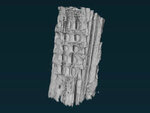
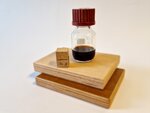
Anyone who wants to develop sustainable materials from wood needs to have a good understanding of its structure. A new sample capsule from the Thünen Institute makes it possible to visualise tiny wood structures under strong X-ray radiation – without damaging the sample.
In September 2025, the Journal for Nondestructive Evaluation published the article "Evaluation and Mitigation of Domain Shift Impact between Volumetric Submicro-Scale and Micro-Scale Computed Tomography Systems in the Context of Automated Binary Wood Classification"
With 13 theses, the twelve forestry research institutes in Germany, Austria and Switzerland take a clear stance on the topic of carbon sequestration in forests and wood products. The researchers' joint conclusion: the best climate protection and thus forest protection is a significant reduction in…
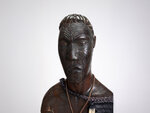
Thünen researchers went on a search for clues for a museum in Munich. To expose possible forgeries, they took a closer look at Māori carvings – or rather, under the microscope. Tomorrow, the exhibition will be officially opened.
In cooperation with the Fraunhofer Development Center for X-ray Technology EZRT and the Faculty of Applied Computer Science at the Deggendorf Institute of Technology, volumetric sub-µCT and nano-CT data were used in combination with artificial intelligence for wood identification for the first time…
People perceive the smell of wood as more pleasant when they see a suitable image of the material. This has been demonstrated by joint studies conducted by the Thünen Institute of Wood Research and the Leibniz Institute for Work Research.