
Institute of

HF Wood Research

Māori carving under the microscope

Thünen researchers went on a search for clues for a museum in Munich. To expose possible forgeries, they took a closer look at Māori carvings – or rather, under the microscope. Tomorrow, the exhibition will be officially opened.

A bust carved from black wood with many decorations on the face.
© Museum Fünf Kontinente/Nicolai Kästner

For the Māori people of New Zealand, carving connects the present with the past.

Munich/Hamburg. Sometimes science is like an adventure trip: tomorrow, an exhibition of carvings by New Zealand's Māori people will open in Munich. Beforehand, it was necessary to check whether the valuable ritual objects were actually genuine. Gerald Koch and Immo Heinz from the Thünen Centre of Competence on the Origin of Timber investigated this on behalf of the Five Continents Museum.

For the Māori people, wood is more than just a material: in indigenous culture, many carvings are considered to be animated and form a connection to deceased ancestors. However, there are numerous fakes circulating in the art trade. Out of respect for these valuable cultural assets, the Munich museum used historical photos and documents to reconstruct the route the works took to Europe. The wood analyses carried out by the Thünen Institute provided an important piece of the puzzle in clarifying the origin of the carvings.

"Holding specimens of these works of art in our hands was something very special for us. Everyone put their heart and soul into this project", says Gerald Koch, head of the scientific wood collection at the Thünen Institute.
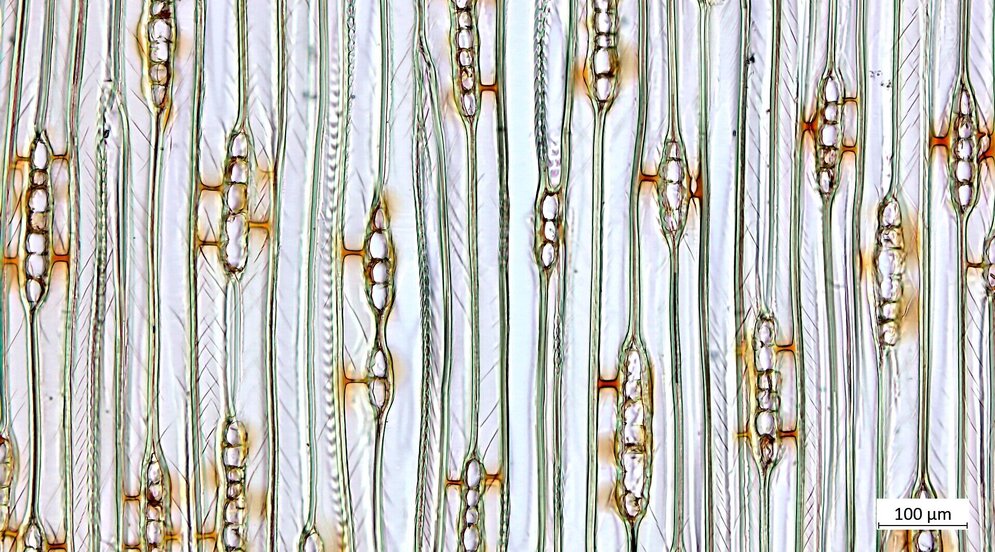
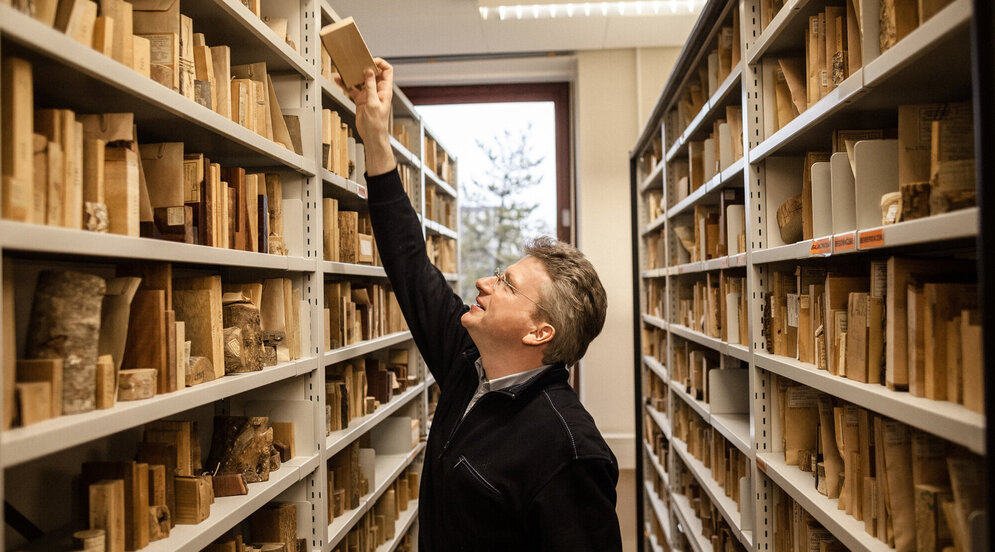
Even though the Bergedorf scientists had often dealt with valuable items, examining the carvings was a delicate task for them. On the one hand, the question of authenticity was constantly in the air. On the other hand, only the smallest chip samples could be taken from the sensitive cultural artefacts. Sergej Kaschuro, an experienced technical staff member, took samples from the exhibits in the Munich museum with the utmost care. The Thünen staff prepared wafer-thin preparations and analysed the delicate wood structures using microscopes. They compared these with countless samples from their institute's own wood collection and with international databases. In the end, the Thünen researchers confirmed that all the wood came from the traditional settlement area of the Māori. "That was a relief," says Gerald Koch.

The Thünen Institute of Wood Research is one of the world's leading institutions in the field of anatomical wood species identification. The xylotheque at the Thünen Centre of Competence on the Origin of Timber stores more than 12,000 wood species and 25,000 microscopic preparations, making it one of the largest wood collections in the world.

The exhibition "He Toi Ora. The Soulful Art of the Māori. In the Footsteps of Carvings" will open on 17 October 2025 and will then be on display at the Museum Fünf Kontinente in Munich until 10 May 2026.

Contact

Institute of Wood Research
Scroll to top