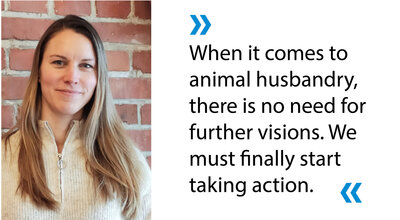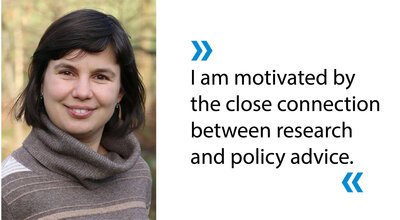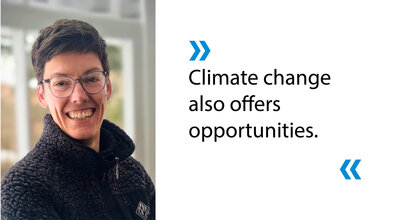
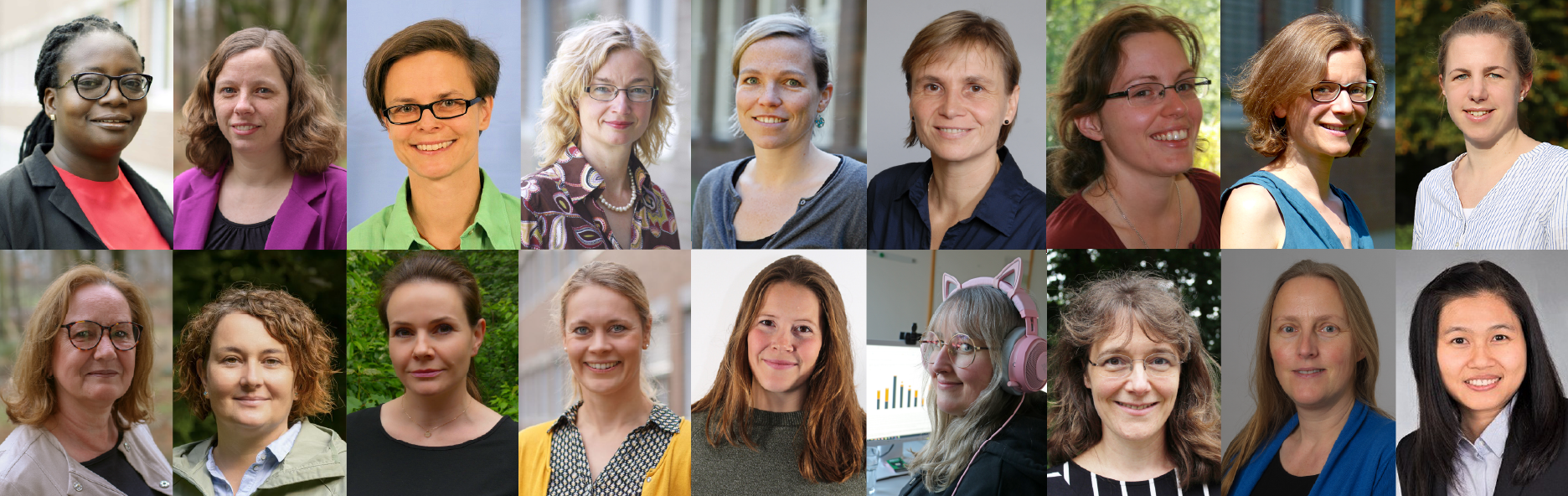
Short portraits
February 11 is the International Day of Women and Girls in Science. The UN uses it to promote gender-equal access to careers in science. The Thünen Institute supports this cause. To promote gender equality and family-friendliness in the workplace, we have also been participating in the "audit berufundfamilie" since 2021.
On this page, female scientists and technicians at the Thünen Institute provide insights into their work. The examples are intended to encourage women to pursue a career in science, but not to hide the sometimes difficult working conditions.
On January 1, 2025, there were 1,180 employees, 631 of them women. Of the 185 employees in leadership positions, 31.9 percent are currently women.
This year, to mark the International Year of Women in Agriculture, we are introducing two female scientists from the Thünen Institute of Organic Farming. We are also profiling two female scientists who are conducting research into water management for the future – in line with our current focus on water.
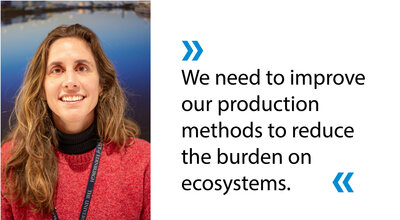
Women in science - further portraits
Expert in global beef production and talented linguist
She speaks four foreign languages, two of them fluently. "I've always been fascinated by looking beyond my own horizons," says Katrin Agethen. Travel and agricultural processes have been her passions since her childhood on a farm in East Westphalia. During her studies and in her first job, she repeatedly seized the opportunity to go abroad. Stays in France and Brazil reinforced her desire to expand her international network and become even more involved in global agricultural research.
This desire brought her to the Thünen Institute of Farm Economics in 2018. Initially, the doctoral candidate worked on a project investigating how global beef production can function in the face of current climate issues and political requirements. Since 2020, she has been researching these questions in a permanent position.
Professionally and privately, joining the Thünen Institute marked the beginning of an eventful period for the young scientist. Travelling to conferences and spending time abroad are part of her work and therefore also part of her life. This now also includes a child. Is it possible to combine international research and family life? She never asked herself this question. "I set new priorities and found a balance. It's important to know what you want, and then you'll find a way!" New tasks involving personnel responsibility at the institute are among the latest welcome challenges for Katrin Agethen.
The scientist at the Thünen Institute for Market Analysis lives on two continents
Mavis Boimah has just spent a month with her family in Ghana. For the past three years, she has been living two lives: her professional life in Braunschweig at the Thünen Institute of Market Analysis and her family life in Ghana. Strictly speaking, she even commutes regularly between Ghana, Germany and Senegal, which she visits regularly for the IMMPEX project, just like her home country. On site, she interviews actors in the value chain and stakeholders in the poultry and dairy industries, as well as consumers, with the aim of understanding the impact of dairy and poultry imports on developing countries. The data forms the basis for advising, for example, the Federal Ministry of Food and Agriculture on international trade policy.
"I have always wanted to make a greater contribution to evidence-based policy solutions for the world's most pressing problems – climate change, sustainability and fairness in global agriculture. It's just a shame that my family doesn't live in Germany too." Her husband and three children live in the Ghanaian capital Accra. Mavis Boimah studied agricultural economics there and went on to earn her doctorate. She sees her family for a month about every six months. Back in Braunschweig, she participates in family life every day thanks to video chat.
Even though the goodbyes and long periods of separation are hard, she sees the positive side: "I can pursue my dream job. And I appreciate the fair and clear structures in Germany. My path is also a valuable experience for the whole family." Despite the challenges, she can imagine continuing to work in Germany. "Ideally as a family. It would be great if there were more support for family members coming over.
My advice to women in science: don't underestimate yourselves! Build your self-confidence, network with other women in the field whom you see as role models, and celebrate every milestone. Every contribution, no matter how small, is important to science. Balancing family life and career is difficult, but with good prioritisation, you can find a good balance.
Tree researcher, wood detective and liaison officer at the Großhansdorf location
What kind of wood is this made of? Dr Céline Blanc-Jolivet can answer that question. Like a detective, she determines the origin of wood using DNA testing in the laboratory. In addition to this practical work, she is involved in numerous projects at the Thünen Institute of Forest Genetics, such as ForGer, which aims to preserve the genetic resources of trees as an important factor in climate adaptation. Constant innovations in methods and feeding large databases require time and a good overview.
She has to keep it at home too – that's where she manages her family of five. For Céline Blanc-Jolivet, one thing has always been clear: "I want to be a scientist and be there for my children." In order to keep up with her projects, she decided to take her first child to the office with her. "It was new and unfamiliar for everyone. But it allowed me to show that it is possible to be a mother and conduct research!" She is keen to set such examples and pave new paths for her female colleagues. That is why she has also volunteered as a union representative at the Großhansdorf site. She has set herself the goals of more flexible parental leave regulations, better home office options and greater trust for female scientists with children. “Corona has improved home office options, but there is still a long way to go before a CV like mine is taken for granted.”
Céline Blanc-Jolivet comes from Fontainebleau near Paris and studied agricultural sciences in Montpellier. She completed her doctorate in ecology and evolution in Switzerland in 2006. She has been working at the Thünen Institute of Forest Genetics since 2007.
Expert on plastic in the environment

Over the past five years, Elke Brandes has opened up a whole new field of work for herself with the topic of water protection, which led her to the Thünen Institute of Rural Studies as a scientist in 2017. Today, the doctor of biology is an expert in the still relatively young field of research into plastics in the environment.
The MicroCatch_Balt and PLAWES projects, which she has been supervising since 2017, came to an end last year – with exciting findings. For the first time, the spatial distribution of microplastic inputs in agricultural soils was estimated, both nationwide and in detail for the Weser and Warnow river basins. Elke Brandes also uses social media to share her scientific findings and network. In order to continue her research on microplastics, she recently submitted a project application to the DFG.
Science or business? Elke Brandes knows both sides. After completing her doctorate in 2007 at the Institute of Forest Botany and Tree Physiology at the University of Freiburg, she worked for medical companies for several years. However, she returned to research in 2013. Before joining the Thünen Institute, she conducted research at Iowa State University in the USA on the effects of diverse agricultural landscapes on the environment and the economic efficiency of farms.
Scientist and laboratory manager at the Thünen Institute of Agricultural Climate Protection

Stable isotopes are a constant feature of Caroline Buchen-Tschiskale's research work: the 36-year-old heads the laboratory for stable isotope analysis at the Thünen Institute of Agricultural Climate Protection. Her work focuses on investigating isotope frequencies in air, water, soil and plant samples. The stable isotopes she studies help to improve our understanding of the processes involved in carbon conversion and greenhouse gas formation in soils.
The agricultural and environmental scientist had already been working with stable isotopes in her master's thesis as part of a DFG research group in the Philippines. Her dissertation, which also included field trials with the Lower Saxony Chamber of Agriculture, led her to the Thünen Institute. Here, she used stable isotopes to investigate nitrogen conversion and the resulting gaseous losses in the form of nitrous oxide (N2O) and dinitrogen (N2) during grassland renewal and conversion to maize. She then moved to ZALF as head of the Stable Isotope Laboratory. "I defended my dissertation on Friday and started in Müncheberg on Monday," the scientist recalls. Two years later, she returned to the Thünen Institute to coordinate the GülleBest joint project.
In May 2021, she took over as head of the stable isotope analysis laboratory and has been permanently employed there ever since. "I can organise my work with maximum flexibility, which is what I like about the Thünen Institute," says the scientist, who works three days a week in Braunschweig and two days from home. However, if necessary, she also goes to the laboratory on a home office day, because regular communication with her team is very important to her: “That's the only way the laboratory and teamwork can function.”
Despite her laboratory work, Caroline Buchen-Tschiskale continues to work as a scientist on various projects – currently including two BLE and one DFG projects. "The great thing about my job," says the scientist, "is that, unlike most laboratory managers, I am not only responsible for the analyses, but can also accompany the sample from its collection in the field to its evaluation."
Agricultural economist with a passion.
Zazie von Davier is good with numbers. This is a skill she definitely needs in her position at the Thünen Institute of Business Economics. Her research focuses on the competitiveness of agricultural businesses. Above all, however, the agricultural scientist investigates the challenges women face in agriculture, such as whether their pensions will be sufficient.
She has been fascinated by agricultural economics since her studies. "I actually wanted to become a farmer," she says. After graduating, she initially worked as a consultant for agricultural businesses. But she missed reading, learning and researching. So she decided to do a PhD at the University of Göttingen on performance-related pay in agriculture. She had her first child during this time. "I went from the office to the hospital and was back there ten days after the birth – with my baby," reports the mother of three. "I had a lot of support, it was a wonderful time," she says today. "But of course it was also very exhausting," she adds. The following years as a freelancer, during which she worked for the Thünen Institute, the FAO and the University of Göttingen and had her second and third children, were particularly hard. But her passion for her work remained.
This is probably what motivated her to join the Thünen Institute in May 2015. Shortly before the first coronavirus lockdown in 2020, she and a team of six people launched one of her most cherished projects: a comprehensive study on the situation of women in agriculture. She loves working directly with people on farms and gaining a tangible understanding of their living conditions. She sometimes finds it difficult to separate her work from her own family life. "The research continues, even after working hours," says the scientist. As a mother, the opportunity to work more from home has made her life much easier. It would be even better with a larger team that can cover for each other in an emergency. This would empower women and mothers in science. Because: “I don't have the coolness to just leave my work behind when the children or I are sick.”
Former KIDA director and family person

Wenn es um Fragen zu Künstlicher Intelligenz (KI) geht, sind Forschende bei Nathalie Gottschalk richtig. Netzwerken, KI-Wissen bündeln und damit Wissenschaftler*innen das Arbeitsleben erleichtern, zählen zu ihren Aufgaben als Leiterin des KIDA-Projektes mit Sitz am Thünen-Institut.
„Seit ich die Vollzeitstelle habe, haben mein Mann und ich die Rollen getauscht – er arbeitet in Teilzeit und kümmert sich wesentlich mehr um Kinder und Haushalt“, erzählt die 36-jährige Zweifachmama. Dass Väter von kleinen Kindern mehr Sorgearbeit als Mütter übernehmen, ist noch immer nicht selbstverständlich: „Oft reagieren Mütter in der Kita überrascht, wenn ich bei Verabredungsanfragen für meine Töchter sage, dass das bei uns der Papa macht. Wir regeln die Kinderbetreuung auf Augenhöhe und möglichst flexibel.“
Nach dem Studium der Lebensmitteltechnologie in Berlin zieht sie mit ihrem Partner nach Braunschweig, beginnt ihre Doktorarbeit an der Technischen Universität in der Verfahrenstechnik und bekommt ihre beiden Kinder. „Eine Uni-Dozentin meinte einmal, die Promotionszeit sei die beste Zeit zum Kinderkriegen. Das würde ich so heute nicht mehr unterschreiben“, sagt Nathalie Gottschalk rückblickend. Als einer von wenigen Müttern gelingt ihr der Spagat zwischen Promotion in Teilzeit und Kindererziehung inklusive zwei Elternzeiten. Ihr Mann unterstützt sie und reiste ihr z.B. mit dem Stillkind zum Projekttreffen ins Ausland nach. Für sie sei immer klar gewesen, dass es geht: engagiert dem Beruf nachgehen UND eine gute Mutter zu sein – egal, ob in Teil- oder Vollzeit.
Was sie sich für „Frauen in der Wissenschaft“ mit kleinen Kindern wünscht? „Mehr Akzeptanz von Müttern untereinander, ausreichend Betreuungsangebote und weniger Vorurteile seitens der Arbeitgeber! In Bewerbungsgesprächen wurde ich oft gefragt, wie ich das mit den kleinen Kindern schaffen will, mein Mann noch nie.“
Head of the Baltic Sea sprat acoustic survey

When a young scientist leads one of the most important research expeditions of the year on a commercial fishing vessel, it is still not an everyday occurrence. In 2021, fisheries biologist Stefanie Haase (27) from the Thünen Institute of Baltic Sea Fisheries led the International Baltic Sprat Acoustic Survey as expedition leader on the Kristin, the most modern vessel in the German fishing fleet.
Clear statements and a wealth of knowledge have helped her to counter prejudices against women on board. She also contributes this to two ICES working groups on stock assessment for Baltic sprat. The fisheries biologist has been active at the Thünen Institute of Baltic Sea Fisheries since her first internship at the age of 14. And she is no longer an exotic figure in fisheries research there: female scientists now occupy 50 per cent of the positions.
Stefanie Haase has written a sea diary about her experiences on the fishing vessel.
Balance comes with enjoying your job and family.

Water management and land use, climate change and adaptation strategies in agriculture – Dr Claudia Heidecke has been working on these essential issues of our time for several years. As deputy head of the administrative department, she uses her expertise to advise policymakers.
"This interface function between science and politics has always been of particular interest to me. It is challenging because I am often confronted with a multitude of topics at the same time," reports the scientist.
After completing her doctorate at the University of Bonn in 2009, she continued her scientific career at the Thünen Institute. Initially, she focused primarily on issues of land use and water management in agriculture. Over time, topics such as climate adaptation and climate protection were added. These topics are now at the forefront of European and international discourse. This also includes providing technical support to the Ministry during the annual international climate negotiations.
Management tasks, business trips, scientific work and family life with three children demand time and energy. "My family and my job are incredibly enjoyable. With the understanding I receive at the institute and from my team, and with the support of my family, I somehow manage to juggle everything. That's why it usually works out quite well," she says. You have to accept that you can't always meet everyone's expectations. Children get sick sometimes, for example, and then you have to reorganise.
In the early years, it was helpful to have the nursery on the institute premises. "Without good, reliable childcare from an early age, I don't think it's possible for both parents to work full-time," she says. Nowadays, working from home makes it easier to manage time in everyday life. However, working after 9 p.m. is not possible. This is a rule that doesn't quite fit Claudia Heidecke's reality: "My working day often continues after the children have gone to bed."
Mediator between computer science and information
Everyone at the Thünen Institute knows the woman with the pink cat ears on her headphones: when there's a problem with the website, Dana Heinemann knows where to find the solution. She is the mistress of the editorial system and often enough the saviour in times of need, a mediator between IT and information.
Originally, the Wolfsburg native wanted to catalogue and manage books. And because she is passionate about science, the library of a research institute was exactly the right place for her to work. But even during her training as a media and information services specialist, it became clear that librarianship had to make the leap into the digital age. What's more, Heinemann's training ended just as the Thünen Institute was founded and a new website was needed. She switched to the IT department. Since then, she has been training web editors and ensuring the website is accessible, among other things – all online. "Sometimes I miss dealing with the public," says Dana Heinemann. “But theoretically, 100 web editors could call me every day.”
It is important to her that she can continue to develop despite working for the same employer. She studied media sciences and communication design alongside her job. She managed the second relaunch of the website as project manager. However, she taught herself much of what she knows through professional exchanges in forums. "I appreciate the creative freedom and flexibility of research work," she says.
Dana Heinemann is still an exception in the IT industry: only just under 17 percent of jobs in Germany are held by women. This puts our country in the middle of the pack among OECD countries. Still, Dana Heinemann has a female boss. At the Thünen Institute, the Centre for Information Management is headed by a woman.
Trainer of chemical laboratory assistants
Researching chemistry has always been her dream. Marina Heuer has fulfilled this dream in a way. As a trainer of chemical laboratory assistants, she has been passing on her knowledge to trainees for the past eight years. "What I particularly enjoyed about this job was encouraging and challenging young people. And, of course, conducting research as part of doctoral projects," she reports. She will be retiring in the summer of 2023.
As a schoolgirl, she would never have believed that she would one day gain a foothold at a research institution such as the Thünen Institute. In the early 1980s, she abandoned her desire to study chemistry, instead training as a chemical laboratory assistant and working in the field of environmental chemistry. “I was afraid of it. Studying chemistry was a male domain back then. In general, I have observed throughout my life that girls and women shy away from pursuing leadership positions or scientific careers. But they can do it just as well!”
At the Thünen Institute of Agricultural Technology, she initially created the training framework for chemical laboratory assistants in 2009. "The gender ratio of candidates was always balanced, and there were always many women among the doctoral students," she reports. In 2022, the last of Marina Heuer's trainees took their final exams. “The training programme will no longer exist in its current form. However, I can imagine that a new training programme will be developed under the dedicated female leadership of the institute, but this time with a digital focus.”
What advice would she give to women in science? "Don't just be hard-working, be visible too. And stick together as women in science, regardless of whether you have a degree or not, whether you have children or not, whether you have a husband or wife or not."
First female driver at the Thünen Institute

Babette Kania reliably and calmly drives the president and other employees to their destinations. Her workplace is the president's official car, a well-maintained black Mercedes 300E. Babette Kania has been working as the first female driver at the Thünen Institute since 2013. She is no stranger to being the only or one of few female colleagues, having previously worked as a driver at the Max Rubner Institute in Kiel and on behalf of the Berlin Chancellery.
"After school, I actually wanted to join the navy on a merchant ship," says the 61-year-old from Potsdam, who grew up in the former GDR. "But I wasn't allowed to because I had relatives in the West." Instead of going on board, she did an apprenticeship as a baker, got married, had her daughter and nurtured a new dream: driving buses.
No sooner said than done: in her early twenties, she obtained her driving licence for lorries and buses, later trained as a professional driver and gained experience at the wheel of lorries and construction vehicles. After the fall of the Berlin Wall, she conquered the whole of Europe as a young coach driver. She drove to sunny Mallorca, Italy and the snow-covered Swiss mountains.
Among her professional highlights are coach trips abroad, a trip with the then Minister of State for Culture Bernd Neumann, and trips abroad with the Thünen President to meetings in Sweden. "It never gets boring in academia. Once, I picked up researchers from the moor near the Dutch border in the evening."
35 years in 40-tonne lorries, coaches and company cars, and accident-free – except for one collision with wildlife – an impressive record. What could possibly upset this calm frequent driver? "Not much! But driving on the left in England – I'm glad I haven't had to do that yet!" she admits with a laugh.
A scientist with clear priorities.
Families in rural areas and social inequalities are the topics that inspire Sylvia Keim-Klärner as a researcher. "I am interested in what it means for single mothers to live in rural areas. How do they experience local public services and the situation on the labour market? How do they manage to balance family and career? How do they deal with the challenges that arise from their living situation?" says the trained sociologist.
In her doctoral thesis, she examined when and why people decide to become parents. She herself had her first child while she was a doctoral student. "In our profession, it's never the right time; you can't wait until a project is completed or until you've earned an academic degree or secured a permanent position," says the mother of two. She spent many years conducting research on fixed-term contracts. In August 2018, she finally came to Braunschweig to work at the Thünen Institute of Rural Economics. Initially, this was also a fixed-term project position, but she has been employed on a permanent basis since 2021. Her research focuses on the living conditions of families in rural areas, also taking gender differences and inequalities into account. She has never worked part-time. As a sociologist, she knows: “Part-time work means a part-time pension. That's not an option.”
Throughout her career, it has always been important to her to follow her heart. "There isn't a single day when I get up and think, 'I don't feel like going to work'," she says. This passion for her field always shines through in conversation.
Her three cornerstones for balancing science and family: reliable childcare, family-friendly employers and a supportive partner. "Leaving science was always an option for me if necessary. At the same time, I wanted to stay," says Sylvia Keim-Klärner. For her, balancing work and family life is a matter of setting the right priorities and having family-friendly structures in place. Modern working time regulations are essential: "The flexibility we now have to work from home is worth its weight in gold," says the scientist. Only a flexible system allows working parents to respond to approaching project deadlines, last-minute tasks or unexpected childcare issues.
Pioneer in the field of plant genetics
Trees fascinated Birgit Kersten even as a child during walks in the forest. This interest led her to study biology in East Berlin in the 1980s. At the same time, she had her two children. "In the GDR, it was common to start a family early. With the childcare available, it was quite feasible!" That's why she never gave up science. Her children have now left home, but the objects of her research remain. Since 2010, she has been working at the Thünen Institute of Forest Genetics on projects such as TaxGen, which aims to decode the genome of the European yew (Taxus baccata). The molecular biologist is particularly interested in the genetic basis of sex determination. She has done truly pioneering work in this field in researching the poplar genome. Together with two colleagues, she received one of the 2021 Thünen Research Awards for this work.
She had already been a pioneer in research once before – during her postdoctoral project in the field of plant protein chips at the Max Planck Institute (MPI) for Molecular Genetics: "In 2005, we were the first to present results in this field and published them before our American colleagues!" In 2006, Birgit Kersten switched to plant bioinformatics and took over as head of the GABI primary database at the MPI for Molecular Plant Physiology.
The upheavals following the fall of the Berlin Wall in 1989 and commitments to her job and family caused delays in her research career. In 2000, she completed her doctorate at the Charité hospital in Berlin. Seventeen years later, she qualified as a professor at the University of Potsdam. "Fortunately, I always had mentors, colleagues and supervisors who supported me!"
After numerous temporary projects, Birgit Kersten appreciates her permanent position as a research assistant. She also teaches as a private lecturer at the University of Hamburg. "I find teaching exciting. And it officially entitles me to supervise doctoral students externally."
Award-winning scientist with an analytical eye
What holds our society together? What are the effects of increasing polarisation? Who participates in it, and who is left out? Do citizens trust their political system? Do they identify with their political community?
As a qualified sociologist and political scientist, Tuuli-Marja Kleiner seeks answers to precisely these questions. She conducts research on democracy, social cohesion and participation – and, since joining the Thünen Institute, with a particular focus on rural areas.
What brought her to the Thünen Institute back then? The desire for better working conditions and a better work-life balance. Everyday life at university was characterised by fixed-term contracts and fears about the future. She no longer wanted to accept these conditions.
Tuuli-Marja Kleiner is a scientist with all her heart: she has always wanted to understand what holds society together at its core and why people act the way they do. For her, the world of social interaction is like a giant jigsaw puzzle: "Every time you understand another piece of the puzzle, it gives you a thrill," she says. But intellectual stimulation alone is not enough for her. What she finds difficult to bear are narratives that are accepted and propagated without question. She sees this as a central task of science: “It is part of our mission to compare widespread assumptions with scientific findings and, if necessary, to tear down the rose-tinted glasses.”
Tuuli-Marja Kleiner is known for critically questioning common narratives – an attitude that does not always meet with approval and sometimes meets with resistance. However, her habilitation at Goethe University Frankfurt, several academic awards and her membership in seven expert committees show that her work is widely recognised in professional circles.
Tuuli-Marja Kleiner also sees room for improvement in the situation of women in academia. Gender studies show that discrimination in funding, publications and appointments continues to be a problem. But it is not only structural changes that are needed, but also more female role models: women who hold important positions and encourage younger female scientists. Mentoring programmes are also needed to show career paths and help young women find their way in the academic system. This will help future generations.
For the future, Tuuli-Marja Kleiner would like to see genuine awareness of discrimination that goes beyond mere lip service – not only towards women, but also towards socio-economically disadvantaged people, people with a migrant background and people with disabilities. “It would be nice if society could recognise that inclusion is a win-win for everyone – not just in science, but across the board.”
Research is what I enjoy doing.

Women and forestry work – this is a challenging combination, especially in countries in the Global South: women often work without contracts or social security and for lower wages. At the Thünen Institute of Forestry in Hamburg-Bergedorf, Dr Rattiya Lippe is developing methods to estimate the number of people employed in the global forestry sector. Another focus of her research is the analysis of decent working conditions.
The fact that the forestry sector became her field of research also has to do with the German Academic Fixed-Term Contract Act. Born in Thailand, she studied and earned her doctorate in agricultural economics in Bangkok. The associated project focused on consumer preferences for fruit and vegetables and household spending on consumer goods. It was funded by the German Research Foundation (DFG) through the University of Hohenheim. After completing her doctorate, she lived in Germany and worked as a postdoc at Leibniz University Hannover. "For four years, my husband and I commuted between Stuttgart and Hannover. It was very exhausting," she says. Only mutual understanding made the situation easier.
After her postdoctoral phase, the era of fixed-term contracts in academia came to an end. Rattiya Lippe took a brief detour into the private sector before finding a position at the Thünen Institute of Forestry in 2020. "I am an economist and I want to continue researching. That's what I enjoy doing," she says. Pursuing a career in academia is challenging, and in some areas even more so for women than for men. In some countries, for example, they have to make more preparations for their field research for safety reasons. But you grow into these careers – if you enjoy what you do.
On the trail of lost food
A strawberry yoghurt that has passed its best-before date in the back corner of the fridge, or crooked cucumbers that do not meet the standard and never make it to the vegetable section: these are the images that come to mind for many people when they think of food waste. In addition, many believe that food waste is primarily a problem of affluence. However, food waste does not only occur in wealthy households and countries. Even in communities where hunger and poverty prevail, people throw away edible food. Sharon Mada is researching why this happens. She is a doctoral student at the Thünen Institute of Market Analysis and works in the Sustainability and Food Loss and Waste working group.
For her research at the Thünen Institute, the scientist is taking a close look at street markets in Zimbabwe. There, she measures the amount of discarded bananas, cucumbers and leafy vegetables, among other things. She also conducts surveys and field observations and asks local residents to document their household waste in kitchen diaries. Her analyses are providing new insights into why people on low incomes waste food. Sharon Mada shows that food is not only discarded because of abundance. Her findings illustrate that socio-cultural norms and values also play a major role. For example, people often cook and serve too much food and throw away the leftovers. In addition, there is a lack of refrigeration facilities – both for private households and for retailers. In Africa in particular, there is a lack of reliable data on where, why and how much food is actually thrown away. "But we need this knowledge in order to take effective action to ensure that there is enough food for everyone, that water and energy are used more efficiently, and that climate protection is improved," says the researcher.
Family and nature played an important role in the scientist's childhood, which she spent growing up in Zimbabwe's capital, Harare. She discovered her enthusiasm for research during high school. She says: "I was fascinated by how climate change and human activities are linked, for example." After graduating from university, she studied geography, completed a master's degree in ecology and nature management, and took up a position as a university lecturer in Zimbabwe. Sharon Mada is now pursuing a doctorate in agricultural sciences at the Thünen Institute, continuing to explore the topics that have been close to her heart since childhood. Her two scholarships are proof of her excellent scientific work. For her doctoral studies, she received a three-year doctoral scholarship from the Catholic Academic Exchange Service (KAAD). In 2024, she was awarded the Herman Weber Scholarship, which is given to KAAD scholarship holders who excel in academic research and in their commitment to their home country and the KAAD community.
Even after completing her dissertation, Sharon Mada wants to continue her research on food loss in the Global South. She knows that "in order to reduce food waste, we need to understand its causes." She wants to use her research to find effective solutions. A first step would be to work with local communities and design public awareness campaigns. For the future, she hopes that her research findings will be incorporated into policy so that less food is wasted, even in low-income communities.
Heads of departments at the Thünen Institute

Hiltrud Nieberg (60) and Christina Umstätter (48) head two of the 15 specialist institutes at the Thünen Institute. The proportion of women among their scientists varies greatly. At the Institute of Business Economics, which Hiltrud Nieberg has headed for twelve years, it is almost 50 per cent. At the Institute of Agricultural Engineering, which Christina Umstätter took over in 2021, there are only two women among eleven research colleagues with permanent positions.
Agriculture still seems to be a male domain. According to the agricultural census, 36 percent of those employed in German agriculture are female. But only one in nine farms is run by a woman. However, the figures in the agricultural statistics do not do justice to the actual role of women in agriculture. This is shown by the initial results of a study on the living and working conditions of women in agriculture, which is being conducted jointly by the Thünen Institute and the University of Göttingen.
The picture is similar in academia: although many women study agricultural sciences, accounting for around half of all students, the higher the position, the fewer women there are. "Men also dominate agricultural committees, and I am often one of the very few women at discussion events or meetings," says Hiltrud Nieberg. However, she has also been involved in committees such as the Future Commission for Agriculture and has been a member of the Scientific Advisory Board for Agricultural Policy, Nutrition and Health Consumer Protection at the BMEL for many years – committees with almost equal representation.
According to Hiltrud Nieberg and Christina Umstätter, promoting women in science means above all encouraging women to choose a career in science and to gain the necessary qualifications. "Women need much more support in building their self-confidence; they too often doubt their abilities," says Christina Umstätter, who would like to see more creative freedom when filling new positions. This would benefit women in terms of higher qualifications.
Both institute directors see their own positions as important role models. Their message to young female scientists: "Be bold, always be curious, and don't let old role models stop you from pursuing your goals."
Has been managing the finance department for 15 years

Carolin Nodewald has been involved in research throughout her entire professional life – albeit from a different perspective than her colleagues at the institutes. She has been head of finance at the Thünen Institute for 15 years. She has been familiar with the figures and balance sheets of one sub-division since 2005, long before the Thünen Institute existed.
Immediately after graduating with a degree in public administration, the then 21-year-old took over as head of the budget at the Federal Research Centre for Forestry and Wood Industry (BFH), the predecessor of today's four forestry and wood institutes. "It was unusual, but a great opportunity that I seized. Fortunately, I had the support of my team, even when my position was suddenly eliminated three years later," she reports.
In 2008, the BFH, the Federal Research Centre for Agriculture (FAL) and the Federal Research Centre for Fisheries (BFA-FI) merged to form the Thünen Institute, headquartered in Braunschweig. Nodewald, who was 24 at the time, reoriented herself, developed new structures for the finance department, such as the travel expense office in Hamburg-Bergedorf, and spent six months networking at the BMEL in Bonn.
When she was offered the position of head of the budget for the entire Thünen Institute in 2009, she became pregnant for the first time. Without hesitation, her partner followed her for a second time and took parental leave. "We thought it would work out somehow," she says. In her new dual role as manager and mother, she struggled with prejudice and role models for the first time. “As a part-time dad, my husband had a hard time, and for many people around me, it was frowned upon not to be with the baby.”
However, she stays focused on her path, rallies her team behind her and has two more children. Would she do anything differently today? "No, but I do have self-doubts. Women just tend to worry about everything more than men do."
Part time deputy
For a long time, Dr. Janine Pelikan from the Institute of Market Analysis was the only deputy director in one of the 15 Thünen Institutes. For a few weeks now, she has had a colleague in Dr. Anja Kuenz at the Institute of Agricultural Technology. "I really enjoy the scientific work. And I enjoy being with my colleagues," says Janine Pelikan. But she emphasizes, "I also have a family that is a great support to me and provides a balance to the many challenges. It helps me to do a good job. Balancing my family and work is very important to me."
To ensure that the balance succeeds in everyday life, the family work is divided equally between the shoulders of father and mother. Her husband, also a scientist at the Thünen Institute, works part-time like Janine Pelikan. They both watch each other's backs so that, for example, business trips lasting several days are possible. "Of course, there is always a bit of time missing somewhere," says the agricultural economist, whose research area is international agricultural trade. Basically, she says, the good cooperation with Institute Director Dr. Martin Banse and with the team at the Institute of Market Analysis is important for her work. More women than men work there, and overall there is a great diversity in terms of age structure and nationalities among the employees. "This diversity enriches the work and promotes understanding for a wide variety of lifestyles," says Pelikan.
Before Janine Pelikan came to what is now the Thünen Institute in 2004, she studied agricultural sciences in Kiel and environmental economics for one semester in Norway, and earned her doctorate in Giessen. While she was still working on her doctorate, the then director of the institute and current president of the Leibniz Association, Prof. Dr. Martina Brockmeier, offered her a permanent position. For Janine Pelikan, her former boss is still an important role model today.
From development cooperation in Mozambique to funding policy in Germany.
Research for the sake of knowledge alone? That would not be for Petra Raue. She wants her work to bring about change. Being close to where policy is made, interacting with decision-makers in ministries and on the ground – that is what she values as a scientist.
However, Petra Raue's path into research was not predetermined, as she grew up as a working-class child in the Ruhr region. "Why do you want to study? You're going to get married anyway." She often heard comments like this. And yet, despite discouragement and a lack of role models, she followed her own path: after starting her career as a pharmaceutical technical assistant and obtaining her high school diploma through adult education, she studied agriculture. Her dream was to work in development cooperation. The birth of her daughter during her studies and her role as a single parent did not prevent her from achieving her goal: her first position as a graduate agricultural engineer was as the manager of a project in Mozambique. There, she supported local farmers in organising irrigation for vegetable cultivation and erosion control.
Concerns about her daughter's school career eventually led her back to Germany. Petra Raue found a new field of expertise at the Thünen Institute (then the Federal Agricultural Research Centre). For 25 years now, she has been working with other scientists to evaluate the impact of rural development programmes. She analyses whether the programmes are having the intended effect and how they can be improved.
She now has a particular focus: gender equality. "How can support policies be designed to give equal consideration to the interests of women and men?" is a central question in her work. At the same time, she knows from her research that there is still a long way to go before equality is achieved. "Even today, men in decision-making bodies often still have no understanding of the situation of women. That's why women's issues are not sufficiently reflected in policy," she says. If there were one change her research could bring about, it would be a quota for equal representation on decision-making bodies in rural areas. The scientist is convinced that this is necessary to ensure that different perspectives are taken into account.
What does Petra Raue want for women in science? She believes flexibility is important, rather than rigid working hours, so that research and family life can be successfully combined. And fathers should be supported in taking more than two months' paternity leave. Above all, however, she wants women to have more space. Women should occupy spaces with the same naturalness as men – and their assertiveness should be valued by society in the same way as that of men.
Equal Opportunity Commissioner for more than 20 years

Birgit Rönnpagel knows almost everyone who is hired at the Thünen Institute. As Equal Opportunity Commissioner, one of her most important tasks is to ensure that all applicants are treated equally in job interviews. The workgroup manager now has more than 20 years of experience as an Equal Opportunity Commissioner at the Thünen Institute, in addition to her main job at the Center for Information Management.
What has changed during this time? "Unfortunately little, women are still underrepresented in senior positions at the Thünen Institute," says Birgit Rönnpagel. There are many reasons for this: work-life balance, part-time work and the fact that women are less likely than men to apply for management positions. Birgit Rönnpagel and her deputy want to discuss this and other topics with the Thünen Institute's female employees in various workshops from fall 2024 and develop ideas on how job advertisements can be made more women-friendly and how potential female applicants can be encouraged to take on management responsibility. Together with a gender equality plan for the Thünen Institute, which provides for concrete measures to promote gender equality and is to be updated shortly, Birgit Rönnpagel hopes that the underrepresentation of women can be visibly reduced in the coming years.
The forest adaptation expert knows how the trees are doing
When trees talk, they talk to Dr. Tanja Sanders: In the Brandenburg forest, there are trees that report daily to the scientist and her 17-member team at the Thünen Institute of Forest Ecosystems how they are doing. One of these trees even published its condition via Twitter for a while. Among other things, methods for electronic data transmission, but also remote sensing via drone and satellite, are being tested at the intensive measurement site in Britz.
Knowing how the forest is doing has become essential in times of climate change. Which tree species are adapting to the changes, and how quickly? Sanders, a geographer and sociologist, has been working on these kinds of questions about forest adaptation for her entire research life. Yet she actually wanted to go into development aid or to work for a newspaper. "I wanted to make a difference either way," she says. Then, however, the trees found her. After graduating, she moved to the United Kingdom to help set up a tree ring lab and begin her doctorate. Since 2011, she has been working at the Thünen Institute for Intensive Forest Monitoring, and since 2018 as the head of the Ecology and Forest Dynamics Unit.
Tanja Sanders has successfully made a career in science, although she has raised her two sons alone for stretches. She takes a critical view of the conditions for this: "Women are qualified enough, but working in science companies is uninteresting, too many business trips, too many evening appointments, too many things to keep in mind at the same time." Most family work still falls on mothers, he said. At the same time, women and careers are a difficult duo. "Women tick differently than men. They rarely actively position themselves for a leadership role," Sanders says. That's why she tries to make men aware not to overlook women and actively motivate them to make career leaps. That's why she also gets involved with young people, she says, imparting knowledge about her research to them, whether live on site or via video chat. Tanja Sanders wants to make a difference, still.
About the diversity of the potato to biodiversity monitoring

Through the diversity of the potato and smallholder livelihoods, which she has researched primarily in South America, Africa and Europe, geoecologist Diana Sietz has become a specialist in the interactions of biodiversity, food and climate, and agroecological transformation. As such, she is one of the main authors of the Nexus Assessment of the World Biodiversity Council IPBES. She also leads the Archetype Analysis in Sustainability and Land Governance Research working group of the Global Land Programme. Her research has taken Sietz to the Potsdam Institute for Climate Impact Research (PIK), the UN University - Institute for the Advanced Study of Sustainability in Japan, the International Potato Center (CIP) in Peru and Wageningen University.
With her expertise in biodiversity and policy advice, the researcher is helping to develop biodiversity monitoring for agriculture at the Thünen Institute of Biodiversity.
Work group leader in a man's world
Her path as a scientist opened up on a Portuguese fishing boat: "On the trips, I understood what it meant to make a living from fishing," says Dr. Sarah Simons. During her master's thesis at NOAA's renowned Northeast Fisheries Science Center in the U.S., she worked on bycatch avoidance in fisheries. After two and a half years abroad, she finally returned to Germany and became one of the first doctoral students at the Thünen Institute of Sea Fisheries. The result of her PhD was an innovative modeling approach that is currently being applied in international bodies for climate change impact assessment and future management measures. Since 2020, she has been a working group leader at the Institute of Sea Fisheries, primarily responsible for economic and social analyses in the fishing industry. "Finding topics that could become relevant and also doing application-oriented research - that's just my thing," says the scientist.
The start as a manager was anything but easy: Sarah Simons took over the position during the Corona pandemic and after her second parental leave. Individual coaching, flexible working hours, home office and consistent division of labor at home help her master the task. "As a mother of young children who works full time, I am an exotic in the neighborhood. And so is my husband, because we share the family chores fifty-fifty," she says with a laugh.
Her working group has grown quickly - the need to make the fisheries sector sustainable and bring environmentally friendly solutions into practice is greater than ever. "I'm proud to lead such a diverse team. We are 13 bright minds from young to experienced, men and women from diverse disciplines, from biology to social science," reports Sarah Simons. When she is deputized, she likes to rotate the deputies. That way, everyone takes responsibility for the working group and everyone has the same level of knowledge. She says she learned this from the U.S., where young people have much more equal rights in the scientific community than in Germany. Her motivation behind all this: "I want to create a fairer system.