[Translate to English:]
[Translate to English:]
Institute of

OF Baltic Sea Fisheries

News

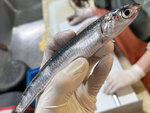
Anchovies are appearing more and more frequently in the Kattegat and are expanding deeper into the western Baltic Sea. A recent master's thesis has now systematically examined this development for the first time using long-term data series.

eine Hand hält eine Sardelle

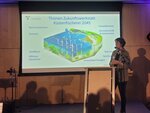
This year's annual reception focused on the question ‘What kind of future do we want to live in?’ The participating institutes took the opportunity to present their ideas and projects in short presentations.

Dr. Fanny Barz steht auf dem Podium.

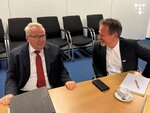
Mecklenburg-Western Pomerania's Minister for Climate Protection and Fisheries, Till Backhaus, visited Rostock yesterday to learn about the status of Baltic Sea fish stocks and the future of coastal fisheries.

Till Backhaus and Christopher Zimmermann in conversation at the Institute of Baltic Sea Fisheries

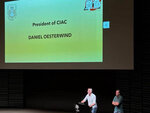
Daniel Oesterwind has become the first German scientist to be elected president of the Cephalopod International Advisory Council (CIAC). The cephalopod expert from the Thünen Institute of Baltic Sea Fisheries will head the council until 2028.

A large screen displaying: President of CIAC Daniel Oesterwind. Two men are standing next to a lectern.

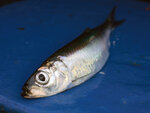
A recent study by the Thünen Institute of Baltic Sea Fisheries provides the first evidence that Atlantic herring also exhibit a so-called spawning site fidelity. This means that most herring in the western Baltic Sea return to their birthplaces, such as the Greifswalder Bodden, to spawn. This…

A herring on a blue background.

At the Thünen Institute of Baltic Sea Fisheries, Mathis Mahler is developing an early warning system for the Baltic Sea. After work, the scientist heads to training to prepare for the World Championships in Portugal as a member of the national beach ultimate team. His research and his sport have a…

Mathis Mahler playing Frisbee.

From 23 to 30 September, the Thünen Institute of Baltic Sea Fisheries in Rostock is hosting the Working Group on Bycatch of Protected Species, which this year consists of 36 experts.

Several people are standing in front of a building.

The “National Fisheries Profile Germany” provides an up-to-date overview of the structure and development of fisheries in Germany, with a focus on the social dimension. The aim is to make the special features of the sector visible and provide a scientific basis for politics and society.

Cover Thünen Report 120 – National Fisheries Profile Germany

The Baltic Sea is changing. In order to record relevant water parameters in coastal areas, we are looking for fishing companies equipped with our HyFive system to carry out regular measurements at fixed stations.

A fisherman on a small cutter holds a monitor with measurement data in his hand.

Squid are becoming increasingly important in fisheries. Landings are increasing in many European waters. In most cases, however, squid are not identified at species level.


Scroll to top