![[Translate to English:]](/media/_processed_/d/7/csm_Startseite-OF_03_c0dfd6e750.png "[Translate to English:]")
![[Translate to English:]](/media/_processed_/a/3/csm_20181116-151457-Stella-Jerome-Fischfalle-Warnem%C3%BCnde-Dorsche-im-Netzk%C3%A4fig-5691_heller_3050c72fa2.png "[Translate to English:]")

At the end of winter, researchers from Rostock set off on a special expedition: in the Greifswalder Bodden and the Strelasund, they search for and count herring larvae. The Rügen Herring Larvae Survey has now been taking place for 35 years. This spring, however, things are a little different. The researchers from the Thünen Institute of Baltic Sea Fisheries are filled with great hope. For unlike the winters of the past ten years, this winter was cold from January onwards. The Greifswald Bodden, into which the herring swim to spawn, was covered in ice for weeks. Water temperatures remained below four degrees Celsius until the end of March. It is at this temperature that the herring begin to spawn. This winter therefore more closely resembles the normal conditions of 30 years ago. The herring could – as in the past – produce a strong year class, which in turn could contribute to a rapid recovery of the stock. For many years, the productivity of herring in the western Baltic Sea has been significantly reduced because the later and warmer winters have led to a shift in phenology, i.e. seasonal processes.
The start of the survey was delayed
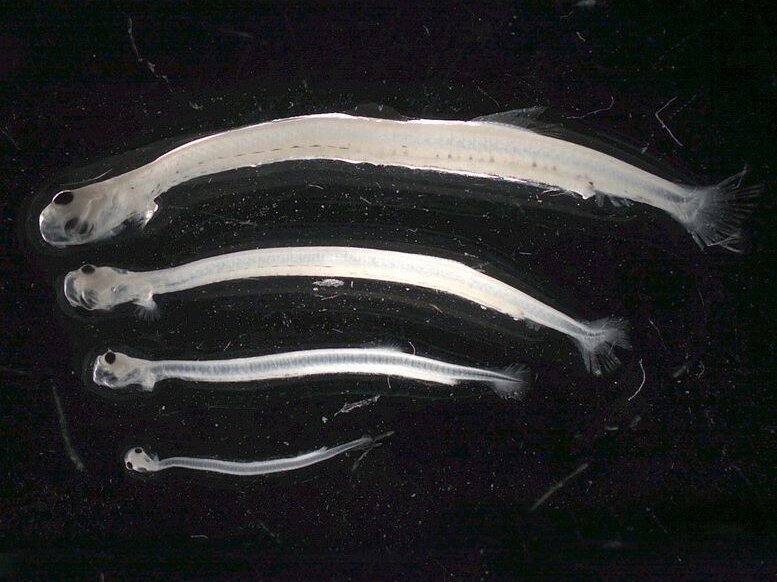
The first two surveys, carried out before and after Easter, showed that many herring had migrated to the spawning grounds, where the water temperature had risen to between five and eight degrees, but that only a few larvae had hatched. At these temperatures, the larvae take less than three weeks to develop to the stage where they hatch from the eggs as small yolk-sac larvae.
This year, however, the survey did not start until 1 April – two weeks later than planned. This was due less to the prolonged cold spell than to technical problems with the fisheries research vessel ‘Clupea’. Commissioned in 2012, the vessel has a very shallow draught specifically designed for use in the shallow waters of the Bodden. “We didn’t miss the peak spawning despite the delayed start,” says Patrick Polte, who is leading the herring larval survey. “We will now closely monitor how things develop.” This is because determining the size of the year class is crucial for assessing how fishing opportunities for coastal fisheries will develop. Reliable data will then be available after all samples have been counted in October.
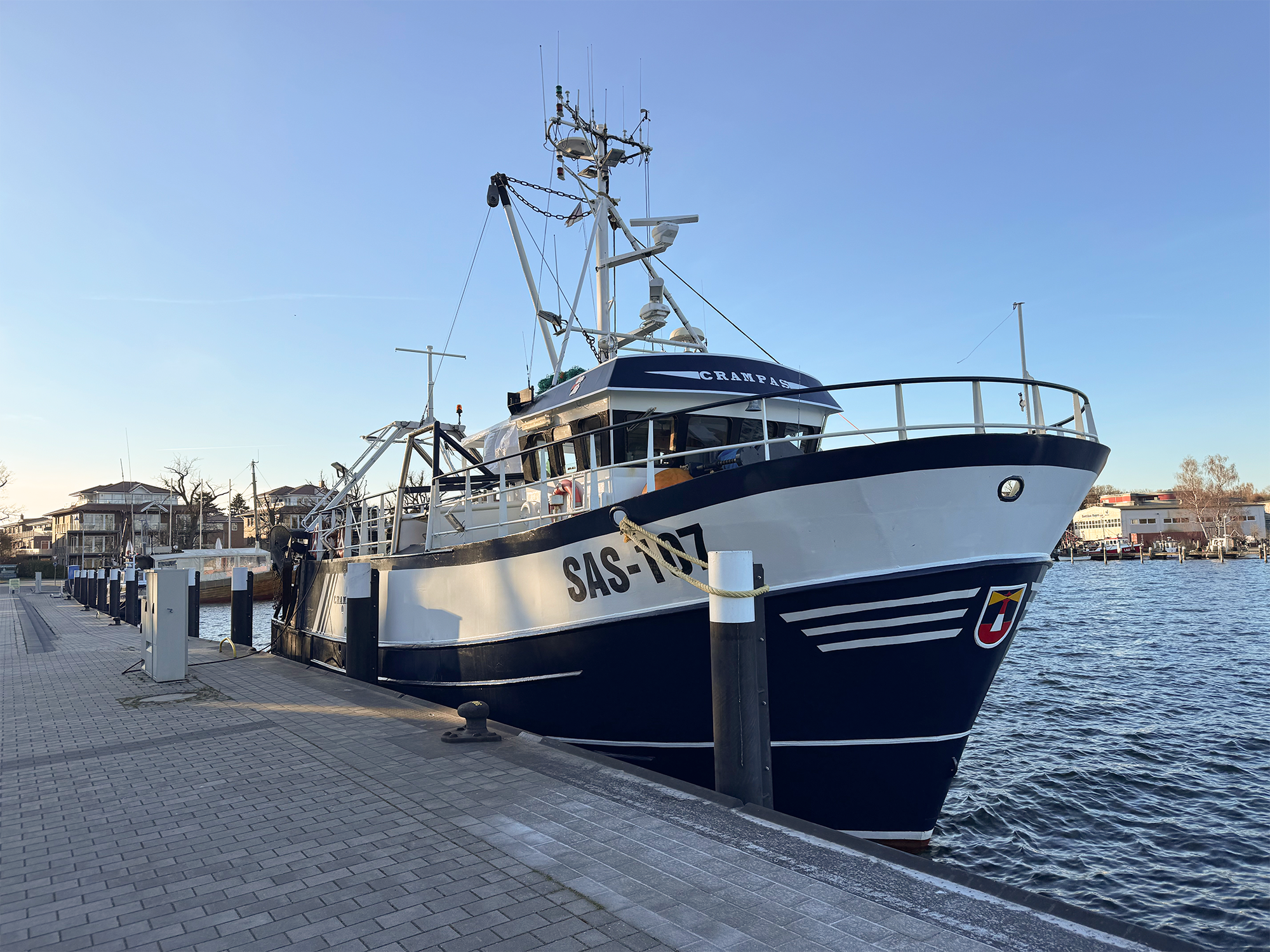
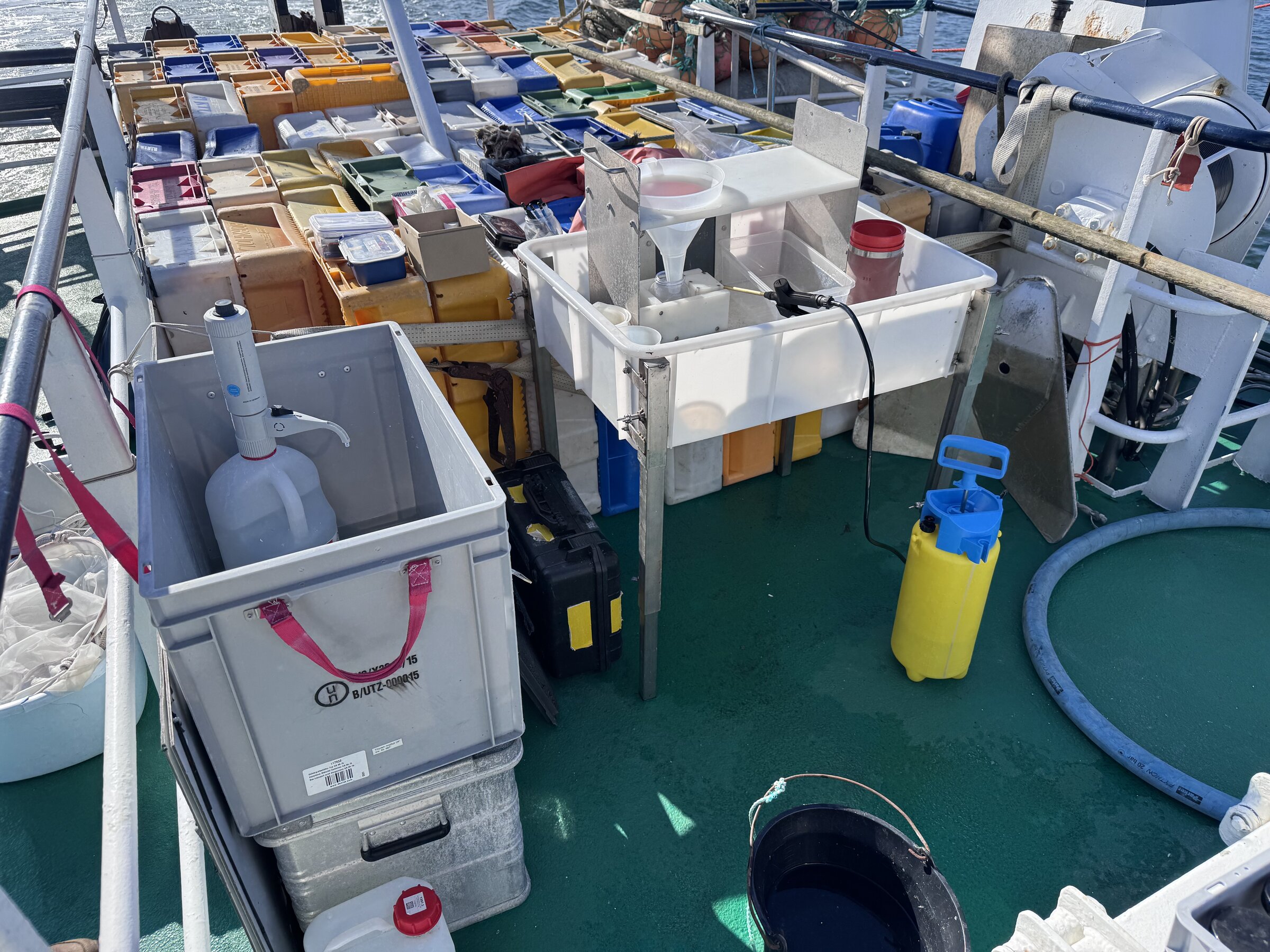
To ensure they did not miss the start of spawning, the Thünen Institute chartered the commercial cutter “Crampas”, based in Sassnitz, for the first few weeks. The 18-metre-long “Crampas” was one of the key herring vessels off Sassnitz before the herring trawl fishery was closed in 2022. Its draught is still shallow enough to access all the survey stations. At the same time, the vessel offers enough space for two researchers and facilities for deploying scientific equipment to collect the most important data.
The number of larvae forms the basis for estimating the population
The Rügen herring larval survey provides the longest time series on the early life history of a regionally significant marine fish. Over a period of 16 weeks, 36 stations are typically sampled each week using a bongo net. The frequency of 20-millimetre-long herring larvae is recorded. From this, scientists calculate the key recruitment index for the herring stock in the western Baltic Sea. This is incorporated into the stock assessment by the International Council for the Exploration of the Sea (ICES).