![[Translate to English:]](/media/_processed_/d/7/csm_Startseite-OF_03_c0dfd6e750.png "[Translate to English:]")
![[Translate to English:]](/media/_processed_/a/3/csm_20181116-151457-Stella-Jerome-Fischfalle-Warnem%C3%BCnde-Dorsche-im-Netzk%C3%A4fig-5691_heller_3050c72fa2.png "[Translate to English:]")
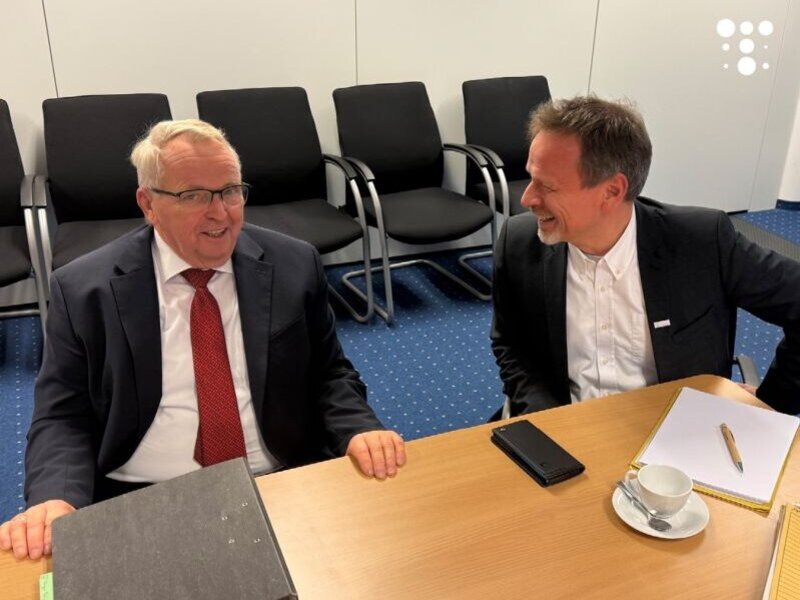
The discussion focused on fish stocks, scientific forecasts, and joint initiatives by the federal and state governments:
Cod
- Both the eastern and western cod stocks remain in a critical situation.
- The main causes are pressures on the ecosystem such as oxygen depletion, temperature changes, and food availability.
- The feasibility of measures such as ecological improvements to habitats will be examined.
Herring
- A new benchmarking system adapted to changed environmental conditions is planned, which will enable fish stocks to be assessed more accurately.
- The state hopes to resume regular herring fishing from 2027.
- The state and federal governments are currently investing around €1.75 million in scientific projects to further develop the management of herring stocks.
Sea trout
- It has become one of the most frequently caught fish species in coastal areas.
- A sustainable stock management plan is to be developed for sea trout. A joint three-year research project is planned from 2027.
- Further spawning protection areas are to be designated in Mecklenburg-Western Pomerania.
Research and cooperation
The state, federal government, and other stakeholders in the fishing industry could work together on various projects in the future, for example
- when financial support for fishermen from the European Maritime and Fisheries Fund expires,
- in supporting initiatives such as Sea Ranger e.V.,
- in developing and implementing seal-safe fishing gear.
The minister explicitly acknowledged the work of the Thünen Institute: "The research of the Thünen Institute is indispensable for realistic perspectives on Baltic Sea fisheries. We need fact-based assessments that take into account both the protection of stocks and the economic existence of our coastal fisheries," said Backhaus.