[Translate to English:]
[Translate to English:]
Institute of

BD Biodiversity

News

Living organisms leave traces of DNA in the environment in the form of tiny cellular remnants. This makes it possible to detect animals and plants without actually seeing them. In order to pool their expertise in working with eDNA more effectively in future, Thünen staff have now set up a new…

A component of a pipetting robot used for analysis.

From 20 March to 9 April, members of the public can once again photograph and report bumblebees. The Bumblebee Challenge harnesses the power of the crowd to record the diversity and distribution of bumblebee species in Germany. From March to April, the focus is on spring-flowering plants.

Eine Gartenhummel-Königin an einer Weidenblüte.

New, practical solutions are needed to ensure that agricultural and food systems can withstand current and future crises. That is why researchers from 15 institutions are working on the agri:change joint project to transform the sector in a sustainable manner. The Thünen Institute is also involved.

In the foreground, a field with flowering plants; in the background, a grain field and a cornfield, with a few trees and bushes in between.

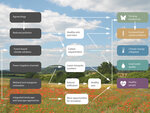
With more than 70 options for taking action, IPBES presents its most comprehensive assessment of the interlinkages between biodiversity, water, food, and health to date for advising decision-makers. Experts from the Thünen Institute of Biodiversity contributed their knowledge.

A diagram with grey, white and coloured boxes, with arrows between them. In the background is a meadow with poppies, and hedges and trees can also be seen.

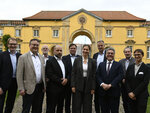
Using artificial intelligence to make agriculture more productive and sustainable: this is the goal of the seven project partners in the new AI Real-World Laboratory for Agriculture. Also the Thünen Institute is involved. Today is the official launch.

Ten people are standing in front of a historic yellow building.

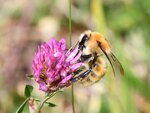
From 20 June to 3 July 2025, citizens can once again observe, identify and report bumblebees using an app - an important contribution to the protection of biodiversity. Particularly in demand: observations in agricultural landscapes.

A bumblebee with a furry upper body and a slender hind body sits on a purple flower.

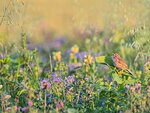
Bird populations benefit significantly from agricultural fallows, especially in landscapes with medium structural complexity

Grey Bunting in a fallow

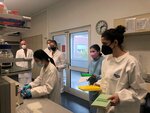
Forensic Scientists of the criminal police at the Institute for Biodiversity

Practical training at the lab of the Thünen-Institut of Biodiversity

"Editor's Choice" a a special recognition of the international peer-reviewed journal FEMS Microbiology Ecology for studies which provide a significant advance in the field.


A major 5-year European project ˗ DiverIMPACTS ˗ was recently launched. The project will explore the full potential of diversifying arable cropping systems with the aim to provide improved agricultural productivity, resource efficiency and sustainable value chains.


Scroll to top