![[Translate to English:]](/media/_processed_/e/3/csm_Demetra2_c8a192c0f8.jpg "[Translate to English:]")
![[Translate to English:]](/media/_processed_/e/2/csm_Demetra1_Panorama_8557ee3b13.jpg "[Translate to English:]")
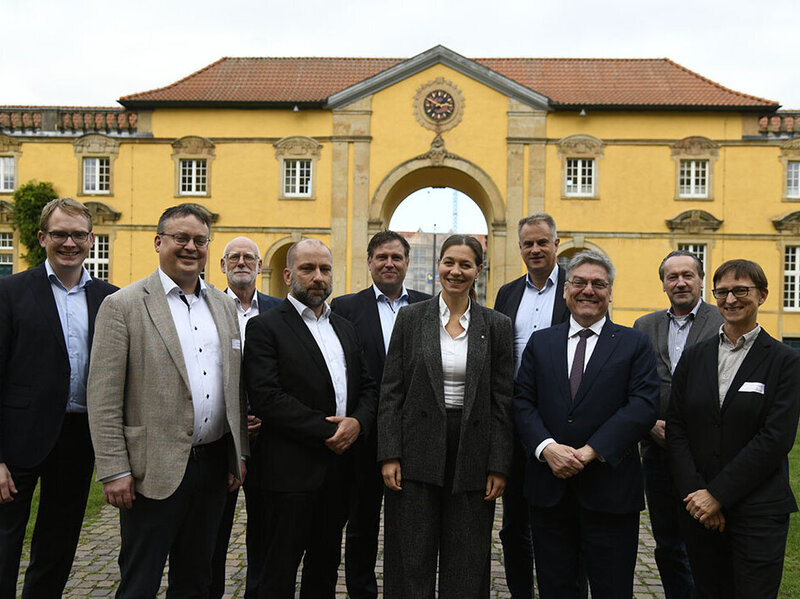
Rising production costs, a shortage of skilled workers and climate change are posing challenges for agriculture. That is why the seven project partners of the AI real-world laboratory for agriculture, coordinated by the University of Osnabrück, are now investigating the question: Can artificial intelligence (AI) make agriculture more productive, more sustainable and potentially also more cost-effective?
Thünen researchers develop automatic monitoring system
Scientists from the Thünen Institute of Biodiversity are developing sensor-based methods for this purpose, which should automatically document biodiversity in grasslands and fields alongside daily business in the future. Using optical and acoustic sensors and classic field methods, the researchers are recording biodiversity in the real-world laboratory and on various investigation fields. Using AI-based computer models, they derive characteristic values from the sensor data and check them against the manually recorded data.
Interdisciplinarity is the central strength of the project
In addition to employees from the fields of computer science and mathematics, people from agricultural science or business studies as well as technicians will be involved in the AI real-world laboratory for agriculture. Lawyers also play an important role in the AI real-world laboratory for agriculture, because one of the core objectives of the research project is to further develop the legal framework for the use of AI and robotics in agriculture.
The Volkswagen Foundation is providing €18.9 million in project funding for the AI Real-World Laboratory as part of the zukunft.niedersachsen initiative through the Ministry of Science and Culture.