![[Translate to English:]](/media/_processed_/e/3/csm_Demetra2_c8a192c0f8.jpg "[Translate to English:]")
![[Translate to English:]](/media/_processed_/e/2/csm_Demetra1_Panorama_8557ee3b13.jpg "[Translate to English:]")
Whether a bumblebee is collecting nectar from a flower or a salmon is swimming through the water, living organisms leave traces of their genetic material everywhere – for example, through excrement, skin particles or tiny cell remnants. By analysing this so-called environmental DNA (eDNA), Thünen researchers can detect animals and plants without having to sight or capture them. To pool their expertise in working with eDNA more effectively in future, Thünen staff have now established a new network. The 22 researchers from seven specialist institutes and the Biodiversity Unit will support one another with new findings and methods, as well as regularly exchanging experiences.
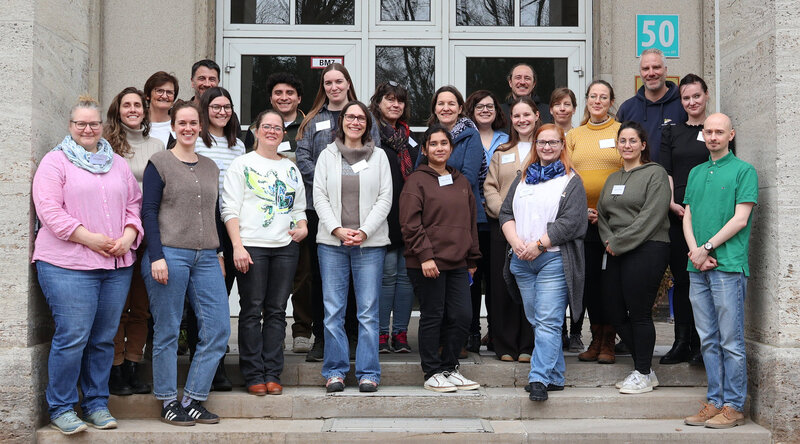
At an initial workshop, participants from the fields of agriculture, forestry and water resources developed shared visions for the future. Technical and scientific staff of all experience levels came together for this purpose. The discussions focused on the entire process – from sampling to bioinformatic analysis. Building on this foundation, the researchers will strengthen eDNA expertise at the Thünen Institute in the future.
News
Let’s search for clues together using eDNA
© Thünen-Institut/Nadine Zirbes
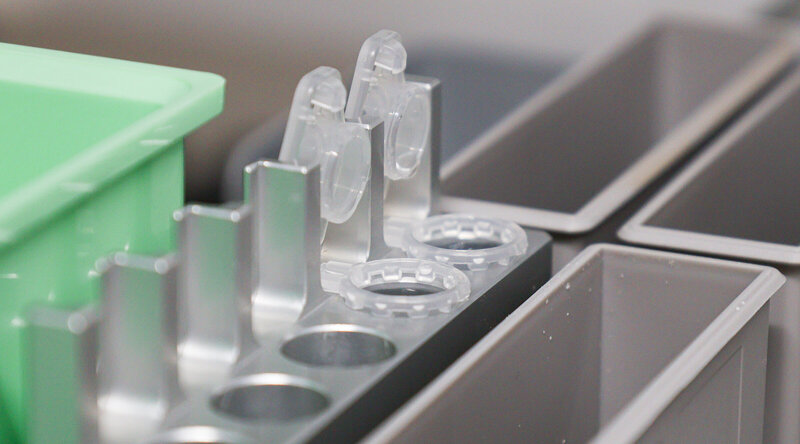
The eDNA samples are analysed in the laboratories of the Thünen Institute.
© Thünen-Institut/Nadine Zirbes
In future, researchers at Thünen will pool their expertise in eDNA.
Further Informations
The EDNA Lab uses monitoring sites in the Thünen Institute’s Landscape Laboratory (EiLT) to assess biodiversity in forests, open land and water bodies through the analysis of eDNA.
The Thünen Topic on biodiversity brings together projects and expertise on biodiversity in fields, forests and the oceans.
Contact
Dr.
Sophie
Ogan
- Phone
- +49 531 257 02048
- sophie.ogan@thuenen.de
Coordination Unit Climate, Soil, Biodiversity
Scroll to top