In times of climate change, geopolitical crises and growing social demands, agricultural and food systems are under increasing pressure. That is why researchers from 15 scientific institutions are working on the large-scale agri:change project to develop new solutions for transforming the sector in a sustainable manner and actively shaping Lower Saxony's agricultural and food industry. The topics range from cycle-oriented resource use and animal welfare to innovative approaches to sustainable agriculture and questions of social acceptance. Scientists from the Thünen Institute contribute their expertise on linking socio-economic developments with the conservation of biological diversity and adaptation to climate change.
At the heart of the project are four real-world laboratories in which researchers test and develop new strategies under real-world conditions. Together with stakeholders from business, politics and practice, they are working to bring scientific findings into application more quickly.
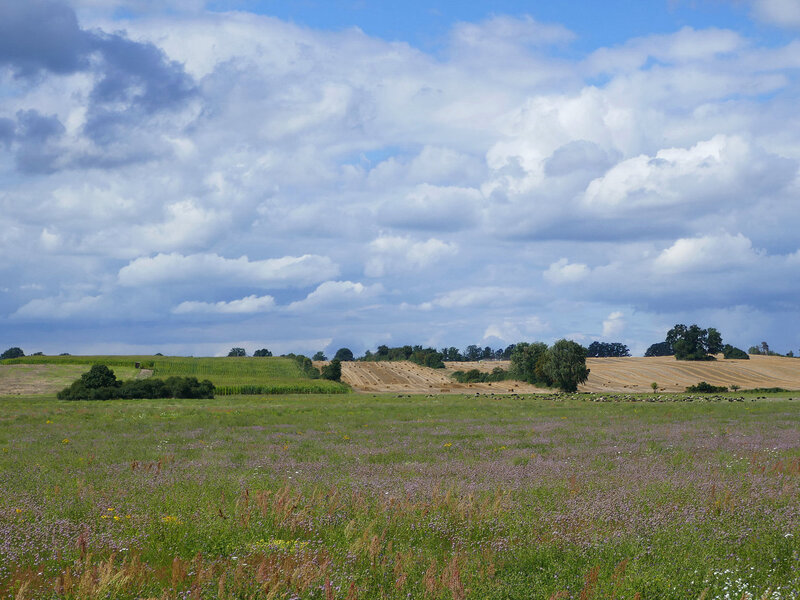
The Thünen researchers are part of the real-world laboratory for integrated agricultural landscape development: Swantje Löbel, an environmental scientist at the Technical University of Braunschweig, is working with researchers from the Thünen Institute for Biodiversity to develop regional concepts for agricultural landscapes in Lower Saxony. Their goal is to make biodiversity the basis of agriculture again and thus promote a reduction in greenhouse gas emissions in the sector. Jörg Rieger and Alexander Gocht, scientists from the Thünen Institute of Farm Economics, are supporting the project with impact assessments of different land use scenarios for Lower Saxony. In cooperation with the University of Göttingen, they are analysing their possible effects, for example on agricultural production, trade and the environment, using the CAPRI agricultural economic model.
The project is being managed by the University of Göttingen and the Lower Saxony Agricultural Transformation Research Network (trafo:agrar). The kick-off event with around 200 experts will take place on 23 February in Hanover.