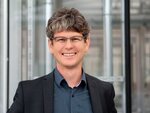
Axel Don, Deputy Director of the Institute and Head of the Department for Organic Soil Matter, has been appointed to the editorial board of the journal Global Change Biology.
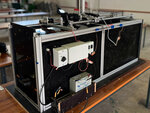
Deep roots are crucial for climate-resilient agriculture. Until now, researching them has been a laborious process: the roots had to be washed and counted by hand. A new technique developed at the Thünen Institute of Climate-Smart Agriculture will make this easier in the future.
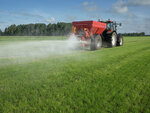
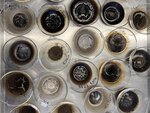
Society and science are debating whether the weathering of rock powder can sequester atmospheric carbon in the long term. However, a team of researchers has now shown that there are still too many unknowns involved. A perspective paper on this topic has now been published.
Ronny Seidel, Ullrich Dettmann, Bärbel Tiemeyer: Peatland Surface Motion: Terminology, Measurement Approaches, Models and Insights From a Global Dataset
A recent study by the Thünen Institute of Climate-Smart Agriculture assessed data on soil carbon content and stocks in arable soils under organic and conventional farming in Germany. The surprising finding: the soil carbon in organically farmed fields hardly differs from that in conventionally…
![[Translate to English:]](/media/_processed_/6/4/csm_titel_CO2Kampagne8_afeea2273e.png "[Translate to English:]")
![[Translate to English:]](/media/_processed_/4/1/csm_titel_93px_CO2Kampagne8_9b0f3354d4.png "[Translate to English:]")
![[Translate to English:]](/media/_processed_/c/8/csm_ERW_Application_Moeller_f5e6a30587.jpg "[Translate to English:]")