Innovation Programme for Brown Shrimp Fisheries
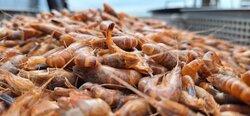
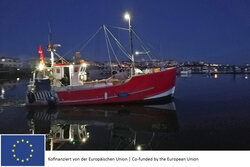
German fishing for North Sea shrimp (Crangon crangon) faces major ecological and technical challenges. Innovative ideas put forward by shrimp fishermen themselves aim to reduce bycatch, energy consumption and environmental impact in the long term.
More
Research on ecosystem-friendly fishing gear in the North Sea and Baltic Sea (EMFAF)
The impact of fisheries on the ecosystem and its components largely depends on the type of fishing gear used. This also means that the systematic further development or redesign of fishing gear is a key factor in advancing an ecosystem-friendly fishery in the North Sea and Baltic Sea.
More
CIBBRINA
Das Projekt zielt darauf ab, den Beifang von gefährdeten, bedrohten und geschützten (ETP) Arten in den Regionen Nordatlantik, Ostsee und Mittelmeer zu minimieren. Um dies zu erreichen, fördert es eine grenzübergreifende und sektorübergreifende Zusammenarbeit zwischen Akteuren – darunter Fischer, Behörden und Wissenschaftler – aus 13 europäischen Ländern. Gemeinsam arbeiten sie daran, Maßnahmen zur Minderung, Überwachung und Bewertung in ausgewählten Fischereien mit Beifangrisiko zu entwickeln.
More
HyFiVe_Baltic
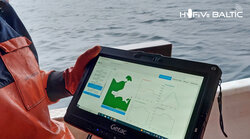
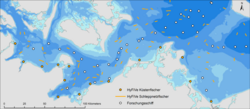
The Baltic Sea is changing. To better understand these changes and the underlying processes, more data with good temporal and spatial resolution is needed. That is why we are planning a measurement campaign with interested fishermen along the entire German Baltic Sea coast as part of this project.
More
ECO-CATCH Sustainable fisheries for the Baltic/North Sea basin
Fisheries in the North and Baltic Seas face significant challenges: the bycatch of protected species such as marine mammals, seabirds, and demersal fish threatens not only vulnerable ecosystems but also the long-term viability of the fishing industry. ECO-CATCH aims to deliver a technology catalogue of innovative solutions for more sustainable fisheries in the North and Baltic Seas.
More
Passive Shrimp fishing (TRAPS)
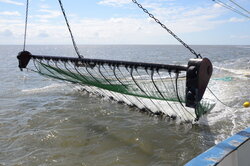
Traditional shrimp fishing in the North Sea is currently conducted almost exclusively with bottom trawls (beam trawls), which are criticized for their high energy consumption and potential ecological impacts. Given rising fuel prices and increasing environmental regulations, there is a growing need for alternative and sustainable fishing methods.
More
PrimePrevention
Due to the expansion of sustainable use of the oceans within the framework of the Blue Growth Strategy, and the expected increase in marine natural hazards such as harmful microorganisms or hypoxia in consequence to climate change, the socio-economic relevance of marine biological hazards and their prevention will increase in the future, also for German coastal waters.
More
Improving selectivity of trawls
Development of improved fishing methods, by means of increased gear selectivity.
More
OTC-Smart Fishing - Sensorsystem für smarte Fischernetze
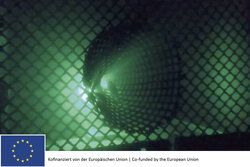
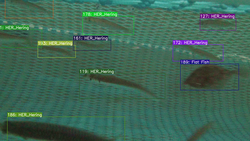
OTC-smartFishing entwickelt die Grundlagen für ein robustes Unterwasser- Kamerasystems mit KI-gestützter Bilderkennung für den Einsatz in der kommerziellen Fischerei und der Fischereiforschung. Damit wird es mittelfristig möglich zielgenau Meeresorganismen zu fangen - in der Fischerei und Fischerei-/Meeresforschung. Darüber hinaus ermöglicht dieses System eine ressourcenschonende, minimal-invasive Untersuchung der Fischfauna als Grundlage für eine nachhaltige Bewirtschaftung der Meere.
Das Projekt ist Teil des Clusterprojekts des Ocean Technology Campus Rostock.
More
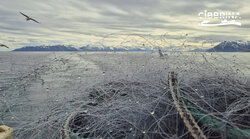
Using acoustically visible gillnets to reduce bycatch of harbor porpoises
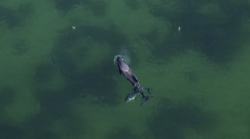
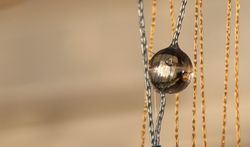
To reduce bycatch of harbor porpoises in gillnets, an „acoustically visible“ gillnet (“pearl net”) was developed. Within this projects, the behavioral reactions of harbor porpoises to the modified gillnet will be evaluated.
More
SimuNet - A tool for fishing gear optimisation
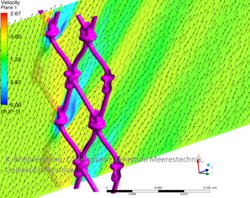
For the development of innovative and sustainable fishing gear, we are working together with the University of Rostock on a software tool to simulate the hydrodynamics and deformation of nets.
More
Optimised brown shrimp fishery (CRANNET)
Optimsation of the selectivity and reduction of by-catches are in the focus of this project.
More
Pulse trawl for shrimp fishery
Our project evaluates the usability of a pulse-beamtrawl in the brown shrimp fishery and its effect on bycatch, catch fo shrimp and the economy of this fishery.
More
Reduction of plastic waste from the brown shrimp fishery through gear modifications (DRopS)
Um das Durchscheuern der Unterblätter von Baumkurrennetzen am Meeresboden zu verringern, werden dort häufig Polyethylenseile angebracht. Diese so genannten Dolly Ropes werden nach kürzester Zeit auf See als Plastikmüll freigesetzt.
More
HyFiVe - Hydrography on Fishing Vessels
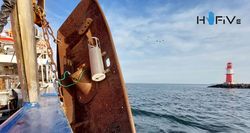
In cooperation with the Leibnitz Institute for Baltic Sea Research and Hensel Elektronik GmbH, we are working on the development of an innovative system for use on fishing vessels for the autonomous acquisition, transmission and evaluation of hydrographic measurement data for interdisciplinary research.
More
Stella2
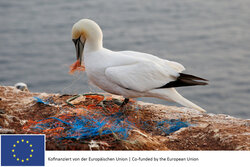
Wie können Beifänge von Meeressäugetieren und Seevögeln vermieden werden? Diese Frage soll im Rahmen eines vom Bundesamt für Naturschutz finanzierten Forschungsprojekts des Thünen-Instituts für Ostseefischerei in Zusammenarbeit mit dem NABU beantwortet werden.
More
MiniSeine – a small Danish seine for German coastal fishing
We are trying to reduce the environmental impact of fishing gear - including the impact of towed gear on the seabed. The Danish seine is ideal for this, as it also saves fuel and makes the catch inaccessible to grey seals. However, this device must be miniaturised for use on small coastal fishing vessels - we are developing and testing such a MiniSeine in this project together with the fishery.
More
![[Translate to English:]](/media/_processed_/d/7/csm_Startseite-OF_03_c0dfd6e750.png "[Translate to English:]")
![[Translate to English:]](/media/_processed_/a/3/csm_20181116-151457-Stella-Jerome-Fischfalle-Warnem%C3%BCnde-Dorsche-im-Netzk%C3%A4fig-5691_heller_3050c72fa2.png "[Translate to English:]")