[Translate to English:]
[Translate to English:]
Institute of

OF Baltic Sea Fisheries

News

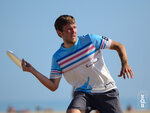
At the Thünen Institute of Baltic Sea Fisheries, Mathis Mahler is developing an early warning system for the Baltic Sea. After work, the scientist heads to training to prepare for the World Championships in Portugal as a member of the national beach ultimate team. His research and his sport have a…

Mathis Mahler playing Frisbee.

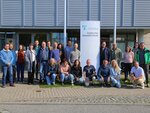
From 23 to 30 September, the Thünen Institute of Baltic Sea Fisheries in Rostock is hosting the Working Group on Bycatch of Protected Species, which this year consists of 36 experts.

Several people are standing in front of a building.

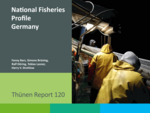
The “National Fisheries Profile Germany” provides an up-to-date overview of the structure and development of fisheries in Germany, with a focus on the social dimension. The aim is to make the special features of the sector visible and provide a scientific basis for politics and society.

Cover Thünen Report 120 – National Fisheries Profile Germany

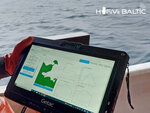
The Baltic Sea is changing. In order to record relevant water parameters in coastal areas, we are looking for fishing companies equipped with our HyFive system to carry out regular measurements at fixed stations.

A fisherman on a small cutter holds a monitor with measurement data in his hand.

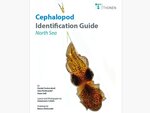
Squid are becoming increasingly important in fisheries. Landings are increasing in many European waters. In most cases, however, squid are not identified at species level.


A combination of overfishing and environmental changes has led to the collapse of the Lake Constance whitefish population. This was discovered by an international research team led by the Thünen Institute of Baltic Sea Fisheries.

A boat sails in the water.

How can German coastal fisheries survive in the future? A new publication shows the way forward


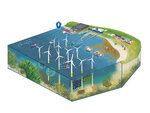
The Baltic Sea is confronted with serious challenges. The sea has been utilised intensively by humans for centuries and is suffering from eutrophication, climate change, waste-pollution, traffic and declining fish stocks. Does the recipe for the recovery of the territorial sea lie on land?

 Seabed with a fish.

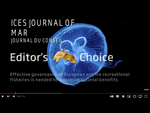
The renowned ICES Journal of Marine Science has declared an article on recreational fishing as particularly recommendable. Key contributors: several researchers from the Thünen Institute of Baltic Sea Fisheries.

Cover picture of the presentation of the article on Youtube.

In its annual reports, ICES provides an overview of the status of exploited fish stocks in the North-East Atlantic and issues advice on total allowable catches. We explain what the recommendations mean for German fisheries and why they are at a certain level.

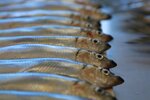
Frische Heringe.

Scroll to top