
![[Translate to English:]](/media/_processed_/d/7/csm_Startseite-OF_03_c0dfd6e750.png "[Translate to English:]")
![[Translate to English:]](/media/_processed_/a/3/csm_20181116-151457-Stella-Jerome-Fischfalle-Warnem%C3%BCnde-Dorsche-im-Netzk%C3%A4fig-5691_heller_3050c72fa2.png "[Translate to English:]")
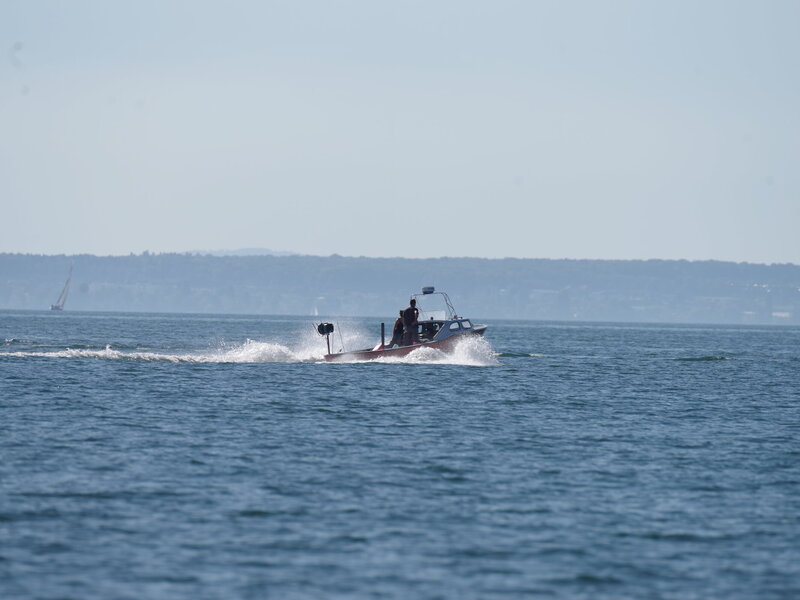
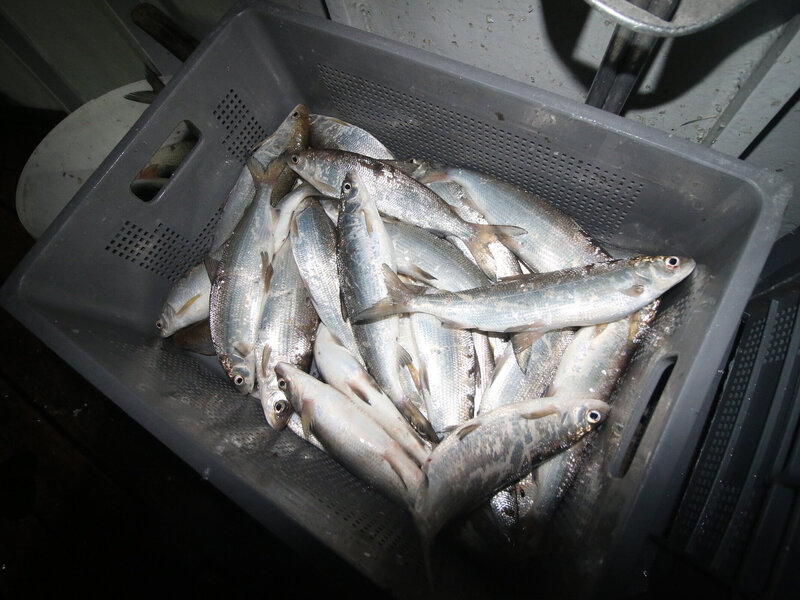
The whitefish is something like the herring of Lake Constance: the most popular fish for human consumption, exploited by several neighbouring countries, the backbone of the Lake Constance fishery. And just like the herring stock in the western Baltic Sea, the whitefish stock in Lake Constance is in a poor state. Fishing had to be stopped in 2024 because the stock had practically collapsed. Marine researchers from the Thünen Institute of Baltic Sea Fisheries and the Dansk Tekniske Universitet (DTU) Aqua in Lyngby as well as inland fisheries experts from the Langenargen Fisheries Research Center on Lake Constance, the University of Constance and the Potsdam Institute of Inland Fisheries have been working together to find the causes. The results have now been published in the renowned Canadian Journal of Fisheries and Aquatic Sciences.
Whitefish stock at historic low
"The whitefish stock and the catches taken by fishermen have been closely monitored for more than a hundred years. However, a continuous stock calculation, as we have for marine fish stocks for a long time, does not yet exist," explains Stefanie Haase, lead author of the study. The expert in fish stock calculations therefore applied the SPiCT stock calculation model developed by Casper Berg from DTU Aqua to the available data from the Lake Constance researchers. Until now, the model has only been used for marine fish stocks. “However, it is entirely possible and permissible to transfer the model to freshwater fish,” says Haase. This requires long and extensive data series, which are available for the Lake Constance whitefish (Coregonus wartmanni). This salmonid fish is among the best documented freshwater species. The model results show for the first time what quantity of whitefish could have been taken in order to exploit the stock sustainably. However, the actual catches were too high. The stock has now reached an all-time low.
Causes of the stock decline
The researchers have analysed the causes of this in detail. On the one hand, there is a lack of stock-specific management for fish stocks as practiced in marine fisheries. In the North Sea and Baltic Sea, for example, stocks are managed according to the maximum sustainable yield (MSY) approach. This approach can be used to determine how high fishing yield and fishing pressure may be in the long term. While there are usually catch limits set for marine fisheries, fishing in Lake Constance was regulated by the number of nets permitted and their mesh size - measures which, in the experience of the fisheries researchers from Rostock, often lead to so-called recruitment overfishing.
This is what happened on Lake Constance: Environmental protection measures to reduce the nutrient input into the lake have been taking effect since the late 1980s. The lake has been returning to its original state as a nutrient-poor inland lake. “An exciting contrast to the Baltic Sea, which suffers greatly from eutrophication,” says Stefanie Haase. However, the resulting reduction in productivity led to less food available for the whitefish, which therefore grew more slowly. When catches fell as a consequence, the fishermen were allowed to reduce the mesh size and extend the fishing times. As a result, too many whitefish were taken and the stock collapsed. This situation allowed the invasive stickleback to spread. Not only did it compete with the whitefish for food, but its mass presence also changed the ecosystem. "The Lake Constance researchers assume that the sticklebacks also prey on whitefish larvae. In the Baltic Sea, in contrast, they preey on the eggs of herring," reports Haase.
“In order for the whitefish population to be able to recover at all, the closure of the fishery, which the Lake Constance riparian states decided on for the years 2024 to 2026, was the right measure,” says the scientist. However, the low fishing pressure alone will hardly lead to a rapid recovery of the whitefish stock. The number of sticklebacks would also have to decrease. It is however possible that nature will help itself: Since 2024, far fewer sticklebacks have been appearing for as yet unexplained reasons. If this situation continues, the whitefish population could recover more quickly. There is therefore certainly hope for better times for Lake Constance fishermen.