![[Translate to English:]](/media/_processed_/7/1/csm_IMG_7977_large_1defaf5de1.jpg "[Translate to English:]")

Project
North Sea fishing vessel of the future
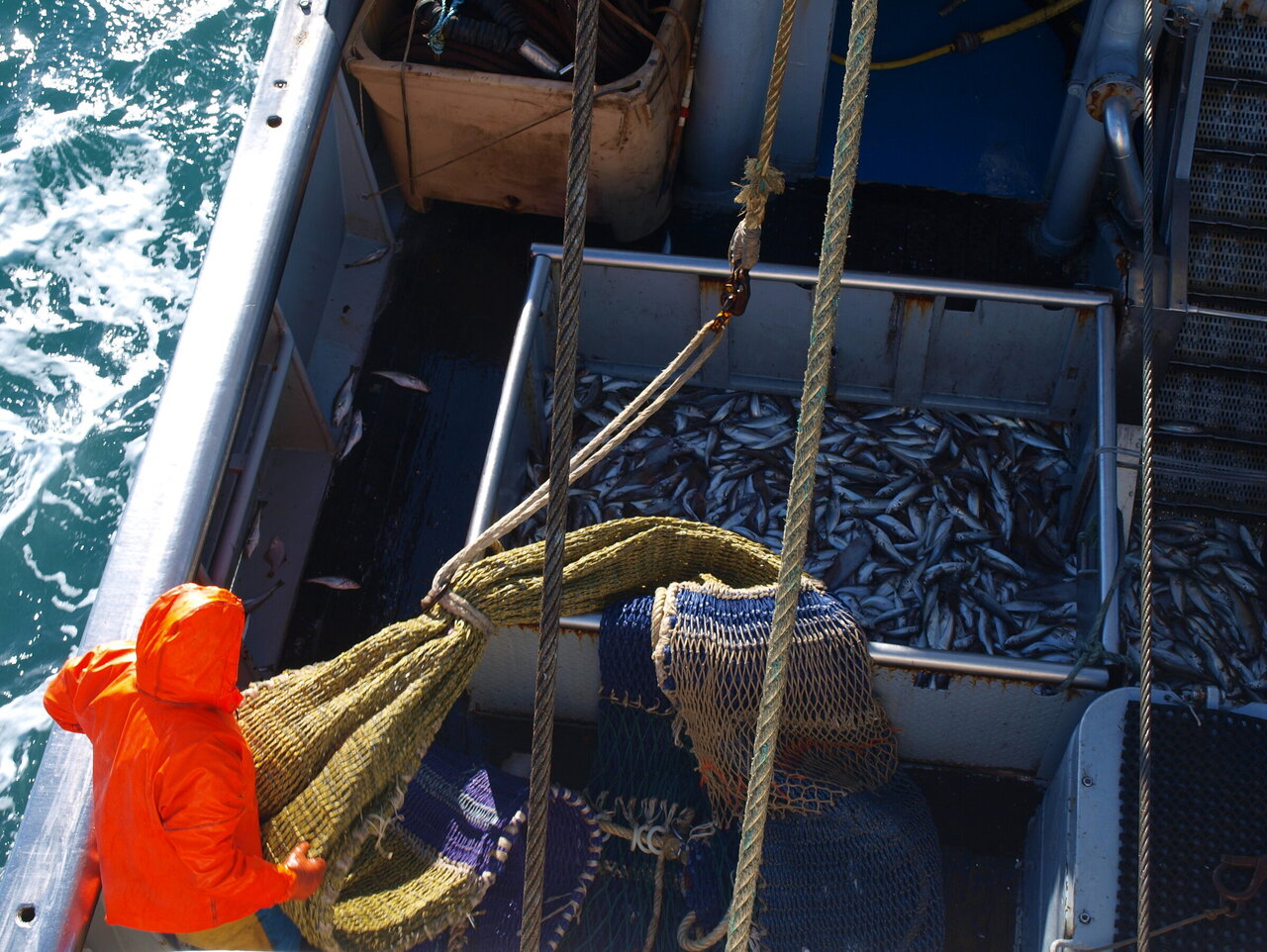
North Sea fishing vessel of the future: Construction of a coastal fishing vessel of the future for use in the North Sea
The North Sea fishing vessel of the future supports the transformation of North Sea cutter and coastal fishery into an ecologically sustainable, economically resilient, and future-proof sector.
Background and Objective
Germany's cutter and coastal fishing fleet is largely outdated. This leads to ineffiency and is increasingly a problem for a future-proof fishery. To meet the variety of coastal and cutter fishing practices in Germany and its needs, several types of new, modern fishing cutters are necessary to ensure fisheries' long-term sustainability. The Future Cutter North Sea is one of them. The interdisciplinary approach of the project brings together expertise from shipbuilding and technical, economic and social science fisheries research.
The University of applied sciences Emden/Leer coordinates the overall project. The Thünen Institute of Sea Fisheries takes on the responsibility for all fisheries scientific of the future fishing cutter in the project. Our joint venture is to create a technical base for an economically optimized, environmentally friendly and socially accepted fishery of the future.
Target Group
Fisheries
Approach
In our work, the economic viability of the demonstrator under the use of conventional and innovative fishing techniques, as well as the social acceptance of a modern, sustainable fishery, are at the forefront. The Thünen Institute of Fisheries tests fishing practices under real conditions together with active fishermen. Our team calculates the full costs and profitability of the Future Cutter, taking into account various operating modes and compares the resuts in an international benchmarking. In a comprehensive survey on the image of the fishing industry among the population and personal interviews with opinion leaders along the coast, the social acceptance of the use of the Future Cutter in the North Sea is investigated. Equipping the fishing industry with modern vehicles only makes sense in the long term if sustainable fishing practices are accepted by the public.
Data and Methods
- typical farm approach
- full costs and profitability analyses
- survey
- focus groups and workshops
- face-to-face interviews
Our Research Questions
- We explore the conditions under which a prototype of a future-fishing vessel can be operated profitably in the North Sea.
- We investigate which fishing practices are economically viable with the new vessel.
- We assess the international competitiveness of the prototype, comparing its performance, efficiency, and costs to those of vessels operating in other regions.
- We examine the public image of the fishing industry in Germany, including perceptions of sustainability and environmental impact.
- We seek to identify a communication strategy for improving public acceptance of modern and sustainable fishing in the North Sea.
Links and Downloads
The article to the funding approvals for the ‘North Sea fishing vessel of the future – KuNo’ project presented by Silvia Breher, Parliamentary State Secretary at the Federal Ministry of Agriculture, Food and Regional Identity can be found here.
Thünen-Contact

Involved Thünen-Partners
Funding Body
-
Federal Office for Agriculture and Food (BLE)
(national, öffentlich) -
Federal Ministry of Agriculture, Food and Regional Identity (BMLEH)
(national, öffentlich)
This work is financially supported by the Federal Ministry of Agriculture, Food and Regional Identity (BMLEH) based on a decision of the Parliament of the Federal Republic of Germany
Granted by the Federal Office for Agriculture and Food (BLE)
Duration
1.2026 - 12.2030
More Information
Project funding number: Förderkennzeichen: 2825F01X02
Project status:
ongoing