[Translate to English:]
[Translate to English:]
Institute of

OF Organic Farming

Working group Animal welfare & On-farm research

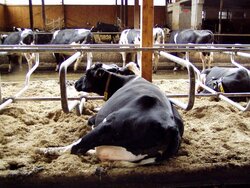
Organic animal husbandry claims targeting an excellent animal health and animal welfare. This is reflected in expectations of society towards processes in organic farming. The health of farm animals therefore is of great significance.
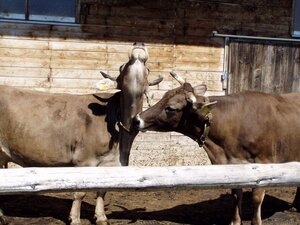
Prevention of is crucial to maintain herd health and welfare. In all parts of the environment behavioral and biological needs of the animals has to be taken into account in order reduce stress. On the other hand herd management and hygiene are needed to reduce infection prevalence and not to overstraine the adaptability of farm animals in the farm environment.
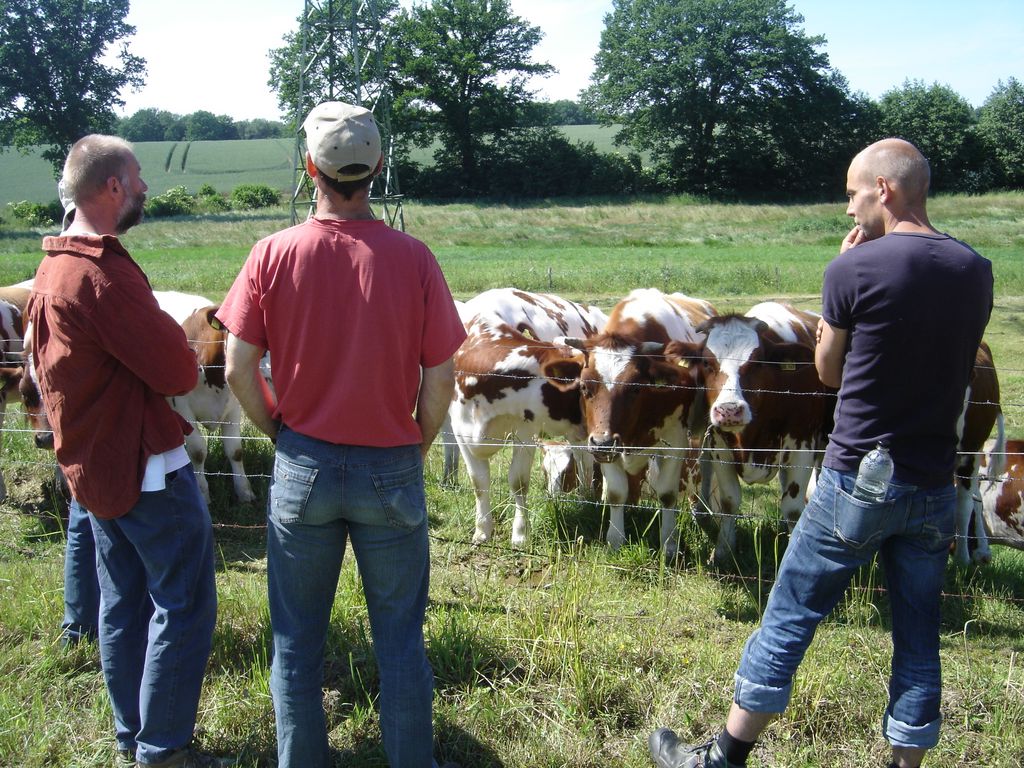
Furthermore we work on the identification and validation of animal based indicators to assess health and welfare of livestock on-farm. Epidemiologic topics such as the analysis of risk factors for certain production diseases are also under study.
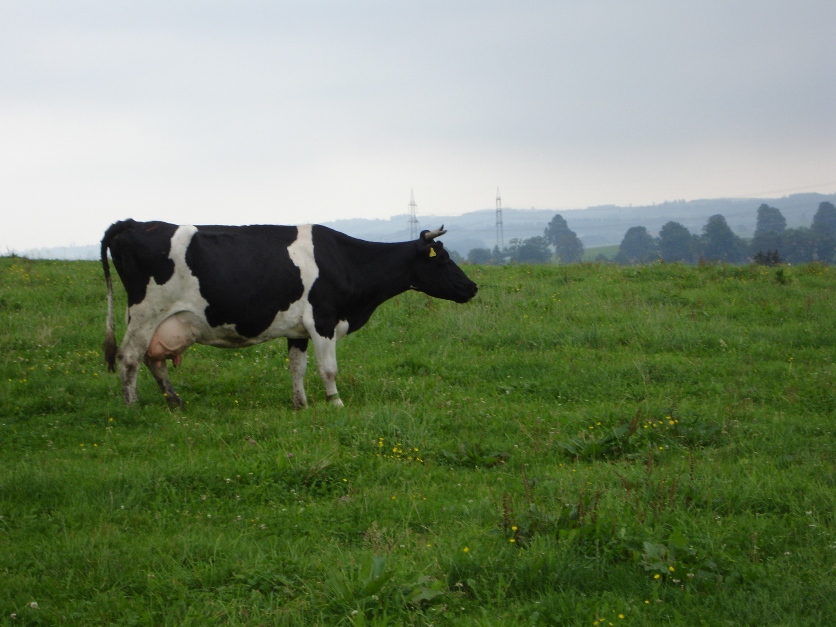
Working group Animal welfare

Dr. Solveig March
Phone
+49 4539 8880 327
Phone
+49 531 2570 2044
solveig.march@thuenen.de
Dr. Jan Brinkmann
Phone
+49 4539 8880 711
Phone
+49 531 2570 1490
jan.brinkmann@thuenen.de
PD Dr. habil. Silvia Ivemeyer
Phone
+49 171 8167462
Phone
+49 531 2570 2033
silvia.ivemeyer@thuenen.de
Viola Magierski
Phone
+49 4539 8880 522
Phone
+49 531 2570 2186
viola.magierski@thuenen.de
Ulrike Peschel
Phone
+49 4539 8880 121
Phone
+49 531 2570 2164
ulrike.peschel@thuenen.de
Merlin Grosse
Phone
+49 4539 8880 128
Phone
+49 531 2570 1836
Johanna Ostermair
Phone
+49 4539 8880 314
Phone
+49 531 2570 1545
johanna.ostermair@thuenen.de
Juliane Helmerichs
Phone
+49 531 2570 2298
Phone
+49 4539 8880 128
juliane.helmerichs@thuenen.de

On-farm research team

Antonia Dettmer
Phone
+49 4539 8880 124
Phone
+49 531 2570 1125
antonia.dettmer@thuenen.de
Christian Zimmer
Phone
+49 4539 8880 513
Phone
+49 531 2570 1215
christian.zimmer@thuenen.de

Ungoing projects

ÖKoTier

Within the framework of organic inspections, various audit systems of the inspection bodies and the organic farming associations are currently applied to monitor animal welfare on farms. These concepts will be reviewed, further developed and standardized with regard to the criteria of validity, reliability and practicability, considering already existing indicator and assessment systems.

More
ÖKoTier

Animal welfare, competence and cooperation between learning locations

The project strengthens cooperation between learning locations in the agricultural sector and ensures the pedagogical professionalization of educational staff through animal welfare-oriented educational modules and teaching-learning settings.

More
Animal welfare, competence and cooperation between learning locations

Risk-based model for dairy herd welfare: Field data collection

Within the framework of organic inspections, various audit systems of the inspection bodies and the organic farming associations are currently applied to monitor animal welfare on farms. These concepts will be reviewed, further developed and standardized with regard to the criteria of validity, reliability and practicability, considering already existing indicator and assessment systems.

More
Risk-based model for dairy herd welfare: Field data collection

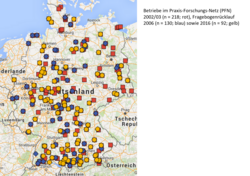
Establishment an on-farm-research network for organic dairy farms

On-farm research with a continuous exchange between practice and research enables the sustainable transfer of findings into practice. Conversely, science receives impulses from practice for relevant research questions. What are the trends and developments in production systems? Through the establishment of a reference network comprising organic dairy farms, we seek to monitor and analyze ongoing practical advancements to ensure our insights remain current and relevant .

More
Establishment an on-farm-research network for organic dairy farms

InnoRind - Cattle Innovation Network – sustainable cattle farming in Germany, considering animal welfare, environmental impacts and social acceptance

What does sustainable cattle farming in Germany look like, considering animal welfare, environmental impact and social acceptance? What changes can be implemented in housing and management of calves, beef and dairy cows?? Answers to these questions are to be provided by nine research farms as part of the InnoRind project.

More
InnoRind - Cattle Innovation Network – sustainable cattle farming in Germany, considering animal welfare, environmental impacts and social acceptance

Finished projects

National Animal Welfare Monitoring

The interdisciplinary project "National Animal Welfare Monitoring" aims to develop the basis for reporting on the status quo and the development of animal welfare in livestock farming.

More
National Animal Welfare Monitoring

Feasibility of animal welfare indicators in on-farm self-assessment

The German Animal Welfare Act requires livestock keepers to carry out on-farm self-assessments in order to ensure that housing conditions meet their animals’ need. But how can livestock farmers carry out objective assessments of animal welfare in their herds?

More
Feasibility of animal welfare indicators in on-farm self-assessment

Animal welfare competence

Development of an individual animal welfare-oriented competence to ensure animal well-being– Concepts of teaching and learning in vocational education and training – Up to now, animal welfare has only been a minor topic in agricultural vocational education. New and innovative concepts of teaching and learning are therefore to be developed, in order to promote a comprehensive animal welfare-oriented competence.

More
Animal welfare competence

EIP- Animal Welfare-Check

More
EIP- Animal Welfare-Check

Animal welfare in dairy husbandry with a system – from farm self-monitoring to national monitoring

Significant, valid and evidence-based indicators to evaluate animal welfare in livestock husbandry are now available. Lacking is a comprehensive monitoring of automatically documentable animal-related indicators that make animal welfare measurable and comparable. In our project Q-Check, indicators for animal health from existing analyses and documentation systems shall be used.

More
Animal welfare in dairy husbandry with a system – from farm self-monitoring to national monitoring

Stable Schools to improve animal health and welfare

Udder diseases and metabolism problems, typical production diseases, also play a great role in organic dairy husbandry. In a pilot study we studied the extent to which Stable Schools are suited as an innovative concept to improve the health situation with consultations in the participating dairy farms. Stable Schools base on mutual learning: problems in the own farm are discussed and solved together with other farmers.
More
Stable Schools to improve animal health and welfare

National Animal Welfare Monitoring

The interdisciplinary project "National Animal Welfare Monitoring" aims to develop the basis for reporting on the status quo and the development of animal welfare in livestock farming.

More
National Animal Welfare Monitoring

Indicators for a Payment-by-Results Approach for Animal Welfare Measures and Organic Farming

According to Eurobarometer surveys, most consumers desire adequate housing and living circumstances for farm animals. But which indicators are most suitable for the measurement of animal welfare and how can animal welfare policies be implemented in a result-oriented way? This research question is adressed by the Thünen-Insitut of Organic Farming and the Thünen-Institut of Farm Economics.

More
Indicators for a Payment-by-Results Approach for Animal Welfare Measures and Organic Farming

Indicators for a Payment-by-Results Approach for Animal Welfare Measures and Organic Farming

According to Eurobarometer surveys, most consumers desire adequate housing and living circumstances for farm animals. But which indicators are most suitable for the measurement of animal welfare and how can animal welfare policies be implemented in a result-oriented way? This research question is adressed by the Thünen-Insitut of Organic Farming and the Thünen-Institut of Farm Economics.

More

Cows on organic farms - looked at through interdisciplinary glasses

Studies have shown:Cows in organic dairy farms are not healthier and face mastiis as well as metabolic disorders. This joint research project aimed for an interdisciplinary approach to that phenomenon.

More

Public services of organic agriculture for the environment and society

Is organic farming good for the environment and animal welfare? This question is a constant source of controversy. Reason enough to take time for a detailed analysis and to investigate the current state of knowledge.

More
Public services of organic agriculture for the environment and society

Politic support for organic farming - measures, strategies and farm-level perspectives

Numerous support measures have been designed to help more farms convert to organic farming. But the number of converting farms has been declining for years.

More
Politic support for organic farming - measures, strategies and farm-level perspectives

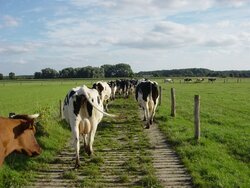
What effects do grassland and grazing management have on cow health and welfare?

What effects do grassland and grazing management have on cow health and welfare?

More
What effects do grassland and grazing management have on cow health and welfare?

Lameness in breeding sows

Sows in conventional husbandry often suffer from diseases in their locomotor systems, leg injuries and lameness. What is the situation on organic farms where pigs have outdoor runs? What risk factors have the most influence here?

More
Lameness in breeding sows

Establishment of web-based decision trees for parasite prophylaxis through future-oriented pasture management in agricultural practice and consultancy

Pasture husbandry is considered to be particularly animal appropriate and is, according to polls, desired by consumers. However younger animals in particular are often afflicted with infections by gastrointestinal parasites while at pasture. Previously developed decision trees available online could be an aid in future-oriented pasture planning. How do farms perceive the work with this online tool? Can it provide support in pasture management to individual farms? Does it reduce the stress on the animals or does the use of the decision tree lead to less use of anthelmintics? These questions are ...

More
Establishment of web-based decision trees for parasite prophylaxis through future-oriented pasture management in agricultural practice and consultancy

Decision Trees for Deworming

Control of gastrointestinal worms of grazing ruminants is crucial to animal health and farmer’s economic success. At the same time the smallest possible amount of drugs is to be used.

More
Decision Trees for Deworming

Deworming only for individual animals - testing of thresholds in young cattle

Infections with gastrointestinal nematodes (GIN) endanger the grazing of cattle. Until now usually it was dewormed strategically. This is not sustainable and promotes Anthelmintic Resistance. Alternative methods will be tested.

More
Deworming only for individual animals - testing of thresholds in young cattle

Organic farming 2002 in Germany

Organic farms are marked by extraordinary diversity. This diversity is caused, among other things, by locational factors; the outset situation at the time of conversion; the farm's own course of development in the process from conversion to the establishment of organic farming; the production guidelines from organic farmers organizations; the socio-economic framework conditions, and the abilities, expectations and preferences of the farm manager.

More
Organic farming 2002 in Germany

Scroll to top