
![[Translate to English:]](/media/_processed_/f/3/csm_2022_Titelbild_gross2_Saatgut_in_Hand_9ffb8f5748.jpg "[Translate to English:]")
![[Translate to English:]](/media/_processed_/f/3/csm_2022_Titelbild_gross2_Saatgut_in_Hand_c17270fcc0.jpg "[Translate to English:]")
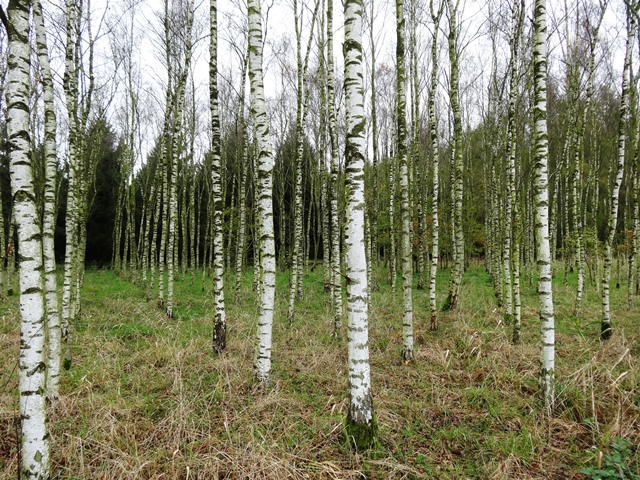

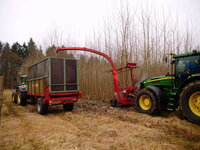
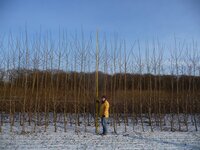
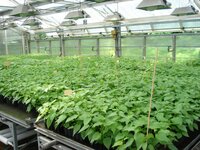
Understanding genetic variation and its influence to adapt to the environment is a fundamental aspect of contemporary forest science. Long-term observations gained with provenance trials provide an essential foundation to address climatic change and guide the strategic development of future management prescriptions. Only with a sound scientific knowledge can we make evidence-based decisions that promote a sustainable forestry and enhance ecosystem resilience.
![[Translate to English:] Die Mitarbeiter*innen des Arbeitsbereichs betreuen bundesweit über 400 Vesuchsflächen](/media/_processed_/f/e/csm_Versuchsflaechen_8a314083df.jpg)
Many tree species have a wide distribution range that spans a variety of climatic and site conditions. As a result, genetic differences develop within a species, since individual populations adapt to their specific growing environments. Understanding these differences is essential for identifying resilient and vigorous provenances that can withstand the challenges posed by environmental and climatic changes.
To assess the cultivation potential and adaptability of various broadleaf and conifer species, we rely on so-called provenance trials. In these trials, populations of the same tree species from different regions are tested under identical conditions. This allows us to draw conclusions about their performance, resilience, and adaptability. With the progression of climate change, this work is becoming increasingly important.
Climatic changes such as prolonged droughts, higher temperatures, or extreme weather events call for tree species and provenances capable of coping with these stresses. There is a great need for research, as many questions remain unanswered—for example, how quickly populations can adapt to new environmental conditions or to what extent genetic differences contribute to this adaptation. The analysis of our extensive datasets plays a key role here. It enables us to make well-founded predictions about the future development of forests and to devise sustainable strategies for forestry.
Ongoing tasks:
Assessment of the suitability and variability of provenances of native tree species
Evaluation of the variability of non-native tree species and their suitability for cultivation in Germany
Delineation of provenance regions and deployment zones
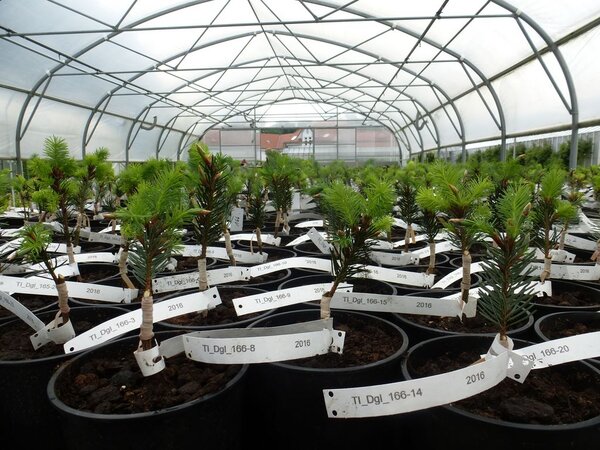
In forest tree breeding research, intensive efforts are being made to optimize biomass and high-quality timber production across various tree species in order to meet both ecological and economic demands. Our focus lies on the improvement of vitality, growth performance, and wood quality—particularly in response to emerging challenges such as climate change, shifting environmental conditions, and the spread of pests and diseases.
The primary goal of forest tree breeding is to increase timber production on the same land area, thereby contributing to meeting society’s growing demand for wood. Enhanced growth performance also contributes to increased CO₂ sequestration. Improving wood quality is essential for enabling multiple material uses before the wood is ultimately used for energy purposes (cascade use).
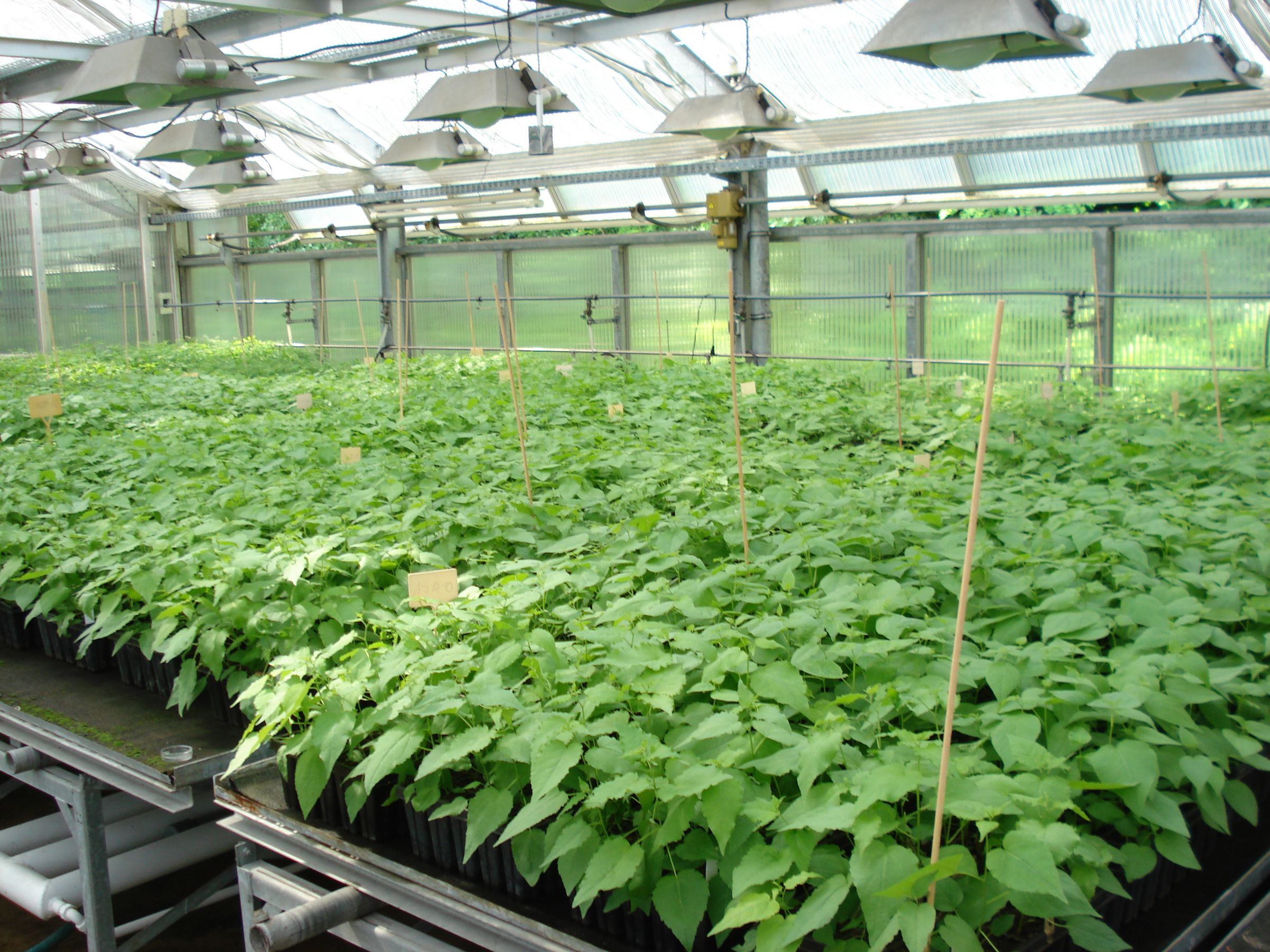
Our work mainly focuses on economically important conifer species such as Scots pine and Douglas-fir. Of particular interest are so-called plus trees, trees selected for their outstanding characteristics. These are vegetatively propagated via grafting to produce genetically identical clones, which are then conserved in clonal archives and seed orchards. In the medium term, seed orchards enable efficient and high-quality seed production, which is crucial for establishing stable and productive forest stands.
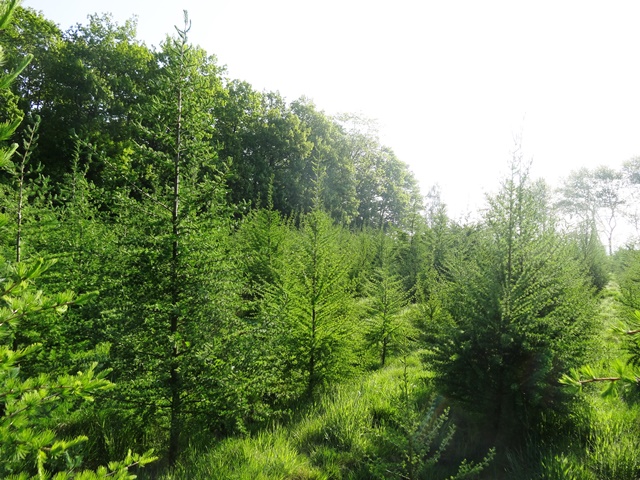
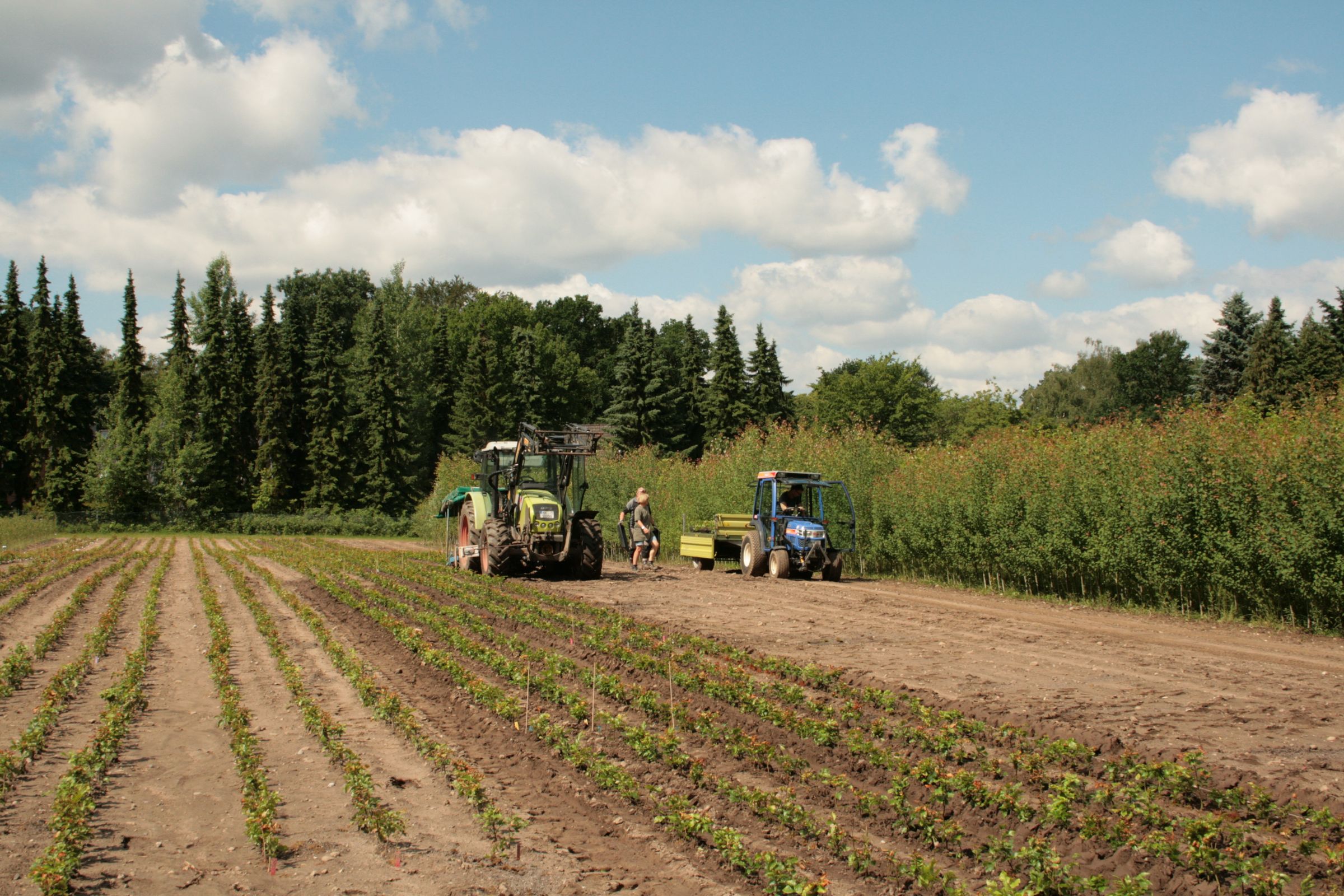
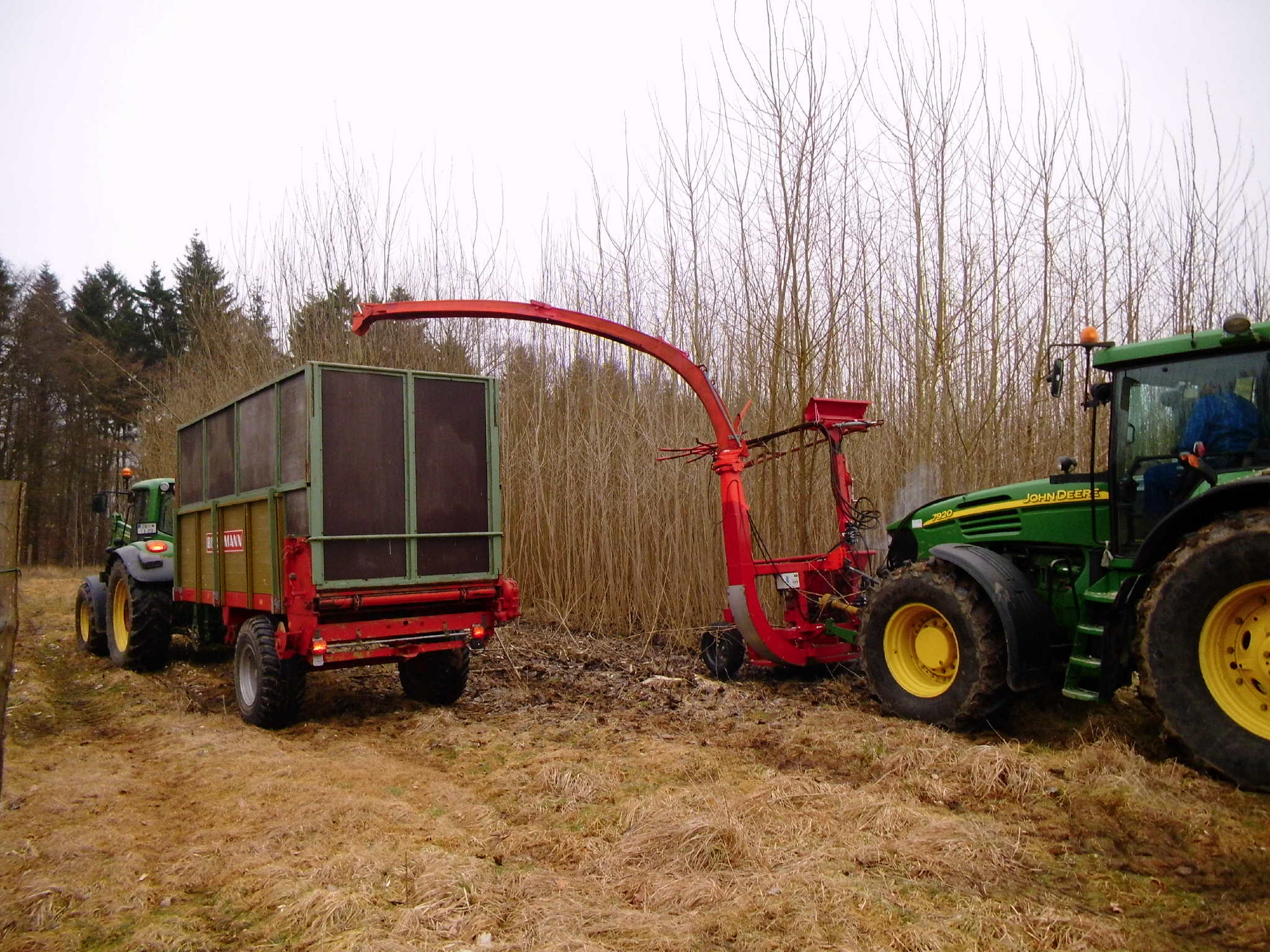
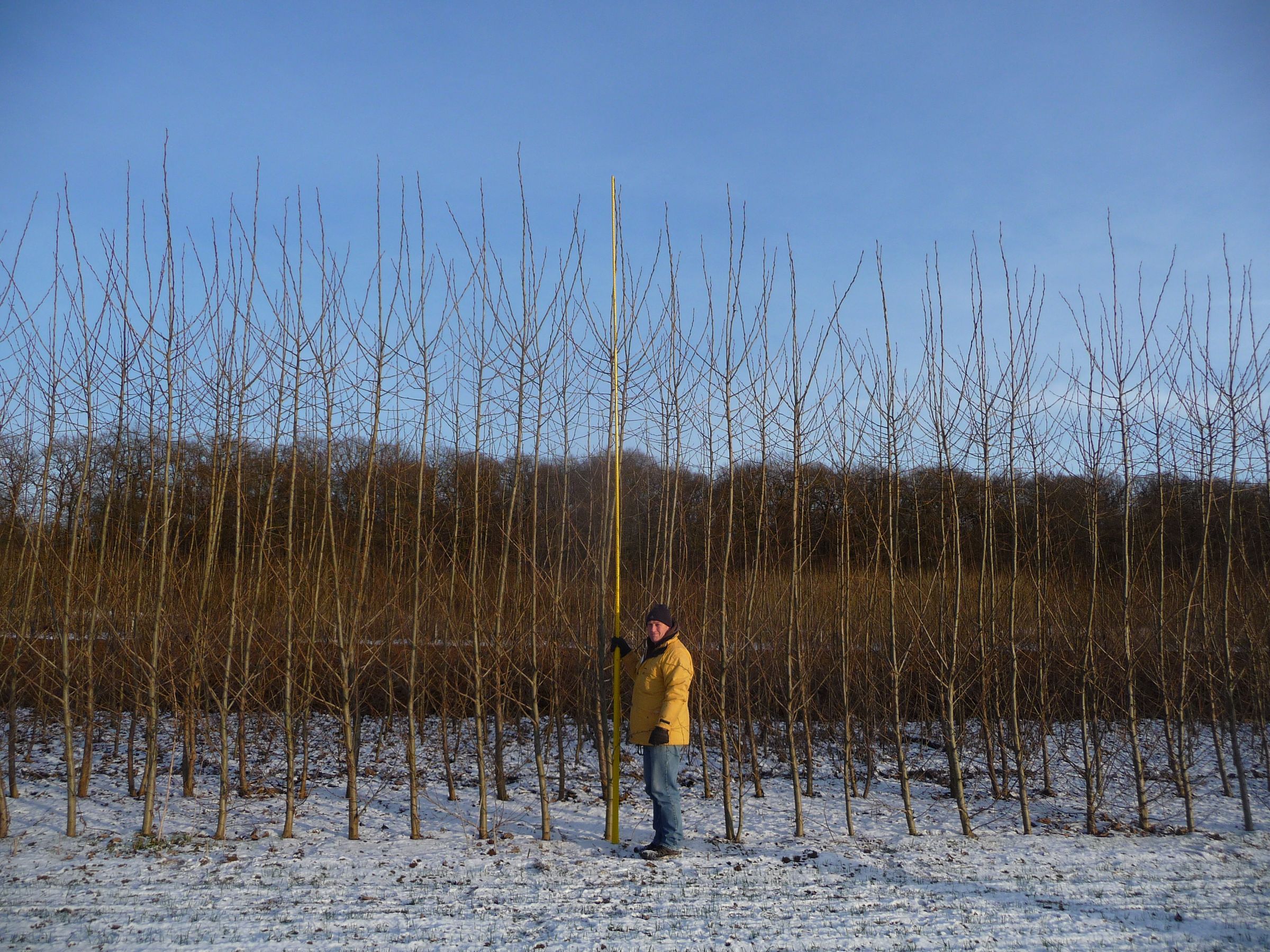
Over the past decade, we have also conducted research on fast-growing tree species such as poplar, larch, black locust, and willow. These species are characterized by short rotation cycles and versatile uses. They are important not only for energy and raw material production but also for increasing carbon sequestration and providing a range of ecosystem services.
Ongoing tasks:
Progeny testing from controlled crossings to determine breeding values
Suitability testing of fast-growing tree species for timber production
The evaluation and documentation of forest genetic resources at national as well as European level are another key focus of our work. The stands selected for conservation serve as an important baseline for forest tree breeding, and their long-term monitoring helps answering questions related to climate change.
To this end, clone archives are maintained as an ex situ conservation measure.
Ongoing task:
- Conservation of forest genetic resources (genetic conservation)
- Fagus orientalis as an alternative tree species in climate change (OrientBuche)
- Accelerated pine breeding for growth and drought tolerance using genomic selection (GS Kiefer)
- Hornbeam - From servant to an alternative tree species for the future (Hainbuche)
- Seed orchards of the future (OptiSaat)
- Genetics and dendroecology of beech: drought stress, in vitro culture and genomics (BucheTIG)
- Assessment of adaptability and growth performance of Norway maple (SpitzAhorn)
- Strategies for the production of value timber (Wertholz)
- Growth and drought stress tolerance in a red oak provenance trial (RubraSelect)
- Genetics and breeding of ash (FraxGen)
- Principles and strategies for the provision of high-quality and adaptable forest reproductive material under climate change (AdaptForClim)
- Procurement of highly-productive and suitable forest reproductive material for future forests under climate change (FitForClim)
- Genetic monitoring network for European beech and Norway spruce in Germany (GenMon)
- Breeding, genetic characterisation, and capacity assessment of Populus-poplar and black locust (FastWOOD I - III)
- Forest management in approved seed stands of European beech (Fagus sylvatica L.) for the production of high-quality reproductive material (Buchensaatgut)
- Detection of clone-site interactions in poplar and willow (ProLoc)
- Drought risk and adaptive potential of different Norway spruce populations (Fichte-Trockenheit)
- Optimising the management and sustainable use of forest genetic resources in Europe (GenTree)
- Designing trees for the future (Trees4Future)
Publications
- 0
Eisold A-ME, Bubner B, Blunk V, Schneck V (2025) Detection of Hymenoscyphus fraxineus in leaf rachises from European ash (Fraxinus excelsior) in Germany. Forests 16(1):149, DOI:10.3390/f16010149
- 1
Ufimov R, Irauschek F, Weißenbacher L, Kormann JM, Liepe KJ, Liesebach M, Chakraborty D, Schueler S, van Loo M (2025) Identifying superior oak provenances : performance analysis under five varied climatic conditions in Austria. Forest Ecol Manag 596:123062, DOI:10.1016/j.foreco.2025.123062
- 2
Burghard V, Wende S, Schneck V, Ulrich A (2025) Inoculation of Fraxinus excelsior seedlings with bacterial strains to enhance the tolerance against ash dieback. J Plant Dis Protect 132(1):9, DOI:10.1007/s41348-024-01014-9
- 3
Unterholzner L, Stolz J, van der Maaten-Theunissen M, Liepe KJ, van der Maaten E (2025) Phenotypic plasticity and inter-individual variability in Fagus sylvatica L. xylem traits challenge assisted migration. Sci Total Environ 1002:180596, DOI:10.1016/j.scitotenv.2025.180596
- 4
Pakull B, Schneck V, Liesebach H (2024) Clonality in black locust (Robinia pseudoacacia L.) and implications for seed production. Ann Forest Sci 81:39, DOI:10.1186/s13595-024-01257-4
- 5
Liepe KJ, van der Maaten E, van der Maaten-Theunissen M, Kormann JM, Wolf H, Liesebach M (2024) Ecotypic variation in multiple traits of European beech: selection of suitable provenances based on performance and stability. Eur J Forest Res 143(3):831-845, DOI:10.1007/s10342-024-01656-2
- 6
Lazic D, Geßner C, Liepe KJ, Lesur-Kupin I, Mader M, Blanc-Jolivet C, Gömöry D, Liesebach M, González-Martínez SC, Fladung M, Degen B, Müller NA (2024) Genomic variation of European beech reveals signals of local adaptation despite high levels of phenotypic plasticity. Nature Comm 15:8553, DOI:10.1038/s41467-024-52933-y
- 7
Kormann JM, van der Maaten E, Liesebach M, Liepe KJ, van der Maaten-Theunissen M (2024) High risk, high gain? Trade-offs between growth and resistance to extreme events differ in northern red oak (Quercus rubra L.). Front Plant Sci 15:1374498, DOI:10.3389/fpls.2024.1374498
- 8
Liepe KJ, Rieckmann C, Mittelberg HS, Liesebach M (2024) Phenotypic variation in 1,100 provenances of Picea abies measured over 50 years on 33 German trial sites. Sci Data 11:854, DOI:10.1038/s41597-024-03726-x
- 9
Unterholzner L, Stolz J, van der Maaten-Theunissen M, Liepe KJ, van der Maaten E (2024) Site conditions rather than provenance drive tree growth, climate sensitivity and drought responses in European beech in Germany. Forest Ecol Manag 572:122308, DOI:10.1016/j.foreco.2024.122308
- 10
Kormann JM, van der Maaten-Theunissen M, Unterholzner L, Liesebach M, Liepe KJ, van der Maaten E (2024) Variation in vessel traits of northern red oak (Quercus rubra L.) provenances revealed high phenotypic plasticity to prevailing environmental conditions. Trees 38(5):1283-1295, DOI:10.1007/s00468-024-02557-y
- 11
James J, Kastally C, Budde KB, González-Martínez SC, Milesi P, Pyhäjärvi T, Lascoux M, Alizoti P, Alía R, Ambrosio O, Aravanopoulos FA, Arx G von, Audrey A, Auñón F, Avanzi C, Avramidou EV, Bagnoli F, Liesebach M, Pakull B, Schneck V, et al (2023) Between but not within-species variation in the distribution of fitness effects. Mol Biol Evol 40(11):msad228, DOI:10.1093/molbev/msad228
- 12
Kormann JM, Liesebach M, Liepe KJ (2023) Provenances from introduced stands of Northern Red Oak (Quercus rubra L.) outperform those from the natural distribution. Forest Ecol Manag 531:120803, DOI:10.1016/j.foreco.2023.120803
- 13
Becker R, Ulrich K, Behrendt U, Schneck V, Ulrich A (2022) Genomic characterization of Aureimonas altamirensis C2P003 - a specific member of the microbiome of Fraxinus excelsior trees tolerant to ash dieback. Plants 11(24):3487, DOI:10.3390/plants11243487
- 14
Liepe KJ, van der Maaten E, van der Maaten-Theunissen M, Liesebach M (2022) High phenotypic plasticity, but low signals of local adaptation to climate in a large-scale transplant experiment of Picea abies (L.) Karst. in Europe. Front Forests Glob Change 5:804857, DOI:10.3389/ffgc.2022.804857
- 15
Ulrich K, Becker R, Behrendt U, Kube M, Schneck V, Ulrich A (2022) Physiological and genomic characterisation of Luteimonas fraxinea sp. nov., a bacterial species associated with trees tolerant to ash dieback. System Appl Microbiol 45(4):126333, DOI:10.1016/j.syapm.2022.126333
- 16
Lange CA, Knoche D, Hanschke R, Löffler S, Schneck V (2022) Physiological performance and biomass growth of different black locust origins growing on a post-mining reclamation site in Eastern Germany. Forests 13(2):315, DOI:10.3390/f13020315
- 17
Matisons R, Jansone D, Elferts D, Schneck V, Kowalczyk J, Wojda T, Jansons A (2022) Silver birch shows nonlinear responses to moisture availability and temperature in the eastern Baltic Sea region. Dendrochronologia 76:126003, DOI:10.1016/j.dendro.2022.126003
- 18
Ulrich K, Kube M, Becker R, Schneck V, Ulrich A (2021) Genomic analysis of the endophytic stenotrophomonas strain 169 reveals features related to plant-growth promotion and stress tolerance. Front Microbiol 12:687463, DOI:10.3389/fmicb.2021.687463
- 19
Matisons R, Elferts D, Krisans O, Schneck V, Gärtner H, Bast A, Wojda T, Kowalczyk J, Jansons A (2021) Non-linear regional weather-growth relationships indicate limited adaptability of the eastern Baltic Scots pine. Forest Ecol Manag 479:118600, DOI:10.1016/j.foreco.2020.118600
- 20
Matisons R, Elferts D, Krisans O, Schneck V, Gärtner H, Wojda T, Kowalczyk J, Jansons A (2021) Nonlinear weather-growth relationships suggest disproportional growth changes of Norway spruce in the Eastern Baltic region. Forests 12(6):661, DOI:10.3390/f12060661
- 21
Matisons R, Schneck V, Jansone D, Baders E, Dubra S, Zeltins P, Jansons A (2021) South-Eastern baltic provenances of scots pine show heritable weather-growth relationships. Forests 12(8):1101, DOI:10.3390/f12081101
- 22
Benavides R, Carvalho B, Bastias CC, López-Quiroga D, Mas A, Cavers S, Gray A, Albet A, Alía R, Ambrosio O, Aravanopoulos FA, Auñón F, Avanzi C, Avramidou EV, Bagnoli F, Ballesteros E, Barbas E, Liesebach M, Pakull B, Schneck V, et al (2021) The GenTree Leaf Collection: Inter- and intraspecific leaf variation in seven forest tree species in Europe. Global Ecol Biogeogr 30:590-597, DOI:10.1111/geb.13239
- 23
Opgenoorth L, Dauphin B, Benavides R, Heer K, Alizoti P, Martínez-Sancho E, Alía R, Ambrosio O, Audrey A, Auñón F, Avanzi C, Avramidou EV, Bagnoli F, Barbas E, Bastias CC, Bastien C, Ballesteros E, Liesebach M, Pakull B, Schneck V, et al (2021) The GenTree Platform: growth traits and tree-level environmental data in 12 European forest tree species. GigaSci 10(3):1-13, DOI:10.1093/gigascience/giab010
- 24
Liesebach H, Liepe KJ, Bäucker C (2021) Towards new seed orchard designs in Germany - A review. Silvae Genetica 70(1):84-98, DOI:10.2478/sg-2021-0007
- 25
Matisons R, Jansone D, Baders E, Dubra S, Zeltins P, Schneck V, Jansons A (2021) Weather-growth responses show differing adaptability of scots pine provenances in the South-Eastern parts of Baltic Sea Region. Forests 12(12):1641, DOI:10.3390/f12121641
- 26
Matisons R, Jansone D, Elferts D, Adamovics A, Schneck V, Jansons A (2019) Plasticity of response of tree-ring width of Scots pine provenances to weather extremes in Latvia. Dendrochronologia 54:1-10, DOI:10.1016/j.dendro.2019.01.002
- 27
Bubner B, Köhler A, Zaspel I, Zander M, Förster N, Gloger J, Ulrichs C, Schneck V (2018) Breeding of multipurpose willows on the basis of Salix daphnoides Vill., Salix purpurea L. and Salix viminalis L.. Landbauforsch Appl Agric Forestry Res 68(1-2):53-66, DOI:10.3220/LBF1538634874000
- 28
Heimpold C, Heimpold K, Schneck V, Tölle R, Liesebach M (2018) Untersuchung der Holzdichte von Aspen und Hybridaspen mittels Pilodyn. Landbauforsch Appl Agric Forestry Res 68(1-2):83-92, DOI:10.3220/LBF1537788833000
- 29
Sáenz-Romero C, Lamy J-B, Ducousso A, Musch B, Ehrenmann F, Delzon S, Cavers S, Chalupka W, Dagdas S, Hansen JK, Lee SJ, Liesebach M, Rau HM, Psomas A, Schneck V, Steiner W, Zimmermann NE, Kremer A (2017) Adaptive and plastic responses of Quercus petraea populations to climate across Europe. Global Change Biol 23(7):2831-2847, DOI:10.1111/gcb.13576
- 30
Yeaman S, Hodgins KA, Lotterhos KE, Suren H, Nadeau S, Degner JC, Nurkowski KA, Smets P, Wang T, Gray LK, Liepe KJ, Hamann A, Holliday JA, Whitlock MC, Rieseberg LH, Aitken SN (2016) Convergent local adaptation to climate in distantly related conifers. Science 353(6306):1431-1433, DOI:10.1126/science.aaf7812
- 31
Liepe KJ, Hamann A, Smets P, Fitzpatrick CR, Aitken SN (2015) Adaptation of lodgepole pine and interior spruce to climate: implications for reforestation in a warming world. Evol Appl 9(2):409-419, DOI:10.1111/eva.12345
- 32
Gapare WJ, Ivkovic M, Liepe KJ, Hamann A, Low CB (2015) Drivers of genotype by environmental interaction in radiata pine as indicated by multivariate regression trees. Forest Ecol Manag 353:21-29, DOI:10.1016/j.foreco.2015.05.027
- 33
Grimrath A, Müller-Navarra A, Schneck V, Liesebach M (2015) Vorkommen von Pappelrost an Aspen und Grau-Pappeln in Kurzumtriebsplantagen. Forstarchiv 86(6):155-158, DOI:10.4432/0300-4112-86-155
- 34
Taeger S, Zang C, Liesebach M, Schneck V, Menzel A (2013) Impact of climate and drought events on the Growth of Scots pine (Pinus sylvestris L.) provenances. Forest Ecol Manag 307:30-42, DOI:10.1016/j.foreco.2013.06.053
- 35
Liesebach H, Schneck V (2012) Chloroplast DNA variation in planted and natural generated stands of black locust (Robinia pseudoacacia L.). Silvae Genetica 61(1-2):27-35, DOI:10.1515/sg-2012-0004
- 36
Liesebach H, Schneck V (2011) Einfluss der waldbaulichen Behandlung von Robinienbeständen (Robinia pseudoacacia L.) auf die genetische Struktur der Nachkommenschaften: ein Vergleich Deutschland - Ungarn. Forstarchiv 82(4):120-124, DOI:10.4432/0300-4112-82-120
- 37
Liesebach M, Schneck V (2011) Entwicklung von amerikanischen und europäischen Herkünften der Roteiche in Deutschland. Forstarchiv 82(4):125-133, doi:10.4432/0300-4112-82-125
- 38
Guse T, Schneck V, Liesebach M, Wühlisch G von (2011) Improving growth performance and drought tolerance of Robinia pseudoacacia L. - analysis of seedlings of European Progenies. Indian J Ecol 38(Spec. Iss.):95-98
- 39
Liesebach H, Schneck V, Ewald E (2010) Clonal fingerprinting in the genus Populus L. by nuclear microsatellite loci regarding differences between sections, species and hybrids. Tree Genetics Genomes 6(2):259-269, DOI:10.1007/s11295-009-0246-5
- 40
Liesebach H, Yang M, Schneck V (2004) Genetic diversity and differentiation in a Black Locust (Robinia PseudoacaciaL.) Progeny Test [online]. Forest Genetics 11(2):151-161, zu finden in <https://kf.tuzvo.sk/sk/2004> [zitiert am 14.07.2015]
- 41
Hertel H, Schneck V (1999) Genetic and phenotypical variation of Scots pine (Pinus sylvestrisL.) populations due to seed origin and environmentsl conditions at experimental sites [online]. Forest Genetics 6(2):65-72, zu finden in <https://kf.tuzvo.sk/sk/1999> [zitiert am 29.05.2015]
- 0
Kormann JM, Liepe KJ, Liesebach M (2025) Die Herkunft macht den Unterschied bei Wachstum und Klimatoleranz der Rot-Eiche (Quercus rubra L.). Großhansdorf: Thünen-Institut für Forstgenetik, 2 p, Project Brief Thünen Inst 2025/22, DOI:10.3220/253-2025-145
- 1
Mittelberg HS, Klenke K, Liepe KJ, Liesebach H, Liesebach M (2025) Erste Ergebnisse eines 55-tägigen Trockenstresses an Herkünften der Hainbuche (Carpinus betulus L.) in der Jungwuchsphase. Thünen Rep 119:6-17, DOI:10.3220/253-2025-23
- 2
Kormann JM, van der Maaten-Theunissen M, Liesebach M, Liepe KJ, van der Maaten E (2025) Intraspezifische Unterschiede in der Reaktion auf Klimaeinflüsse bieten Möglichkeiten für die Herkunftswahl der Roteiche (Quercus rubra L.). Thünen Rep 119:115-122, DOI:10.3220/253-2025-23
- 3
Liesebach H, Bäucker C, Pakull B, Liepe KJ, Mittelberg HS, Eusemann P (2025) Ist Anpassungsfähigkeit quantifizierbar? Schlussfolgerungen zur Gewinnung von genetisch hochwertigem forstlichem Vermehrungsgut. Thünen Rep 119:46-56, DOI:10.3220/253-2025-23
- 4
Kormann JM, Liepe KJ, Liesebach M, van der Maaten-Theunissen M, van der Maaten E (2025) Neue Perspektiven bei der Roteiche. AFZ Der Wald 80(16):18-21
- 5
Kormann JM, Liepe KJ, Liesebach M (2025) Provenance differentiation in growth and climate tolerance of Northern red oak (Quercus rubra L.). Grosshansdorf: Thünen Institute of Forest Genetics, 2 p 2025/22a, DOI:10.3220/253-2025-146
- 6
Liepe KJ, Rieckmann C, Kormann JM, Liesebach M (2025) Standortspezifische Herkunftsunterschiede der Rot-Buche in Überleben und Wachstum entlang eines Nord-Süd Gradienten in Deutschland. Thünen Rep 119:194-210, DOI:10.3220/253-2025-23
- 7
Schirmer R, Tubes M, Karopka M, Schneck D, Schneck V, Konnert M (2025) Weißtannen aus den Karpaten - klimaplastische Herkünfte bewähren sich. AFZ Der Wald 80(13):46-51
- 8
Lazic D, Geßner C, Liepe KJ, Lesur-Kupin I, Mader M, Blanc-Jolivet C, Gömöry D, Liesebach M, González-Martínez SC, Fladung M, Degen B, Müller NA (2024) Genomic variation of a keystone forest tree species reveals signals of local adaptation despite high levels of phenotypic plasticity [Preprint]. Cold Spring Harbor: bioRxiv, 20 p, DOI:10.1101/2023.05.11.540382
- 9
Eisold A-ME, Bubner B, Schneck V (2024) Hymenoscyphus sp. isolate Hfra_Wsd_c1 internal transcribed spacer 1, partial sequence; 5.8S ribosomal RNA gene, complete sequence; and internal transcribed spacer 2, partial sequence. : PP905194.1 [Datenpublikation] [online]. Hinxton, Cambridgeshire: European Nucleotide Archive, zu finden in <https://www.ebi.ac.uk/ena/browser/view/PP905194.1> [zitiert am 09.01.2025]
- 10
Eisold A-ME, Bubner B, Schneck V (2024) Hymenoscyphus sp. isolate Hfra_Wsd_c3 small subunit ribosomal RNA gene, partial sequence; internal transcribed spacer 1 and 5.8S ribosomal RNA gene, complete sequence; and internal transcribed spacer 2, partial sequence : PP905193.1 [Datenpublikation] [online]. Hinxton, Cambridgeshire: European Nucleotide Archive, zu finden in <http://www.ebi.ac.uk/ena/browser/view/PP905193.1> [zitiert am 09.01.2025]
- 11
Liesebach M, Schneck V (2024) Pappeln und andere schnellwachsende Baumarten in Deutschland: Bericht der nationalen Pappelkommission 2020-2023. Braunschweig: Johann Heinrich von Thünen-Institut, 47 p, Thünen Working Paper 237, DOI:10.3220/WP1713423686000
- 12
Liepe KJ, Rieckmann C, Mittelberg HS, Liesebach M (2024) Phenotypic variation in 1,100 provenances of Picea abies measured over 50 years on 33 German trial sites [Datenpublikation] [online]. 3 CSV files, 1 PDF file, 4 R scripts, 1 Shapefile. Göttingen: OpenAgrar, zu finden in <https://www.openagrar.de/receive/openagrar_mods_00095868> [zitiert am 25.07.2024], DOI:10.3220/DATA20240507093138-0
- 13
Liesebach M, Schneck V (2024) Poplars and other fast-growing tree species in Germany: Report of the National Poplar Commission 2020-2023. Braunschweig: Johann Heinrich von Thünen-Institut, 46 p, Thünen Working Paper 237a, DOI:10.3220/WP1713424619000
- 14
Eisold A-ME, Bäucker C, Schneck V (2024) Tissue culture as proper tool for forest tree breeding - A case study with wood of value. In: Sota V, Werbrouck S (eds) In vitro culture of woody crops: problem solving by new approaches : The 2nd Conference of Cost Action CA21157 CopyTree, 22-24 April, 2024, Bulduri Technical School, Jurmala, Latvia ; Book of proceedings. pp 68-75
- 15
Mittelberg HS, Liepe KJ, Liesebach H, Liesebach M (2023) Die Hainbuche und ihr Potenzial für den Wald. Thünen Rep 105:238-243
- 16
Haag V, Bäucker C, Meier-Dinkel A, Eisold A-ME, Fuchs A, Hutter I, Karfik V, Lewandrowski TL, Liesebach H, Quambusch M, Schatz L, Schneck V, Wallbraun M (2023) Die Riegelung des Holzes (Teil I) : Wissenschaftler der Fachbereiche Holzanatomie, Genetik und Pflanzenzucht entdecken Anhaltspunkte für Wachstumsmerkmal. Holz Zentralbl 149(49):817-819
- 17
Liepe KJ, van der Maaten E, van der Maaten-Theunissen M, Kormann JM, Wolf H, Liesebach M (2023) Ecotypic variation in multiple traits of European beech - selection of suitable provenances based on performance and stability [Preprint]. Durham, NC: Research Square, 25 p, DOI:10.21203/rs.3.rs-3387770/v1
- 18
Liesebach M, Liepe KJ, Šeho M, Kätzel R, Becker F, Löffler S (2023) Ergebnisse aus dem Internationalen Buchenherkunftsversuch 1996/98 von den Versuchsflächen in Deutschland. Thünen Rep 105:97-127
- 19
Eisold A-ME, Bäucker C, Liesebach H, Schneck V (2023) Geriegelte Werthölzer - Vermehrung und genetische Charakterisierung. Thünen Rep 105:164-169
- 20
Schneck V (2023) Nachkommenschaftsprüfungen bei der Wald-Kiefer (Pinus sylvestris L.). Thünen Rep 105:153-163
- 21
Liesebach H, Liepe KJ, Bäucker C (2023) Neue Samenplantagen für Deutschland - Empfehlungen auf Basis internationaler Erkenntnisse. Thünen Rep 105:274-281
- 22
Thurm EA, Liesebach M, Schneck V, Voth W (2023) Pflanzen wir Buchen unter Buchen? : Anpassung von Baumarten im Klimawandel. Immergrün : Forschung(1, Frühling/Sommer 2023):5-13
- 23
Ardao Rivera E, Cao HX, Becker F, Bilela-Eckert S, Braun A, Brückner M, de Abreu I, Erbacher J, Feußner I, Feußner K, Gailing O, Hofmann M, Kätzel R, Kelly AA, Kleinschmit J, Kormann JM, Lamprecht N, Liepe KJ, Liesebach M, Löffler S, et al (2023) Roteiche im Klimawandel: Grundlagen zur Züchtung unter Berücksichtigung der Trockenstresstoleranz (RubraSelect Projekt). Thünen Rep 105:244-256
- 24
Kormann JM, Liesebach M, Liepe KJ (2023) Wachstum der Roteiche (Quercus rubra L.) in zwei Herkunftsversuchsserien in Deutschland. Thünen Rep 105:257-266
- 25
Past F, Schneck V, Bubner B, Schrader M, Röhe P (2022) Chancen für eine gefährdete Baumart. Land Forst 175(19):44-46
- 26
Wolf H, Schneck V, Röhe P (2022) Die Hybridlärche - eine besonders schnellwachsende und standorttolerante Baumart. 16 p Mitt Ges Förderung schnellwachsender Baumarten Norddeutschl 7/2021
- 27
Liesebach M, Liepe KJ (2022) Reichen die Herkunftspotenziale heimischer Baumarten im Klimawandel? In: 38. Osnabrücker Baumpflegetage. Berlin; Hannover: Patzer, pp 57-63
- 28
Schneck V, Bubner B, Past F, Eisold A-ME (2022) ResEsche - Ein Beitrag zur Rettung der Esche. Großhansdorf: Thünen-Institut für Forstgenetik, 2 p, Project Brief Thünen Inst 2022/27, DOI:10.3220/PB1658736221000
- 29
Schneck V, Bubner B, Past F, Eisold A-ME (2022) ResEsche - Research for survival of common ash in Germany. Grosshansdorf: Thünen Institute of Forest Genetics, 2 p, Project Brief Thünen Inst 2022/27a, DOI:10.3220/PB1658736609000
- 30
Lange CA, Knoche D, Schneck V, Anders A (2021) Die Robinie - Anbauversuch unter schwierigen Bedingungen. AFZ Der Wald 76(2):24-29
- 31
Past F, Schrader M, Bubner B, Schneck V, Röhe P (2021) Forschungsprojekt "ResEsche" - Chance für die Baumart Esche. AFZ Der Wald 76(8):12-16
- 32
Gömöry D, Himanen K, Tollefsrud MM, Uggla C, Kraigher H, Bordács S, Alizoti P, A’Hara S, Frank A, Proschowsky GF, Frýdl J, Geburek T, Guibert M, Ivankovic M, Jurse A, Kennedy S, Kowalczyk J, Liesebach H, Maaten T, Pilipovic A, Proietti R, Schneck V, Servais A, Skulason B, Sperisen C, Wolter F, Yüksel T, Bozzano M (2021) Genetic aspects linked to production and use of forest reproductive material (FRM): Collecting scientific evidence for developing guidelines and decision support tools for effective FRM management. Barcelona: Euforgen Secretariat, 216 p
- 33
Liesebach M, Rieckmann C (2021) Mammutbäume - eine Option im Klimawandel für die Forstwirtschaft in Deutschland? Mitt Dtsch Dendrol Ges 106:93-107
- 34
Rieckmann C, Schneck V, Liepe KJ, Liesebach H, Liesebach M (2021) Neue Zuchtpopulationen bei Douglasie und Kiefer. AFZ Der Wald 76(11):25-29
- 35
Schneck V, Heimpold C, Liesebach M (2020) Aktuelle Ergebnisse der Züchtung von Hybridaspen (Populus x wettsteinii Hämet-Ahti). Thünen Rep 76:133-143
- 36
Liepe KJ, Mittelberg HS, Liesebach M (2020) Der IUFRO-Fichtenherkunftsversuch von 1964/68 - Eine erste abschließende Auswertung der deutschen Flächen nach Herkunftsgruppen. Thünen Rep 76:60-72
- 37
Liesebach M, Schneck V (2020) Die Genressourcen der Robinie erhalten und nutzen. AFZ Der Wald 75(20):16-20
- 38
Rieckmann C, Schneck V, Liesebach M (2020) Ein Vergleich von Absaaten europäischer Hybridlärchen-Samenplantagen. Thünen Rep 76:100-118
- 39
Hofmann M, Grotehusmann H, Schneck V (2020) Robinie - eine Option für den Klimawandel? - Erste Ergebnisse einer Klonprüfung. Thünen Rep 76:211-221
- 40
Bäucker C, Schneck V, Liesebach H (2020) Versuchsanlagen mit in vitro vermehrten Riegelahornpflanzen für die Zulassung von Wertholz-Klonen nach FoVG. Thünen Rep 76:155-167
- 41
Liesebach M, Liepe KJ (2019) Forstpflanzenzüchtung in Deutschland im Aufwind : Entwicklung und aktuelle Herausforderungen. ProWald(5):4-7
- 42
Heimpold C, Rieckmann C, Liesebach M (2019) Neues aus der Forstpflanzenzüchtung für die Praxis : Sechste Tagung der Sektion Forstgenetik/Forstpflanzenzüchtung vom 16. bis 18. September in Dresden. Holz Zentralbl 145(44):962-964
- 43
Liesebach M, Schneck V (2018) Clone test with hybrid aspen (As130). Thünen Rep 62:127-130
- 44
Liesebach M, Schneck V, Pecenka R, Spikermann H, Paulsen HM (2018) Comparison of the biomass production from 3 three-year rotation cycles of 2 ProLoc sites. In: Seventh international poplar symposium : new bioeconomies: exploring the role of salicaceae ; 28th October - 4th November 2018, Buenos Aires, Argentina - Book of Abstracts. Buenos Aires: IUFRO, p 88
- 45
Liesebach M, Rieckmann C, Rogge M, Wolf H (2018) Intra-specific variation in growth and quality of beech in a 25-year old provenance trial. In: Di Filippo A, Madsen P, Matsui T, Pederson N, Piovesan G, Sagheb-Talebi K (eds) 11th International Beech Symposium "Natural and managed beech forests as reference ecosystems for the sustainable management of forest resources and the conservation of biodiversity", 18-21 September 2018 ; International Union of Forest Research Organizations (IUFRO) Group 1.01.07 - "Ecology and Silviculturae of Beech". Viterbo: IUFRO, p 18
- 46
Liesebach M, Schneck V (2018) The German forest tree breeding concept - the base for new seed orchards. Thünen Rep 62:41-48
- 47
Liesebach M, Schneck V (2018) Züchtung, Zulassungen, Vermehrung. In: Veste M, Böhm C (eds) Agrarholz - Schnellwachsende Bäume in der Landwirtschaft : Biologie - Ökologie - Management. Wiesbaden: Springer Spektrum, pp 119-145, DOI:10.1007/978-3-662-49931-3_5
- 48
Naujoks G, Schneck V, Ewald D (2017) 30 Jahre In-vitro-Vermehrung der Braunmaser-Birke. AFZ Der Wald 72(5):32-35
- 49
Liesebach M, Schneck V (2017) Die Traubeneiche und ihre Herkünfte (Teil 1). Forstzeitung 128(6):16-17
- 50
Liesebach M, Schneck V (2017) Die Traubeneiche und ihre Herkünfte (Teil 2). Forstzeitung(7):18-19
- 51
Liepe KJ, Liesebach M (2017) Einfluss der Genetik auf das Wachstum genauer bestimmen. AFZ Der Wald 72(10):25-27
- 52
Liesebach M, Ahrenhövel W, Janßen A, Karopka M, Rau HM, Rose B, Schirmer R, Schneck D, Schneck V, Steiner W, Schüler S, Wolf H (2017) Planung, Anlage und Betreuung von Versuchsflächen der Forstpflanzenzüchtung : Handbuch für die Versuchsanstellung. Braunschweig: Johann Heinrich von Thünen-Institut, 80 p, Thünen Rep 49, DOI:10.3220/REP1496222427000
- 53
Schröder J, Schneck V (2017) Regressionsanalytischer Ansatz zur versuchsübergreifenden Auswertung von Herkunfts-Versuchen mit Wald-Kiefer (Pinus sylvestris L.). Beitr Nordwestdt Forstl Versuchsanst 16:55-64
- 54
Schröder J, Schneck V, Liesebach M (2017) Stärkung der Nutzfunktion durch Forstpflanzenzüchtung. Holz Zentralbl 143(4):109
- 55
Liepe KJ, Liesebach M (2017) Verwendungszonen für Vermehrungsgut von Douglasie auf Basis von Klimadaten und Herkunftsversuchen. Beitr Nordwestdt Forstl Versuchsanst 16:39-54
- 56
Liepe KJ, Liesebach M (2016) Die Berücksichtigung kleinräumiger Standortsunterschiede verbessert die Evaluation von Nachkommenschaftsprüfungen. Thünen Rep 45:78-88
- 57
Liesebach M, Schneck V (2016) Ist die Einteilung der forstlichen Herkunftsgebiete in Deutschland noch zeitgemäß? Thünen Rep 45:15-20
- 58
Gray LK, Liepe KJ, Hamann A, Aitken SN (2015) Geographic patterns of genetic variation observed in adaptive SNPs, growth chamber common gardens, and long-term field trials: implications for adaptation to climate change. In: Vettori C, Vendramin GG, Paffetti D, Travaglini D (eds) IUFRO Tree Biotechnology 2015 Conference : "Forests: the importance to the planet and society" ; 8-12 June 2015, Florence, Italy ; Proceedings. Florenz: IUFRO, p 81
- 59
Grimrath A, Müller-Navarra A, Schneck V, Liesebach M (2015) Melampsora-Rost an Pappeln der Sektion Populus. Thünen Rep 26:177-180
- 60
Liepe KJ, Schröder J, Wojacki J (2015) Neue Perspektiven der Züchtung für Douglasie und Waldkiefer. AFZ Der Wald 70(11):27-29
- 61
Schneck V (2014) Tree improvement for forests under climate change in Germany. In: Tree breeding strategies to cope with climate change : Sep. 16, 2014 ; Korea Forest Research Institute, Korea. Seoul: Korea Forest Research Institute, pp 19-31
- 62
Taeger S, Zang C, Liesebach M, Schneck V, Menzel A (2014) Wie reagieren verschiedene Herkünfte der Kiefer auf Trockenheit? : Auswertung des Herkunftsversuches IUFRO 1982 zeigt Bandbreite der Reaktion. LWF Aktuell(98):44-47
- 63
Krakau U-K, Liesebach M, Aronen T, Lelu-Walter M-A, Schneck V (2013) Chapter 6: Scots Pine (Pinus sylvestris L.). In: Paques LE (ed) Forest tree breeding in Europe : current state-of-the-art and perspectives. Dordrecht; Heidelberg; London: Springer, pp 267-323
- 64
Liesebach M, Degen B, Grotehusmann H, Janßen A, Konnert M, Rau H-M, Schirmer R, Schneck D, Schneck V, Steiner W, Wolf H (2013) Strategie zur mittel- und langfristigen Versorgung mit hochwertigem forstlichem Vermehrungsgut durch Züchtung in Deutschland. Braunschweig: Johann Heinrich von Thünen-Institut, 78 p, Thünen Rep 7, DOI:10.3220/REP_7_2013
- 65
Liesebach M, Schneck V, Ewald D, Wolf H (2013) Züchtung von Zitter-Pappeln für Kurzumtriebsplantagen auf landwirtschaftlichen Flächen. Gülzower Fachgespr 43:195-205
- 66
Krabel D, Wolf H, Konnert M, Liesebach M, Schneck V (2012) Bergahorn : eine Baumart mit Züchtungspotenzial. AFZ Der Wald 67(5):10-12
- 67
Schneck V (2012) Prüfung von Pappelklonen aus einem alten Sortiment auf Anbaueignung für Energieholzpflanzungen. Beitr Nordwestdt Forstl Versuchsanst 8:370-371
- 68
Liesebach M, Schneck V, Wolf H (2012) Züchtung von Aspen für den Kurzumtrieb. Beitr Nordwestdt Forstl Versuchsanst 8:71-90
- 69
Liesebach H, Schneck V, Ewald E (2011) Klonidentifizierung in der Gattung Populus L. mit nuklearen Mikrosatellitenmarkern. Mitt Forschungsanst Waldökologie Forstwirtsch 69/11:115-122
- 70
Schneck V (2011) Züchtung von Hybrid-Lärche in Deutschland - ein Beispiel für erfolgreiche Forstpflanzenzüchtung? Mitt Forschungsanst Waldökologie Forstwirtsch 69/11:149-157
- 71
Schneck V (2010) Robinie - Züchtungsansätze und Begründungsverfahren [online]. In: Deutschland / Bundesministerium für Ernährung, Landwirtschaft und Verbraucherschutz (eds) Beiträge - Agrarholz 2010 : Symposium am 18. und 19. Mai 2010 in Berlin. Bonn: BMELF, pp 1-8, zu finden in <http://www.fnr-server.de/cms35/fileadmin/allgemein/pdf/veranstaltungen/Agrarholz2010/11_2_Beitrag_Schneck.pdf> [zitiert am 17.06.2010]
- 72
Krabel D, Liesebach M, Schneck V, Wolf H (2010) Transfer von Saat- und Pflanzgut innerhalb Europas - Was wissen wir? Forst Holz 65(11):22-32
- 73
Liesebach M, Schneck V (2009) Forstforschung prägt das Landschaftsbild der Märkischen Schweiz. Jb Landkr Märkisch Oderland 2010:71-73
- 74
Schneck V, Liesebach M, Rau HM (2009) Klima-Wachstums-Beziehungen bei verschiedenen Herkünften der Wald-Kiefer (Pinus sylvestris L.). In: Freibauer A, Osterburg B (eds) Aktiver Klimaschutz und Anpassung an den Klimawandel - Beiträge der Agrar- und Forstwirtschaft : 15.-16. Juni 2009 Braunschweig ; Tagungsband. Braunschweig: vTI, p 73
- 75
Schneck V, Zaspel I (2008) Phytopathologische Probleme bei der Anzucht und Kultur von Pappeln (Populus spp.) für die Biomasseproduktion. Cottbuser Schr Ökosystemgenese Landschaftsentwickl 6:203-207
- 76
Schneck V (2008) Scots pine in north-eastern Germany. In: Liesebach M, Schneck V (eds) Workshop on "Scots Pine Breeding" : Wageningen/NL, Friday: 06 June 2008 ; programme & book of abstracts ; activity-no. 5: Optimisation of breeding strategies.
- 77
Schneck V (2007) Ergebnisse und Perspektiven der Kreuzungszüchtung bei der Kiefer im nordostdeutschen Tiefland. Eberswalder Forstl SchrR 32:407-413
- 78
Liesebach H, Schneck V, Kätzel R (2007) Phänotypische und genetische Variation bei Landschaftsgehölzen : ein Review und Beitrag zur aktuellen Diskussion über Herkunftsgebiete. Naturschutz Landschaftsplanung 32(10):297-303
- 79
Schneck V (2007) Wachstum von Kiefern unterschiedlicher Herkunft - Auswertung der Kiefernherkunftsversuche im nordostdeutschen Tiefland. Eberswalder Forstl SchrR 32:374-382
- 80
Dünisch O, Koch G, Puls J, Schneck V, Dreiner K (2006) Bildung und Eigenschaften juvenilen Robinienholzes (Robinia pseudoacacia L.). In: Proceedings Forstwissenschaftliche Tagung, Tharandt, 21.-22.09.2006. DVFFA, p 87
- 81
Schneck V (2006) Ein Langzeitprogramm zur Züchtung von Hybridlärche (Larix x eurolepis Henry). In: Forstliche Genressourcen als Produktionsfaktor : Tagungsband 26. Tagung der Arbeitsgemeinschaft Forstgenetik und Forstpflanzenzüchtung, Fuldatal, 20.-22.10.2005. Hessen-Forst, pp 212-219
- 82
Schneck V (2006) Ergebnisse der Züchtung von Hybridlärchen. Vortr Pflanzenzüchtung 70:147-156
- 83
Ewald D, Naujoks G, Schneck V (2006) Micropropagation of fast growing tree species as possible alternatives for agriculture. In: Jezowski S, Wojciechowicz MK, Zenkteler E (eds) Alternative plants for sustainable agriculture. Poznan: Institute of Plant Genetics, Polish Academy of Sciences, pp 23-31
- 84
Ewald D, Schneck V, Liesebach H (2006) Riegelahorn - Vermehrung und Anbauversuch. In: Forstliche Genressourcen als Produktionsfaktor : Tagungsband 26. Tagung der Arbeitsgemeinschaft Forstgenetik und Forstpflanzenzüchtung, Fuldatal, 20.-22.10.2005. Hessen-Forst, pp 131-132
- 85
Zaspel I, Schneck V (2006) Susceptibility to Phytophthora alni and the growth performance of common alder (A. glutinosa Gaertn.) progenies. In: Oszako T, Woodward S (eds) Possible limitation of decline phenomena in broadleaved stands. Warsaw: FRI, pp 135-141
- 86
Schneck V, König AO (2006) TreeBreedEx - ein Impuls für die europäische Forstpflanzenzüchtung. In: Forstliche Genressourcen als Produktionsfaktor : Tagungsband 26. Tagung der Arbeitsgemeinschaft Forstgenetik und Forstpflanzenzüchtung, Fuldatal, 20.-22.10.2005. Hessen-Forst, pp 220-221
- 87
Yang M, Hertel H, Schneck V (2004) Allozyme variability of provenance populations of Robinia pseudoacacia from Middle Europe. Acta Genet Sin 31(12):1439-1447
- 88
Yang M, Hertel H, Schneck V (2004) Genetic diversity and population structure of Robinia pseudoacacia provenances from middle Europe. Acta Ecol Sin 24(12):2700-2706
- 89
Hertel H, Schneck V (2004) Untersuchungen zur genetischen Struktur eines Robinienbestandes (Robinia pseudoacaciaL.) in Brandenburg. Angew Wiss 498:257-263
- 90
Schneck V, Hertel H, Yang M (2003) Prüfung von Nachkommenschaften ausgewählter Robinienbestände - Konzept, Anzuchtphase und Populationsstruktur. In: Behm A (ed) Neue Baumarten im deutschen und europäischen Recht für forstliches Vermehrungsgut : 23. - 25. Oktober 2002, Teisendorf, Deutschland. Teisendorf: ASP, pp 111-118
- 91
Markussen T, Wrobel S, Schneck V, Fladung M (2002) Construction of linkage maps and QTL analyses in Pinus Sylvestris (L.). In: International Congress "Sustainable Forestry Wood Products and Biotechnology" (Biofor-02), Vitoria-Gasteiz, November, 11 to 14, 2002 : [proceedings]. pp 313-318
- 92
Schneck V (2002) Ergebnisse und Perspektiven der forstlichen Selektions- und Kreuzungszüchtung am Beispiel der Kiefer. Beitr Forstwirtsch Landschaftsökol 36(3):132-135
- 93
Schneck V, Hertel H (1999) Untersuchungen zu Auswirkungen von Klimaänderungen und Standortunterschieden auf verschiedene Herkünfte der Gemeinen Kiefer (Pinus sylvestrisL.). Ber Landwirtsch 77(1):134-136
Group leader
Scientists
- Dr. Jonathan Kormann
- Dr. Katharina Liepe
- Hannah Mittelberg
- Christoph Rieckmann
- Volker Schneck
Technicians
- Marie-Fee August
- Susanne Hoppe
- Petra Müller
- Ute Straßburg-Käßler