![[Translate to English:]](/media/_processed_/f/3/csm_2022_Titelbild_gross2_Saatgut_in_Hand_9ffb8f5748.jpg "[Translate to English:]")
![[Translate to English:]](/media/_processed_/f/3/csm_2022_Titelbild_gross2_Saatgut_in_Hand_c17270fcc0.jpg "[Translate to English:]")
Project
Oriental beech as an alternative tree species under climate change
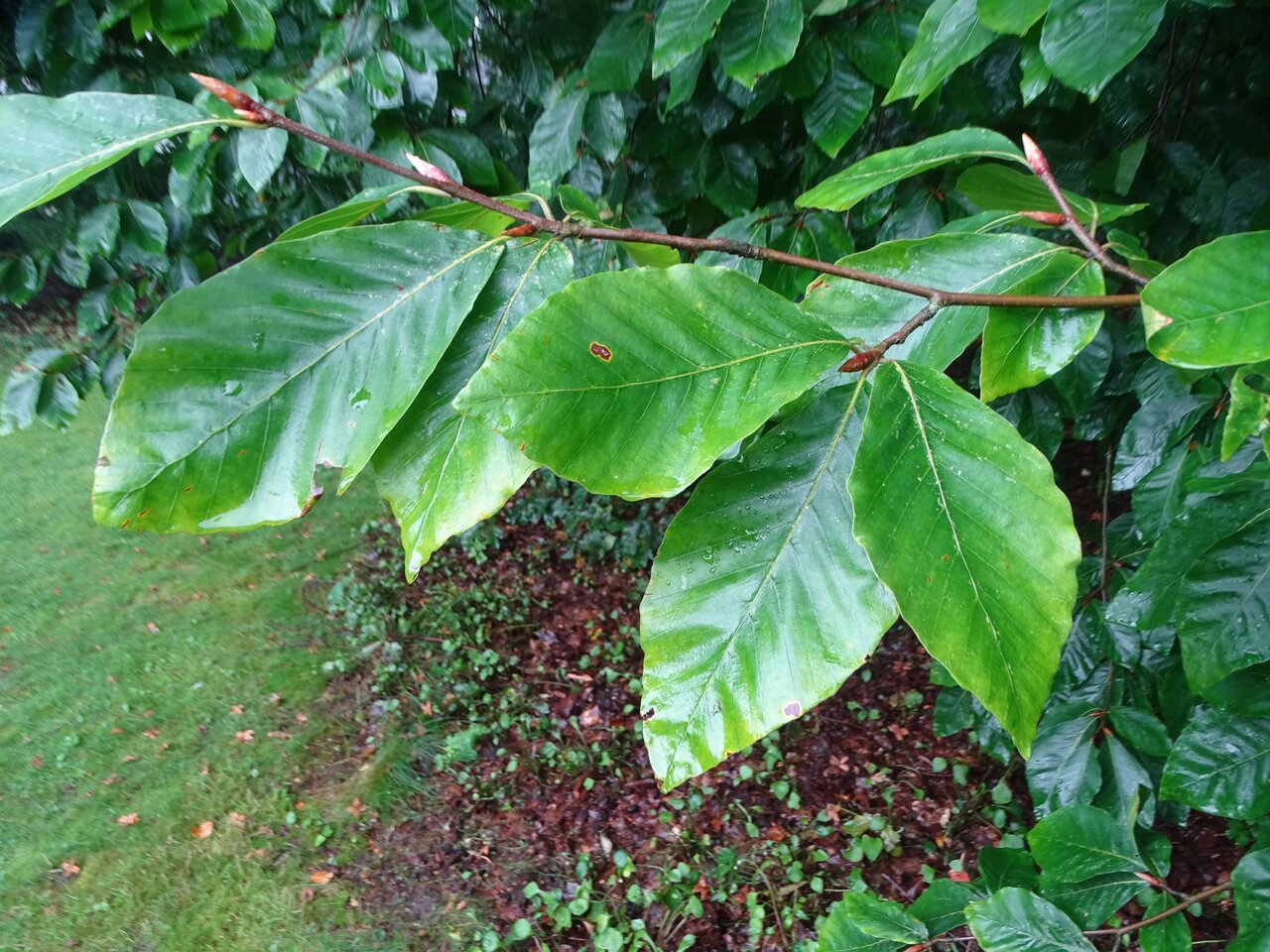
Fagus orientalis as an alternative tree species under climate change - Identification of high-quality seed sources based on genetic and phenotypic characterization; Sub-project 4: Identification of high-quality stands and establishment of a provenance trial
One main task of forest management in Germany is the establishment of genetically diverse, multi-layered, stable forests with tree species adapted to expected future climate. There is great interest in alternative tree species in order to maintain forest functions. In addition to already established non-native species, the focus is shifting to other species for which there is little experience to date. These include the Oriental beech, which is characterised by a higher drought tolerance than the related European beech, with otherwise comparable properties (site requirements, shade tolerance, wood use). It has great potential for sustainably ensure all forest functions.
Background and Objective
This project focuses on the genetic and phenotypic variation of Oriental beech. The aims are:
- the identification of high-quality and adaptable source material from the entire distribution area with a new provenance trial,
- the establishment of a genetic reference covering the entire distribution area,
- the development and application of a set of neutral and adaptive markers,
- the assignment of stocks established in Germany to their potential origin and the assessment of their adaptive potential,
- the investigation of hybridisation between Oriental beech and European beech,
- the comparison of provenances of both beech species with regard to the efficiency and stability of their water-conducting system, which is of decisive importance for the survival and productivity of trees,
- the comparison of the growth dynamics of European beech and Oriental beech based on dendroecological analyses,
- the identification of plus trees based on the genetic and phenotypic data collected.
- Finally, a new genetic monitoring area to be established will serve to investigate hybridisation with neighbouring red beech populations in the long term.
Approach
Working packages in which Thünen Institute participates:
WP 1: Identification and sampling of natural and artificial populations of Oriental beech
WP 2: Analysis of neutral and adaptive gene markers to detect genetic variation
WP 3: Comparison of growth dynamics between Oriental beech and European beech
WP 5: Establishment of a provenance trial
WP 7: Transfer into practice, publication and reports
Thünen-Contact

Involved Thünen-Partners
Involved external Thünen-Partners
- Georg-August-Universität Göttingen
(Göttingen, Deutschland) - Bayerisches Amt für Waldgenetik (AWG)
(Teisendorf, Deutschland) - Forstliche Versuchs- und Forschungsanstalt Baden-Württemberg
(Freiburg, Deutschland) - Technische Universität Dresden
(Dresden, Tharandt, Deutschland)
Funding Body
-
Federal Ministry of Agriculture, Food and Regional Identity (BMLEH)
(national, öffentlich)
Duration
2.2025 - 12.2027
More Information
Project funding number: 2223NR082D
Project status:
ongoing