Dossier
Protecting soils through sustainable management
Bastian Steinhoff-Knopp | 26.06.2025
Soils are the foundation of agriculture and forestry - and at the same time their most important factor of production. In ecosystems, soils serve as important filters and storages for water and nutrients. Farmers have a responsibility to preserve the soil through their farming practices. good agricultural practice sets out corresponding principles in the Federal Soil Protection Act.
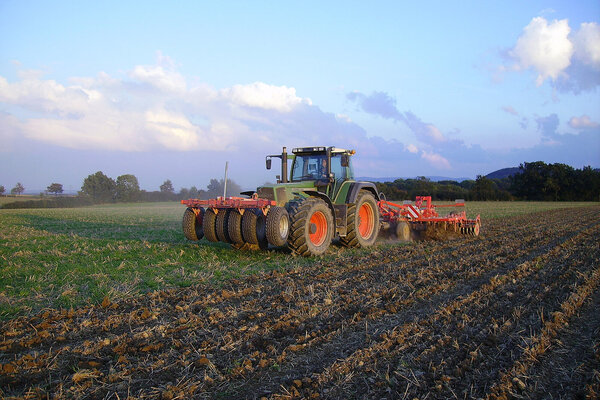
Managed agricultural soils are often equated with the usable land in terms of area, but soils are more: . In agriculture, the quality of soils is just as important as the number of hectares cultivated: Is the soil fertile? Can it hold water and be tilled well? Which arable crops is it suitable for? Soils fulfil vital functions in the ecosystem: for example, they convert nutrients or regulate and filter percolating rainwater.
Functional soils and the ecosystem services they supply are the foundation of our society. For example, 95 per cent of all food is derived from plant cultivation – and therefore from the soil. Preserving soils and their functions is therefore essential for sustainable agriculture and food security.
The expertise articles in this dossier show the challenges farmers face in soil management as well as possible solutions.
In Germany, soil protection is legally enshrined in the Federal Soil Protection Act (BBodSchG), enacted in 1999. Specifically, the following soil functions are protected according to §2 BBodSchG:
- Natural soil functions as
- Basis for life and a habitat for people, animals, plants and soil organisms (habitat function),
- part of natural systems, especially by means of its water and nutrient cycles (cycle function),
- a medium for decomposition, balance and restoration as a result of its filtering, buffering and substance-converting properties, and especially groundwater protection (buffer function).
- Functions as an archive of natural and cultural history (archive function).
- Functions useful to people as
- a medium that holds deposits of raw materials,
- land for settlement and recreation,
- land for agricultural and silvicultural use,
- land for other economic and public uses, for transport, and for supply, provision and disposal.
The climate protection function of soils is not yet specifically included in the German Federal Soil Protection Act. However, arable soils in Germany alone store 2.5 billion tonnes of organic carbon, making them the largest terrestrial carbon reservoir. Carbon dioxide and other greenhouse gases are continuously fixed in the soil and released to the atmosphere. As dynamic systems, soils are both a source and a sink for greenhouse gases. Adapted management can preserve or even build up soil organic carbon and thus contribute to achieving climate protection targets.
Preserving soil fertility is one of the main objectives of the ‘good agricultural practice’ as laid down in the Federal Soil Protection Act. Farmers are therefore obliged to prevent the degradation of their soils. The requirements of the Federal Soil Protection Act are fulfilled if the site-adapted management follows the principles of good agricultural practice (§17).
The principles of good agricultural practice cover seven subject areas:
- Site-adapted soil management taking into account the weather conditions
- conserving or improving soil structure
- Avoiding soil compaction
- Avoiding soil erosion as far as possible
- Preservation of natural structural elements in the agricultural landscape
- Maintaining and promoting biological activity by crop rotation
- preserve site typical humus contents
The focus of good agricultural practice is particularly on adapted forms of management that avoid soil erosion and soil compaction. However, as soils must be managed site-specific considering weather conditions, no concrete regulations are laid down. Rather, the principles regulate which soil protection goals are to be achieved. Agricultural advisory authorities of the federal states support farmers in implementing the principles of good agricultural practice. Fact sheets and information materials show how the principles can be implemented in practice.
In addition to the good agricultural practice in soil protection regulated in the Federal Soil Protection Act, farmers are also subject to corresponding principles for plant protection and fertilisation. Nature conservation law utilises the concept of good professional practice as well.
Further information
The brochures of the aid information service on good professional practice:
- for soil management and soil protection and
- for soil fertility. (both in German)