Expertise
Humus makes the soil strong
Christopher Poeplau, Axel Don | 02.10.2025
Humus is a true all-rounder: it stores water and nutrients, protects against erosion, promotes soil life – and is even good for the climate. The German Agricultural Soil Inventory shows the state of Germany's humus reserves and which approaches to humus build-up are most promising.
More humus, better soil health
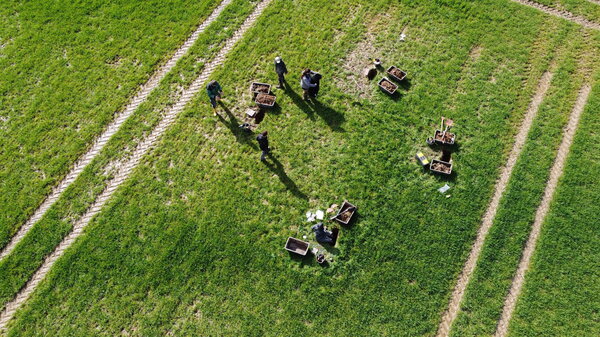
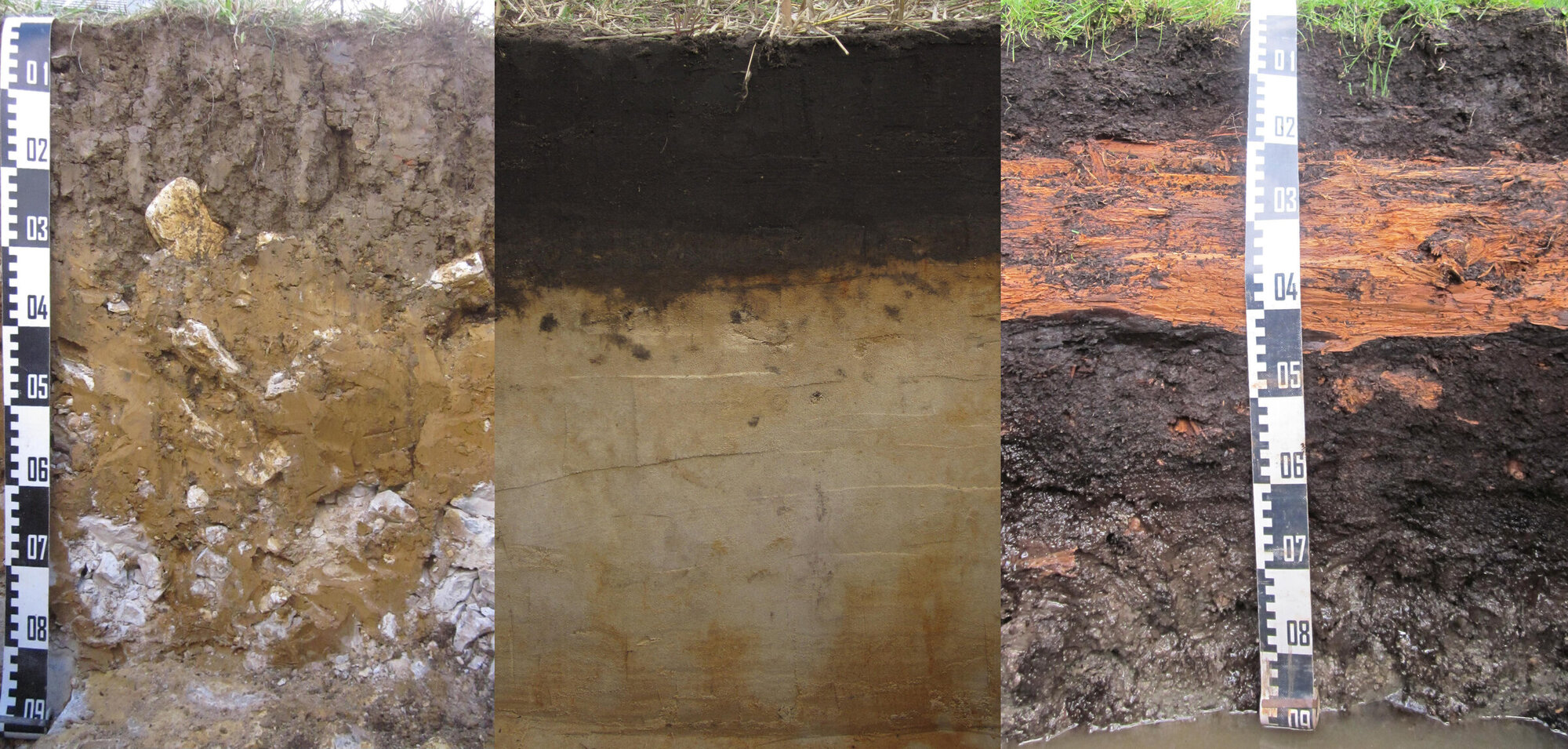
When farmers invest in humus build-up, it brings multiple advantages. It supplies plants and soil organisms with nutrients and binds pollutants. By binding individual mineral particles into aggregates, the dark soil substance improves the soil structure. This allows roots to grow better and protects the soil from erosion. In times of increasing weather extremes, humus is therefore key to stable harvests.
Also the climate benefits from humus, as it consists of about half carbon. The top meter of Germany's agricultural soils stores 2.5 billion tons of carbon in the form of humus. This is shown by the German Agricultural Soil Inventory (BZE-LW) conducted at the Thünen Institute of Climate-Smart Agriculture. Whether this reserve grows or shrinks depends on the balance: humus build-up is successful when, in the long term, more organic material – such as harvest residues or organic fertilizers – ends up in the soil than is decomposed.
How to build up humus
Farmers can specifically promote humus build-up and thus contribute to climate protection. The appropriate management method depends on the respective soil properties, location, and specialization of the farm. Various approaches can help to preserve and increase humus – we present the most important ones below.
Organic fertilizers promote soil fertility and enable efficient nutrient recycling. Whether fermentation residues, manure, compost, or fresh plant residues: the more organic material reaches the soil, the better for the humus balance.
However, it is not possible to protect the climate with organic fertilization: organic residues are merely redistributed. This means that no additional carbon is stored.
In addition to carbon, organic fertilizers provide a lot of nitrogen – an important nutrient for microorganisms. This is why these fertilizers decompose quickly in the soil and ensure rapid humus formation. Conversely, this means that reduced nitrogen fertilization can slow down humus formation.
When fallow land is covered with cover crops, the soil and climate benefit: cover crops reduce the leaching of water-polluting nitrate, weed pressure, and soil erosion. Cover crops offer particularly good protection when they are established as undersown crops before harvest.
At the same time, more plants also mean more photosynthesis and thus more carbon dioxide, which is stored in the form of humus. On average, cover crops accumulate around 600 kilograms of additional humus. Varieties with strong roots are particularly efficient. With a certain amount of experimentation, it is possible to find the right mixtures depending on the location and crop rotation.
Cover crop cultivation has increased significantly over the last decade. Today, more than two million hectares are cultivated with cover crops every year. Nevertheless, there are still many areas where cover crops could be grown. The potential to sequester additional carbon has therefore not yet been fully exploited.
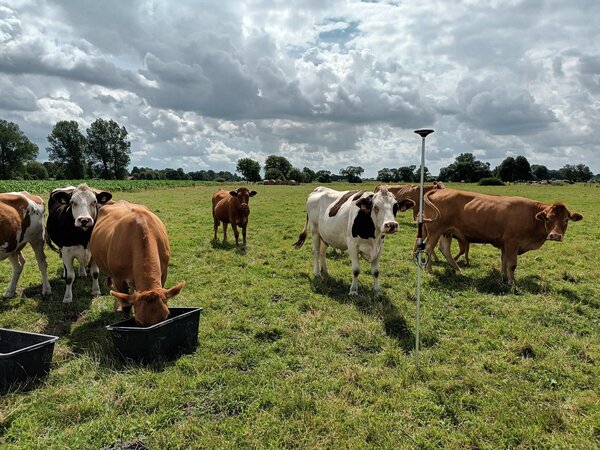
On average, grasslands have around 30 to 40 percent higher humus reserves than arable land. On the one hand, grasslands develop more roots, which promote humus formation. On the other hand, the more stable soil aggregates protect the humus from degradation.
The conversion of arable land to grassland is particularly useful in combination with open-space photovoltaics, on marginal yield sites, or as buffer strips along waterways. Nevertheless, there is less and less grassland in Germany. Since the 1990s, the proportion of grasslands in total agricultural area has fallen from 31 to 28 percent – to the detriment of humus reserves.
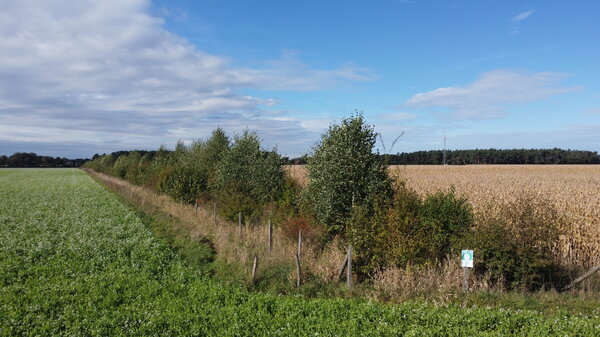
Hedges are effective carbon sinks. A hedge forms a lot of woody, potentially long-lasting plant material in a very small space and has been proven to increase the humus content in the soil. And there are other positive effects: hedges promote biodiversity and protect the soil from erosion.
In the past, hedges were much more common in Germany's agricultural landscape than they are today. They have been lost as a result of land consolidation measures. Climate change makes it urgently necessary in many regions to use hedges or modern agroforestry systems to ensure greater water retention in the landscape.
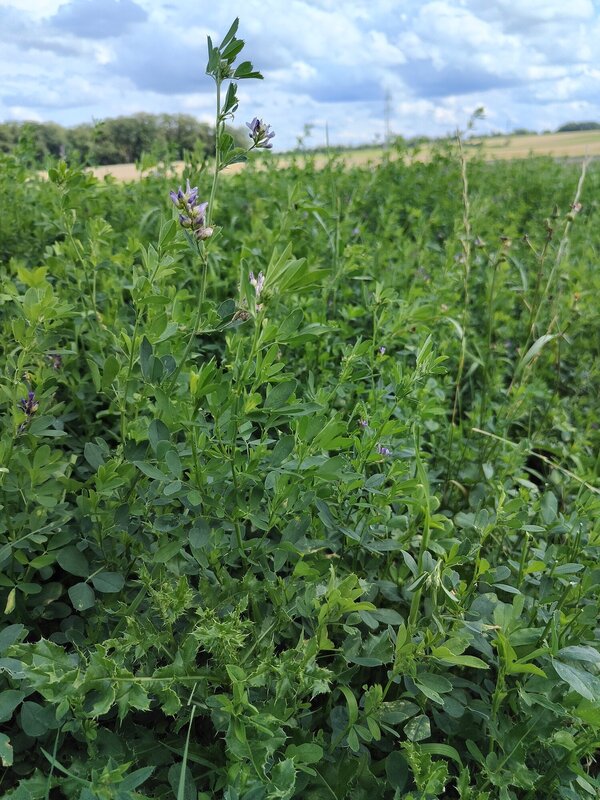
It does not necessarily have to be a change in land use: a change in crop rotation towards varieties with stronger roots, more forage crops and arable grass, more cover crops, and more forage legumes also have a positive effect on humus reserves.
Gentle tillage promotes soil life and soil structure – and thus also benefits humus formation. Possible reasons for this are that minimally tilled soils are often less eroded, store more water, and allow roots to grow better. Even if only a small humus effect is to be expected, less and less plowing is already taking place in many regions of Germany today.
Agricultural soils cannot be expected to act as a major carbon sink that makes agriculture climate-neutral, even if many of the options mentioned above are implemented. However, humus formation is still worthwhile because researchers at the BZE-LW are currently finding that grassland soils in Germany in particular tend to lose humus. It is therefore now important to slow down this loss – for the sake of the climate and soil fertility.
Further information
The German Agricultural Soil Inventory is currently conducting its second assessment of the state of Germany's soils:
https://www.thuenen.de/de/fachinstitute/agrarklimaschutz/projekte/bodenzustandserhebung-landwirtschaft-bze-lw
The Thünen fact check “Climate protection through CO2 certificates for humus” gets to the bottom of the trade in carbon storage in the soil:
https://www.thuenen.de/de/newsroom/mediathek/faktencheck/klimaschutz-durch-co2-zertifikate-fuer-humus
Farmers can find out how the humus content of their soil ranks by taking the Thünen Institute's humus check:
https://humuscheck.thuenen.de/
The interactive maps of the EJP SOIL joint project show where the potential for additional carbon storage in Europe's agricultural soils lies:
https://shinyapp.cra.wallonie.be/ejpsoil-carboseq/
Contact

- Phone
- +49 531 596 2679
- christopher.poeplau@thuenen.de