![[Translate to English:]](/media/_processed_/2/0/csm_LV_Bei_Hornburg_Quelle_Johanna_Fick_neu_da89674833.jpg "[Translate to English:]")
![[Translate to English:]](/media/_processed_/2/0/csm_LV_Bei_Hornburg_Quelle_Johanna_Fick_neu_3aae309567.jpg "[Translate to English:]")
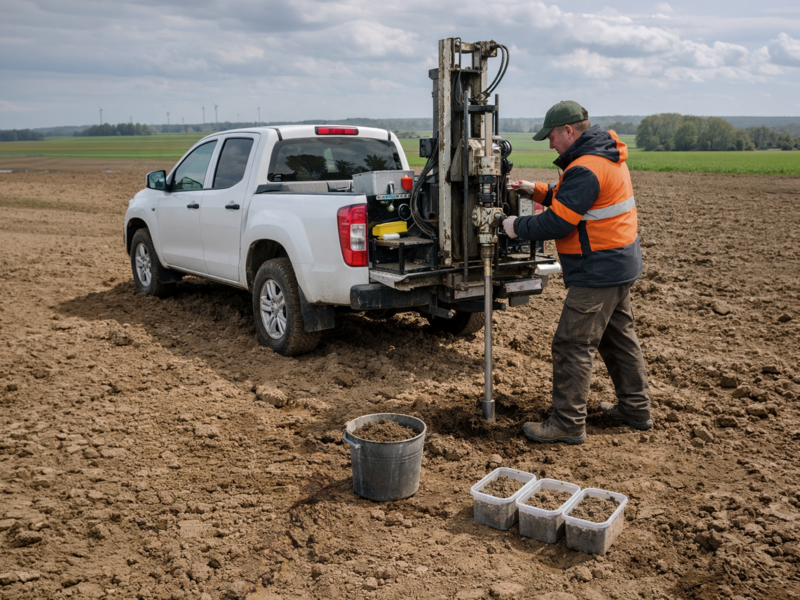
Plants grow best when they have a sufficient supply of nutrients such as nitrogen. However, too much of it can lead to environmental pollution, for example in groundwater and surface water. That is why farmers calculate the fertiliser requirements for their land. A key factor in this is the nitrogen that is already present in the soil and available to the plants. As the federal states have previously collected and provided the so-called Nmin values in spring using different methods, the resulting recommendations vary considerably across state borders. Researchers at the Thünen Institute of Rural Studies have now systematically analysed these differences and, for the first time, standardised and made available the official Nmin guideline values nationwide.
To ensure that data collected by the federal states in future is comparable, the Thünen researchers recommend standardising sampling periods, sampling frequency and analytical methods across all states. They have also developed a new template setting out minimum standards, which authorities can now use. The researchers developed the proposals in collaboration with the Chambers of Agriculture of Lower Saxony and North Rhine-Westphalia, as well as the Bavarian State Institute for Agriculture.
“A standardised method for determining Nmin levels, carried out to high standards, improves the data available for fertiliser planning. It is important for the protection of water bodies and the environment, and helps to ensure a level playing field,” explains Thünen Institute researcher Dr Philipp Löw, the study’s lead author.