Expertise
Protecting the climate with wood products
Andreas Krause | 04.12.2025
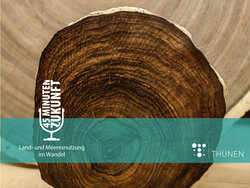
Wood can help achieve climate targets: when used in construction or processed into plastics in biorefineries, the carbon remains stored in it. Researchers from the Thünen Institute have now published recommendations on how wood products can contribute specifically to climate protection.

In order to achieve the federal government's climate targets, all potential for carbon storage must be exploited. One effective way of doing this is to make greater use of wood in house construction or as a raw material in biorefineries. This is because carbon remains stored in wood products instead of being released into the atmosphere.
Researchers from the Thünen Institute of Wood Research have now published recommendations on how wood can be used more extensively as a material and make a targeted contribution to climate protection. In house construction and industry, wood can replace fossil or mineral products, for example in the form of fibreboard used as insulation material or as a raw material for high-quality carbon fibres and plastics. It is crucial that wood-based products are at least equal to existing products in terms of quality and cost-effectiveness. Only then can they be competitive on the market.
Sustainable forestry must not be neglected in this context. "The additional wood for the new products is only available if energy use – i.e. combustion – is reduced accordingly," explains Prof. Dr. Andreas Krause, Director of the Thünen Institute of Wood Research. The scientist also believes that the circular economy must be implemented more consistently.
Policy brief
- Policy brief „Durch stoffliche Holznutzung Klimaziele erreichen“ (in German)Jörn Appelt, Andreas Krause, Ralph Lehnen, Jan Lüdtke, Martin Ohlmeyer, Fokko Schütt