
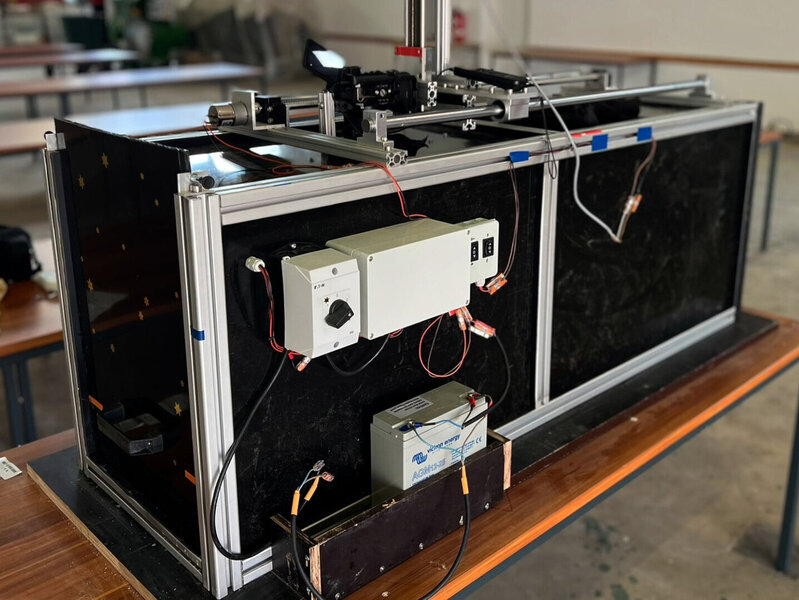
With droughts becoming more frequent due to climate change, it is increasingly important for crops to develop deep-reaching roots. This allows them to access water from deeper soil layers during drought periods. However, research into this has so far been severely limited by the labour-intensive sample preparation: roots had to be washed and counted by hand. That is why researchers at the Thünen Institute of Climate-Smart Agriculture have now developed the so-called RootBox. In doing so, they made use of the fact that roots glow under UV light.
For the study, the researchers first extract a one-metre-long soil core, split it lengthways and carefully expose the roots using a water syringe. Inside the light-tight RootBox, they photograph the roots illuminated by UV light. Using AI-based image recognition software, they then analyse the photos to determine the total length of all the roots in the sample.
The aim of the research is to learn more about the roots of our crops. This is because roots not only improve the plants’ water uptake but also effectively promote humus formation in the soil. Humus strengthens the soil structure, binds pollutants and protects against erosion – at the same time, the climate benefits as humus stores large amounts of carbon.