![[Translate to English:]](/media/_processed_/2/0/csm_LV_Bei_Hornburg_Quelle_Johanna_Fick_neu_da89674833.jpg "[Translate to English:]")
![[Translate to English:]](/media/_processed_/2/0/csm_LV_Bei_Hornburg_Quelle_Johanna_Fick_neu_3aae309567.jpg "[Translate to English:]")
Project
An Evaluation of the Common Agricultural Policy from the Perspective of Environmental Protection (GAPEval IV)
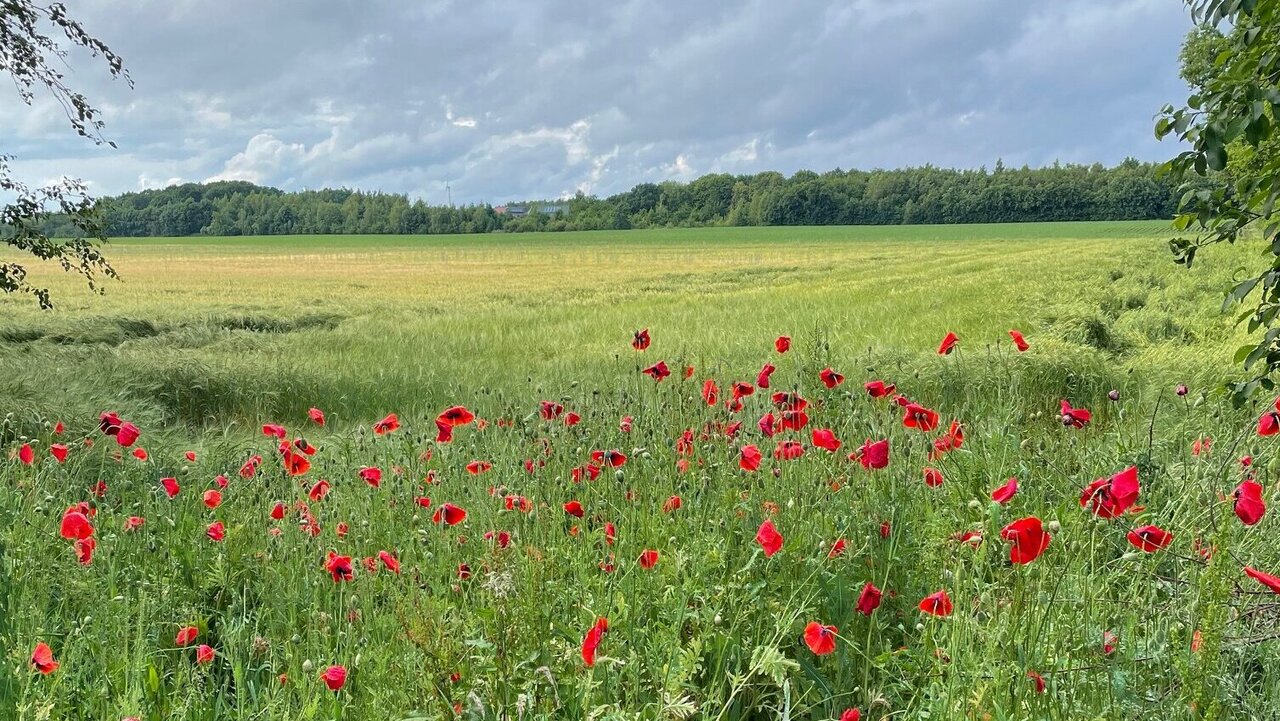
An Evaluation of the Common Agricultural Policy from the Perspective of Environmental Protection
We analyze the impact of the European Union’s Common Agricultural Policy on land-use changes and resource conservation. The focus is on the changes in the 2023–2027 funding period compared to the previous funding period.
Background and Objective
The agricultural use of land plays a major role in resource protection. The European Union’s Common Agricultural Policy (CAP) addresses climate and environmental protection in agriculture, both as a regulatory instrument for European agriculture and as a funding instrument for environmental protection measures.
With the 2013/2014 CAP reform, the greening measures were introduced and direct payments were linked to specific environmental obligations. However, results from the three predecessor projects GAPEval I to III show that greening had only a minor positive effect on environmental protection.
The current CAP funding period began in 2023 and includes mandatory and voluntary instruments within the framework of the so-called Green Architecture to enhance nature conservation, environmental protection, and climate action through the CAP. To receive agricultural support, farms must comply with basic requirements, known as conditionality. These include standards for good agricultural and environmental condition (GAEC). Voluntary measures under the Green Architecture consist, in the first pillar, of eco-schemes and, in the second pillar, primarily of agri-environmental and climate measures (AECMs).
The aim of the current research project is to identify and assess the impacts of the measures under the current CAP on land use as well as on biotic and, in particular, abiotic resource protection in Germany. The primary focus is on evaluating the measures of the current funding period in comparison with those of the previous funding period.
Target Group
Science, ministries of agriculture and environment, farmers, advisory services, official nature conservation authorities, agricultural administration, European Commission
Approach
In GAPEval IV, we map land-use changes during the transition from the previous to the current CAP funding period using data from the Integrated Administration and Control System (IACS) of the German federal states, and on this basis assess the environmental impacts of the current CAP. The analyses thus provide an empirically sound foundation for conducting evaluations of the current CAP instruments and for developing policy recommendations for action for both the current and future CAP funding periods. To this end, as in the predecessor projects,
- the small-scale differentiated time series on agricultural land use in Germany will be continued;
- changes in land use during the observation period will be assessed with regard to their impacts on abiotic and biotic protected assets;
- the causes of these changes will be identified and the influence of individual factors will be quantified.
Data and Methods
To answer our research questions, IACS data from the German federal states for the period 2013–2025 will be used wherever possible. This builds on the previous projects on greening. In addition, we use data from the Agricultural Structure Survey.
Our Research Questions
- What changes in land use can be observed from the previous CAP funding period to the current funding period starting in 2023? What impacts do these changes have on the environment and biodiversity?
- Which land-use changes and environmental effects are associated with conditionality?
- What costs are associated with compliance with GAEC standards?
- What is the level of participation of agricultural holdings in the voluntary measures of the CAP’s Green Architecture, and which factors determine their attractiveness for farmers? What environmental impacts do the voluntary measures have?
- Which eco-schemes are primarily taken up in which regions?
- How can the environmental impacts of the eco-schemes be assessed in comparison with those of the agri-environmental and climate measures (AECMs)?
Thünen-Contact

Involved Thünen-Partners
Funding Body
-
Umweltbundesamt (UBA)
(national, öffentlich)
Duration
10.2025 - 10.2028
More Information
Project funding number: 3724127020
Funding program: BMUKN - REFOPLAN 2024 - Ressortforschungsplan 2024
Project status:
ongoing