![[Translate to English:]](/media/_processed_/2/0/csm_LV_Bei_Hornburg_Quelle_Johanna_Fick_neu_da89674833.jpg "[Translate to English:]")
![[Translate to English:]](/media/_processed_/2/0/csm_LV_Bei_Hornburg_Quelle_Johanna_Fick_neu_3aae309567.jpg "[Translate to English:]")
Hedgerows protect soil from erosion and promote biodiversity. As carbon sinks in agricultural landscapes, they also contribute to climate protection. Hedges thus support the achievement of political goals. Currently, few new hedges are being planted in Germany. For almost three years, the CatchHedge project has been investigating the benefits of hedges in the agricultural landscape. It has also identified the requirements that need to be met so that more hedges are planted as carbon sinks and habitats for animals and plants.
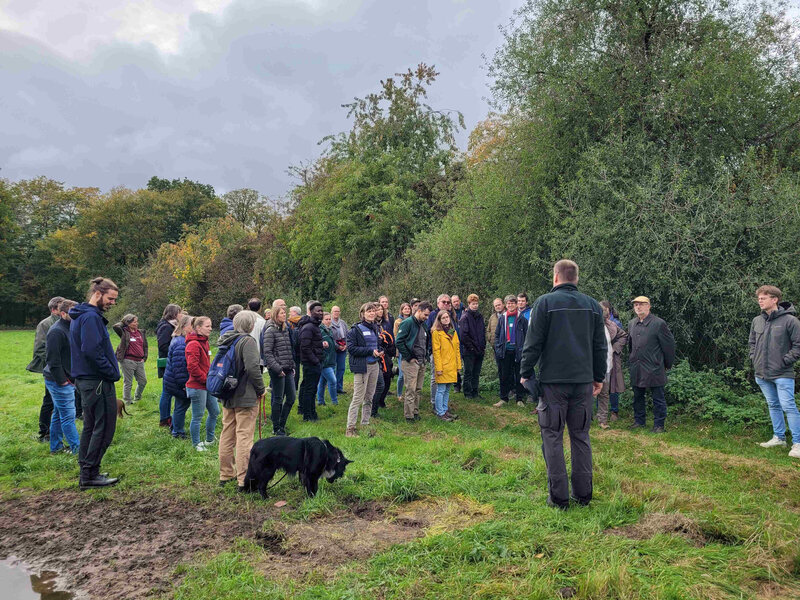
During the closing event in the forum of the Thünen Institute, the project team presented the project results to approximately 60 participants from research, practice, administration, and associations. In addition to several presentations and discussion rounds, the event also included an excursion to hedges on the Thünen site in Braunschweig.
There are many obstacles that prevent farmers and other landowners from planting new hedges, for example:
- They often lack the expertise required for planting and maintenance.
- Planting new hedges is associated with high costs. The current subsidies are usually not sufficient to cover the financial outlay.
- Hedges need to be maintained in order to preserve them, but the associated costs are not covered, or not sufficiently covered, by subsidy programs.
- In contrast to agroforestry, both the use and removal of hedges are subject to strict legal restrictions.
The researchers presented several options to make planting hedges more attractive. For example, attractive, long-term subsidy programs are important which guarantee easy application and rapid processing through standardization. Possibilities to combine advantages of agroforestry systems and hedges in a joint subsidy program were also presented.
In addition to the presentation of the results, the project team took the opportunity to exchange ideas and discuss the proposed solutions with the participants. For further information, project results are published in the newsletter “Praxiswissen Hecken” (in German language) on the project website.
CatchHedge is part of the RessortForschtKlima project network in which the departmental research institutes within the BMLEH's remit are investigating how the food, agriculture, and forestry sectors can support the achievement of the 2030 climate protection targets. The project will run until December 31, 2025.
Contact person: Berit Schütze