![[Translate to English:]](/media/_processed_/2/0/csm_LV_Bei_Hornburg_Quelle_Johanna_Fick_neu_da89674833.jpg "[Translate to English:]")
![[Translate to English:]](/media/_processed_/2/0/csm_LV_Bei_Hornburg_Quelle_Johanna_Fick_neu_3aae309567.jpg "[Translate to English:]")
Many regions in Europe are experiencing economic stagnation, population decline, and inadequate public services. However, perceptions of this situation are by no means uniform: in addition to political frustration and mistrust, residents also express attachment to their region, commitment, and confidence. Political discontent is not widespread, but varies depending on social situation, regional context, and local points of comparison.
In Central Eastern Europe, it has become particularly clear that historical developments and post-socialist transformation processes have led to major spatial inequalities. In many regions there, economic weakness, social exclusion, and processes of decline often overlap even more strongly than in Western Europe, and there are marked urban-rural differences. This can foster political alienation and support for right-wing populist parties, but the extent to which this occurs varies greatly depending on the country, region, and population group. Regional conditions shape political attitudes, but they do not explain them entirely — individual experiences remain central.
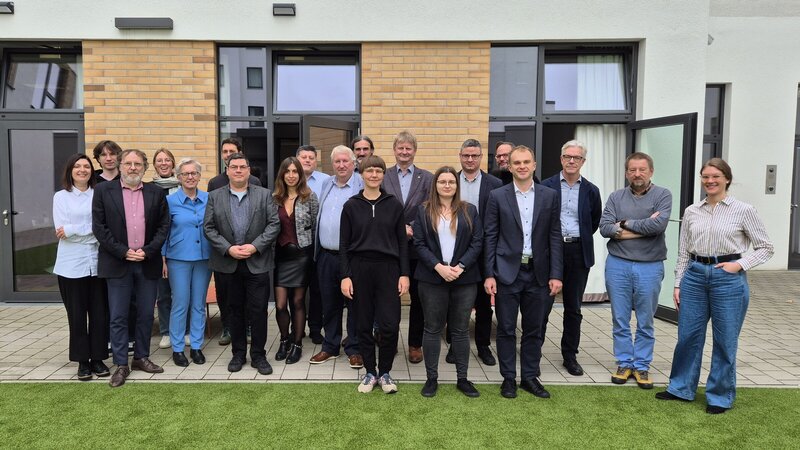
The researchers involved in the project “Social and Political Consequences of Spatial Inequalities” discussed their findings with eight invited experts from various European countries during a workshop held in Berlin on October 7, 2025.
The research project is funded by the German Research Foundation (DFG) and partner organizations in Czechia (Czech Science Foundation) and Poland (National Science Centre) as part of the Weave Lead Agency Initiative.
The project is a cooperation of the Thünen Institute of Rural Studies, the Institute of Sociology of the Czech Academy of Sciences and the Institute of Geography and Spatial Organization of the Polish Academy of Sciences.
The first published results of the project can be found here.
Contact person: Andreas Klärner