[Translate to English:]
[Translate to English:]
Institute of

OF Organic Farming

Technology of livestock farming

Livestock systems engineering and works at the interface between animals, environment (e. g. buildings) and technology. Therefore, methods and measurements are based on ethology, environmental test equipment and electronic and optical measuring methods. The evaluation of livestock, building and technology, regarding animal welfare and environmental impact has to be done in a holistic way. Improvements of livestock production systems should be in balance when environmental benefits, such as clean alleys in a dairy barn, have a positive side effect on the claw health of dairy cows.
Ongoing projects

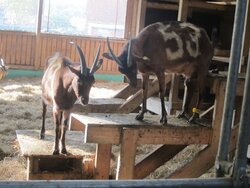
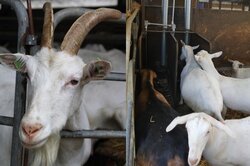
Development of an animal-friendly feeding system for horned goats

Dairy goat farming is a growing business in Germany since more then one decade. In the same manner, there is a growing demand on extension for dairy goat farms regarding husbandry and management. Although there is some knowledge present, there is a lack of transer into practical dairy goat farming. That is the starting point for our new initiative Stable Schools for dairy farmers.

More
Development of an animal-friendly feeding system for horned goats

Stable Schools for goat farmers

Dairy goat farming is a growing business in Germany since more then one decade. In the same manner, there is a growing demand on extension for dairy goat farms regarding husbandry and management. Although there is some knowledge present, there is a lack of transer into practical dairy goat farming. That is the starting point for our new initiative Stable Schools for dairy farmers.

More
Stable Schools for goat farmers

Animal welfare in goat keeping

Goats are able to produce even without best keeping conditions. In organic farming is the target to have high animal welfare standards and good production performance. Several projects have developed high animal welfare standards for goats kept in stables and on pasture. Avoidance of manipulation is part of the research.

More
Animal welfare in goat keeping

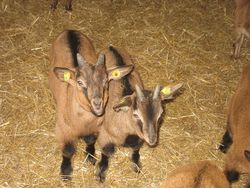
Animal welfare aspects on electronic animal identification for goats

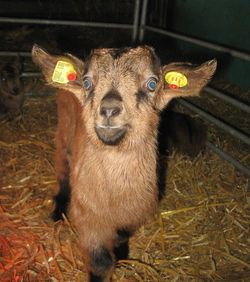
Electronic identification of sheep and goats is mandatory in Europe since 01.01.2010. There are many concerns about injuries related to identification tags. Thus the objective of our study was the evaluation of an early identification of goat kids together in their housing and on pasture.

More
Animal welfare aspects on electronic animal identification for goats

How you measure emissions from open stable systems

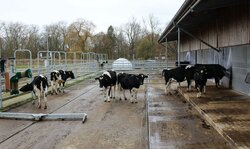
Open stable systems with open yards are used in organic cattle farming. Until now, emission factors for open yards of cattle barns respectively dairy barns do not exist in Germany. For an objective evaluation of the emissions, which is necessary for proceedings on the granting of building permission, these data are strongly needed.

More
How you measure emissions from open stable systems

Clean floors as ammonia mitigation strategy in dairy barns

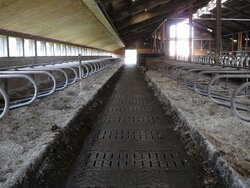
Ammonia emissions from animal husbandry highly contribute to environmental acidification and eutrophication as to odour nuisance. More than 50 % of the totally emitted ammonia has its origin from cattle husbandry and 60 % of the ammonia is emitted from the walking area.

More
Clean floors as ammonia mitigation strategy in dairy barns

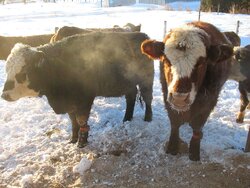
Outdoor keeping of suckler cows and beef cattle in winter

Outdoor keeping of suckler cows and beef cattle in winter is a traditional housing system in Canada. Cattle herds are kept on a limited area without roofed shelter but providing wind protection walls.

More
Outdoor keeping of suckler cows and beef cattle in winter

Scroll to top