![[Translate to English:]](/media/_processed_/3/6/csm_Hintergrund-Ausschnitt1_9daaef6b89.jpeg "[Translate to English:]")
![[Translate to English:]](/media/_processed_/3/6/csm_Hintergrund-Ausschnitt1_0bd7111163.jpeg "[Translate to English:]")
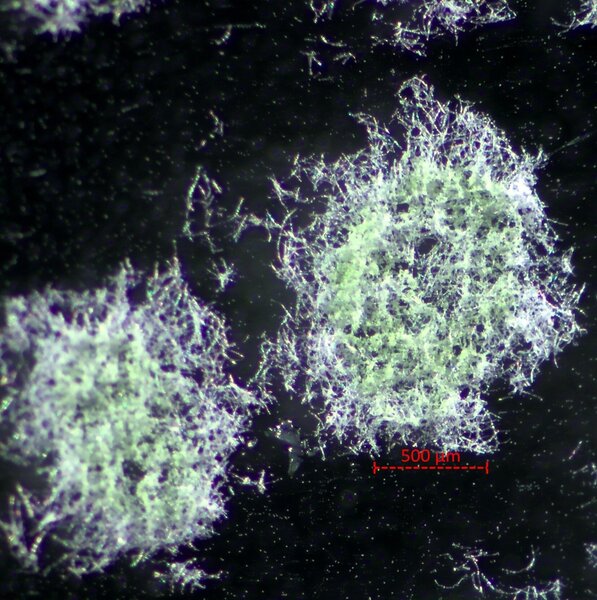
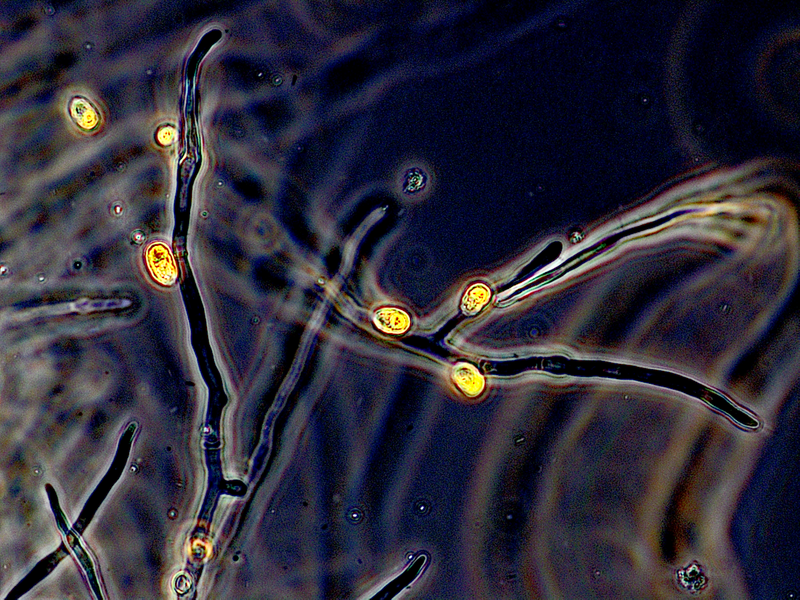
By as early as 2100, food will be scarcer worldwide than it is today. In Africa in particular, climate change, declining soil fertility and a growing population are converging. Researchers at Thünen are therefore developing cost-effective alternatives that enable food to be produced from microalgae and fungi, independent of soil and freshwater.
Nutritional content comparable to chicken
Microalgae and fungi can be cultivated under controlled conditions in so-called bioreactors. Some species of algae produce such high levels of carbohydrates, proteins and fats that they are suitable as a high-calorie food source for humans and animals. The Thünen researchers have identified a species that grows well even under high salt concentrations. They have now developed a cost-effective and efficient solution for harvesting this microalgae in the laboratory: when combined with a specific mould, the microalgae forms a mat that can be easily skimmed off. Together, the two are suitable for consumption and provide an energy density comparable to that of root vegetables. The high protein content and moderate fatty acid content, however, are more similar to the nutritional profile of chicken meat.
Sustainable, space-saving, affordable
Unlike conventional staple foods, the microalgae-fungus composite can be produced in just two weeks. The bioreactors do not require fertile soil and can be stacked to save space. The culture medium on which the microorganisms grow is often expensive. However, the Thünen researchers discovered that the nutrients for the microorganisms can also be obtained cheaply and in a resource-efficient manner from waste. Human urine, for example, is particularly well suited to supplying the microalgae with nitrogen. In addition, the researchers used seawater, which offers two advantages: it conserves freshwater supplies and, thanks to its high salt content, protects the microalgae from infection by bacteria or mould spores. In this way, the scientists ensure that these alternative foodstuffs can be produced safely and without expensive technology, even in remote, arid areas. The products are then to be dried, ground and added to various foods.
“Microalgae and mould have long been regarded as potential food sources. However, their interaction is of key importance, as it offers great potential for preventing protein and energy shortages in a growing global population,” says Anja Kuenz, head of the research project.