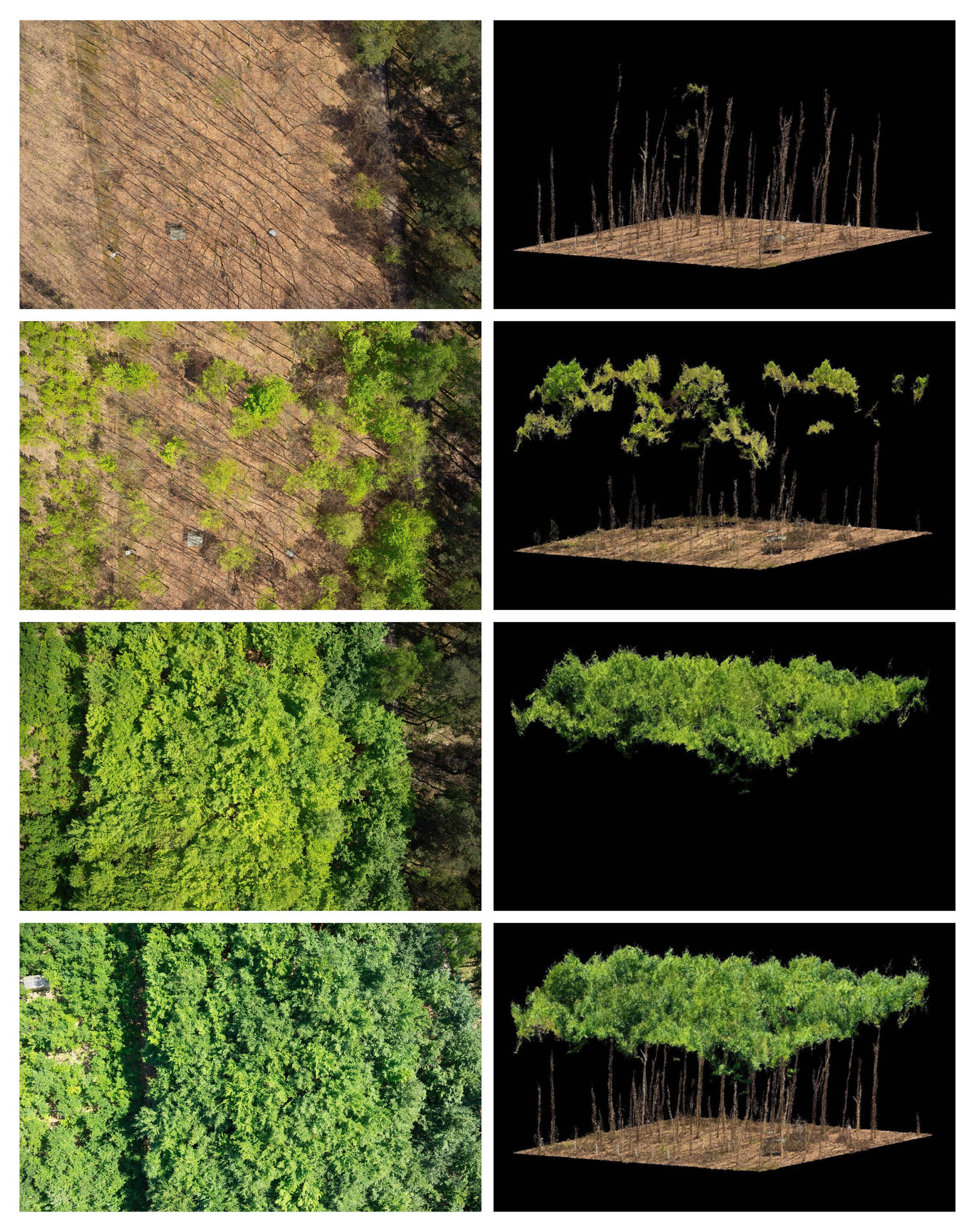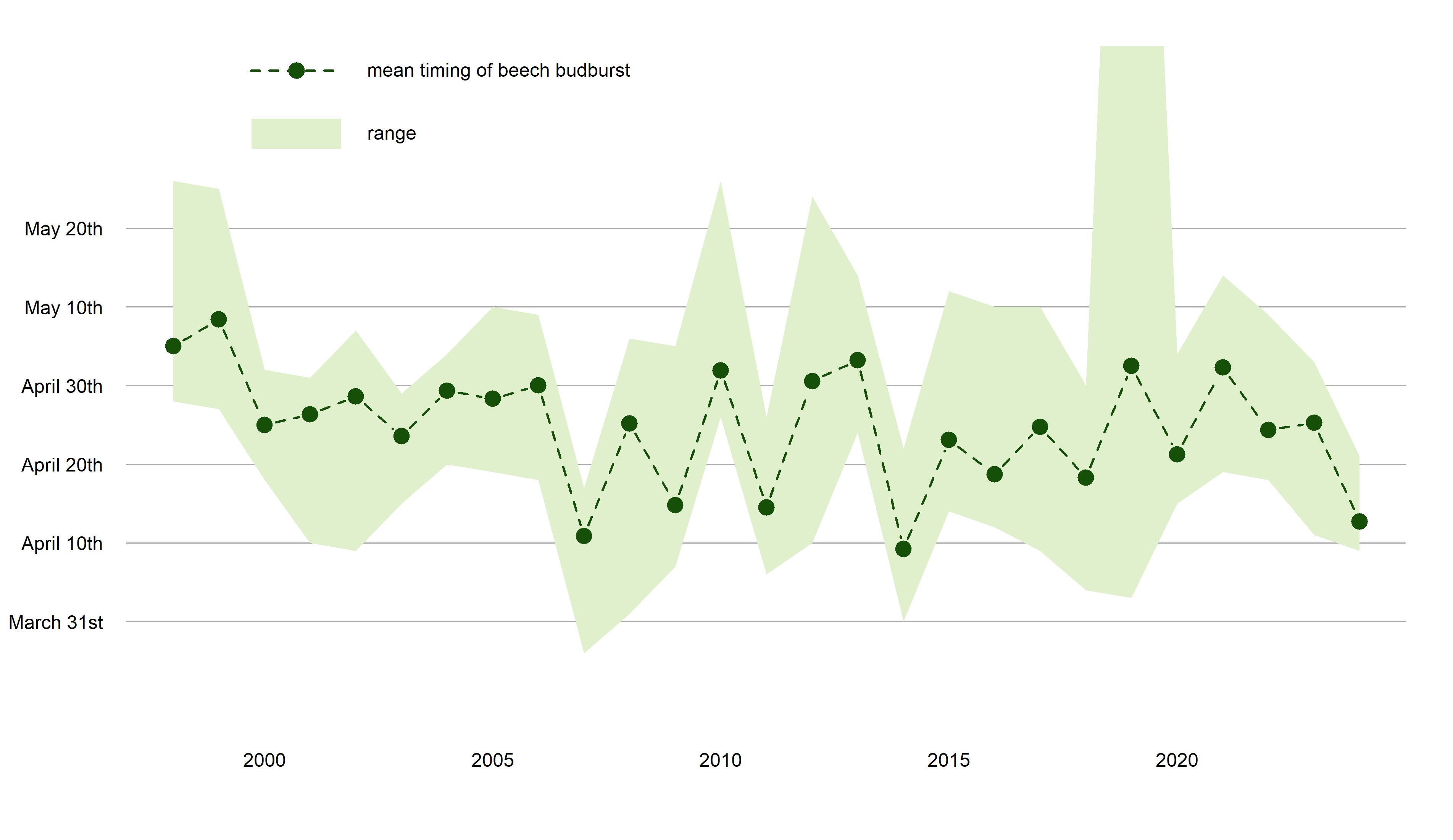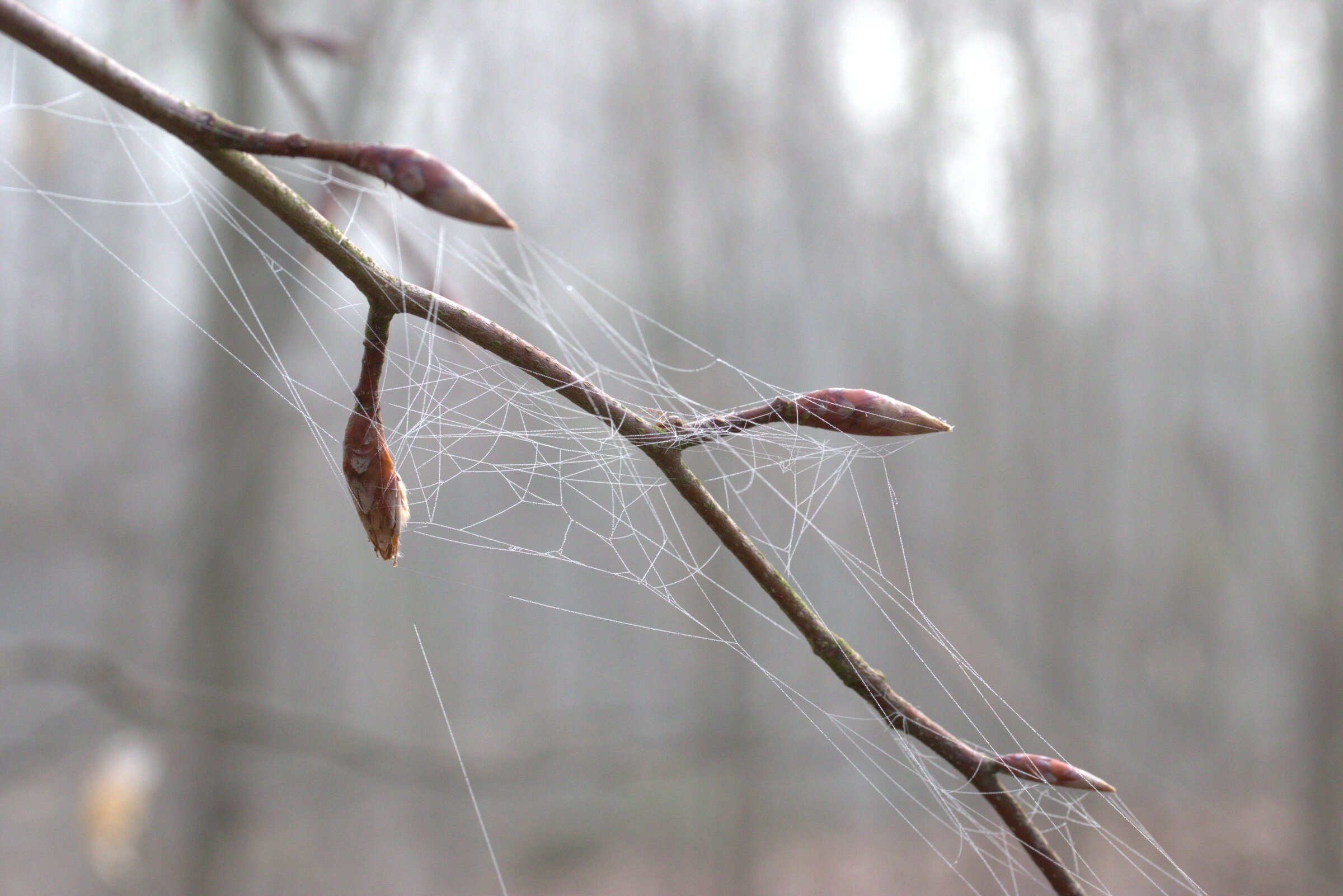

Eberswalde (21 April 2026). Forests are getting greener by the day. Whilst maple and hornbeam show their first leaves early in the year, European beech generally takes its time. However, recent observations reveal a changing trend: beech is flushing earlier and earlier. Rising spring temperatures bring the growing season forward. On average, flushing begins around 0.3 days earlier each year. This is confirmed by data from the past 25 years from the intensive forest monitoring programme Level II.
According to researchers at the Thünen Institute of Forest Ecosystems in Eberswalde, where Level II is coordinated, this development is a further visible sign of climate change in German forests. “Early budburst brings both opportunities and risks. It extends the growing season but also increases the risk of frost damage,” says Dr Tanja Sanders, who heads the Level II programme at the Thünen Institute.
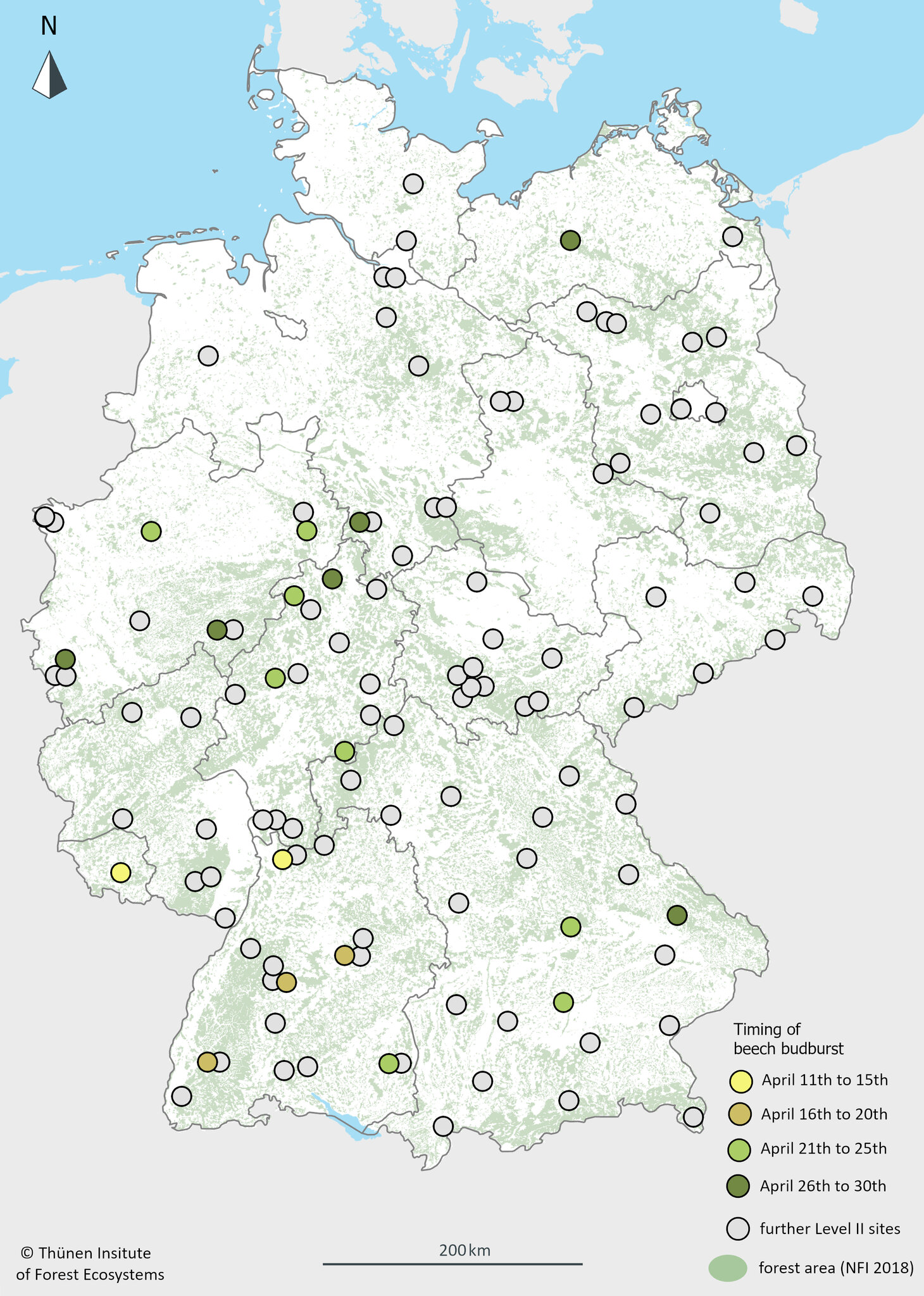
On the long-term average, budburst of European beech trees begins around the 26th April. However, there are significant regional variations and even differences between individual trees: in the south, beech trees flush earlier than in the north. Altitude above the sea level as well as local weather conditions influence the timing. The earliest budburst on the Level II monitoring plots was recorded on 27th March 2017 in the Steigerwald area in Bavaria. The latest budbursts occurred in 1998 in the Bavarian Forest and in 2010 in Esslingen near Stuttgart – both on the 26th May.
How are the phenological phases recorded? For beech, experts observe selected trees on 19 Level II plots across Germany at least once a week and across twelve standardised survey areas. Among other assessments, they inspect the upper canopy using binoculars. To ensure the surveys are comparable across Germany, those involved regularly take part in comparative training sessions. This is of course done for all other species as well.
Background: This is Level II monitoring
Level II monitoring complements Level I monitoring, which surveys the condition of forests and soil at regular intervals across representative areas. Both monitoring programmes form part of the International Cooperative Programme on Forests (ICP Forests) under the umbrella of the Geneva Convention on Long-range Transboundary Air Pollution (CLRTAP). Since the mid-1990s, data has been collected at 112 sites across the whole of Germany as part of the Level II programme. The data enables ecosystem-oriented cause-and-effect relationships in the forest. Since 2014, the programme has been enshrined in the German Forest Act.
The data is made available for internal use and, upon request, for national and international analyses.