![[Translate to English:]](/media/_processed_/7/1/csm_IMG_7977_large_1defaf5de1.jpg "[Translate to English:]")

Young fish in German coastal waters (DYFS)
The internationally coordinated demersal young fish survey (DYFS) along the coasts of the southeastern North Sea
What is the current situation with regard to the next generation of sole, plaice and other commercially important species? Which species are disappearing, appearing, or returning? The Demersal Young Fish Survey (DYFS), conducted by Belgium, the Netherlands and Germany along the south-eastern North Sea coast, provides answers to these and other questions each year.
Background and objectives
At the end of the 1960s, the Dutch started their Demersal Young Fish Survey (DYFS) along the coast to study the population of young fish, especially sole (Solea solea) and plaice (Pleuronectes platessa). Germany and Belgium soon joined the survey so that they could jointly cover the southeastern North Sea coast, which is the main distribution area for the early life stages of these two important commercial flatfish species. The DYFS is coordinated by the Working Group on Beam Trawl Surveys (WGBEAM) of the International Council of Exploration of the Sea (ICES).
Since 1974, the German portion of the survey has been organised annually by the Institute for Sea Fisheries in the German Bight and across much of the German Wadden Sea. The DYFS is a mandatory survey in the EU Data Collection Framework (DCF) due to its high relevance for estimating the size of juvenile fish populations. The survey's primary objective remains to estimate the recruitment of the most important commercially exploited flatfish species. These recruitment indices form an integral part of the ICES-coordinated assessment of fish stock biomass and the subsequent catch recommendations. Additionally, the survey aims to determine the abundance and distribution of North Sea shrimp (Crangon crangon) and other demersal and epibenthic species.
Prior to 2012, the DYFS was conducted exclusively with chartered shrimp boats.
Since 2012, the modern research vessel “Clupea” has also been used to supplement coverage of areas within the 12-mile zone along the entire North Sea coast.
Approach
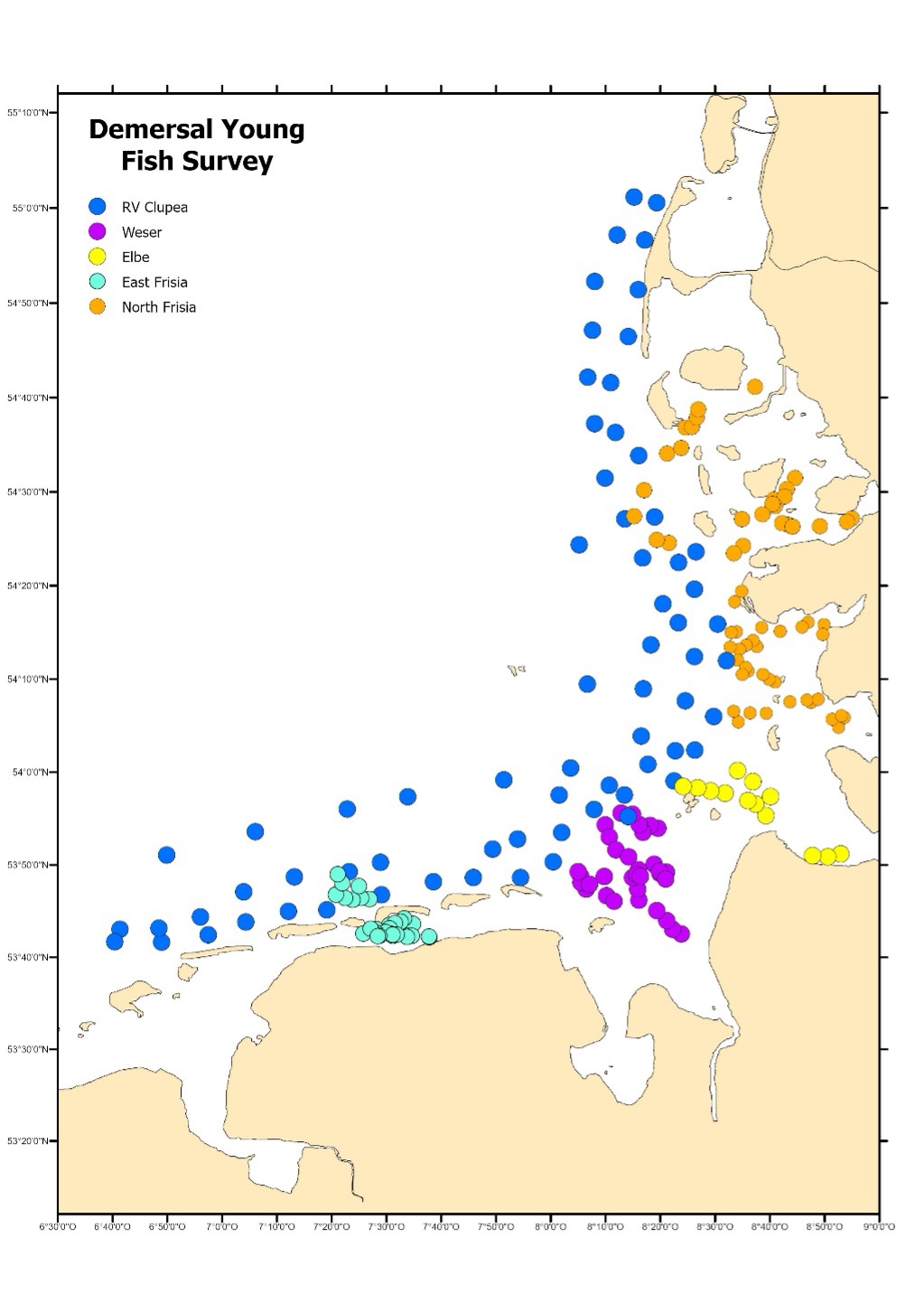
The standard DYFS equipment includes a 3 m shrimp trawl which is towed at a speed of approximately 3 knots over the seabed for 15 minutes. Since the start of the investigations in the early 1970s, the areas off Dithmarschen and North Frisia and the Elbe and East Frisia have formed part of the German DYFS area (see Fig. 1). From 2006, stations in the Jade and Weser estuaries were added, and from 2012, additional stations were added along the coast with the FFS Clupea. At each station, a haul is carried out, which is then processed in accordance with fisheries biology. This involves sorting the catch by species, counting and weighing the individuals, and taking length measurements for the target species. If necessary, further biological samples are taken.


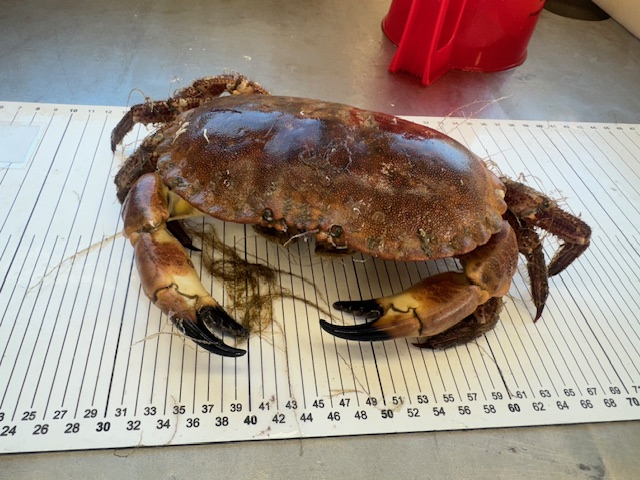
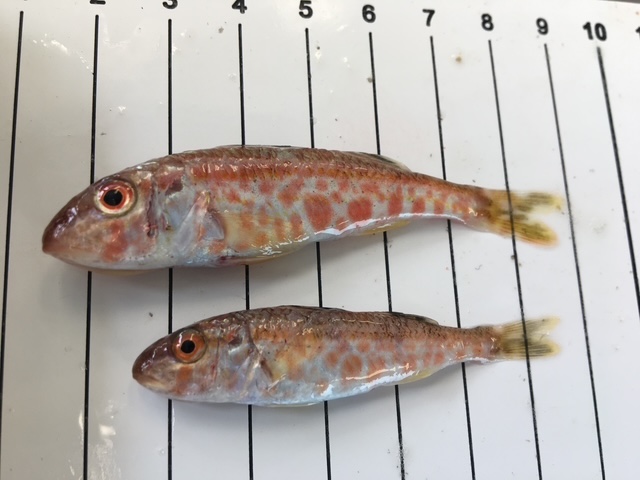
While the focus is on plaice, sole and brown shrimp, all other demersal fish species and epibenthic organisms are also recorded and evaluated quantitatively. The aim is to identify spatial and temporal trends in abundance and species composition in order to detect changes in the ecosystem.


The ICES Working Group on Beam Trawl Surveys (WGBEAM) is responsible for coordinating and standardising the surveys and data collection. The group meets annually in spring. The data is checked again within this framework and is then made available via the DATRAS database (Database of Trawl Surveys) of the International Council for the Exploration of the Sea (ICES). Other ICES working groups and interested scientists can then access the data directly from this online platform.
For example, within the ICES Working Group on the Assessment of Demersal Stocks in the North Sea and Skagerrak (WGNSSK), the data is used as a recruitment index for certain fish stocks and is therefore integrated into scientific recommendations for catch levels.
Links & Downloads
- ICES Working Group on Beam Trawl Surveys (WGBEAM)
- ICES Working Group on Assessment of Demersal Stocks in the North Sea and Skagerrak (WGNSSK)
- DYFS Manual with details on sampling and much more