![[Translate to English:]](/media/_processed_/7/1/csm_IMG_7977_large_1defaf5de1.jpg "[Translate to English:]")

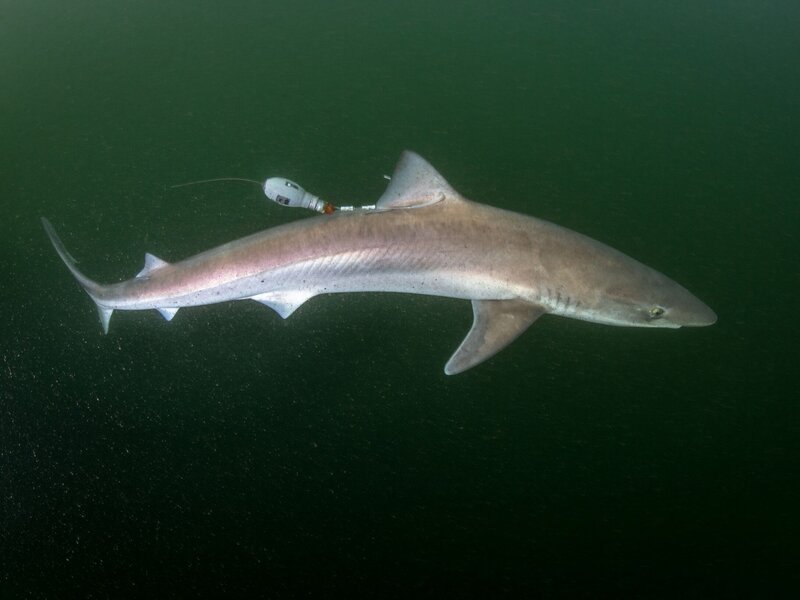
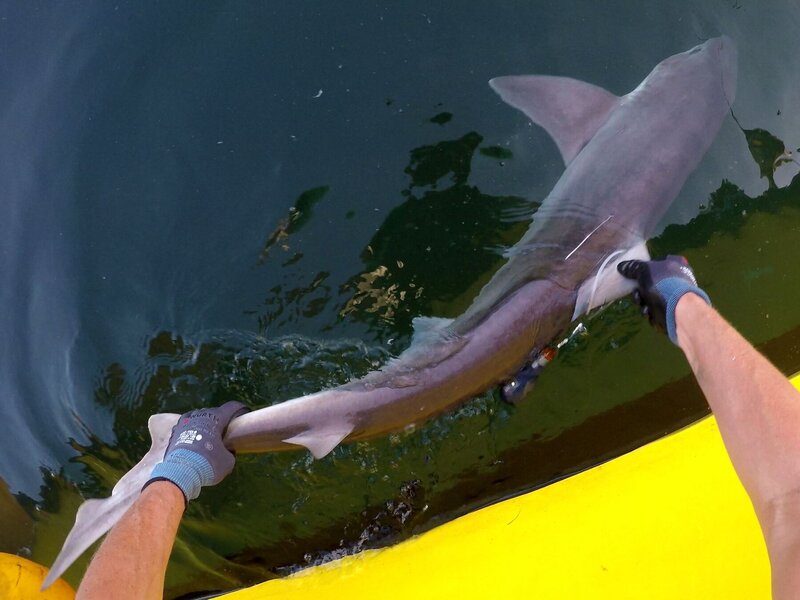
Sharks and rays are among the most endangered marine animals worldwide – including European waters. The causes are decades of overfishing, destroyed habitats, climate change and inadequate management. As part of the project “ISRA – Important Shark and Ray Areas” of the International Union for Conservation of Nature, an international team of shark experts has now identified 124 areas that are vital for the survival of various shark and ray species – for example, as nurseries for young animals or as migration routes for reproduction. The Important Shark and Ray Areas (ISRA) have now been published.
Shark areas in the North Sea and the English Channel
Although the identified ISRAs are not designated as protected areas, they can serve as a basis for such areas. The designated areas are also important for marine spatial planning and sustainable fisheries management, enabling effective international cooperation for the protection of sharks and rays. For example, the experts identified a nursery area for spiny dogfish in the southern North Sea in the Wadden Sea area and the Borkum Reef. They also identified a corridor stretching from the inner German Bight in the southern North Sea through the English Channel to the Celtic Sea. Tope use this corridor during their annual migrations to and from the German Bight. The so-called "English Channel Hai-Way" is also used by other endangered shark species, such as smooth-hound, porbeagle and basking shark, for their migrations.
The Thünen Institute provided important data.
The data that led to the delineation of the migration corridor comes from the Thünen Institute of Sea Fisheries “Heligoland Tope Tagging Project”. In this project, researchers tagged tope in the sea area near Heligoland with satellite transmitters. This enabled them to determine the animals' annual migration routes. The majority of the animals tagged in the summer migrated in autumn through a relatively narrow corridor towards the south-west through the English Channel. A wealth of additional data from international databases was used to identify other ISRAs, such as the "Southern German Bight" breeding area for tope. This included long-term data series on young tope in research catches, as well as image evidence from social media posts.
"I am excited that our research on dogfish is providing important data and insights for identifying such areas," says Dr Matthias Schaber from the Thünen Institute of Sea Fisheries, who is involved in the ISRA project. “Migratory sharks don’t stick to borders – this makes it even more important that we work together internationally to improve the protection of these animals.”
From Germany, scientists from the Thünen Institute of Sea Fisheries and the WWF – both members of the IUCN Shark Specialist Group – were involved in identifying important shark areas in the North-East Atlantic. Together with colleagues from international research institutes and non-governmental organisations, they defined the ISRAs.