
![[Translate to English:]](/media/_processed_/2/0/csm_LV_Bei_Hornburg_Quelle_Johanna_Fick_neu_da89674833.jpg "[Translate to English:]")
![[Translate to English:]](/media/_processed_/2/0/csm_LV_Bei_Hornburg_Quelle_Johanna_Fick_neu_3aae309567.jpg "[Translate to English:]")
Are spatial inequalities within nation states a risk to social cohesion? Do people in disadvantaged regions feel "left behind" of economic prosperity and neglected by national governments? Do people react with discontent and protest?
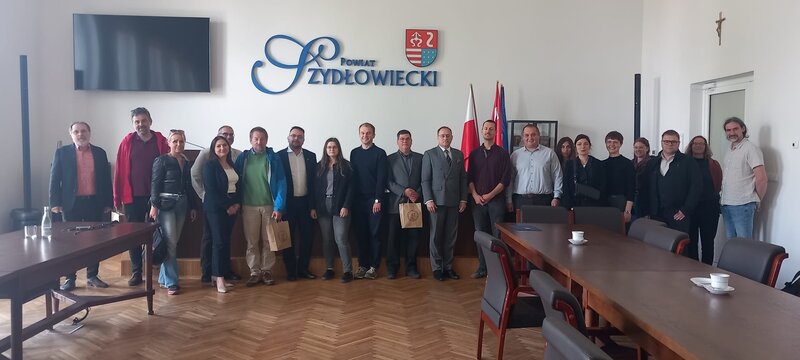
These questions were the focus of the workshop of the research project "Social and Political Consequences of Spatial Inequalities", which took place at Warsaw and Szydłowiec, one of the study regions in Poland. The project is headed by Professor Andreas Klärner and it is a cooperation of the Thünen Institute of Rural Studies, the Institute of Sociology of the Czech Academy of Sciences and the Institute of Geography and Spatial Organization of the Polish Academy of Sciences.
Susann Bischof, Larissa Deppisch and Martin Refisch from the Thünen Institute, among others, presented their research findings at the meeting. The results show that the lack of jobs and training places and uncertain future prospects can certainly lead to political dissatisfaction among the population. However, other factors, such as the demographic composition and educational level of the population in disadvantaged regions, must also be considered when explaining rising political dissatisfaction.
This international research project is funded by the DFG (Germany), GACR (Czech Republic) and NCN (Poland) within the Weave Lead Agency Initiative.
Contact: Prof. Dr. Andreas Klärner