![[Translate to English:]](/media/_processed_/2/0/csm_LV_Bei_Hornburg_Quelle_Johanna_Fick_neu_da89674833.jpg "[Translate to English:]")
![[Translate to English:]](/media/_processed_/2/0/csm_LV_Bei_Hornburg_Quelle_Johanna_Fick_neu_3aae309567.jpg "[Translate to English:]")
The collective implementation of agri-environmental and climate measures by groups of farmers is considered a promising approach to improving the effectiveness and efficiency of agri-environmental funding. In Germany, several research projects have been launched to explore cooperative approaches in nature conservation.
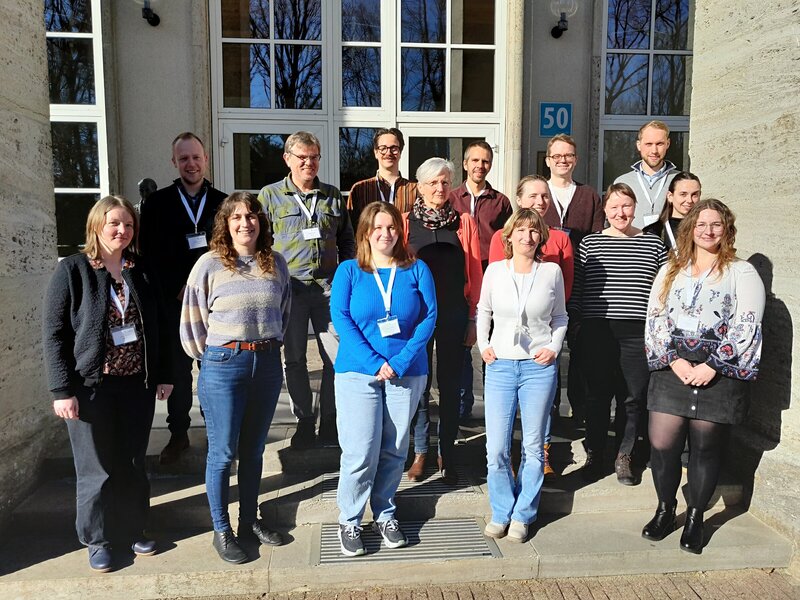
On March 19–20, 2025, 16 researchers from the projects MoNaKo, KOMBI, CAP4gi and KOOPERATIV came together at the Thünen Institute in Braunschweig for a joint workshop. Under the title “Cooperation in a Nutshell”, participants engaged in an intensive exchange of perspectives and key questions relating to socio-economic research. The workshop was organized by Bea Bardusch from the Thünen Institute for Living Conditions in Rural Areas.
The workshop focused on presenting each project’s approach, research design, and methods. The discussions revealed overlapping themes and fostered a lively dialogue on the varying understandings of what constitutes an agri-environmental cooperative.
“It was fascinating to see how differently we think about cooperatives – and that there is no such thing as ‘the’ cooperative. The projects reflect a wide range of structures and models.”– Karin Reiter, Thünen Institute.
A central aim of the workshop was to identify shared research questions. These included both theoretical aspects – such as the use and distinction of key terms – and more practical issues, such as the development of effective coordination and cooperation structures in agricultural practice.
In small group sessions, participants discussed their project approaches and identified potential areas for future collaboration. The exchange highlighted how the different perspectives complement each other, helping to build a more comprehensive understanding of the opportunities and challenges of cooperative models from a socio-economic viewpoint.
Another focus was the discussion of what basic rules cooperatives need, what core tasks they should take on, and how a shared pursuit of goals can succeed within such groups.
The workshop marked the starting point for deeper collaboration. Initial ideas for further meetings and joint steps have already been outlined.
Contact: Norbert Röder