[Translate to English:]
[Translate to English:]
Institute of

OF Organic Farming

Working group Animal health

Organic livestock production requires high Animal Welfare standards and Animal health until slaughter. To fulfil these demands, it is important to (a) prevent husbandry- or nutrition-related diseases and (b) use suitable prophylactic measurements or effective therapies. The working group animal health evaluates these aspects in the housing systems that were developed at the institute or tested on farm.
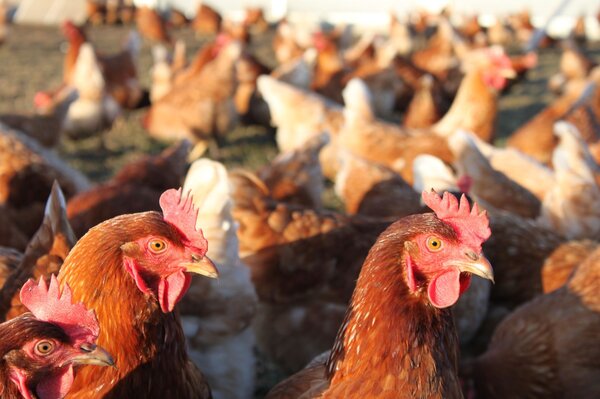
Regarding the different species – cattle, pig, poultry, small ruminants – that are studied on station and on farm, various risks for diseases are relevant. Health issues on farms are monitored and concepts to improve the situation are developed with the goal to establish them successfully in practice.


Working group Animal health

Dr. Christina Veit
Phone
+49 4539 8880 226
Phone
+49 531 2570 1221
christina.veit@thuenen.de
Ulrike Peschel
Phone
+49 4539 8880 121
Phone
+49 531 2570 2164
ulrike.peschel@thuenen.de

Projects

Biomarkers

One option to measure animal welfare objectively, is the recording of physiological parameters, so called bioindicators, that reflect the immune status of a heard as well as the stress level of the animals and that can be collected by minimal invasive sampling are of great importance for monitoring of animal welfare.

More
Biomarkers

Update of decicion tools for parasite control in grazing ruminants

Providing information on sustainable parasite management in grazing ruminants, www.weide-parasiten.de is a well-known german online-platform

More
Update of decicion tools for parasite control in grazing ruminants

Finished projects

Deworming only for individual animals - testing of thresholds in young cattle

Infections with gastrointestinal nematodes (GIN) endanger the grazing of cattle. Until now usually it was dewormed strategically. This is not sustainable and promotes Anthelmintic Resistance. Alternative methods will be tested.

More
Deworming only for individual animals - testing of thresholds in young cattle

Control of endoparasites by Duddingtonia flagrans

Grazing of sheep and goats is compromised by gastrointestinal strongyles. Many worms have developed Anthelmintic Resistance. Promoting the natural predation of worm stages on pasture could possibly reduce the infection pressure for the livestock.

More

FAMACHA© color chart in the sheep and goat farming

A stomach parasite can cause life-threatening anemia in sheep and goats. The pallor of conjunctivae, compared with a color chart developed in South Africa indicates those animals that need to get dewormed. Is this method also useful and applicable in German farms?

More

Decision Trees for Deworming

Control of gastrointestinal worms of grazing ruminants is crucial to animal health and farmer’s economic success. At the same time the smallest possible amount of drugs is to be used.

More
Decision Trees for Deworming

Scroll to top