![[Translate to English:]](/media/_processed_/3/e/csm_AdobeStock_249730128_92f14d3a63.jpeg "[Translate to English:]")
![[Translate to English:]](/media/_processed_/3/e/csm_AdobeStock_249730128_a6fcf4c893.jpeg "[Translate to English:]")
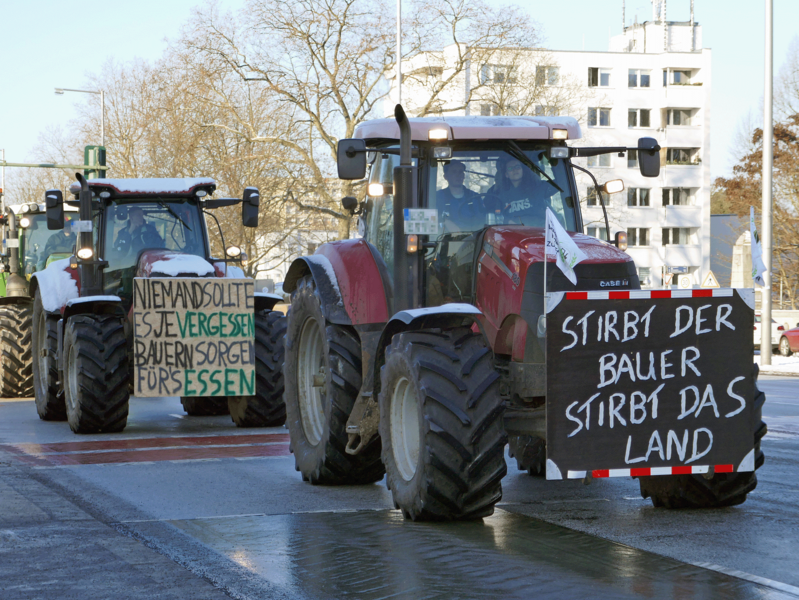
Tractors in the big city, piles of manure in front of the Bundestag: in December 2023, farmers in Germany took to the streets. The trigger was the federal government's plans to cut subsidies for agricultural diesel. Researchers have now investigated the causes of the protests in Germany, as well as in Poland and France. They recently published their findings in the book "Why so angry? Background and causes of the farmers' protests". Marie von Meyer-Höfer from the Thünen Institute of Market Analysis wrote a chapter on the situation in animal husbandry.
The contribution of the Thünen researcher is based on experiences and findings she gathered in the SocialLab joint research project, among other things. The project investigated conflicts driven by changes in the animal husbandry industry. In a broad-based stakeholder process, the researchers developed common objectives together with stakeholders, affected parties and other participants. At the same time, they strengthened competencies that support changes in routines, framework conditions and innovations.
Following massive resistance from the agricultural sector, the planned cuts to agricultural diesel subsidies were scaled back. However, the causes of dissatisfaction go far beyond this. The authors show that many farms are struggling with uncertain conditions, extensive regulations and rising costs, while at the same time society's expectations for sustainable production are growing. This complex situation highlights the potential for conflict in the ongoing transformation of the agricultural sector – and how closely agricultural issues are linked to social and political developments.