
Project
EUDR Effects
Land use change and trade effects of the EU regulation for deforestation-free products in Brazil and Paraguay
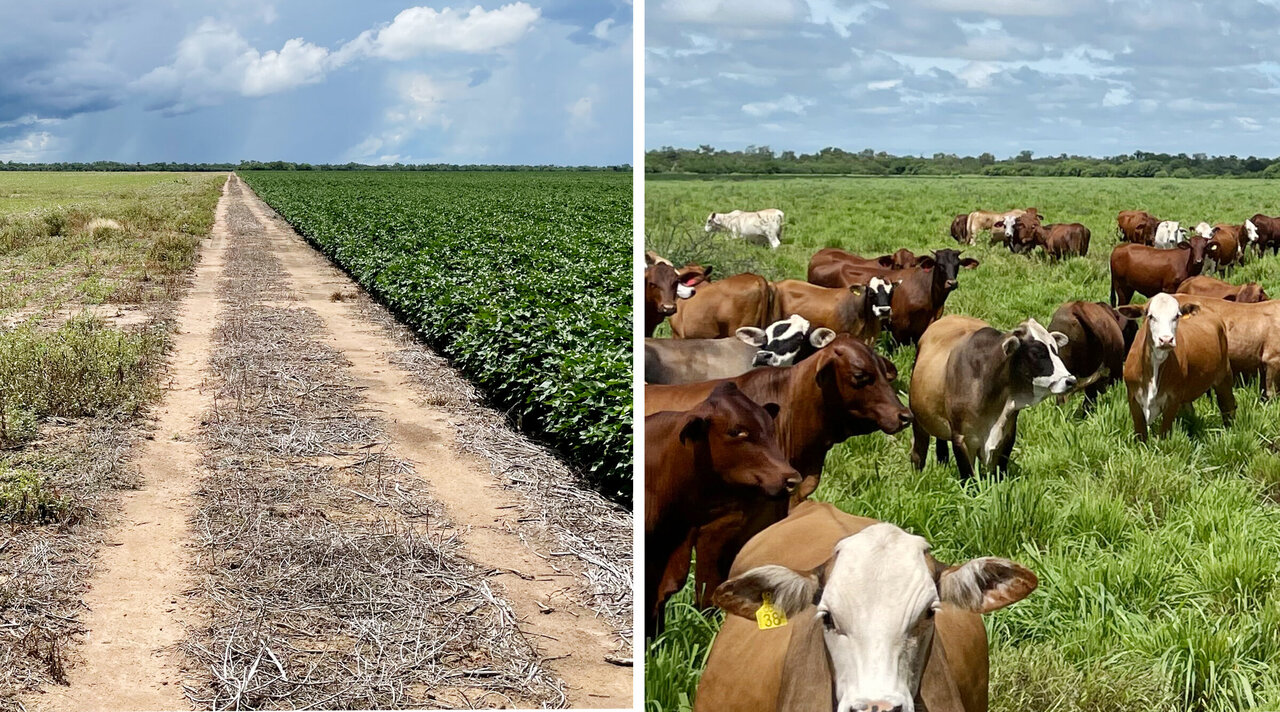
EUDR Effects aims to assess effects of the EUDR on soy and cattle production in and between Brazil and Paraguay in order to evaluate whether this regulation has the potential to reduce deforestation, greenhouse gas emissions and biodiversity loss
Background and Objective
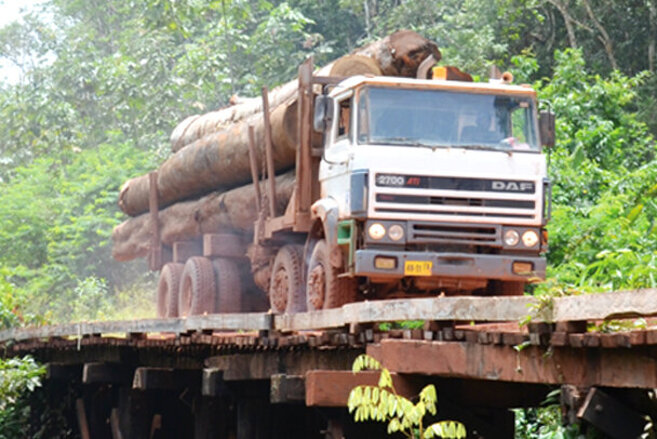
In 2023, the EU adopted the Regulation on Deforestation-Free Products (EUDR) to reduce its influence on global deforestation and forest degradation. The regulation prohibits the entry of wood and a number of agricultural commodities including soy and cattle as well as products made thereof into the EU market, unless they are deforestation-free.
The EUDR-Effects project of the Thünen Institute of Forestry aims to assess effects of the EUDR on soy and cattle production in and between Brazil and Paraguay. Specifically, it will examine the perception and implementation of the deforestation-free requirement by actors along the supply chains in these countries. Core research elements are (i) analysis of existing policy instrument and their relation to the EUDR through literature reviews and participatory policy mapping in case study areas, as well as (ii) a large-scale interview campaign in the two countries among representatively selected actors along the soy and beef value chains.
Implementation of the EUDR will depend on links with existing national policy instruments. Support and cooperation measures need to take into account at least those policy instruments that have a direct and causal link to the EUDR. This will increase the effectiveness on one hand but as well ownership on the Brazilian and Paraguayan side. The expected main results include science-based answers to whether the regulation has the potential to reduce the EU’s influence on deforestation in Brazil and Paraguay and whether it affects land use and trade related to soy and beef. The project is designed to span for three years from 2025 to 2027.
Approach
2025: Literature reviews on existing policy instruments will be related to land use and land use changes on subnational/casts study level scale. In Brazil the work will build on existing outputs of the CarbonLeak project (mid 2025 – mid 2026)
2025: Policy mapping case studies will be implemented mainly in the first half of the project period in collaboration with project partners. The case studies aim to provide a detailed insight in supporting or conflicting interrelations between EUDR and existing policy instruments and assess (supporting or conflicting) stakeholder perceptions.
Case studies include a compilation of all relevant policy instruments and the scientific analysis of their links and interrelations.
2026: Stakeholder workshops and interviews in case study areas will be carried to assess policy perceptions and reactions among soy and cattle producers, as well as policy and science stakeholders and additional value chain actors, in Brazil and Paraguay. They examine the perception and implementation of EUDR related requirements and evaluate whether these align with or are in conflict with stakeholder motivations. Additionally, the survey quantifies the reactions of producers, traders, processors and exporters in terms of production and the resulting land use changes.
2027: Large scale interview campaign among soy and cattle producers, will be carried out depending on the availability of large scale contact information as online surveys in order to upscale the information gathered in the case studies
Preliminary Results
- Poster presentation first case study results Brazil, Oct 2025
Political perspectives and possible EUDR effects - first results of „EUDR Effects“ project case study Brazil - - EUDR Effects inquiry on the sidelines of COP30, Nov 2025
Thünen Institute focuses on agriculture and EU deforestation regulation - Survey on expected EUDR effectiveness in the Global South, Nov 2025
PDf file - Strengthening national policy instruments: early effects of EUDR preparation in the Global South?, Dec 2025
Thünen project brief 2025/31a: DOI:10.3220/253-2025-223 - A new Memorandum of Understanding with the Thünen Institute, Jan 2026
The Ministry of Industry and Commerce (MIC) and the National University of Asunción (UNA) in Paraguay have signed a new Memorandum of Understanding with the Thünen Institute.
Thünen-Contact

Thünen-Contact

- Dr. Caroline Salomão
Telephone
+49 531 2570 2361
caroline.salomao@thuenen.de
Funding Body
-
Federal Ministry for Economic Cooperation and Development
(national, öffentlich)
Duration
1.2025 - 12.2027
More Information
Project funding number: G34 E5000-3003/010
Project status:
ongoing
Publications
- 0
Fischer R, Salomão C, Günter S (2025) Strengthening national policy instruments : early effects of EUDR preparation in the Global South? Hamburg: Thünen Institute of Forestry, 1 p, Project Brief Thünen Inst 2025/31a, DOI:10.3220/253-2025-223