
Yet, they are often not included in official statistics. This leads to a lack of basic economic data on their timber production, complicating the implementation and monitoring of policy measures.
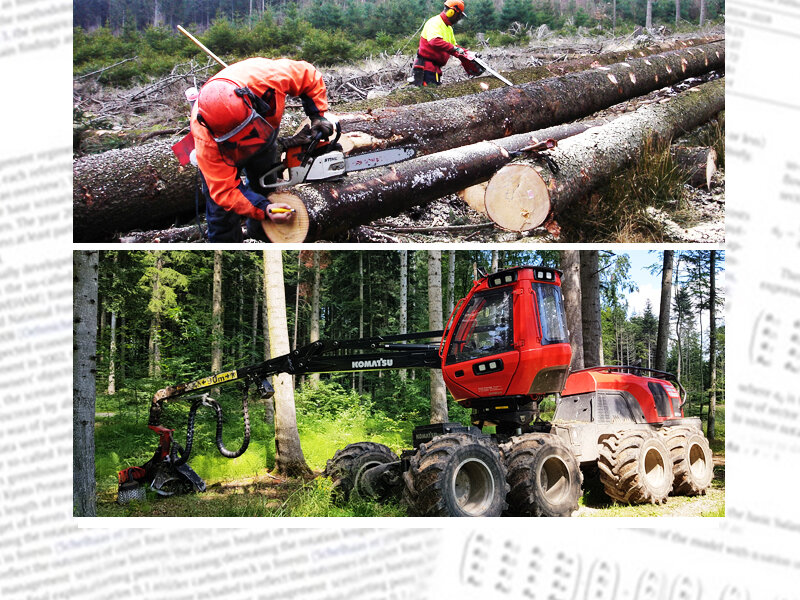
In a pilot study, we applied an adapted "Typical Enterprise Approach" (TEA) to forestry in small-scale private forest enterprises for the first time. We developed model enterprises that reflect typical conditions and management practices in different countries. Based on literature and expert interviews, we described typical small-scale private forest enterprises in Austria, Finland, Germany, Slovenia, and Sweden and presented their timber production systems with key performance indicators.
The results show that, despite common EU framework conditions, the data situation, operational structures, and cost and revenue models differ greatly between countries. Although the method still needs further refinement, the TEA shows great potential for clearly mapping different wood production systems and providing key economic indicators. This can highlight regional differences, highlight best practices, and promote the sustainability of small forestry enterprises.
In the long term, establishing an international TEA network for forestry would be an important step to provide reliable data and better understand the diversity of European forestry enterprises.
Rosenkranz L, Peters MJ, Sekot W, Leppänen J, Šinko M, Schueler S, Seintsch B (2025) Assessing the potential of the ‘typical forest enterprise approach’ for research in forest economics and application in policy making : a comparative analysis based on five national case studies. Forest Pol Econ 178:103587, DOI:10.1016/j.forpol.2025.103587
Projektseite
ValoFor | Forest Value