![[Translate to English:]](/media/_processed_/2/9/csm_Embryo-Exp_Gelege_9F_dpf5-200513111619_c8534a8199.jpg "[Translate to English:]")
![[Translate to English:]](/media/_processed_/2/9/csm_Embryo-Exp_Gelege_9F_dpf5-200513111619_9027994d44.jpg "[Translate to English:]")
Economics of Fish Farms
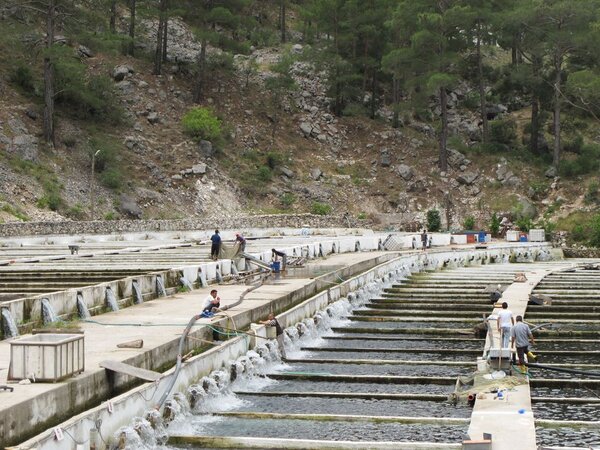
Aquaculture production is growing worldwide. But, the growth of aquaculture is dispersed very differently around the globe. Which production systems have the capacity to compete internationally? Which type of aquaculture will become an important market player in future? The posed questions are widely unanswered yet.
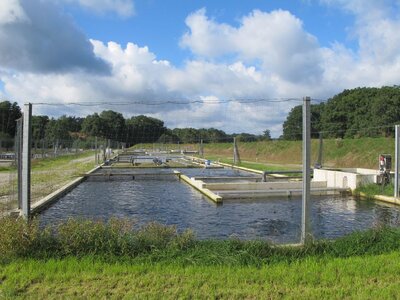
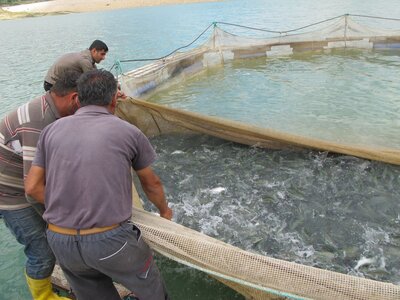
Fish farmers combine their production factors quite differently and aim at diverse distribution channels. Both input and output strategies directly influence the profitability of a production system. In industrial nations for instance, small-scaled traditional fish farms are less profitable than larger farms, which are highly automated. Main cost drivers of every fish grow-out are feed, fingerlings, energy consumption and wages. Also, there are some indirect factors which influence the economics of fish farming: In some regions of the earth, the climate conditions for fish production are better than in others. Farms, which are located in such regions, might be able to grow-out fish faster. In addition, if the water supply is naturally high and high water withdrawal rates are approved by local governments, the concerned farms have production advantages. Low wages, high market prices and friendly economic- policies in general lead to cost advantages for fish farms, too.


Publications
- 0
Barz F, Lasner T, Dorrien C von, Döring R, Goti L, Probst WN, Kraus G, Kreiß CM, Krumme U, Reiser S, Schulze T, Stelzenmüller V, Stepputtis D, Simons SL, Strehlow HV, Zimmermann C (2025) An analysis of stakeholders' vision of the future of coastal fisheries in Germany. ICES J Mar Sci 82(6):fsaf074, DOI:10.1093/icesjms/fsaf074
- 1
Nielsen R, Guillen J, Llorente Garcia I, Asche F, Garlock T, Kreiß CM, Višnic Novakovic S, Danatskos C, Cozzolino M, Pokki H, Kankainen M, Dennis J, Jackson E, Mytlewski A, Kulikowski T, Rakowski M, Tveterås R (2025) An analysis of the European aquaculture industry using the aquaculture performance indicators. Aquacult Econ Manag 29(2):253-274, DOI:10.1080/13657305.2025.2453747
- 2
Kreiß CM, Brüning S, Colsoul B, Reiser S (2025) Fact sheet on animal husbandry in Germany : Aquaculture. Braunschweig: Johann Heinrich von Thünen-Institut, 24 p
- 3
Schiffer-Harms M, Kreiß CM, Reiser S (2025) Sicherung der Biodiversität durch nachhaltig bewirtschaftete Teichlandschaften in der Lausitz ("TeichLausitz") - betriebswirtschaftliche Rahmenbedingungen und Rentabilität in Abhängigkeit von Politikinstrumenten ; Kurzbericht TeichLausitz TI (Sachbericht Teil I). Hannover: TIB, 14 p, DOI:10.34657/26828
- 4
Schiffer-Harms M, Kreiß CM, Reiser S, Döring R (2025) Wenn Fische Zahlen schreiben : politische Rahmenbedingungen und Profitabilität der Lausitzer Karpfenteiche. Bremerhaven: Thünen-Institut für Fischereiökologie, 2 p, Project Brief Thünen Inst 2025/23, DOI:10.3220/253-2025-150
- 5
Schiffer-Harms M, Kreiß CM, Reiser S, Döring R (2025) When fish sum up : political framework conditions and profitability of Lusatian carp ponds. Bremerhaven: Thünen Institute of Fisheries Ecology, 2 p, Project Brief Thünen Inst 2025/23a, DOI:10.3220/253-2025-151
- 6
Grefsrud ES, Jacob C, Kreiß CM, Mascorda-Cabre L, Misund B, Ojaveer H, Poelman M, Strand Å, Svåsand T (eds) (2025) Workshop on the Greater North Sea Ecoregion aquaculture overview (WKGNSAO). Copenhagen: ICES, 230 p, ICES Sci Rep 7(76), DOI:10.17895/ices.pub.30406633
- 7
Kreiß CM, Brüning S, Reiser S (2024) Steckbriefe zur Tierhaltung in Deutschland: Aquakultur. Bremerhaven: Thünen-Institut für Fischereiökologie, 22 p
- 8
Nielsen R, Guillen J, Virtanen J, Lasner T, Döring R, Kraak SBM, Stransky C, Araujo R, Lamprakis A, Avdic Mravlje E, Borges Marques AC, Brogaard M, Cozzolino M, Danatskos C, Davidjuka I, De Peuter S, Delorme A, Dennis J, Ellis T, Fernandez Polanco JM, et al (2021) Scientific, Technical and Economic Committee for Fisheries (STECF) - The EU Aquaculture Sector - Economic report 2020 (STECF-20-12). Luxembourg: Publications Office of the European Union, 387 p, JRC Sci Pol Rep, DOI:10.2760/441510
- 9
Edebohls I, Lasner T, Focken U, Kreiß CM, Reiser S (2021) Steckbriefe zur Tierhaltung in Deutschland: Aquakultur [online]. Braunschweig: Johann Heinrich von Thünen-Institut, 24 p, zu finden in <https://www.thuenen.de/media/ti-themenfelder/Nutztierhaltung_und_Aquakultur/Aquakultur/Steckbrief_Aquakultur_in_Deutschland_2021.pdf> [zitiert am 08.04.2021]
- 10
Lasner T (2020) "Being Typical" - The representative farms method in aquaculture and fisheries. Mediterranean Fish Aquacult Res 3(2):92-100
- 11
Lasner T, Mytlewski A, Nourry M, Rakowski M, Oberle M (2020) Carp land: Economics of fish farms and the impact of region-marketing in the Aischgrund (DEU) and Barycz Valley (POL). Aquaculture 519:734731, DOI:10.1016/j.aquaculture.2019.734731
- 12
Edebohls I, Lasner T, Reiser S (2020) Steckbrief Aquakultur - ein neues Informationsblatt des Thünen-Instituts. Fischer Teichwirt 71(7):245-247
- 13
Edebohls I, Kreiß CM, Focken U, Lasner T, Reiser S (2020) Steckbriefe zur Tierhaltung in Deutschland: Aquakultur. Braunschweig: Johann Heinrich von Thünen-Institut, 23 p
- 14
Chibanda C, Agethen K, Deblitz C, Zimmer Y, Almadani I, Garming H, Rohlmann C, Schütte J, Thobe P, Verhaagh M, Behrendt L, Tudela Staub DF, Lasner T (2020) The typical farm approach and its application by the Agri Benchmark network. Agriculture 10(12):646, DOI:10.3390/agriculture10120646
- 15
Behrens GM, Lasner T, Brinker A, Schumann M (2019) Viability of cork-enriched feed in trout farming - An agri benchmark fish study on innovative aquaculture techniques. Braunschweig: Johann Heinrich von Thünen-Institut, 32 p, Thünen Working Paper 116, DOI:10.3220/WP1545314770000
- 16
Nielsen R, Carvalho N, Guillen J, Araujo R, Avdelas L, Avdic Mravlje E, Borges Marques AC, Cano S, Carpenter G, Cozzolino M, Danatskos C, Davidjuka I, Dennis J, Ellis T, Fernandez Polanco JM, Herring J, Kazlauskas E, Lasner T, Döring R, Stransky C, et al (2018) Economic report of the EU aquaculture sector (STECF-18-19). Luxembourg: Publications Office of the European Union, 416 p, JRC Sci Pol Rep, DOI:10.2760/45076
- 17
Behrens G, Brinker A, Schumann M, Lasner T (2018) Korkfutter in der Forellenmast. Eine umweltschonende und wirtschaftliche Alternative? Auf Auf(2):16-23
- 18
Lasner T (2018) Umfrage zur Wirtschaftlichkeit der deutschen Fischzucht - Was soll das? Fischbauer 6(47):2-4
- 19
Lasner T (2018) Value Chain: Carp - Carp in Germany [online]. Ser Value Chain Price Integration Summaries:1-3, zu finden in <http://www.success-h2020.eu/outputs/summary-documents/value-chains-and-price-integration/> [zitiert am 14.11.2018]
- 20
Lasner T, Brinker A, Nielsen R, Rad F (2017) Establishing a benchmarking for fish farming - Profitability, productivity and energy efficiency of German, Danish and Turkish rainbow trout grow-out systems. Aquacult Res 48(6):3134-3148, DOI:10.1111/are.13144
- 21
Lasner T, Brinker A (2016) Mit Fischen Geld verdienen? DLG Mitt 131(4):78-80
- 22
Lasner T (2015) Forellenzucht in Deutschland : haben lokale Betriebe im internationalen Vergleich eine langfristige Perspektive? Forschungsreport Ernähr Landwirtsch Verbrauchersch(1):24-27
- 23
Lasner T, Klämt G (2015) Woran hakt es in Deutschland? Panorama: Aquakultur. DLG Mitt(10):68-71
- 24
Lasner T (2013) Towards a sustainable aquaculture: the innovations-decision-process of ecopreneurs. In: Moberg M, Puckett A, Wallace T (eds) Natural Resource Distribution and Development in the 21st Century : The Society for Applied Anthropology (SfAA), 73rd Annual Meeting, Proceedings, March 19-23, 2013; Denver (CO). Denver, p 109