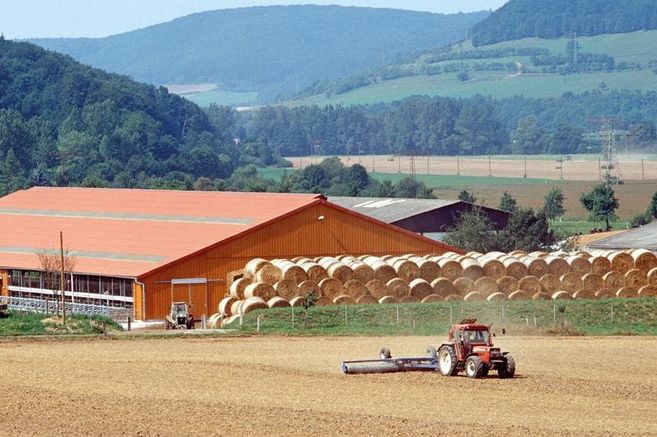

The level of emissions varies greatly from farm to farm. These can be reduced through operational management and technical optimisations. Many well-managed farms have already implemented these measures in various areas. Therefore, while the scope for improvement is no longer huge, it is often not fully exploited. Conversely, emissions can be influenced by additives in feed or the storage of manure.
Taking a typical dairy farm with 330 cows as an example, the greenhouse gas reduction potential and costs per tonne of CO₂ reduced were calculated for three management measures: reducing the age at first calving, reducing the replacement rate, and improving the quality of the basic feed. The technical measures considered were the use of calcium cyanamide as a manure storage additive and the use of the feed additive 3-nitrooxypropanol (3-NOP).
All of the measures have their pros and cons and cannot be applied universally to other farms. Costs in particular vary greatly from farm to farm. The calculation based on this example shows that, for well-established farms, emission savings through efficiency improvements are often costly. However, certain emission reductions can be achieved at an acceptable cost through management measures and efficiency improvements in less optimised farms.
News
What are the costs of climate protection on dairy farms?
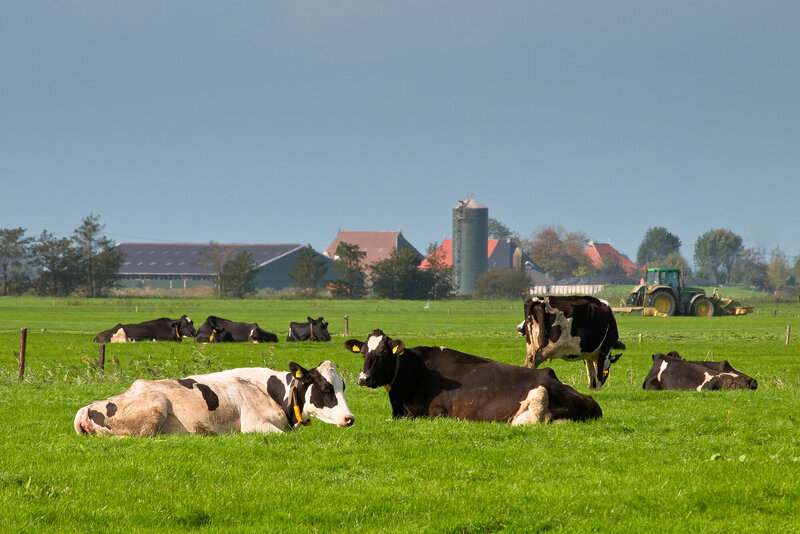
© CreativeNature.nl-stock.adobe.com
The article published in DLG-Mitteilungen 12/2024 is available on www.milchtrends.de. [ 2025-01_Was_kostet_das_den_Betrieb.pdf].
Scroll to top