
These barriers currently prevent farmers from planting new hedges:
Often, they lack the expertise to understand which types of hedges are suitable and what to consider when planting and maintaining them. Planting new hedges is associated with high costs. Current funding is insufficient to cover the investment and maintenance costs.
The researchers presented nearly 20 solutions that make hedges more attractive.
For example: Funding should be increased to cover the costs of planting and maintenance.
Structures should be established through agricultural advisory networks and environmental consulting companies to ensure access to advice and foster knowledge transfer.
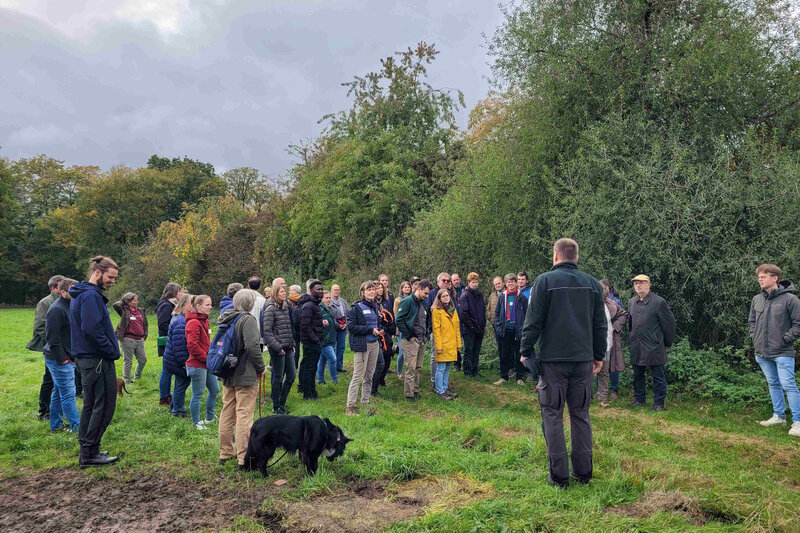
In addition to presenting the results, the project team took the opportunity to engage with interested parties and discussed proposed solutions. There were interesting insights into hedgerows, panel discussions, and an excursion to the Thünen site in Braunschweig.
CatchHedge is part of the #RessortForschtKlima project network, in which the departmental research institutes within the portfolio of the Federal Ministry of Agriculture, Food and Regional Identity are investigating how the areas of nutrition, agriculture, and forestry can support the achievement of the 2030 climate protection targets.
Project CatchHedge - Carbon sequestration of hedgerows and field copses