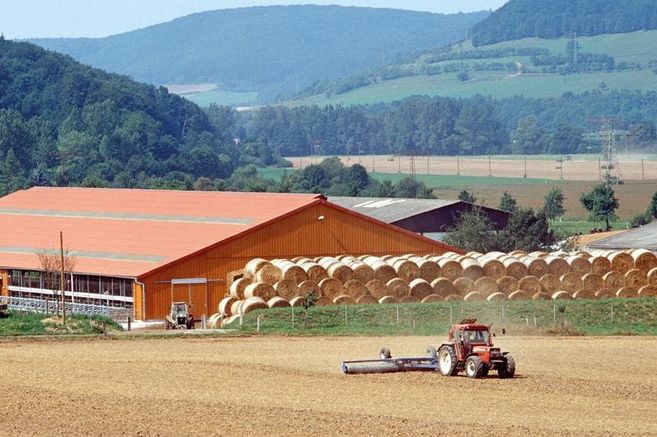


33.9 million tonnes of milk were produced in Germany in 2024. This means that Germany remains the largest milk producer in the European Union. Meat production rose by an additional 122,000 tonnes in 2024. Previously, it had fallen by 25 per cent over eight years. A total of 7.3 million tonnes of meat were produced on German farms in 2024. "Meat production has risen slightly, but it remains to be seen whether this really marks the end of the downward trend," says Claus Deblitz, a researcher at the Thünen Institute of Farm Economics. In German aquaculture, the downward trend in fish production that has also been ongoing since 2017 continued. The harvest volume for 2024 amounted to around 16,750 tonnes of edible fish.
The researchers attribute the declining trends, which also characterised meat production before 2024, to African swine fever, the Covid-19 pandemic and the increased costs of energy and feed. However, changes in consumers' eating habits and stricter regulations on animal welfare and environmental policy are also possible reasons.
Pork is the main export
Pork remains the number one export commodity, accounting for 51 per cent of total exports. As less and less pork is being exported to third countries, it was traded almost exclusively within the EU. Within Germany, per capita meat consumption increased by up to three per cent in 2023 compared to the previous year.
Only small amounts of domestic fish on the German market
Fish accounted for around 51 per cent of aquaculture production, with molluscs, mainly mussels, accounting for the remaining 49 per cent. Production of salmonids, such as trout, the most economically important group in German aquaculture, fell to 9,641 tonnes, its lowest level since 2015. A large proportion of the fish and, above all, seafood produced inland is exported. Less than two per cent of all fish and seafood products on the German market come from domestic aquaculture.
With their profiles on animal husbandry, Thünen researchers provide annual updates on production, consumption and exports. This year's profiles include data up to 2024, and in some areas up to 2025. They thus provide a technical basis for social discussions and political decision-making on the future of livestock farming in Germany.