[Translate to English:]
[Translate to English:]
Institute of

AT Agricultural Technology

Emission Prevention

Current Projects

emission reduction in livestock

Determination and assessment of emissions from livestock and development of measures and operations for emission reduction.

More
emission reduction in livestock

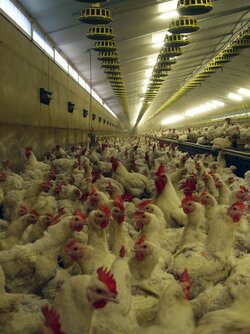
How good is the air quality in animal houses?

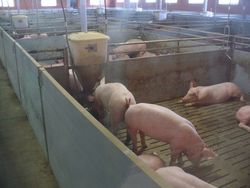
Poor air quality in stables can harm the respiratory ducts of farm animals; lung function impairment is also a recognised occupational disease of farmers and veterinarians. We investigate the composition of air in animal houses to improve air quality and prevent diseases.

More
How good is the air quality in animal houses?

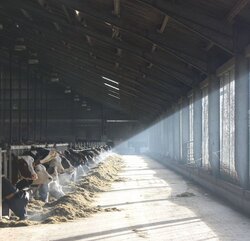
Determine emissions from open stables

Freely ventilated open stalls are good for animal welfare: they offer natural light, fresh air and exercise as needed for pigs, cattle and co. But how high are the greenhouse gas emissions actually caused by this type of animal husbandry? The EmiMod project will provide the data basis for this.

More
Determine emissions from open stables

Completed Projects

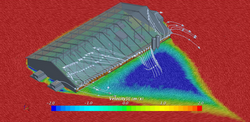
Digital twins of free ventilated dairy barns

How does the air flow through an open stable building and what air pollutants are released as a result? We answer this with the help of a "digital twin".

More
Digital twins of free ventilated dairy barns

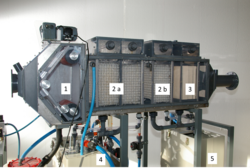
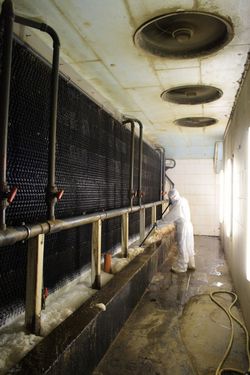
Examination of Legionella in agricultural exhaust air purification systems

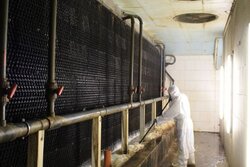
Currently, well over 1.000 exhaust air purification systems are in use on German pig- and poultry farms to reduce emissions. Under certain operating conditions and circumstances a colonization of legionella in these systems cannot be completely ruled out. Therefore we are on track.

More
Examination of Legionella in agricultural exhaust air purification systems

Recirculation air scrubbing of inside stable air

With 95 % the agriculture is the main polluter of ammonia emissions in Germany. A considerable portion of these emission is released from animal livestock. Emissions should be reduced and animal welfare improved as well by using the recirculation air scrubbing within the animal keeping.

More
Recirculation air scrubbing of inside stable air

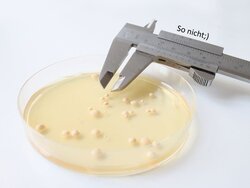
Investigation of the tenacity of airborne microorganisms under real ambient air conditions

How long can bacteria survive in the air? Nobody knows that exactly. Not yet.

More
Investigation of the tenacity of airborne microorganisms under real ambient air conditions

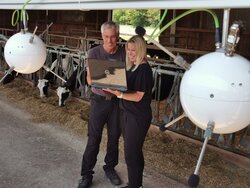
Development of a drone-based bioaerosol collector

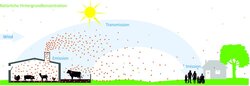
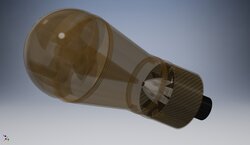
The spatial distribution of bioaerosols in the environment of intensive livestock husbandry is calculated almost exclusively by computer models, because bioaerosol measurements are relatively complex and have so far been carried out only on the ground. We want to show another way.

More
Development of a drone-based bioaerosol collector

Investigation of Legionella in agricultural wastewater treatment plants

Currently, more than 1000 exhaust air treatment plants are in operation in Germany to reduce emissions in pig and poultry farming. Under certain operating conditions and circumstances, colonization of these air scrubbers with Legionella can not be completely ruled out. We will check that.

More
Investigation of Legionella in agricultural wastewater treatment plants

Dust in horse keeping

A large number of horses are afflicted by acute or chronic airway diseases. Airborne particulate matter (APM), in the vernacular often named as dust, are regarded as one of the causative factors. Sources of APM in horse keeping are among others roughage (hay) and riding surface (tread layer). To reduce the APM concentration in horse keeping a range of measures can be adopted.

More
Dust in horse keeping

Partial underfloor suction in cattle stables

On the one hand, the stables are supposed to release only low rates of ammonia into the environment. On the other hand, they are supposed to offer enough space, light and fresh air for the animals. A classical target conflict between environment and animal protection? This project is supposed to show that this combination can work out.

More
Partial underfloor suction in cattle stables

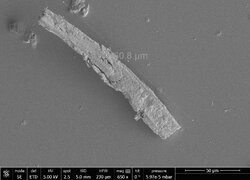
What are the sizes of bio-aerosols?

“What is the size of bio-aerosols?” The answer to this question is not easy to give, because bio-aerosol particles are composed of many different components as viruses, bacteria, moulds, pollen and debris of plants and animals, each with different sizes. It is an important question, too, because the effects of bio-aerosols on human health are depending also on the particle size. For example, large bio-aerosol particles get already stuck in the nose or mouth which may cause a common cold, but small particles can get deep into the lungs and in the worst case may induce pneumonia.

More
What are the sizes of bio-aerosols?

Tracing the flight of bioaerosols

Planned construction of animal housings lead more and more often to resistance in the local population. The reason: Emission of bioaerosols. We develop measuring systems to collect valid data and provide them for health assessment.

More
Tracing the flight of bioaerosols

Automated measurement of bio-aerosols

Planned construction of animal houses lead more and more often to resistance in the local population. The reason: Emission of bio-aerosols. We develop measuring systems to collect valid data and provide them for health assessment.

More
Automated measurement of bio-aerosols

Bio-aerosols around the clock

Automated measurement of fluctuations of the bio-aerosol concentration at animal houses during the course of the day

More
Bio-aerosols around the clock

How you measure emissions from open stable systems

Open stable systems with open yards are used in organic cattle farming. Until now, emission factors for open yards of cattle barns respectively dairy barns do not exist in Germany. For an objective evaluation of the emissions, which is necessary for proceedings on the granting of building permission, these data are strongly needed.

More
How you measure emissions from open stable systems

Scroll to top