![[Translate to English:]](/media/_processed_/3/6/csm_Hintergrund-Ausschnitt1_9daaef6b89.jpeg "[Translate to English:]")
![[Translate to English:]](/media/_processed_/3/6/csm_Hintergrund-Ausschnitt1_0bd7111163.jpeg "[Translate to English:]")
Project
Clean air for animals, people and the climate
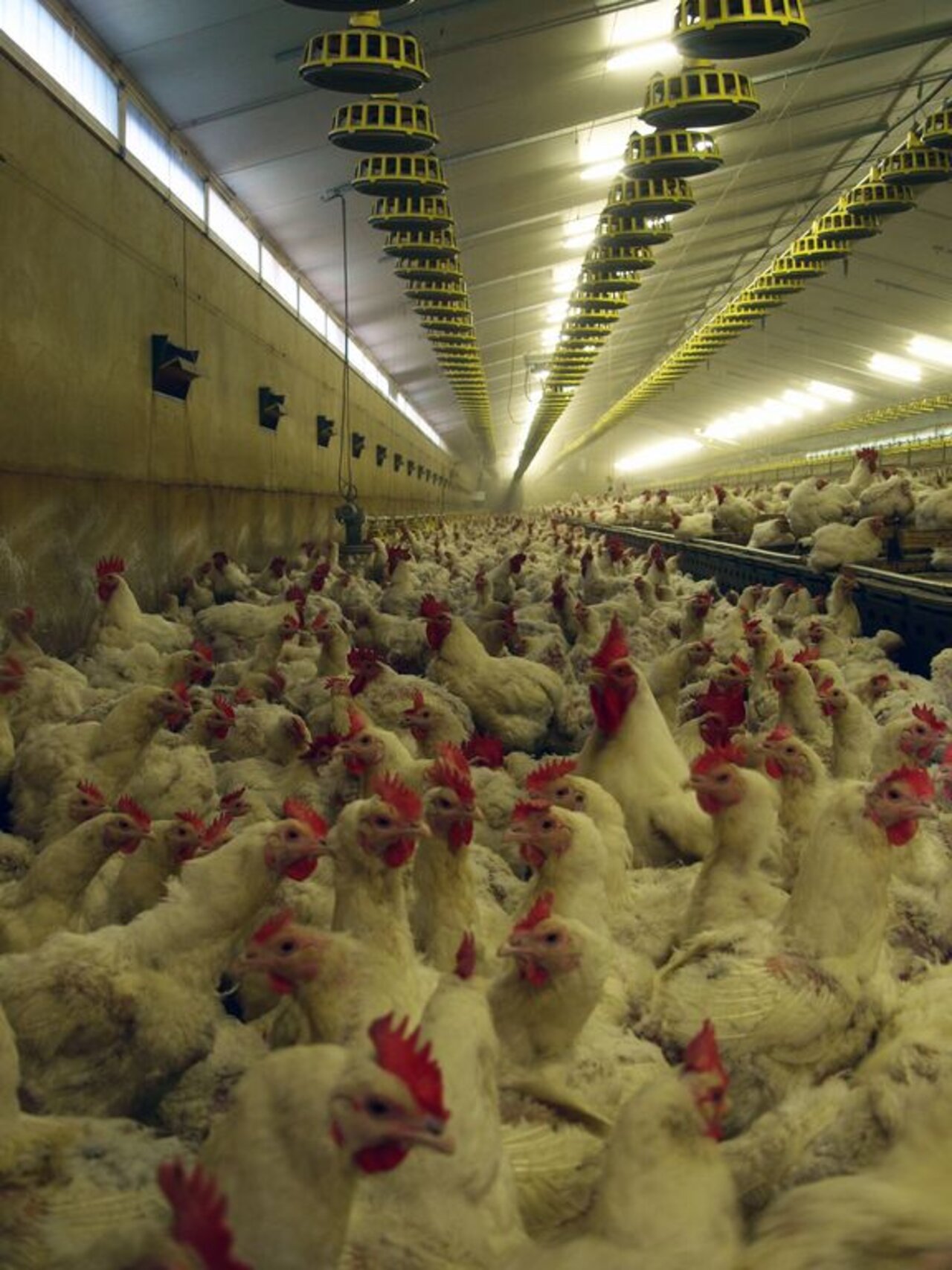
Recording, evaluation and reduction of emissions from livestock farming with the aim of promoting animal health, workplace hygiene and climate-friendly, sustainable and adaptable livestock farming
Sustainable and climate-friendly livestock farming requires in-depth knowledge of emissions and their generation. Our work area is therefore dedicated to the comprehensive recording and evaluation of airborne emissions from livestock farming - with the aim of improving animal welfare, environmental protection and working conditions in equal measure.
Approach
Our work includes the holistic recording and evaluation of airborne emissions (e.g. ammonia, dust, bioaerosols) from animal husbandry and the storage of manure. To this end, continuous, long-term measurements are carried out under practical conditions, whereby innovative measuring and sampling devices are also developed for the various air pollutants. The data obtained is used to analyze the correlations between emissions, husbandry conditions and stable management. The aim is to derive and implement effective mitigation measures to improve air quality and reduce climate-relevant emissions. Knowledge transfer and the implementation of measures are achieved through project work in a national and international context, publication of the results, collaboration in standardization committees and advising political decision-makers.
Our Research Questions
To develop measures for better air quality, we are mainly interested in how air quality and management type or rather animal house management correlate.
Preliminary Results
The air quality is depending on the animal species, the management type and the house management. Large influences have also general activities in the stable. For example the concentrations of dust and bio-aerosols are one power of ten lower at night times, when the animals rest, than at daytimes. In pig houses the partial underfloor extraction reduces the concentrations of ammonia in the animal house air by a factor of 4. In chicken houses the ammonia concentration can be reduced to 1/3 when the feces are removed by a manure belt two times a week instead of only one time.
Thünen-Contact

Involved Thünen-Partners
Duration
Permanent task 1.2001