Sea blog
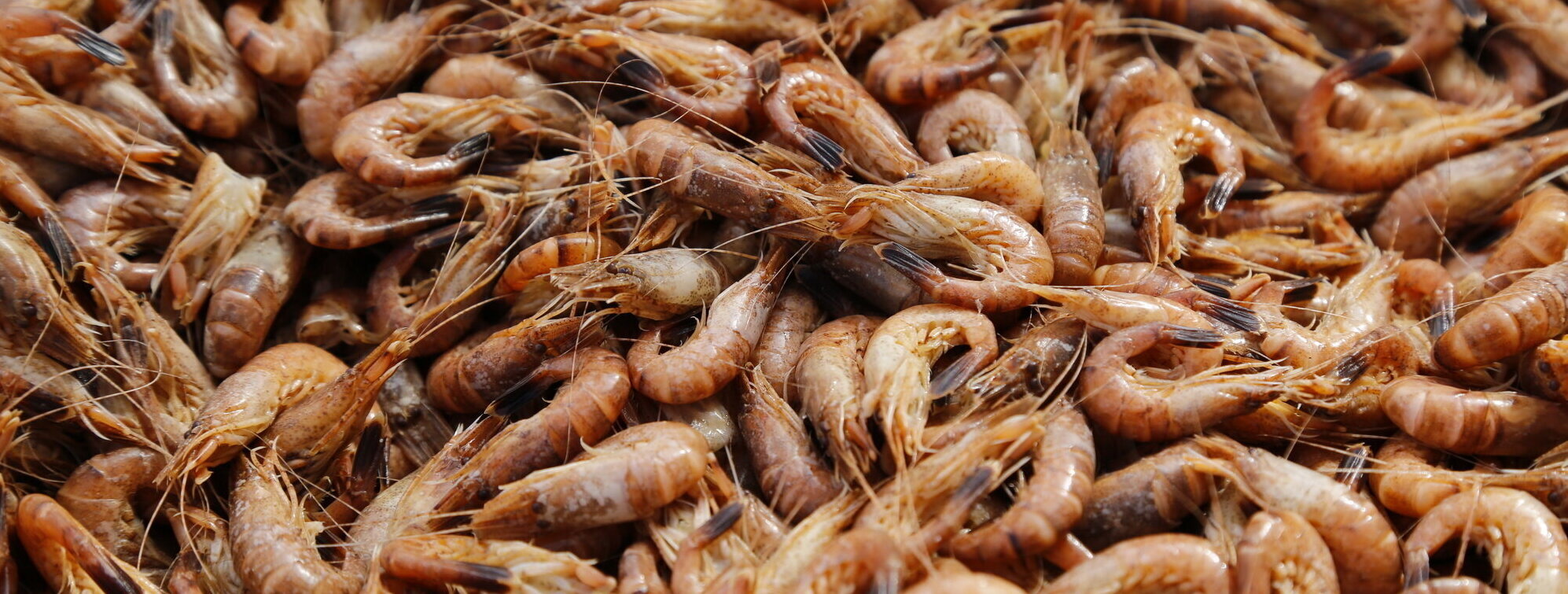
Fishing technique trials for brown shrimp fishing
Annika Brüger | 17.09.2025
Fishing gear trials for brown shrimp fishing in the North Sea, including underwater observations via video recordings in the Baltic Sea.
Duration of the cruise: 15 September to 26 September 2025
Cruise area: North Sea and Baltic Sea
Cruise leader : Annika Brüger, Institute of Baltic Sea Fisheries
Main areas of research in the North Sea trials:
- Investigation of the influence of escape openings near the bottom in the various modular sections of the trawl net on the bycatch of unwanted species and on the catches of the target species
- Investigation of the influence of escape openings in the upper part of the various modular sections of the trawl net on the bycatch of unwanted species and on the catches of the target species
- Investigation of the influence of escape openings in the side areas of the various modular sections of the trawl net on the bycatch of unwanted species and on the catches of the target species
Main areas of research in the Baltic Sea experiments:
- Examination of the 4-flap crab net
- Comparison of the structure and design of a four-flap net and a two-flap net, and investigation of possible differences during use
- Visual inspections of escape panels in specific areas of the net
- Investigation of fastening options for the KingGrid sorting grid in 4-flap mesh and 2-flap mesh
The investigations will be carried out in commercial fishing grounds in the North Sea. In order to achieve the research objectives, the preferred catch composition should include a mixture of North Sea shrimp (Crangon crangon), fish of various age classes and invertebrates, in particular typical benthic by-catch species in this fishery.
The video recordings are carried out in the Baltic Sea due to the better visibility conditions there.
15 September 2025: The ship sets sail. The crew and scientists assemble the fishing gear and prepare everything else needed for the voyage. The ship leaves Cuxhaven and sets off on its journey.
16 September 2025: Fishing trials commence.
21 September 2025: Last day of fishing in the North Sea. Arrival in Cuxhaven at noon. Dismantling of a beam trawl and preparation of equipment for the journey ahead.
22 September 2025: In the morning entry into the Kiel Canal. In the evening arrival in the Baltic Sea.
23 September 2025: First day of testing in the Baltic Sea. Use of the video system to record underwater videos. Daily departure from and arrival in Warnemünde and daily change of scientific crew.
26 September 2025: Further trials in the Baltic Sea in the morning, arrival in Rostock at noon, unloading of fishing gear and sample material, end of the sea voyage.
The North Sea is not only a habitat for countless animal and plant species, but also an important basis for crab fishing. To ensure that this long-standing tradition continues in the future, sustainable use of marine resources is essential. But this is precisely where a major challenge lies: the economic interests of the fishing industry must be reconciled with the ecological requirements of the sea.
An important starting point is the continuous development of fishing gear and sorting devices. These should not only work efficiently, but also be adaptable to new conditions. During SOLEA's 846th research expedition in March 2025, it was already demonstrated that so-called "escape panels" – special openings in the nets – can improve sorting efficiency and, in particular, reduce bycatch of species near the seabed.
On our current trip, we are building on these results. The aim is to deepen the insights gained and provide new impetus for sustainable crab fishing in the North Sea. This time, the trip will take us not only to the Wadden Sea area near Cuxhaven, but also through the Kiel Canal to Rostock.
This logbook invites the public to follow our work on board and gain insights into our research.
++ 15.09.2025 ++ A stormy start


After several weeks of preparation, we are finally back on board and ready to continue our research into crab fishing. However, as soon as we arrive at the harbour, it becomes clear that the weather is dictating its own schedule: strong winds and persistent rain force us to delay our departure. The crew uses the waiting time to prepare all our fishing equipment. We also get ourselves organised: the research team prepares the laboratory and all sample materials for use. At the same time, we hold intensive discussions about how the individual working days will be structured. Everything is covered, from the use of our electric measuring boards to sample processing.
In the meantime, we also visited one of our protection boats: the “Meerkatze”.
++ 16. & 17.09.2025 ++ Challenges


While we wait for the weather to allow us to start our journey, we talk a lot about the content of our research. This journey builds on our previous work. One of the biggest challenges in crab fishing is bycatch: unwanted catches of various fish species and marine invertebrates. These include starfish, swimming crabs, beach crabs and mussels. Due to the particularly small mesh size of crab nets, bycatch has little chance of escaping from the net. Our research focuses on finding new sorting methods that give bycatch fish new escape routes. Our approach involves the use of escape windows. These are sections of large mesh in the crab net that make it easier for bycatch to escape. These special nets were already used in the spring, and we are now testing them again. It is also important for us to know whether the escape windows can be used at different times of the year. As the seasons change, so does the marine environment, as evidenced by the seasonal occurrence of various bycatch species or large algal blooms.
++ 18.09.2025 ++ The first catch


Finally, the first real day of fishing begins – there is palpable excitement in the air. After several days of preparation, the moment has finally arrived when we cast our net for the first time. A short time later, we can take a first look at our catch: there's life in the box! In addition to lots of North Sea prawns, we discover various other species of fish, invertebrates and crabs.
So that we know exactly what we have caught, we now sort through our haul. That means rolling up our sleeves and getting stuck in. Sorting helps us to get a clear overview. How many kilograms of prawns have we caught? What different types of bycatch do we have? And does our test net with the escape window work better than a conventional crab net? However, in order to answer all these questions, we need more than one catch. Today, we have already been able to carry out the first five hauls: a good start!
++ 19.09.2025 ++ What do we have here?


The North Sea is a diverse habitat. It is home to countless fish, marine mammals and seabirds, as well as a large number of different plant species. We discover something new in every one of our catches. Today, we present a few of our special catches:
The mackerel - Amongst the prawns and other fish, we suddenly discover something that immediately catches the eye: a mackerel. Its shimmering body stands out clearly from the rest of the catch. In the morning light, its bluish-green flanks glisten, covered with dark, wavy stripes.
The mackerel is a typical inhabitant of open water and a fast, powerful swimmer. With its streamlined body, it is perfectly adapted to life in open water. It is a rather rare guest in our crab nets, as it usually stays higher up in the water. This makes it all the more impressive to be able to observe this colourful animal up close. A small but fascinating eye-catcher among all the prawns.
Shortly afterwards, we discover another interesting species: a horse mackerel.
But is all mackerel the same? In zoology, animals and plants are divided into categories, which is called "taxonomy". This involves grouping together living organisms that share common characteristics but can also be distinguished from other groups. These higher-level groups can then be subdivided into smaller subgroups, which in turn can be divided into even smaller groups. This process continues until the organisms are classified into genera and finally into species. The scientific names of all animal and plant species tell us exactly that: this allows every living creature to be precisely classified and distinguished.
Our mackerel and horse mackerel do have one thing in common in terms of their names, don't they? But wait! The English names of these two fish species are misleading. If we take a closer look at their Latin species names, it quickly becomes clear that the fish come from different genera:
In the case of our mackerel, Scomber scombrus, we can see that it comes from the genus "Scomber" and has the species name "scombrus". The horse mackerel, however, bears the name Trachurus trachurus. This tells us that the horse mackerel belongs to a different genus. If we now trace the taxonomic history of our two mackerels, it quickly becomes clear why this is the case. The mackerel "scombrus" belongs to the order of mackerel fish, the Scombriformes. The horse mackerel, on the other hand, belongs to the order of trevally, the Carangiformes. Both orders are then grouped together with many other orders to form the perch family.
So, apart from their English names, mackerel and horse mackerel don't have much in common. Taxonomically speaking, horse mackerel is more closely related to flatfish and swordfish (both from the order Carangiformes) than to our mackerel Scomber scombrus. Who would have thought?
The viperfish – Suddenly, a small black fin appears while sorting through the catch. Caution is advised! It quickly becomes clear that this is a viperfish (Echiichthys vipera). It grows to a mere 15 cm in length, but packs a punch. It looks inconspicuous, but its dorsal fin, shaped almost like a crown, contains a very strong poison. There is also a poisonous spine on its gill cover. Although it is not life-threatening to humans, it is extremely painful. Despite this, it is a very popular edible fish, especially in France. The viperfish itself prefers to feed on small shrimp, fish larvae, spawn and other small bottom-dwelling animals.
The striped red mullet – Another rare guest in our net: the striped red mullet (Mullus surmuletus). Their beautiful striped colouring is striking. But another feature immediately catches the eye: their exceptionally long chin whiskers. These are unique because they are equipped with sensory and taste cells. The striped red mulletuses its whiskers to search for food: small crustaceans, worms and molluscs are on the menu.
The rootmouth jellyfish - At first glance, it looks almost alien: the rootmouth jellyfish (Rhizostoma pulmo). A translucent creature with a bell-shaped umbrella that shimmers milky blue. Its German name already reveals something about its anatomy: instead of long, fine tentacles, as seen in other jellyfish, the rootmouth jellyfish has thick, branched "mouth arms". They resemble small roots and serve to filter tiny plankton organisms from the water. Although their size is quite impressive, with some specimens reaching a diameter of up to 50 cm, this jellyfish species is harmless to humans.
Another name used for the rootmouth jellyfish is "cauliflower jellyfish". However, it cannot replace an everyday serving of vegetables. ;o)
++ 20. - 22.09.2025 Catch, cook, peel


Over the following days, we continue to focus entirely on testing our escape windows. We vary the size and position of our windows. The idea is to find the ideal position. Where do the bycatches reliably escape – and where do the North Sea shrimp remain safely in the net? In order to determine this accurately, we need to try out different variants. So we're not just fishing, we're also experimenting with the net from time to time. The more data we can collect, the more accurate the result will be.
Unfortunately, the next storm front arrived on Sunday, 21 September, forcing us to take a break from fishing. But we are making good use of this time too. There is hardly any time to catch your breath between the technical tests, but the next highlight is just around the corner during the break: peeling and eating crabs! Freshly caught, briefly boiled and peeled while still warm – that's how North Sea prawns taste best.
On the North Sea coast, peeling crabs is more than just a way of eating prawns. It is both a tradition and a craft. Those who know how to do it separate the head and shell with a few hand movements, remove the tender meat and enjoy it on its own, classically as a crab sandwich or with a little lemon. On board the Solea, the result of your own work tastes twice as good!
This is where our trip to the North Sea ends. On Monday evening, we return to the harbour, where the next surprise awaits us: as soon as we dock, we are greeted by a large rainbow!
++ 23. + 24.09.2025 ++ Of locks and nautical miles


With the finish of the North Sea part of the trip, it's now time to get ready for the next part of the journey. The crossing to the Baltic Sea and preparations for the next stage of the trip are on the agenda. The day in port will be used to refit the ship, do some final rehearsals and get to bed early, because the next day will start very early this time.
Before sunrise, we leave the port of Cuxhaven and head for Brunsbüttel. This is where the Kiel Canal begins, connecting the North Sea with the Baltic Sea and often lovingly referred to simply as the ‘NOK’. From small sailing boats to huge freighters, around 30,000 ships pass through the 100 km (approx. 53.9 nautical miles) stretch between Brunsbüttel and Kiel-Holtenau every year. If you were to sail around Jutland instead, taking the route through the North Sea, Skagerrak and Kattegat, the distance would be around 460 km (or about 250 nautical miles) longer.
The canal was built between 1887 and 1895 under Emperor Wilhelm II, after several designs and plans for connections between the Baltic Sea and the North Sea had already been submitted. Regular operation of the canal began on 1 July 1895 and cost around 156 million marks. The first expansion of the canal took place from 1907 to 1914, so that new German battleships could also pass through the canal. In addition, further locks were built that were more than twice as large as the previous ones. The canal is still being expanded and the locks enlarged today. This is because the lock chambers, which are now over 100 years old, are increasingly prone to repair.
After passing through the first lock (about 0.167 nautical miles) with the Solea, a rather quiet working day begins. This is mainly used to process smaller frost samples and carry out initial data evaluations. The weather has calmed down and soon the morning sun greets us. The journey through the canal lasts until the evening and everyone prepares for the last day of the trip in the Baltic Sea.
Today marks the start of the second last chapter of our sea voyage. It's going to be really exciting again: we're using camera systems to film our nets underwater. This has several advantages, as it allows us to observe exactly what is happening below the surface of the water. How does the net move, how do the meshes behave, is our construction stable?
Such questions are difficult to answer without this technology. Commercial crab fishermen fish at various depths, sometimes over 20 metres deep. This means that nothing can be seen from the ship with the naked eye. But even in shallower areas, the net underwater is simply not visible from the water's surface. That's why we use waterproof cameras, which we attach directly to the net or to the outside of the lines, to record what's happening. The evaluation enables us to make further technical adjustments and potentially identify problems. The Baltic Sea is more suitable for recording videos than the North Sea, as the water is often clearer and cleaner. Here you can view the first underwater images.
After this last day at sea, we return to Rostock harbour, where our journey ends.
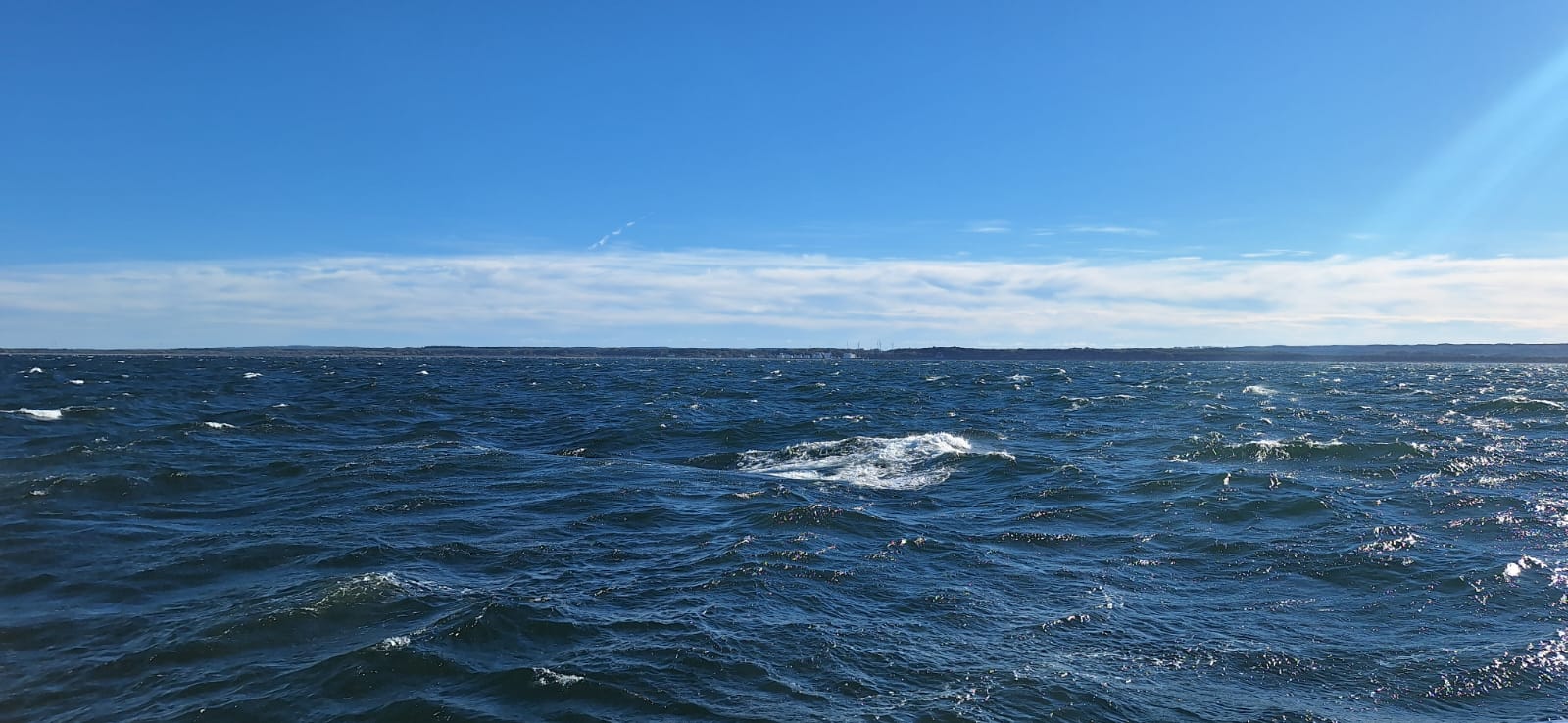
Today is the last day: that means packing boxes, cleaning laboratories and stripping beds. With a touch of sadness, all the data collected is backed up and the last catch logs of the trip are filed away. And then it's time for us to head home for the weekend.
At this point, I would like to thank everyone who made this trip another wonderful experience. A big thank you goes to our captain Marc and the entire crew of the Solea, who are always there to help us and lend a hand when we need it.
I would also like to express my warmest thanks to my own crew. You have all done a great job and I have really enjoyed working with you (even though I lost every round of “Gruppenschnick”. But I'll make up for that).
I hope to see you all again on our next crab trip!
Farewell and the last wave turns off the light.
Your cruise leader Annie