Dossier
Water management in peatlands
Merten Minke, Bärbel Tiemeyer | 19.12.2024
Wet peatland soils consist of almost 98 percent water. This high water content is the reason why a lot of carbon has been stored in the peatlands over the millennia. If they are drained for agricultural use, large amounts of greenhouse gases are released to the atmosphere. Other ecosystem services also suffer from drainage. How could an alternative water management for peat soils look like?
Importance of water for peatlands
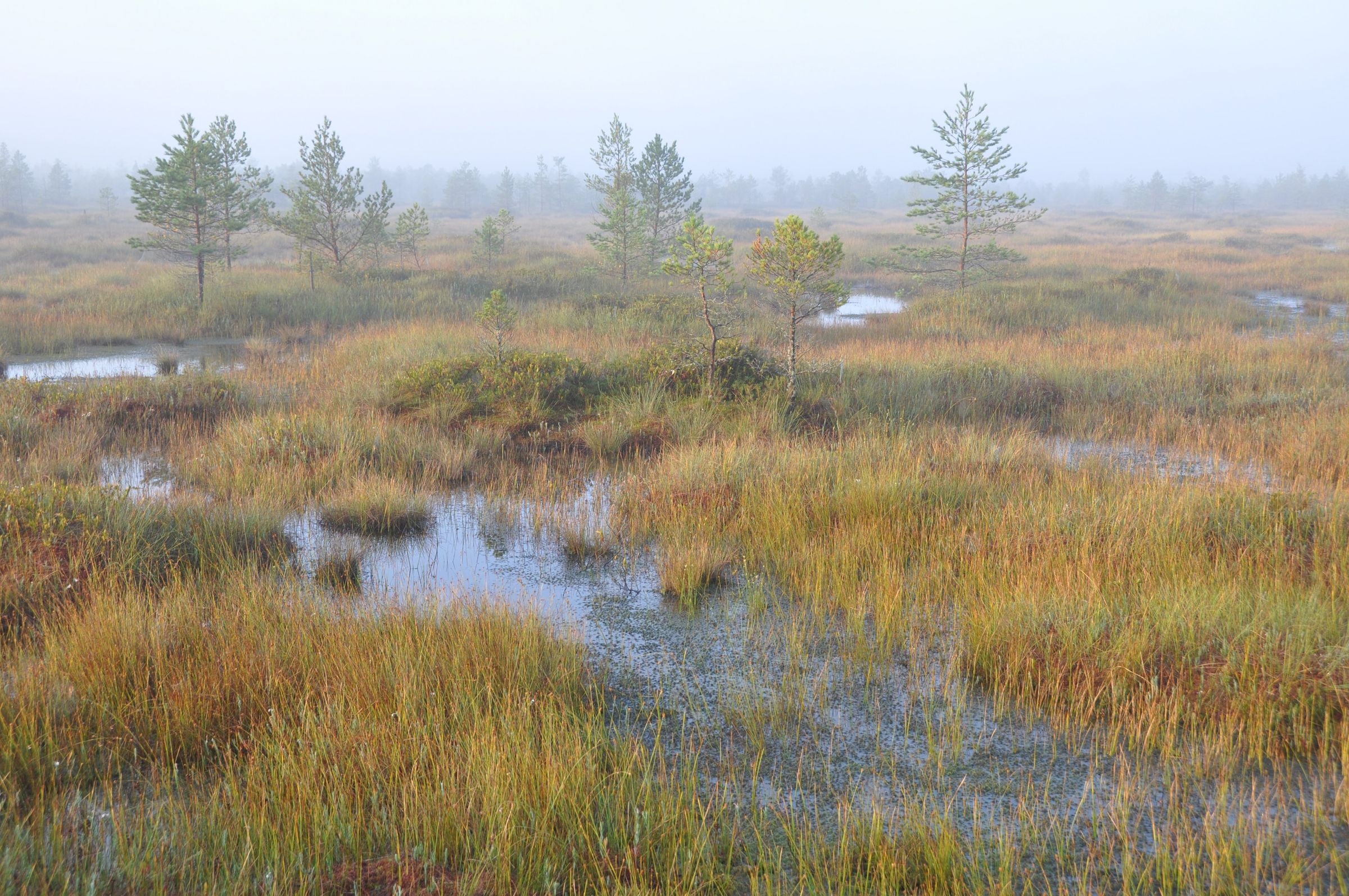
Peatlands are an ecological transition zone between land and water. As such, they have a special property: the plants in intact peatlands are not fully decomposed by microorganisms after they die. Rather, part of their biomass is deposited as peat. However, for this the water level needs to be close to the surface. This ensures that the soil is saturated with water leading to a lack of oxygen. In the absence of oxygen (anaerobic), the organic matter is degraded much more slowly and incompletely, compared to oxygen-rich (aerobic) conditions.
Important peat-forming plants are sedges, common reed, peat mosses, various brown moss species and some woody plants, especially alders, pines and birches. In the case of vascular plants, it is mainly the belowground plant parts that contribute to peat formation. After death, they are no longer supplied with oxygen. The above-ground plant parts in contrast are almost completely mineralized. Only a small fraction of their material remains as peat.
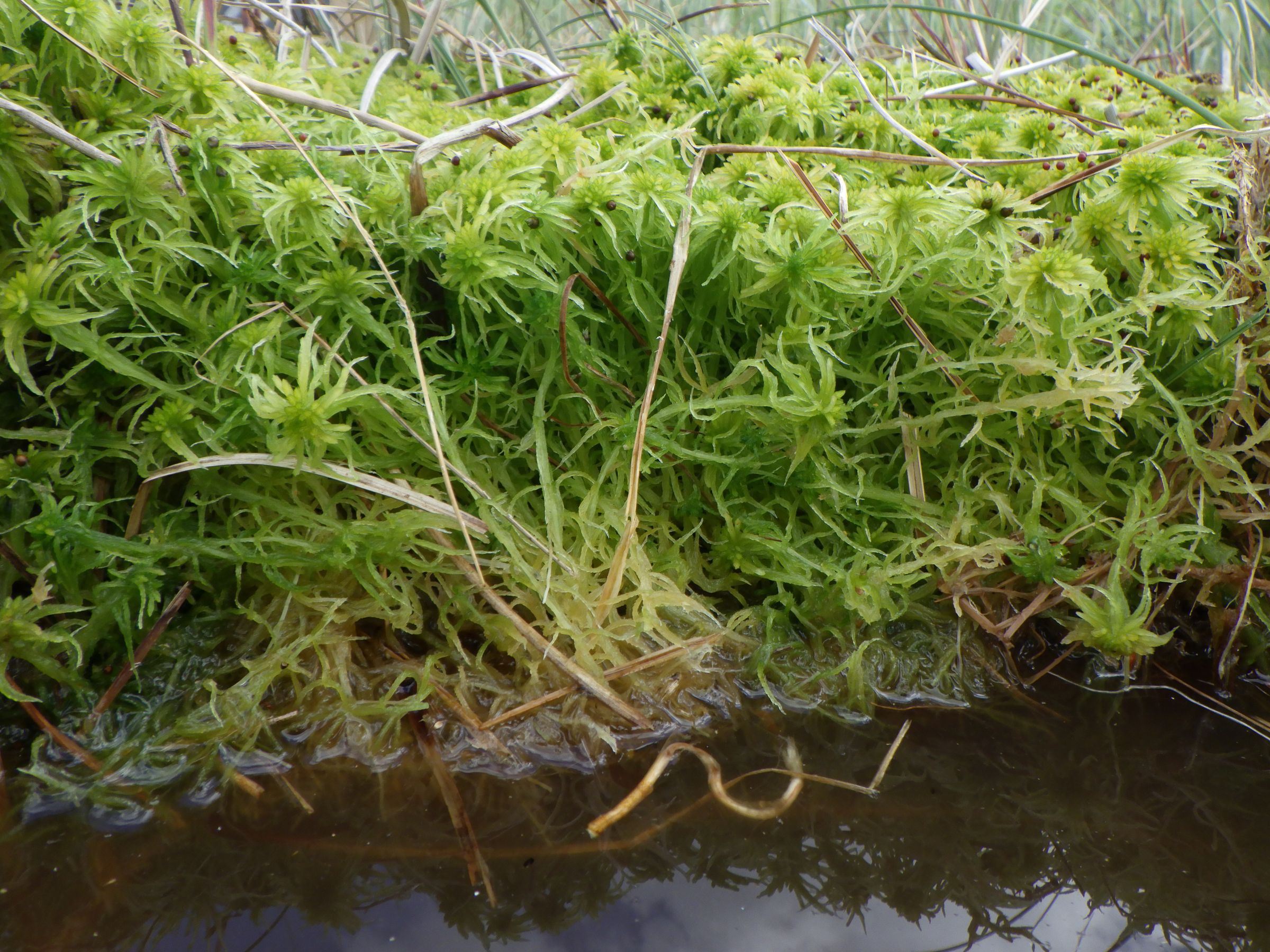
Most moss species that grow in peatlands turn into peat below the water level and at the same time continue to grow upwards. As a result, the peat is becoming thicker and thicker, by an average of one millimetre per year. This process continues as long as the water level in the peatland rises accordingly, new plant residues accumulate under the exclusion of air and are deposited as peat. In this way, peatlands around the world have accumulated enormous amounts of carbon over the course of thousands of years.
However, if the water level drops, for example due to drainage of the peatland for agricultural use, aerobic bacteria become active: with the help of oxygen, they break down the carbon compounds stored in the peat. The carbon is released as carbon dioxide. To assess the effects of the drainage or rewetting of peatlands on greenhouse gas emissions, it is necessary to know how water level and carbon mineralisation influence each other.
Water regulation of growing peatlands
Peatlands need a fairly evenly distributed water supply in order to grow. For this reason, the raised bogs, which are fed solely by precipitation, only occur in particularly rainy regions. In Germany, these are regions in the northwest that benefit from the rather humid Atlantic air. But also the low mountain ranges, the foothills of the Alps and the northern Alps are home to raised bogs.
In regions with lower rainfall, fens occur instead. However, they can only grow in areas with sufficient surface water or groundwater. An example: Although the glacial valleys in north-eastern Germany have little precipitation, extensive water rise mires have developed there. Reasons are the flat relief coupled with a high groundwater level and large catchments.
Mire breathing
Precipitation, surface water or groundwater are rarely evenly available. Peatlands have developed various mechanisms to counteract fluctuations in water levels and the associated influence on vegetation and peat. They are based on the special properties of the peat and differ depending on the mire type.
One of these mechanisms is called mire breathing: peat is a porous, elastic mass that can hold large amounts of water. In slightly decomposed peat, up to 98 percent of the pore space is water-saturated. When the water level drops, the larger, now air-filled pores collapse and the peat volume decreases. The peat below the water level collapses under the increased load. The result: the peatland surface sinks. When more water arrives in the peatland again, the pores fill and stretch, the peat surface rises. This oscillation is called mire breathing. It reduces water level fluctuations in relation to the surface. In peatlands with buoyant plants and loose peat, such as schwingmoor mires or percolation mires, mire breathing ensures stable conditions for peat formation. However, aeration also leads to mineralization of the peat. As a result, the stored organic carbon is released as carbon dioxide and the pore volume is irreversibly reduced.
From peatland surface motion scientists want to derive carbon dioxide balances. To this end, the peatland soil monitoring examines undisturbed, drained and rewetted peatlands in order to be able to separate the basic physical and biological processes from each other.
In addition to mire breathing, also other mechanisms for water regulation happen in peatlands, controlling runoff and evaporation. For example, peat mosses turn white when water in their cells is replaced by air. As a result, more sunlight is reflected and less water evaporates. In raised bogs, the permeability of the peat decreases sharply from top to bottom. This causes excess water to be quickly drained through the large pores close to the surface to the sides. However, if the water level falls into areas with lower water conductivity during dry periods, the lateral runoff stops. Surface flow mires and percolation mires can also slow down lateral water flow and thus can increase the peatland water level and water retention in the landscape.
Water management in drained peatlands
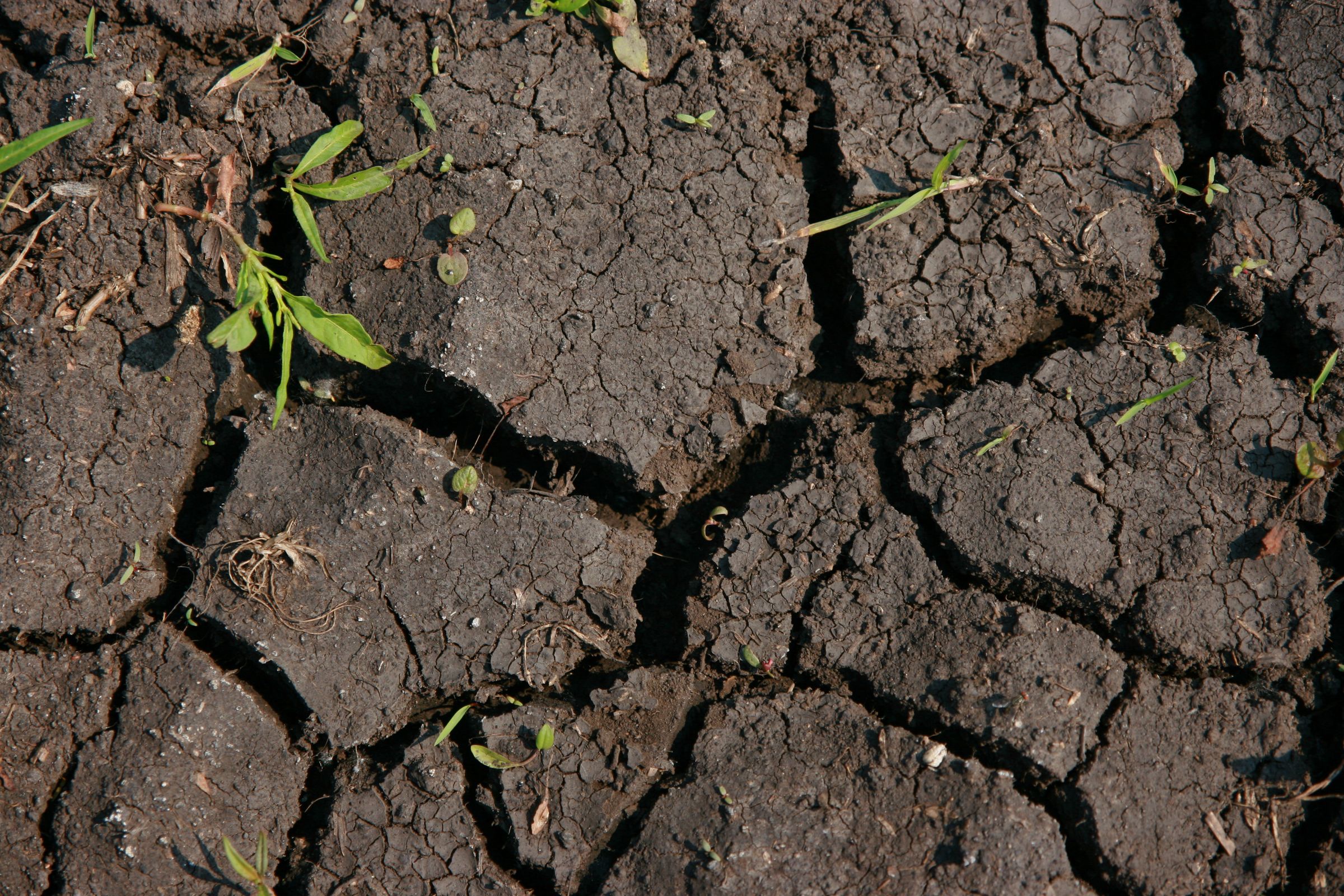
Most peatlands in Germany are used for agriculture. To this end, they are permanently drained via ditches, pumping stations and canals. As a result, the water levels in agriculturally used peatland soils drop deep below the ground surface in summer. Depending on the weather and drainage system, this can be 60 to 120 centimetres. The costs of water management are high and the negative consequences for peatlands, water and climate are serious.
According to the National Inventory Report, the total of 1.3 million hectares of agriculturally used, drained peatlands in Germany emit almost 43 million tons of carbon dioxide-equivalents annually. In addition, large quantities of nutrients enter the groundwater and surface water. The Water Framework Directive and Agriculture Advisory Service estimates nutrient discharges from agricultural peatlands for Mecklenburg-Vorpommern alone at around 4,600 tonnes of nitrogen and 270 tonnes of phosphorus per year. In addition, withdrawal of water and mineralization of the peat lead to a continuous subsidence of the peatland. The peat in the topsoil compacts and shrinks and becomes a water-impermeable layer. This makes it increasingly difficult to use the soil for agriculture. In addition, receiving water courses, ditches and drainage systems must be permanently deepened. There are various methods in which sand is applied or mixed with peat soil to stabilise agriculturally used peat soils. However, peatlands cannot be used sustainably in this way, because without raising water levels, microbial peat degradation will continue and the peat soil will continue to vanish.
Intensive grassland farming on wet soils?
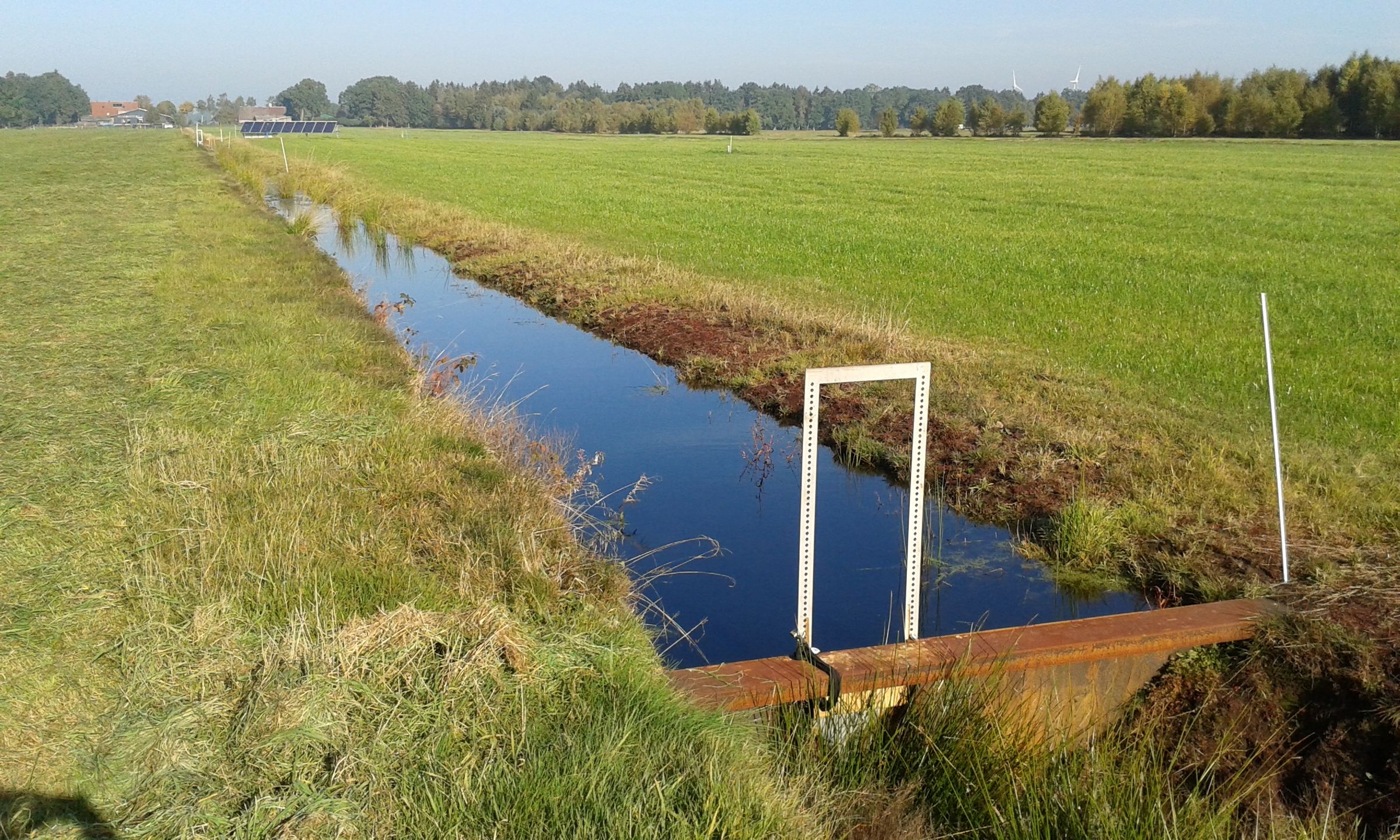
In the dairy region of Lower Saxony, the Thünen Institute is part of research projects that were set up in grasslands on peat soils. For example, in the projects SWAMPS and Modellprojekt Gnarrenburger Moor. In these projects, it was investigated whether and to what extent peatland water levels can be raised in order to reduce the degradation of peat and thus greenhouse gas emissions without impairing intensive grassland farming. It has been shown that peatland water levels are difficult to regulate: The effect of ditch blocking, for example, depends strongly on the water inflow from the catchment area and the peat properties. Under favourable conditions, ditch blocking leads to a significant increase in the water levels. The effect on the investigated agriculturally used bog sites, however, was minimal.
Ditch blocking with continuous additional water supply and thus high water levels in the blocked part of the ditch resulted in relatively high mean annual water levels in the adjacent peatland area. However, it was difficult to drive on the grassland in spring due to high peatland water levels. In summer, the water level dropped far below the surface.
More complex, but also more successful, is subsurface irrigation. With this method, water is distributed in the soil primarily via drainage pipes. In this way, average annual water levels of 20 to 40 cm below the surface were reached. The disadvantage: As studies from the Gnarrenburger Moor, Ipweger Moor and Hammelwarder Moor show, greenhouse gas emissions from bog grassland is not and from fen grassland only very slightly reduced by subsurface irrigation. Thus, the method is not recommended for this purpose.
Water management in rewetted peatlands
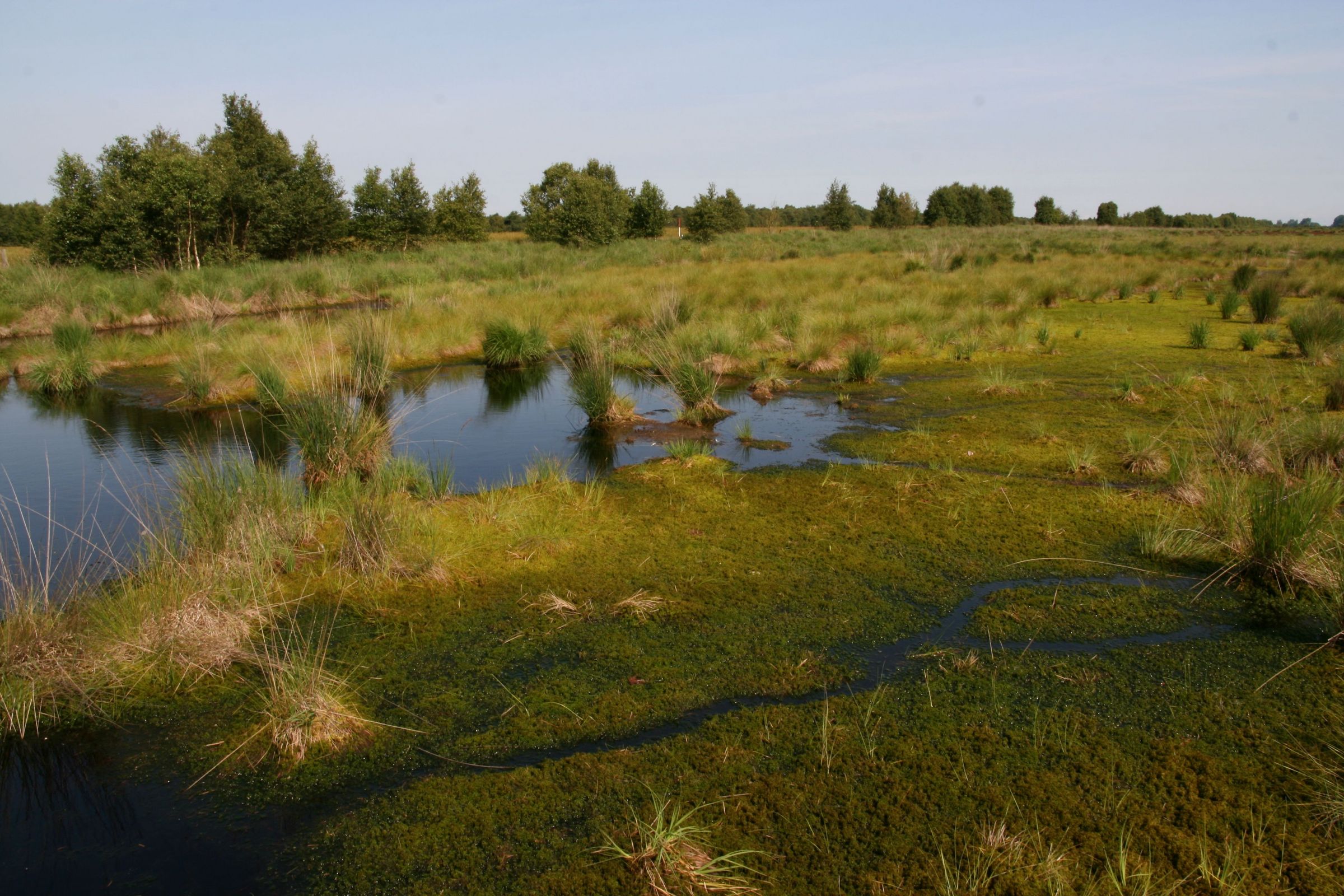
The aim of the rewetting of peatlands is to ensure near-surface water levels and thus permanent water saturation of the peat. This minimises microbial peat degradation and the associated release of greenhouse gases and nutrients, and it supports the establishment of potentially peat-forming plant species and the development of the peatland back into a long-term carbon sink. Rewetted peatlands can be used for paludiculture – the productive use of wet peatlands – or left to nature conservation.
The rewetting of peatlands is important for climate protection. At the same time, many of the areas previously used for agriculture are still needed for value creation. Therefore, the Federal Ministry for the Environment, Nature Conservation, Nuclear Safety and Consumer Protection and the Federal Ministry of Food and Agriculture are funding large-scale pilot projects and model and demonstration projects for peat soil protection through paludiculture. The task of these projects, which are cooperating in the PaludiNetz, is to rewet peatlands on a practice-relevant scale, to establish and manage paludicultures, to test value chains for paludi-biomass and to investigate the associated ecological and economic effects.
Different methods of rewetting
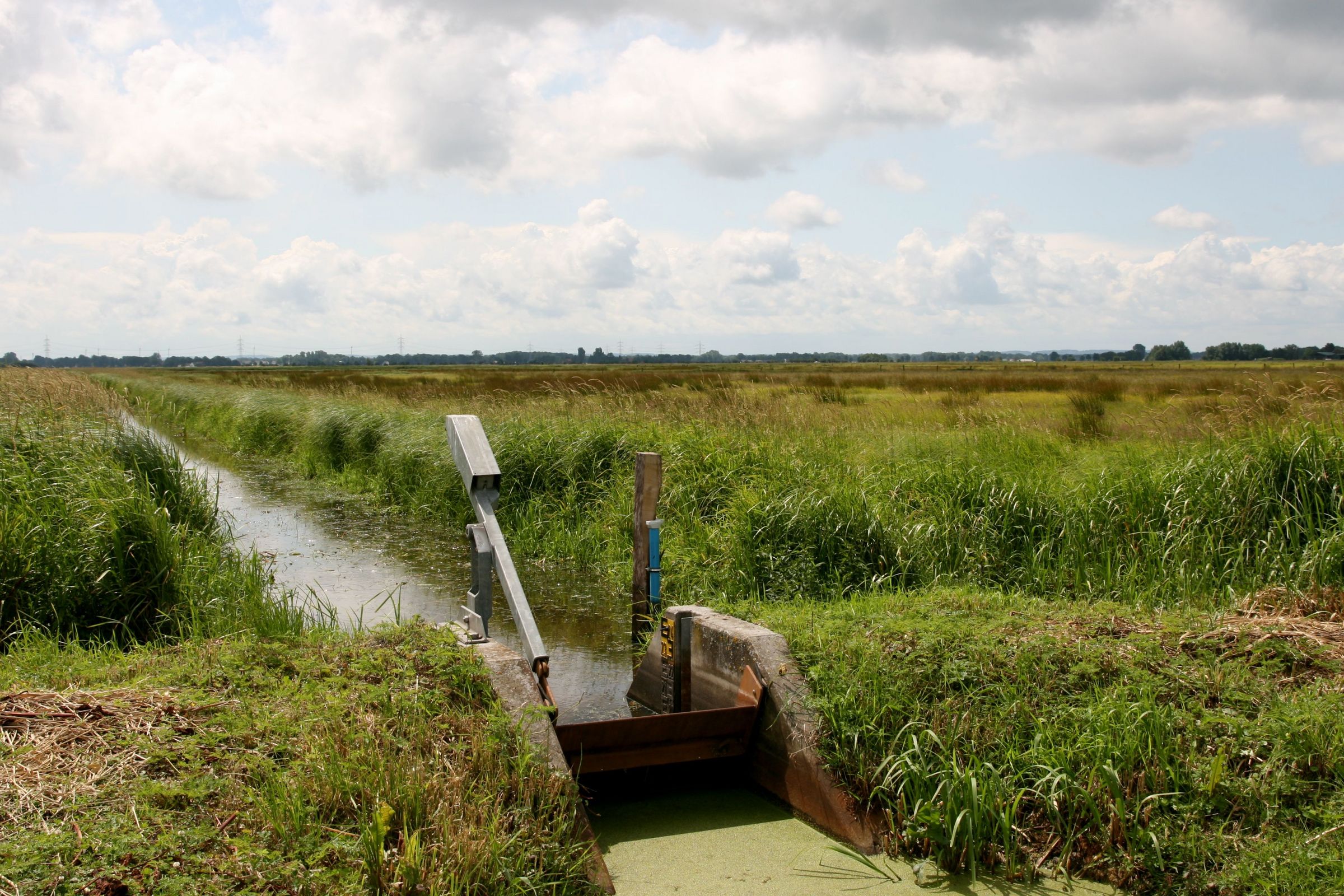
The rewetting of peatlands generally starts with turning off the pumps, closing the drainage ditches and removing drainage infrastructure. This enables peatland and groundwater levels in the catchment area to rise again. It is more reasonable to rewet entire peatlands or at least hydrologically contiguous peatland areas, than to keep individual parcels of land wet. In addition to the owners and users of the peatlands, other stakeholders, such as residents, municipalities, authorities and associations, should also be involved in the preparation, planning and implementation of the rewetting process.
The changed peat properties are a challenge for rewetting: Due to the long drainage, the water conductivity and water storage capacity of the peat are very low. In addition, the landscape relief has often changed due to peatland subsidence. Last but not least, there is a lack of water, for example when the summers are dry.
Depending on the circumstances, ditch blocking with and without additional water supply and subsurface irrigation can also be used for water management in rewetted peatlands. Ditch blocking, for example, can be established as a cascade and provide for sufficient water retention in fens with only slightly decomposed peat and a constant inflow of water. In raised bogs, however, blocked ditches dry out at the beginning of summer. Therefore, ditch blocking with water supply is an alternative there if additional water is available. In most cases, this method is only suitable for small-scale demonstration experiments.
The rewetting of peatlands formerly used for agriculture is particularly difficult. Filled ditches are often not sufficient due to the low permeability of the peat. Subsurface irrigation improves the distribution of ditch water in the peat. However, the installation and maintenance are very complex. In addition, even when the ditches are entirely filled with water, it is often not possible to prevent the water level from sinking by up to 40 centimetres below the surface in summer. Subsurface irrigation is not suitable for nature conservation-oriented rewetting projects due to the associated severe disturbance of the soil.
So-called inundation is much more practicable and promising. For rewetting, polders are created on flat surfaces, which can be terraced in the case of sloping peatlands. The polders can be filled with water or serve as a reservoir for winter precipitation. Flooding in winter is characteristic for water rise mires and flood mires. In peatlands that were not flooded in their natural state, polders can substitute the reduced ability to store water in the peat. Standing water of 30 to 40 centimetres above surface provides a sufficient buffer for a dry summer. The disadvantage of this method is that in inundated peatlands the establishment of sedges and peat mosses is impeded. As an example, inundation is being investigated on the ”Lichtenmoor” restoration site in Lower Saxony .
Examples of water management for paludiculture
![[Translate to English:] Managed bog under paludiculture with bulrushes, trees in the background.](/media/ti-themenfelder/Wasser/Wassermanagement_in_Mooren/10_paludikultur-rohrkolben-Bad_Bederkesa-pk.jpg "Insulation materials can be made from cattail, for example. Since cattail prefers very wet conditions, corresponding test areas are usually created as polders surrounded by dams.")
Paludicultures combine peatland protection and economic use: instead of forage grasses there grow reeds, cattails, alders or wet meadow grasses, which can be used for roofs, insulation and the like. To thrive, some paludicultures need very precisely adjusted water levels. Peat mosses, for example, grow optimally when the water table is just below the land surface. Cattails, on the other hand, cope well with inundation. However, they need a water-free soil surface to reproduce. Therefore, paludicultures often depend on additional water supply. The peat moss paludiculture Hankhausen (Greifswald Moor Centrum), for example, is therefore arranged in terraces. Water is pumped from a small river into shallow ditches that surround and supply the peat moss beds. The water level is regulated with overflow pipes.
The cultivation areas in the project Sphagnum Farming: Effects on biodiversity and climate protection were designed as polders and received additional water from a rainwater-fed reservoir, which was supplemented with groundwater if necessary.
Cattail paludicultures in the projects Product Chains from Fen Biomass or PaludiProgress (Greifswald Mire Centre) are also designed as polders and are fed with groundwater and water from a nearby ditch or river.
There is usually enough additional water available for small areas. However, there is not enough additional water available for entire peat areas. Water retention in the peatland and catchment area is therefore crucial for successful rewetting, but at the same time also for successful water management of paludicultures.
Many projects have already shown that water management for rewetted peatlands must be individually adapted. It depends on the local water conditions, the peat properties and the planned land use. Further, the larger the areas that are rewetted, the smaller the proportion of leaching water that is lost to dry neighbouring areas. Thus, larger areas make it easier to achieve high peatland water levels, which improves the carbon dioxide balance.