Dr. Nataliya Stupak
Expert in water management of the future
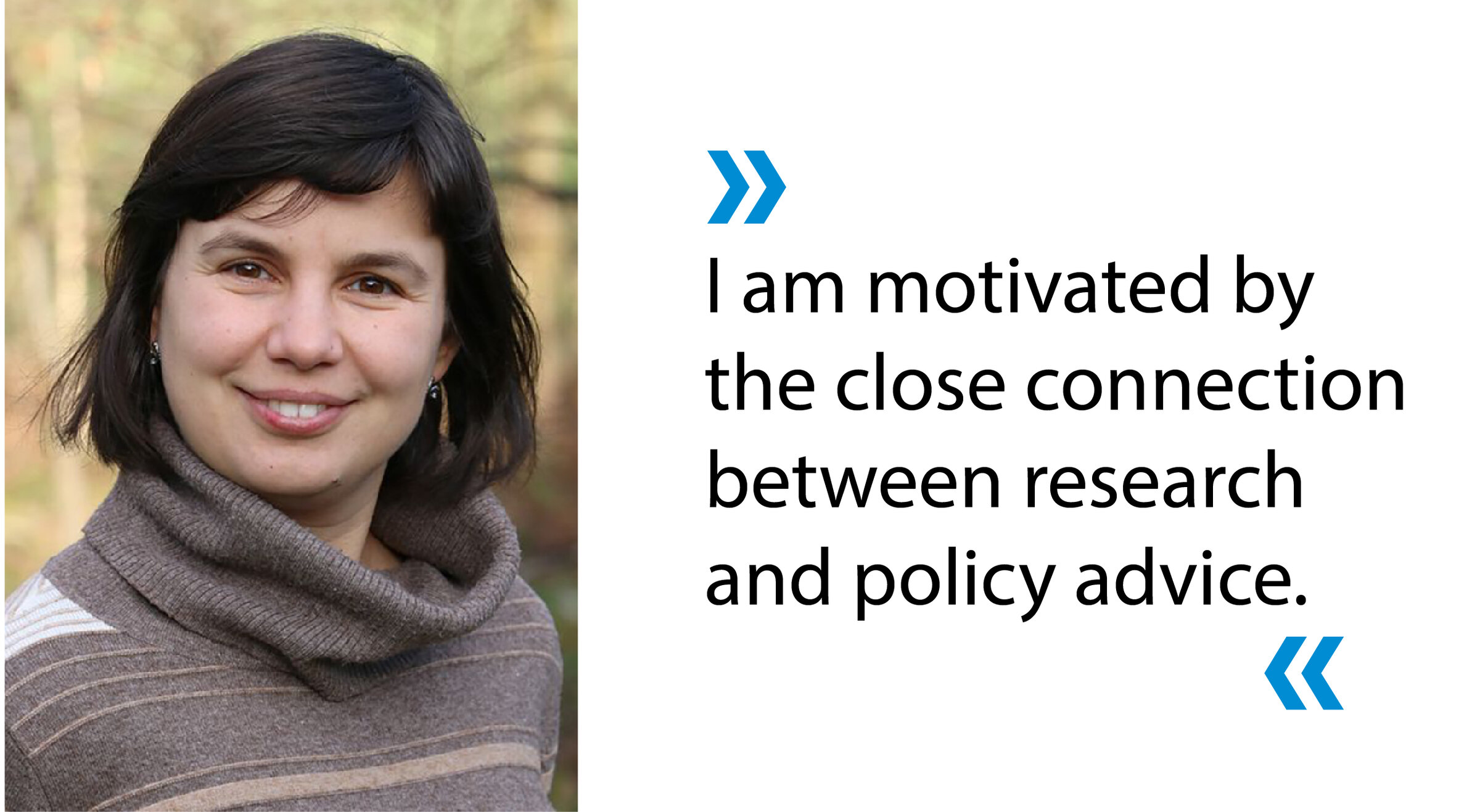
When the rain fails to fall, agriculture faces major challenges. Nataliya Stupak is conducting research at the Thünen Institute into how water can be made more readily available and irrigation more reliable in future – and how research and policy can provide concrete support to farmers.
Where will the water for agriculture come from in the future? And how can irrigation become more reliable in the future? These questions drive Nataliya Stupak. She has been working at the Thünen Institute since 2017 and has been researching the consequences of climate change and how agriculture can adapt to it since 2019.
Water shortages have become an increasingly pressing issue, particularly since the exceptionally dry year of 2018: "Droughts will become more and more frequent in the coming years. Farmers will no longer be able to rely on sufficient rainfall," explains the researcher. Currently, around five percent of agricultural land in Germany is irrigated, with the majority of farms relying on rainfall. If this does not come, crop failures are likely. Nataliya Stupak experienced the impact of long periods of drought on farms during the hot summer of 2018: as part of a research project, she visited farms in several regions of Germany. Many reported significant crop failures, and in some cases fields even burned.
Today, Nataliya Stupak coordinates the joint project Agricultural Water Management in Germany (LAWAMAD) at the Thünen Institute's Climate, Soil and Biodiversity Unit. She is particularly motivated by the combination of applied research and policy advice. Close cooperation with businesses and international colleagues is important to her. "Other countries have decades of experience in dealing with water scarcity. There is a lot we can learn from each other," says the scientist. The water expert sees the greatest challenge in the coming years as finding regionally adapted solutions to water scarcity in Germany and combining them with the current state of research. This requires a reliable legal framework that also allows scope for individual solutions.
The scientist grew up in a suburb of the Ukrainian capital Kyiv. After living and working as a scientist in Belgium, Italy, France and Berlin, she now lives with her family in Braunschweig. According to her observations, conditions for women in the scientific world have continued to improve. She encounters structural discrimination and subtle comments less frequently than she did a few years ago. At the Thünen Institute, she experiences a high degree of equality. "Many women are in leadership positions here," says the scientist.
Nataliya Stupak practises yoga and meditation to clear her head and manage stress. She explains, "It's good for my body and helps me find inner peace in what is often a stressful everyday life." For Nataliya Stupak, it's a balance that helps her keep a clear head in her research and develop solutions for the water management of tomorrow.