Dr. Friederike Fenger
Agricultural scientist with a grand vision
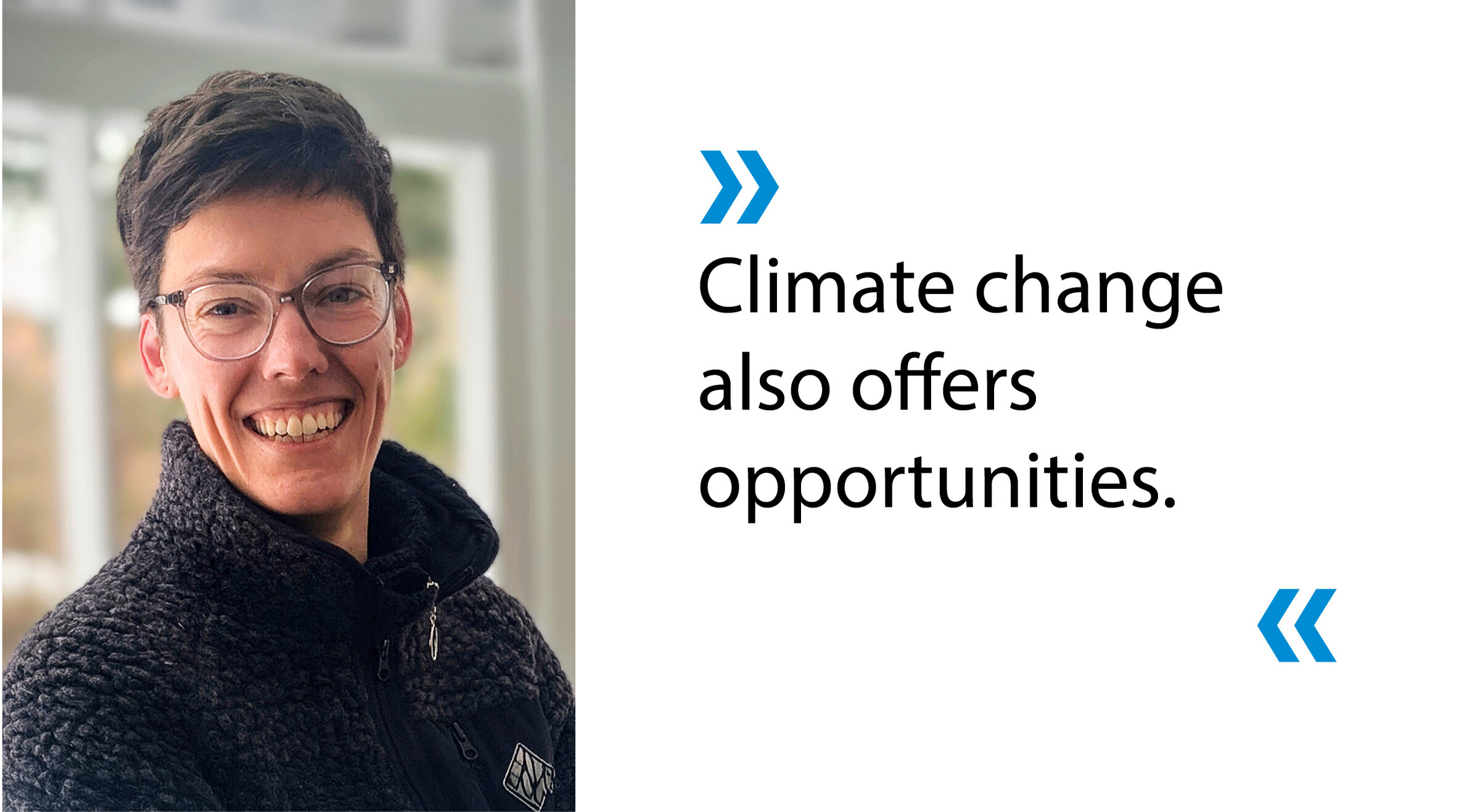
An agricultural scientist from the big city – for Friederike Fenger, this is not a contradiction. As a native of Hamburg, she was one of the few students at the University of Kiel who had not grown up on a farm. This outside perspective became her strength. "I am free to express my opinion. Others who are part of large dairy or meat farms have to be much more courageous to be able to represent new perspectives," she says. Her interest in pasture farming led her to Ireland – the European stronghold of pasture milk production – for her doctorate. She was particularly fascinated by how comprehensively and efficiently the Irish pasture system is designed. For example, the periods during which the cows produce milk are specifically tailored to grass growth in order to make optimum use of the fresh pasture feed.
Friederike Fenger has been head of the Grassland Working Group and the Plant Production Technical Department at the Thünen Institute of Organic Farming for three years. In Trenthorst, Schleswig-Holstein, she and her team are researching how German agriculture can make better use of and appreciate meadows and pastures in the future. "Grassland is much more than just green meadows. If we use it properly, it provides food for animals, promotes biodiversity and stores carbon at the same time," she explains. Some predict the end of pasture farming, saying that climate change will make it too hot and too dry. But the Thünen scientist remains optimistic: “The new conditions challenge us to further develop our systems. If we plant trees on the pastures, the animals will have more shade and the wood will also serve as a source of income.”
With her clear vision of resilient, climate-friendly pasture farming, she will be researching how trees can be sustainably established on pasture land at the Experimental and Interdisciplinary Landscape Laboratory at the Thünen Institute (EiLT). Together with two other Thünen researchers, she coordinates the WieseAckerTierGehölz experimental field. So far, the team has planted 76 trees on three pasture areas. The scientists are now working flat out on the project applications – a creative task that Friederike Fenger enjoys. Being able to actively shape her work is important to her; she can hardly imagine doing any other job.
In recent years, she has observed a generational change in academia, which has also led to more women in leadership positions. She notes with satisfaction: "Today, it's more about the issue and less about names and individuals. There is more cooperation and less competition."
After work, she walks her dog through fields and meadows. Her flat is not far from the experimental fields. She doesn't miss city life: "I love nature and the peace and quiet here. There's a lot going on in my head. When I step outside, it's much quieter," she says contentedly. Every day, the meadows and fields show her what she is working towards with her research: modern pasture farming 2.0.