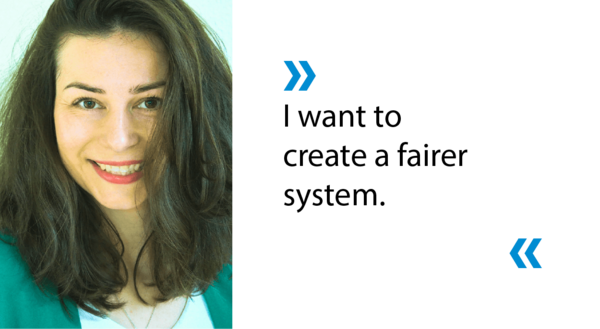
Dr. Sarah Simons
Work group leader in a man's world
Her path as a scientist opened up on a Portuguese fishing boat: "On the trips, I understood what it meant to make a living from fishing," says Dr. Sarah Simons. During her master's thesis at NOAA's renowned Northeast Fisheries Science Center in the U.S., she worked on bycatch avoidance in fisheries. After two and a half years abroad, she finally returned to Germany and became one of the first doctoral students at the Thünen Institute of Sea Fisheries. The result of her PhD was an innovative modeling approach that is currently being applied in international bodies for climate change impact assessment and future management measures. Since 2020, she has been a working group leader at the Institute of Sea Fisheries, primarily responsible for economic and social analyses in the fishing industry. "Finding topics that could become relevant and also doing application-oriented research - that's just my thing," says the scientist.
The start as a manager was anything but easy: Sarah Simons took over the position during the Corona pandemic and after her second parental leave. Individual coaching, flexible working hours, home office and consistent division of labor at home help her master the task. "As a mother of young children who works full time, I am an exotic in the neighborhood. And so is my husband, because we share the family chores fifty-fifty," she says with a laugh.
Her working group has grown quickly - the need to make the fisheries sector sustainable and bring environmentally friendly solutions into practice is greater than ever. "I'm proud to lead such a diverse team. We are 13 bright minds from young to experienced, men and women from diverse disciplines, from biology to social science," reports Sarah Simons. When she is deputized, she likes to rotate the deputies. That way, everyone takes responsibility for the working group and everyone has the same level of knowledge. She says she learned this from the U.S., where young people have much more equal rights in the scientific community than in Germany. Her motivation behind all this: "I want to create a fairer system.