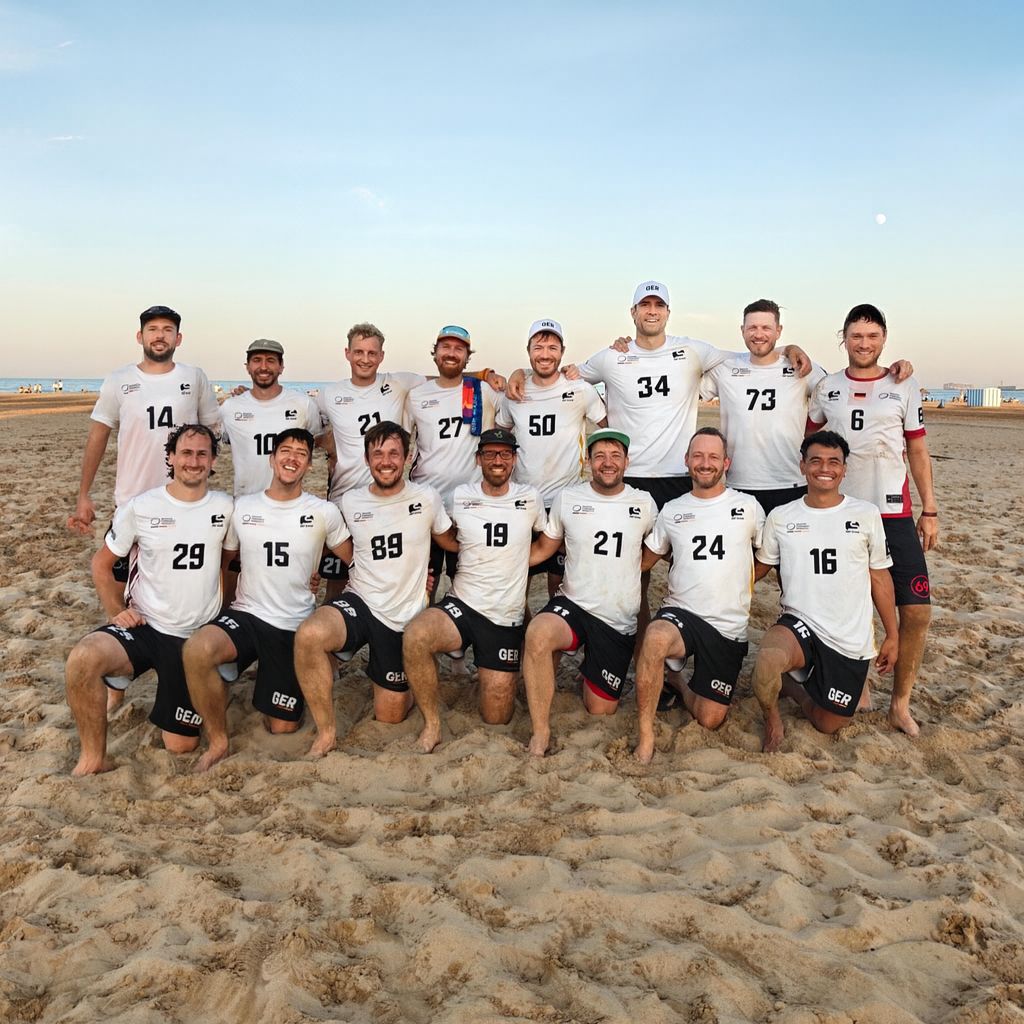
Trips to the Atlantic Ocean are nothing unusual for researchers at the Thünen Fisheries Institutes. However, for Mathis Mahler from the Institute of Baltic Sea Fisheries, his upcoming trip to the coast of Portimão in Portugal will be a first. That's because he's not travelling there as a scientist, but as a national team player. His discipline: beach ultimate – a variant of ultimate frisbee that is played on the beach. In this team sport, a team of five players attempts to throw a disc into the opponent's end zone. From 16 to 22 November, Mathis Mahler will compete against teams from all over the world as part of the German national team during the World Beach Ultimate Championships. "It's the first time I'll be playing in a national team and it's also the first tournament that lasts a whole week," reports the scientist, full of anticipation.
Frisbee, research, freedom
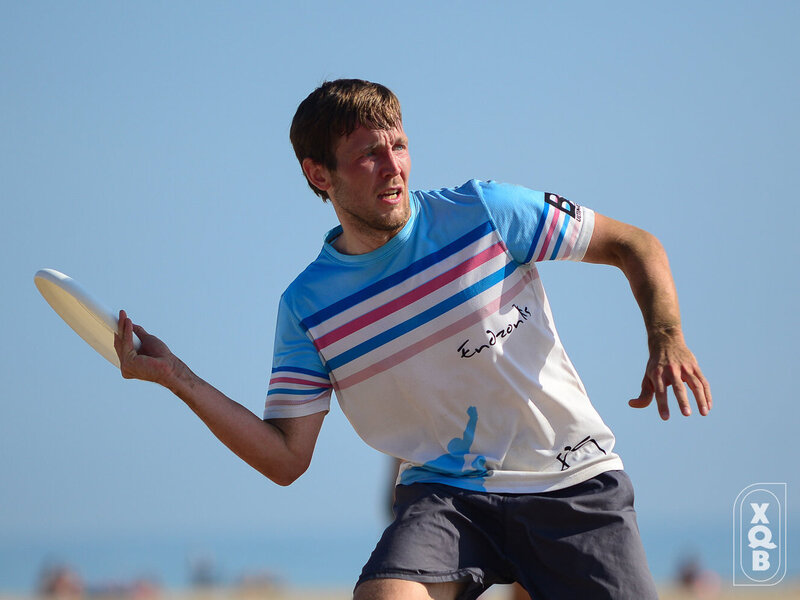
Mathis Mahler: "I associate sport with a kind of feeling of freedom when I run after a disc across the beach."
Research, train, regenerate
How can playing for a national team be combined with working as a scientist? "It's not that complicated to balance the two," says Mathis Mahler. "I go to training after work, and we play tournaments at the weekend." The Thünen Institute also supports participation in the World Cup with special leave, which is available to participants in high-level tournaments in a discipline recognised by the German Olympic Sports Confederation. However, according to Mahler, it is challenging to find enough time for family and personal relaxation. In order to be able to "be there" in all areas, he currently works part-time.
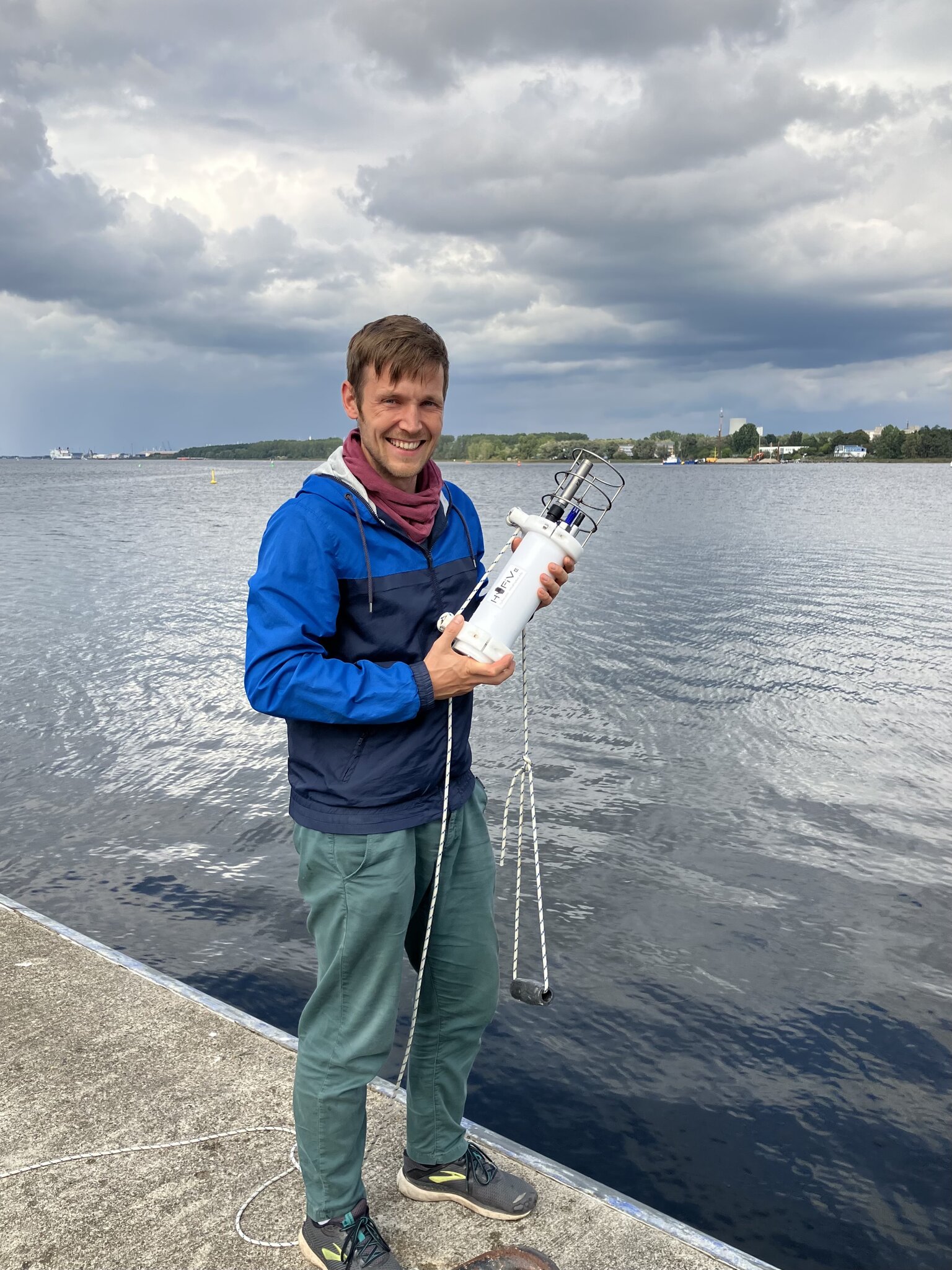
Mathis Mahler has been part of the Fisheries and Survey Technology Working Group at the Thünen Institute of Baltic Sea Fisheries in Rostock since 2021. As someone with a passion for technology, he initially studied mechatronics. "I did my master's degree in biomedical engineering because I wanted to use technology to improve people's lives," he explains. At the Thünen Institute, he is now developing a technical system that may one day improve the health of the Baltic Sea. In the PrimePrevention project, he is currently developing and testing the HyFiVe system in collaboration with researchers from the Leibniz Institute for Baltic Sea Research in Warnemünde. The aim is to detect biological hazards such as blue-green algae at an early stage and to establish a warning system. The scientists are working with the fishing industry to achieve this. Commercial fishing vessels are being equipped with HyFiVe systems. The crew uses the probe to take regular measurements: salinity, temperature, depth, oxygen content and indicators for cyanobacteria. The measurement data is then transmitted to a server on land via a router and can be examined for threshold values, for example. With HyFiVe, fishermen can detect underwater conditions, such as oxygen content, in real time.
Mathis Mahler's work has a lot to do with data, but also with product development: it is important to fix bugs and continuously improve the devices. It also involves a lot of collaboration and dialogue – two aspects that also play a major role in his sport. "There are no referees in Ultimate. This promotes good communication, which is also essential in science," he explains. When there is disagreement, you have to listen to the other person so that you can come to a good decision.
His sport and his work also have another element in common: the sea. "I associate the sport with a kind of feeling of freedom when I run after a disc on the beach. It flies very differently from a ball and is strongly influenced by the wind. Sometimes it seems to hang in the air. There's something a bit magical about that," he says.
Mathis Mahler wants success and prospects for both his research and his sport: more attention for sports such as Ultimate Frisbee and the establishment of HyFiVe as a regular measuring instrument. He works actively towards this every day. Only in mid-November does he leave his desk for a week. But who knows, maybe he will take his place again as a scientist and world champion from 24 November onwards.